Author: Gabrielle Garzotto

  • Blue Horizons: How the Riviera’s light and striking sea shapes the people who live and work there

    Blue Horizons: How the Riviera’s light and striking sea shapes the people who live and work there

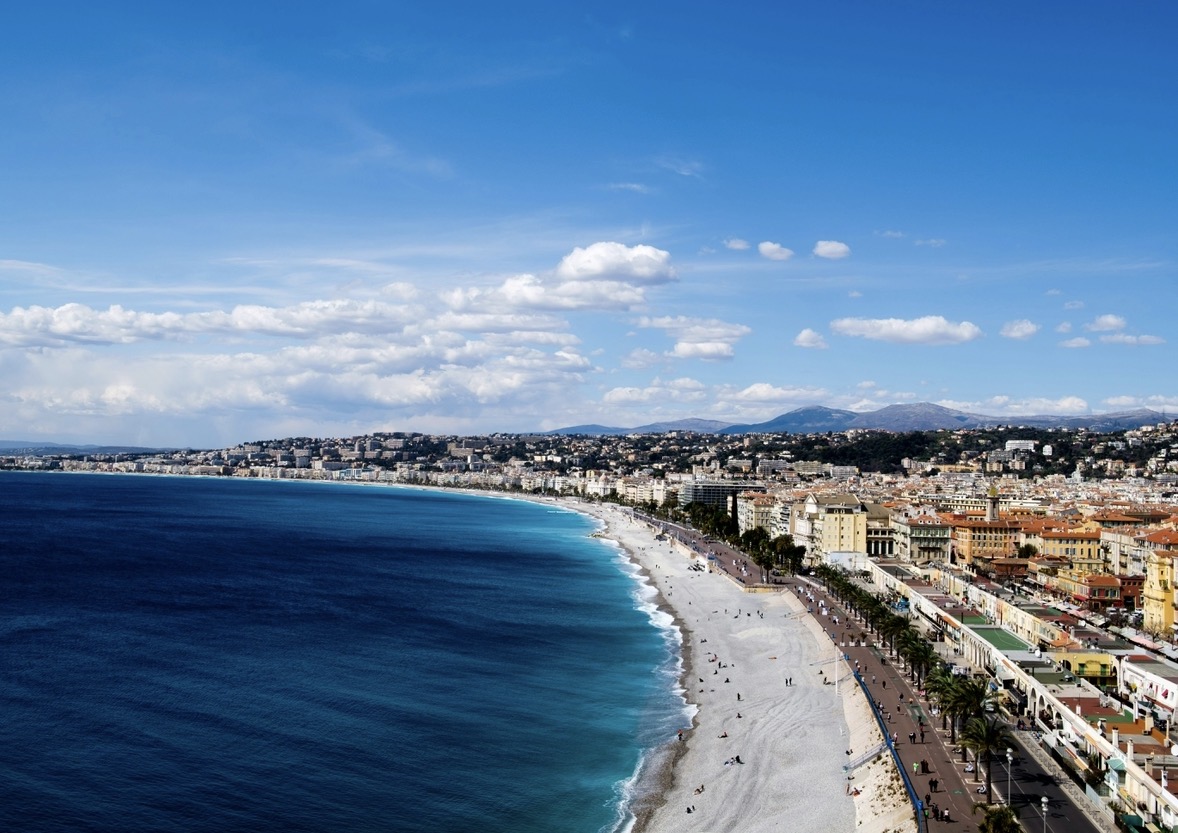
    By late afternoon in Nice, the sunlight stretches across the Promenade des Anglais, warms the limestone façades into shades of honey and cream, and flattens the Mediterranean into a sheet of saturated blue. There is no skyline cutting the horizon into fragments. No vertical wall of glass interrupts your peripheral vision. The eye travels forward and keeps going. 
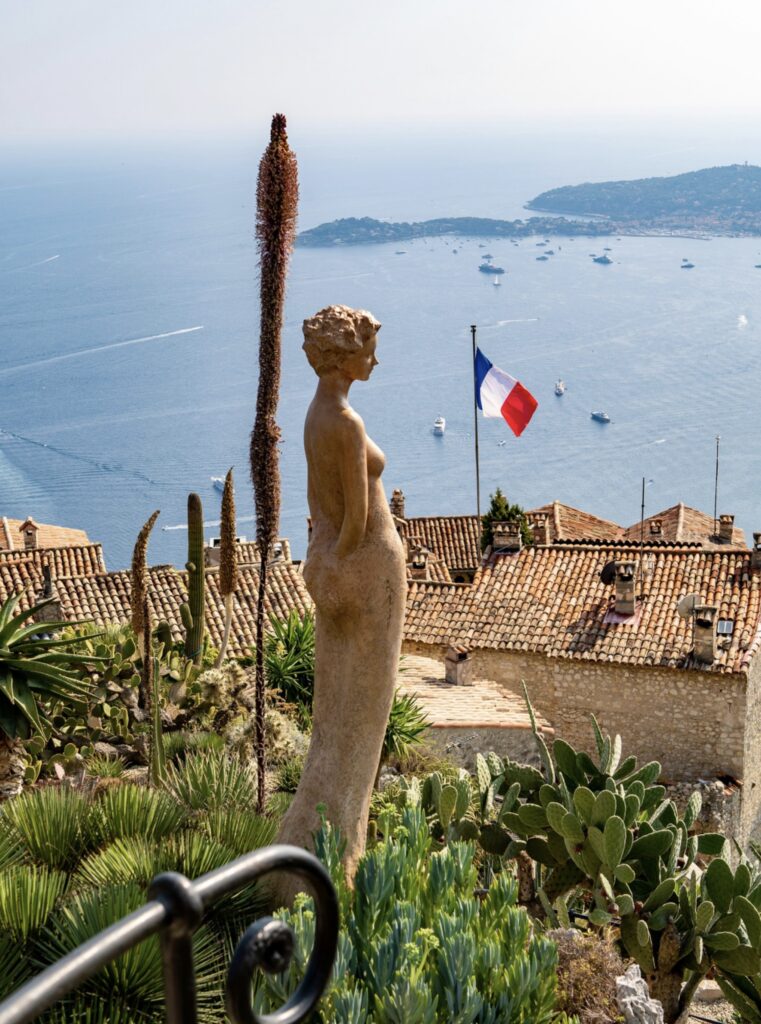
    Statue. Image: Unsplash

    In most major business capitals, your gaze is constantly interrupted. Glass towers reflect competing images. Digital screens demand your attention. Traffic and density compress the horizon into blocks. Even when you are still, your eyes are working. In Nice, they are allowed to rest on the horizon. For a growing number of professionals relocating here, that uninterrupted visual field is not simply beautiful; it changes how they feel at work. 

    Claire Atkinson, 55, understands this shift intimately. After nearly three decades in the United States building a career as a journalist covering media, telecommunications, and technology policy, she could have permanently anchored herself in New York or Washington. Instead, she bought an apartment in Nice and now works remotely between France and the US. 

    “There’s real infrastructure here,” she says, referring to Cannes’ expanding calendar of media and technology conferences and the steady growth of AI-related events along the coast. “It’s connected.” 

    But when she compares the Riviera to larger cities, the difference she highlights is psychological rather than logistical. 

    “In other big cities it can feel very transactional,” Claire explains. “Here, it’s community first. Friendship, then work.” 

    That softer professional culture mirrors something measurable. In an interview with The New York Times, environmental psychologist Marc Berman discussed research showing that time spent in natural environments improves performance on tasks requiring memory and sustained attention. His studies found that participants performed better cognitively after exposure to natural settings compared to dense urban ones. The explanation lies in what psychologists call directed attention, the mental resource used for strategic thinking and decision-making. Urban environments tax it, while natural environments help restore it.  

    The Mediterranean’s intense blue is not only beautiful but also has some positive psychological effects. According to NASA’s Ocean Color research, seawater absorbs longer red wavelengths of light while shorter blue wavelengths are scattered back toward the observer, giving deep water its vivid colour. The relative clarity of the Mediterranean enhances that effect, creating a horizon that feels almost hyperreal. Some small-scale research has linked exposure to blue environments with perceptions of calm, but you do not need a journal citation to feel the difference between staring at glass and staring at open water.
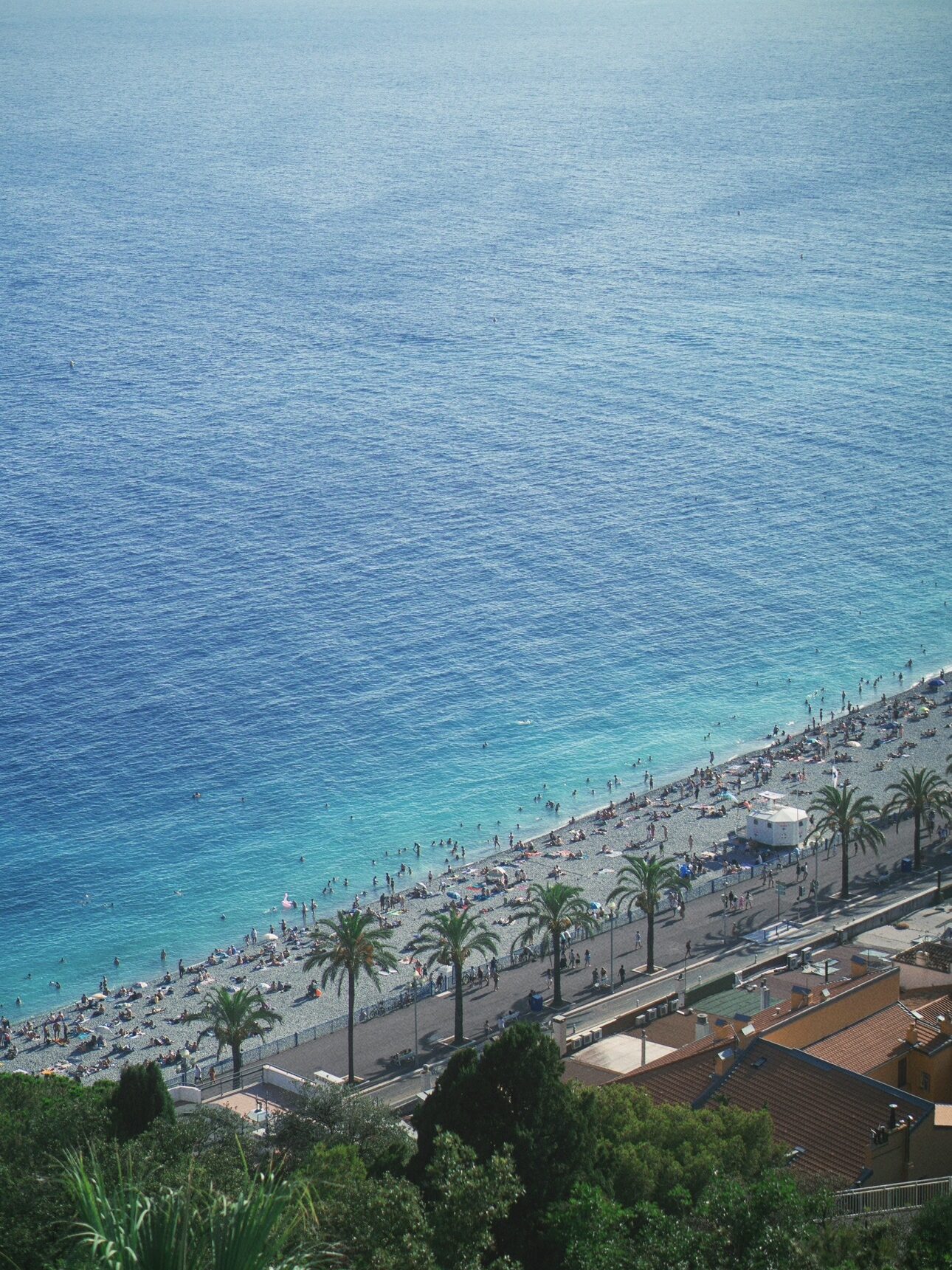
    Aerial view Nice beach. Image: Unsplash

    Jean-Claude Goldenstein, 66, a Cannes native who spent 25 years building his career in the United States before returning to the Riviera, structures his routine around that difference. As a founder, advisor, and investor working across markets, his schedule remains international and under high pressure. What has changed is his recovery. 

    “I like to see the ocean,” he says. “It’s more informal here. I like serenity.”

    In the summer months, he sails for an hour or two before swimming. The physical fatigue is immediate, while the cognitive reset arrives the next morning. “I’m super regenerated,” he says.

    Small boat floating on sea. Image: Unsplash

    One explanation lies in stress physiology. As Stanford neuroscientist Robert Sapolsky explains in his book Why Zebras Don’t Get Ulcers, cortisol, the body’s primary stress hormone, is useful in short bursts but harmful when chronically elevated. Persistent stress caused by living in cities can impair focus, working memory, and complex reasoning, while living in natural environments lowers stress levels, supporting clearer decision-making and more stable attention. He adds that living in natural environments does not eliminate all pressure, but they can reduce the constant low-level stimulation that keeps cortisol artificially elevated in dense cities.

    Katrina Horning, 44, who relocated from New Orleans to establish an architectural tour company in Nice, describes the impact in sensory terms. “The limestone is everywhere,” she says. “The textures, the Mediterranean colours. And the blue here is specific. It makes me really happy.” 

    Her work depends on observation and narrative. She spends her days analysing façades, proportions, and urban layers. Collaborations often take place outdoors, and meetings stretch along café terraces facing the sea. The visual environment feeds directly into creative output. 

    The appeal of the Riviera is not detached from ambition. Twenty minutes inland sits Sophia Antipolis, one of Europe’s most established technology parks. Founded in the late 1960s, it was designed as a research and innovation campus integrated into pine-covered hills between Nice and Cannes. Today, it hosts thousands of companies across artificial intelligence, cybersecurity, biotech, and telecommunications, alongside research institutions and engineering schools. Global firms maintain operations there, and AI has become a particular growth area in recent years.  

    What distinguishes Sophia Antipolis is not just its industry concentration, but its setting. Offices are embedded in greenery rather than packed into financial towers. The ecosystem provides credibility and opportunity without demanding the sensory overload of a traditional tech capital. 

    For professionals considering relocation, this combination is persuasive. The Riviera offers infrastructure, international connectivity, and a growing technology network. It also offers an intact horizon. 

    Late in the evening, as the sun lowers behind the curve of the coast, the blue deepens toward silver. Conversations continue along the Promenade. Emails wait until morning. The Mediterranean remains steady, absorbing the last light of the day. 

    For the people building companies, advising boards, and negotiating deals from this coastline, that steady line between sea and sky is a daily recalibration point. Attention holds longer here, and decisions are made from a slightly calmer baseline. 

    The work is still serious, and the ambitions are still global. The difference is that in Nice, your eyes are not constantly fighting the environment. And over time, that changes how clearly you think. 
  • Inside Liberty London: The Art of Catching the Eye

    Inside Liberty London: The Art of Catching the Eye

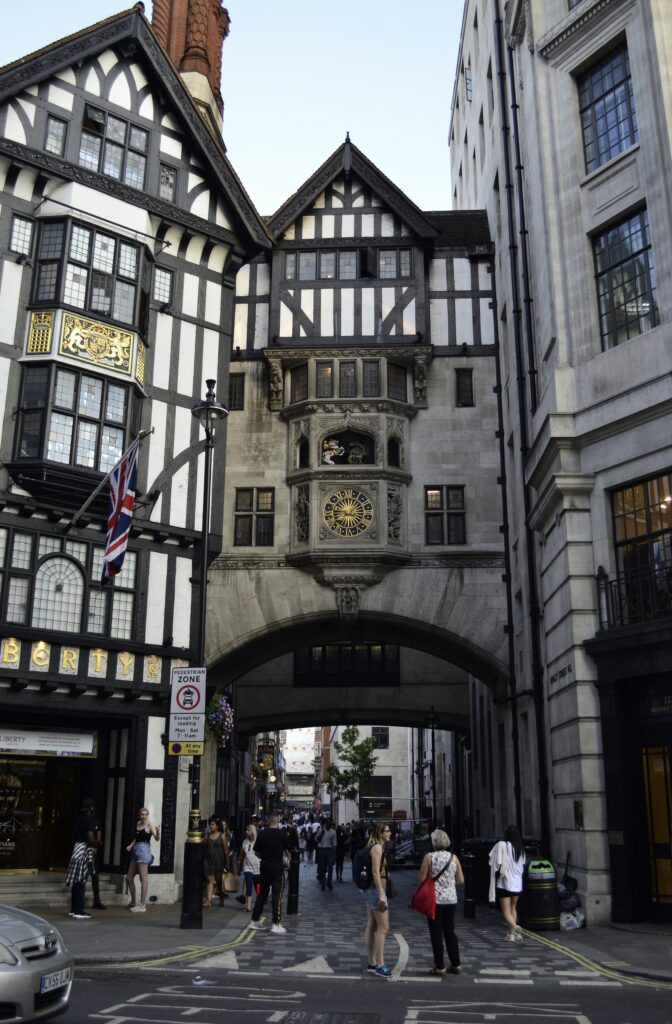
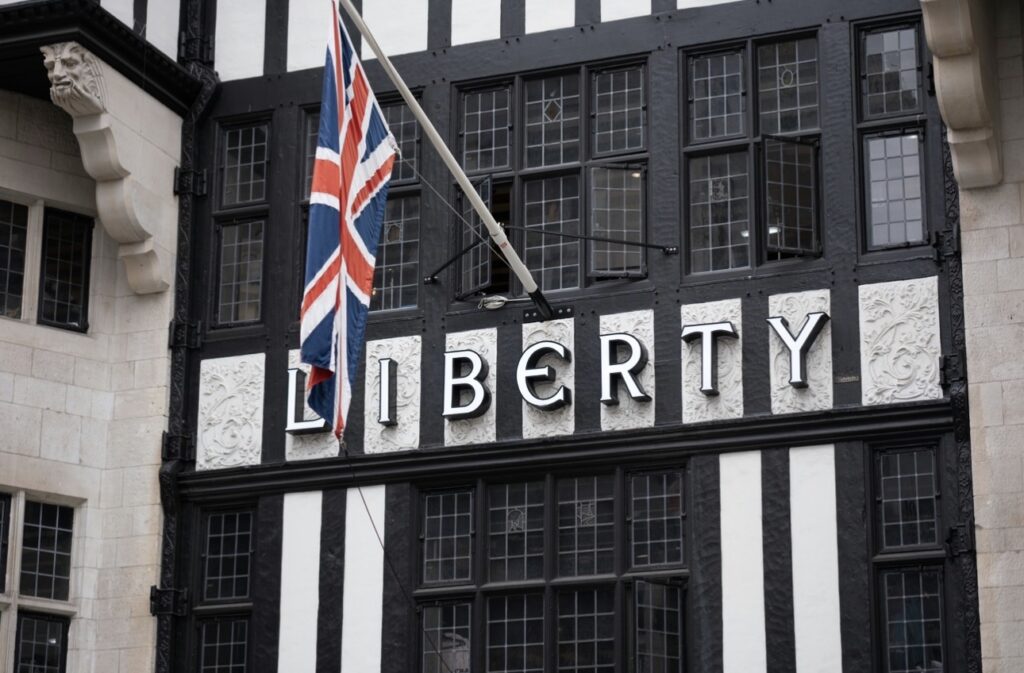
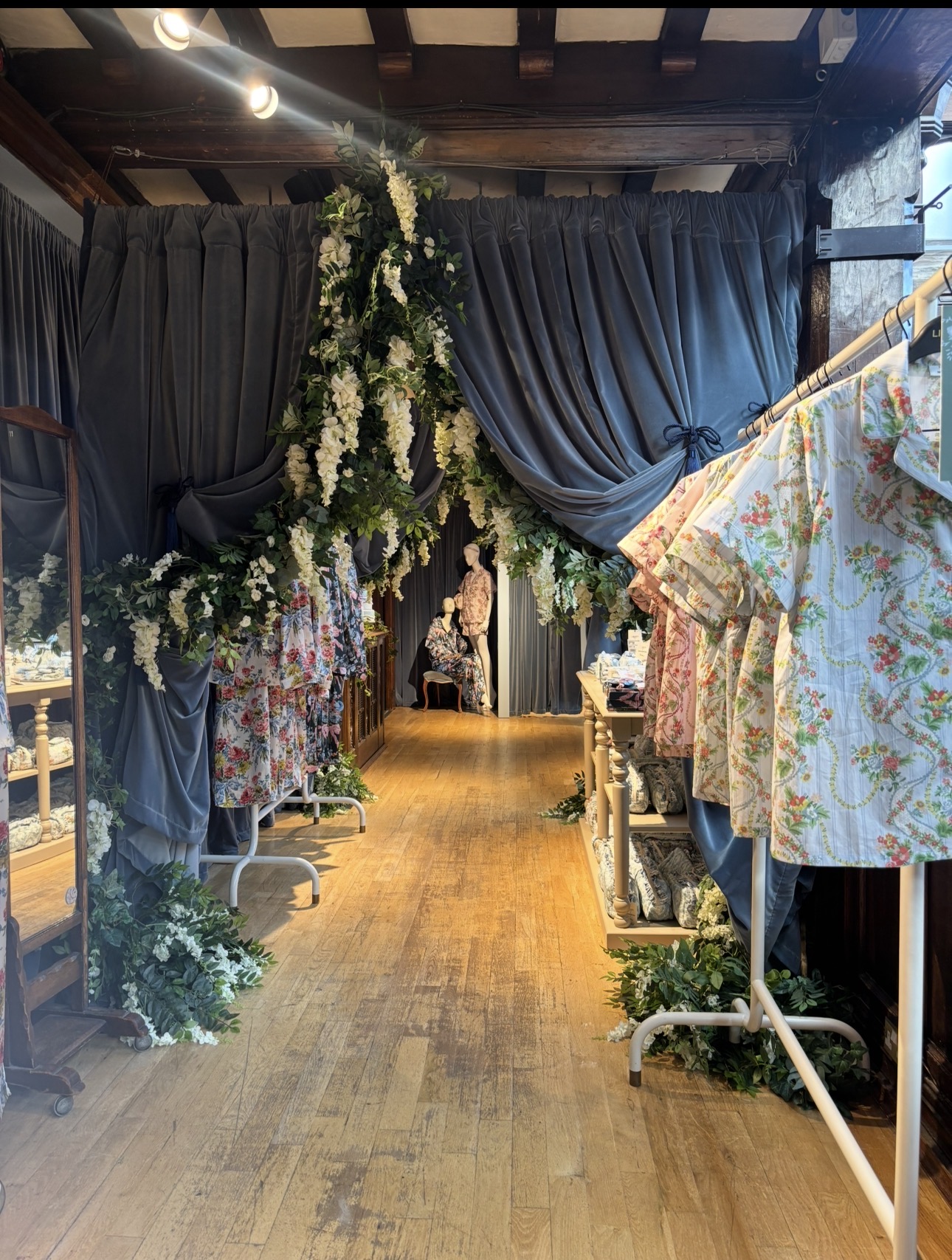
    Just off Regent Street, along the polished sweep of Great Marlborough Street, Liberty London rises like a mirage from another century. In a city defined by glass façades and illuminated branding, its dark timber frontage is impossible to miss. Heavy beams, irregular windows, and deep shadow interrupt the visual rhythm of the street. 

    Founded in 1875 by Arthur Lasenby Liberty, the store has long stood as one of London’s most recognisable retail institutions, known for its fashion, fabrics, and homewares, as well as its unmistakable Tudor Revival building. While its façade appears centuries old, its current structure was completed in the 1920s, reflecting a revivalist architectural movement rather than medieval preservation. As London historian Jessica Storoschuk explains, the building is often misunderstood. Liberty’s store on Great Marlborough Street is very much a product of the era in which it was built, as the 1920s saw a resurgence of Tudor-style architecture across the city, making Liberty entirely of its time.

    Liberty Building. Image: Unsplash

    Much of the timber that shapes the interior was salvaged from Royal Navy battleships, including HMS Impregnable and HMS Hindustan. These structural beams dominate the store visually. Their dark surfaces absorb light, soften transitions between rooms, and create an atmosphere entirely distinct from the bright, reflective surfaces of contemporary department stores.

    Stepping inside Liberty is certainly a much different sensory experience than the average department store shopping trip. Instead of a single open vista, you are met with a series of interconnecting rooms that reveal themselves gradually. The store does not surrender itself in one glance; it unfolds in a way that feels inviting and intimate to customers. A Liberty sales associate describes the reaction she sees daily. “Visitors often comment on how different Liberty appears compared with other department stores, especially on the first entry.”

    In a retail landscape where many stores favour bright signage and immediate visual impact, Liberty takes what she calls a more tasteful approach. To understand how deliberate that structure is, I spoke to Andy Smith, a professional store organiser and retail spatial strategist who works with brands to design layouts that influence customer movement and purchasing behaviour. His role involves analysing how architecture, lighting, and merchandising shape consumer psychology. Although he does not work for Liberty, the principles he applies across major retail environments illuminate exactly why Liberty feels the way it does.

    “Layout is extremely important to different retail businesses,” Andy explains. “Some retailers want a seamless, frictionless and time-efficient experience. Others intentionally design disruption. They slow customers down.”

    Where modern department stores often prioritise open floor plates and uniform lighting to enable rapid visual scanning, Andy emphasises that expectation begins before a customer even crosses the threshold. “There’s your own perception of what you are entering into,” he says. “For Liberty, you’re highly likely to go in with an expectation to browse and be inspired. In other retailers, you might already have a planned mission, focused on convenience.” Liberty’s layout encourages wandering and discovery, so visitors expect to browse and be inspired. Many modern retailers, by contrast, are designed for speed and convenience, so shoppers often arrive with a specific item in mind.

    Liberty building. Image: Unsplash

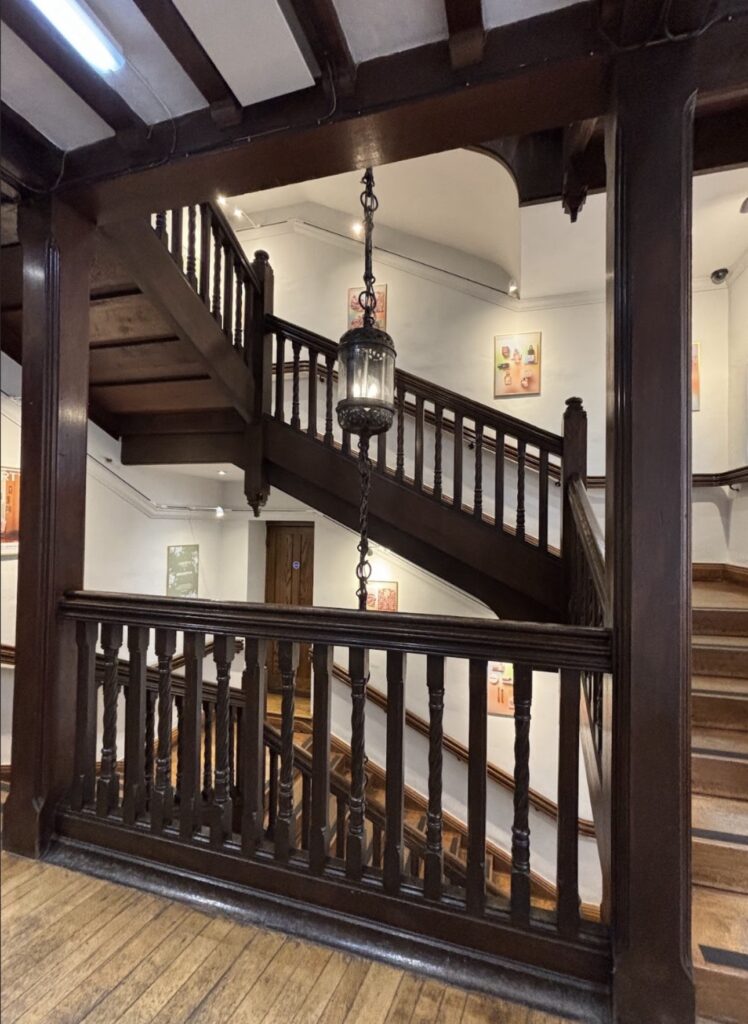
    Liberty’s architecture reinforces that mindset. Its cellular layout, carved staircases, and wraparound balconies invite wandering rather than efficiency. You cannot absorb the store in one sweeping glance, forcing customers to spend longer looking through the aisles. Sightlines play a crucial role in that movement. Andy describes them as a psychological reassurance. “Being able to see where the next point in your journey is matters just as much as where you are at that very moment,” he explains. “Customers need to subconsciously map their path.”

    Stairs. Image: Gabrielle Garzotto

    At Liberty, this mapping is subtle but constant. Balconies overlook lower floors, staircases draw the eye upward, and openings between rooms offer glimpses of colour and texture beyond. Customers are guided by the layout, but never hurried through the store.

    The lighting of Liberty intensifies this effect. Throughout the store, illumination is deliberately restrained. Dark wood absorbs rather than reflects light, reducing glare and allowing colour and texture to stand forward. Andy notes that lighting is one of the most powerful psychological tools in retail. “The more you see, the more you understand,” he says. “Good lighting doesn’t just present the overall space. It highlights the areas retailers want you to focus on. Different white tones flatter different products. It’s incredibly specific.”

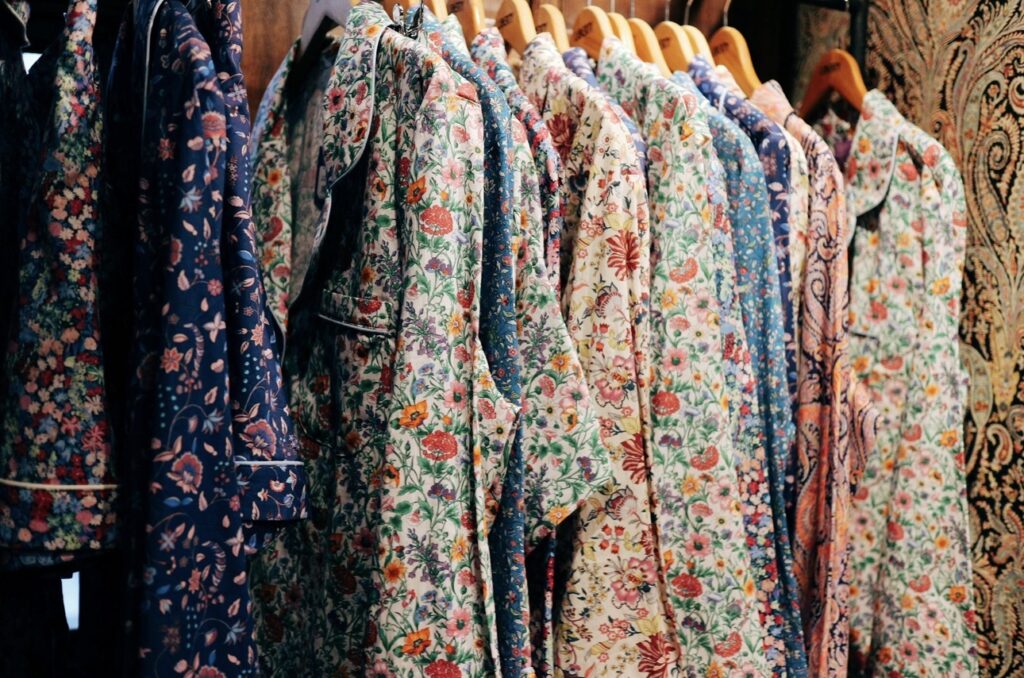
    Within the department store, the warmth of the lighting flatters the grain of timber and the intricacy of print. In the fabric department, walls are densely lined with Liberty’s iconic florals, creating a continuous field of pattern and colour. Jessica Storoschuk observes that these prints are still used liberally throughout the store, reinforcing its storied and continuing legacy. The visual effect is immersive. The eye moves laterally, registering shifts in hue and motif. Rather than isolating single products, the display encourages comparison and prolonged glances.

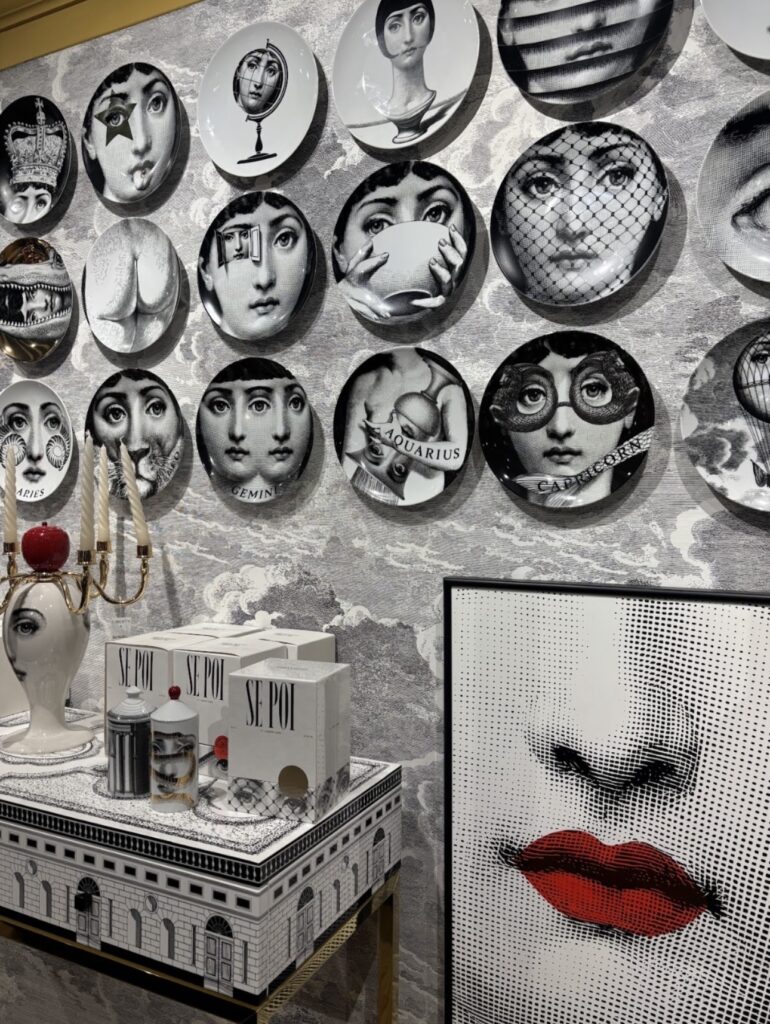
    Dining department. Image: Gabrielle Garzotto

    In the dining department, objects are arranged in ways that highlight their unique and intricate designs. Plates are often displayed on the walls, making them feel like pieces of art. This, too, is strategic. Andy explains that visual merchandising shapes perception in ways customers rarely articulate. “In mass retail, we’ve been conditioned to think that items displayed in large quantities are cheaper,” he says. “When something is merchandised sparingly in space, we perceive it as having more worth. It feels premium.”

    Liberty moves between these signals fluidly. In some departments, repetition creates spectacle and celebrates craftsmanship. In others, a single handbag or sculptural object is given breathing room, framed by timber beams and soft shadow. The architecture becomes part of the merchandising experience.

    This interplay between aesthetic storytelling and commercial practicality is delicate. Andy points out that some flagship stores are considered marketing tools. They have significant budgets and are not always expected to perform commercially in the same way as smaller branches. They occupy high-profile addresses such as Bond Street or Oxford Street and function as immersive brand statements.

    Liberty shares elements of that flagship mentality. Its building is itself an advertisement for heritage and craft. Yet it remains fully operational as a retail environment. Some of its rooms were originally created as workshops for artisans and remain part of the building’s structure.

    “Each of the major London department stores has its own identity,” Jessica notes. Their buildings, merchandise, and windows reflect different approaches. Liberty’s long association with the English Arts and Crafts movement is visible in every carved detail and printed textile. Its visual language is one of craftsmanship, ornamentation, and depth.

    Liberty clothes. Image: Unsplash

    Leaving the store and stepping back onto Great Marlborough Street, the contrast is immediate. Glass storefronts and illuminated logos reassert themselves. The city feels faster, brighter, more direct. Yet the memory of Liberty lingers. The dark timber, filtered light, and slow unfolding of rooms remain a reminder of the artisanal nature of the department store.

    For its clientele, Liberty offers more than striking visual beauty. It offers a lesson that vision is not simply about what is visible. It is about how visibility is controlled. Through layout, lighting, sightlines, and merchandising, Liberty demonstrates that retail can guide the eye as carefully as any gallery. It proves that slowing down can be commercially powerful. And it reminds us that in a culture obsessed with instant visibility, there is still something deeply compelling about a space that reveals itself gradually, asking not just to be seen, but to be looked at.

  • Hidden Energies of Greenwich: Where Time Begins

    Hidden Energies of Greenwich: Where Time Begins

    On a hill in Greenwich Park, a thin metal line runs across the ground, marking zero degrees longitude, the point where east meets west, and the world’s time begins. Beneath your feet runs the Prime Meridian, the invisible line that divides east from west and anchors global time. Each day, visitors queue outside the Royal Observatory to stand astride the line, one foot in each hemisphere, smiling for photographs as if they have briefly stepped outside the ordinary rules of geography. Yet many visitors describe something else when they arrive on the hill: a subtle feeling that the place carries a particular presence. Not necessarily mystical, but intuitive. A sense that certain landscapes seem meaningful before we fully understand why.

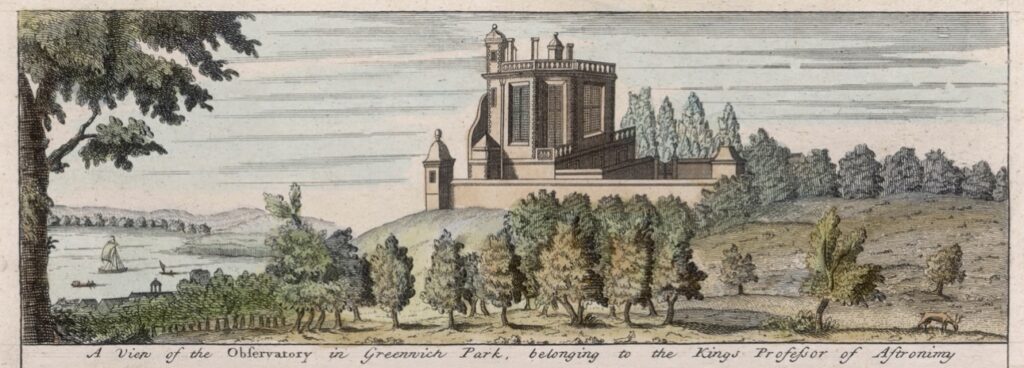
    Sketch of the observatory. Image: Adobe Stock

    It is a playful moment, but the setting lends it unexpected weight. The hill rises above the Thames, open to the sky, with sweeping views across London. For many visitors, the experience feels strangely grounding, as though the landscape itself carries a quiet significance. Some might find themselves wondering, “Why here?”

    It is the kind of question that sits somewhere between science and human intuition. Maps and measurements explain part of the answer, but human beings have long relied on intuition when choosing where to build, gather, and observe the sky. The true answer, historically speaking, is surprisingly practical. When the Royal Observatory was founded in the seventeenth century, its purpose was to solve one of the most pressing problems of the age: determining longitude at sea.

    Accurate navigation depended on understanding the relationship between time and position, and astronomers needed a location where the stars could be observed clearly. Practical reasons may have determined the final decision, but the qualities that made Greenwich useful for astronomy, elevation, open horizons, and distance from the noise of the city are the same qualities that people instinctively respond to today. Intuition often begins with the body: a quiet sense of stillness, perspective, or clarity in a particular place.

    According to Louise Devoy of the Royal Observatory Greenwich, the site was chosen largely for logistical reasons.

    “When the Royal Observatory was established in the seventeenth century, Christopher Wren [the architect of the Observatory] was actually looking at a couple of different places,” she explains. “There was an option near Chelsea to be closer to the royal court, and another in Hyde Park. But Greenwich was ideal mainly because it was free.”

    The land sat within a royal park and was readily available to the Crown. Geography also played an important role. “That hilltop location gives you good visibility,” Devoy says. “You can see the stars rising and setting across the horizon.”

    Distance from London’s smoky centre also mattered. In the seventeenth century, the city’s fires, chimneys, and growing population produced a haze that interfered with astronomical observations. “It was about five or six miles away from the main city,” Devoy explains, “so away from smoke or interference. But you still had the river, which enabled the Astronomer Royal to get the ferry back into town to meet with other scholars. So it seemed like a good option all around.”

    On the surface, Greenwich’s story is one of pragmatism. Yet the qualities that made the site scientifically useful, elevation, open sky, and distance from urban noise, are the same qualities that shape how it feels today.

    Long before telescopes were installed, the hill already held historical significance. The site once hosted Duke Humphrey’s Tower, a medieval structure associated with an early royal library. The surrounding park contains traces of Roman activity and centuries of layered history.

    As Chris Hawkins, a volunteer with Friends of Greenwich Park, explains, “Greenwich is a place that has been chosen again and again across history. Its beauty, elevation, and wide views over the Thames have consistently drawn different groups to it, from royalty to scientists.”

    That sense of continuity is reflected in its royal past. “Before it became a scientific landmark, Greenwich was closely tied to the life of Elizabeth I, who was born at the Palace of Placentia, which was demolished in the 17th century to make way for the Royal Navy hospital that stands there now,” Hawkins says, describing a time when the area was a centre of royal power and court life.

    The landscape itself may help explain this enduring appeal. “The hill in Greenwich Park would have stood out in any period; it’s a natural vantage point over the Thames, and that alone would have made it significant,” he notes.

    Devoy is also careful not to suggest that ancient symbolism influenced the Observatory’s location. “As far as I know, the choice was much more pragmatic,” she says. And yet visitors often experience the place in ways that go beyond practicality. For many people, the Meridian line itself triggers a subtle shift in perspective.

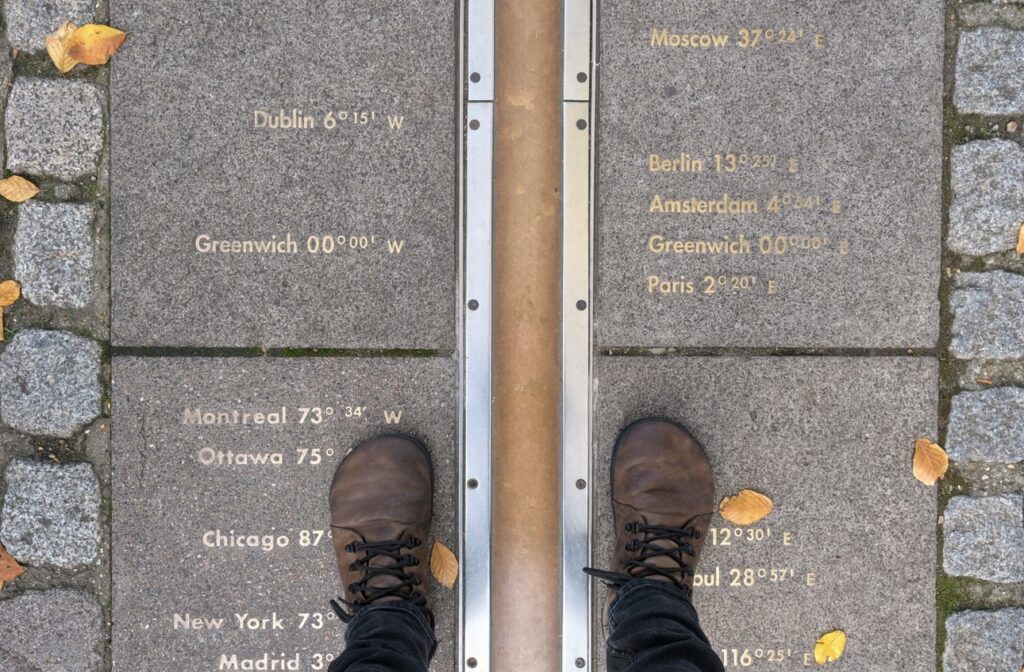
    “When you look at the line and see place names like New York, Sydney, or Beijing, it’s a reminder that we’re on a planet,” Devoy says. “Our time and location here is completely different from what it is somewhere else. I think it just reminds us how small we are.”

    The Meridian, after all, is not a natural feature but a human decision. “A meridian is just an imaginary line that goes from the North Pole to the South Pole,” Devoy explains. “There’s no natural start or finish point. Any meridian could be significant.”

    For centuries, different nations used different prime meridians. Lines passed through locations such as the Canary Islands, the Azores, Baghdad, and Paris. By the nineteenth century, more than ten competing systems existed. “If you bought a map in Brazil, zero degrees would go through Rio de Janeiro,” Devoy says. “In Russia, it would go through St Petersburg.” As global trade expanded, this confusion became impractical. In 1884 representatives from around the world gathered in Washington DC to agree on a single international standard.

    Meridian Line. Image: Unsplash

    Four observatories were considered: Greenwich, Paris, Berlin, and the US Naval Observatory. Greenwich ultimately won. “Greenwich was chosen because the majority of shipping companies were already using British charts,” Devoy explains. “Seventy-two percent by tonnage. It was a very pragmatic decision.”

    Even the systems that organise our world, it seems, begin with collective agreement. Today, Greenwich continues to draw visitors from across the globe. 

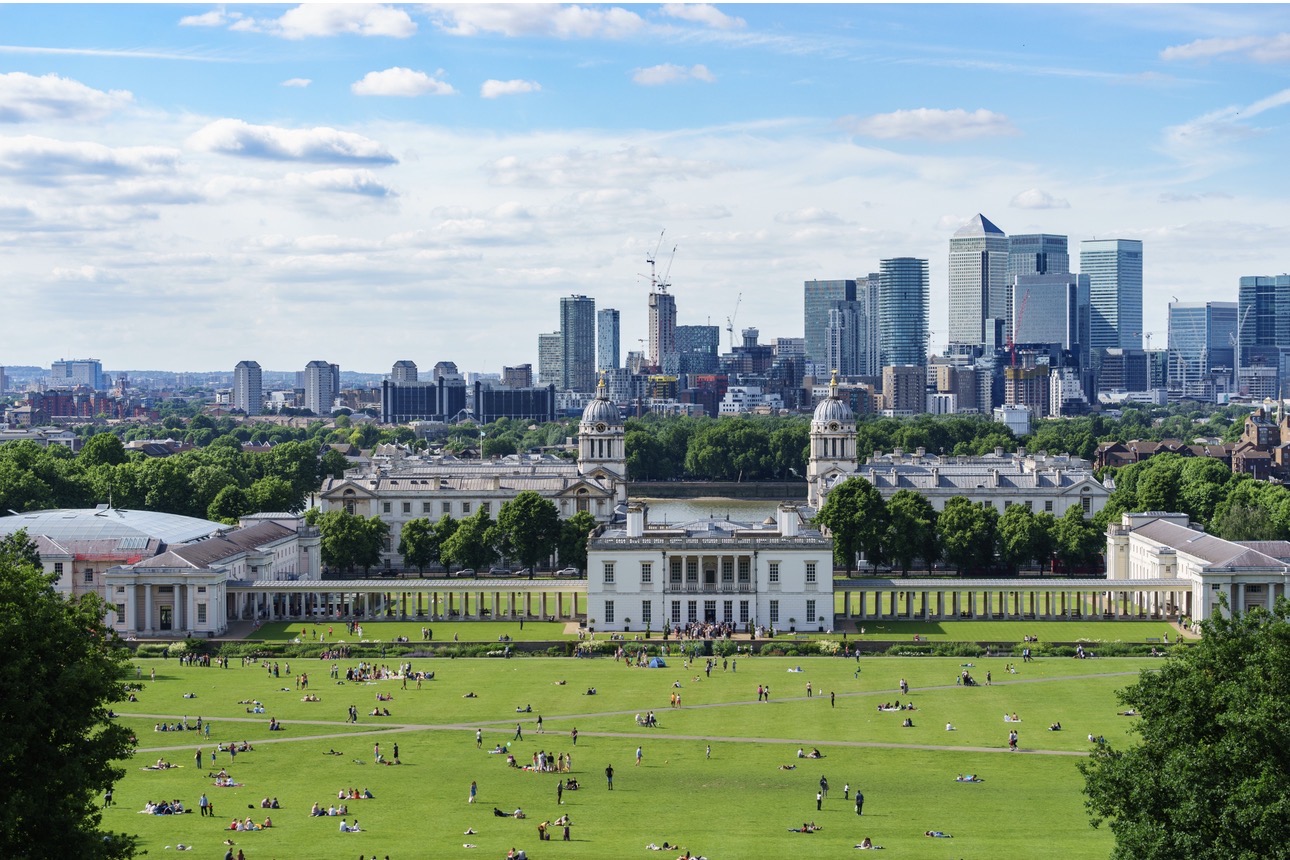
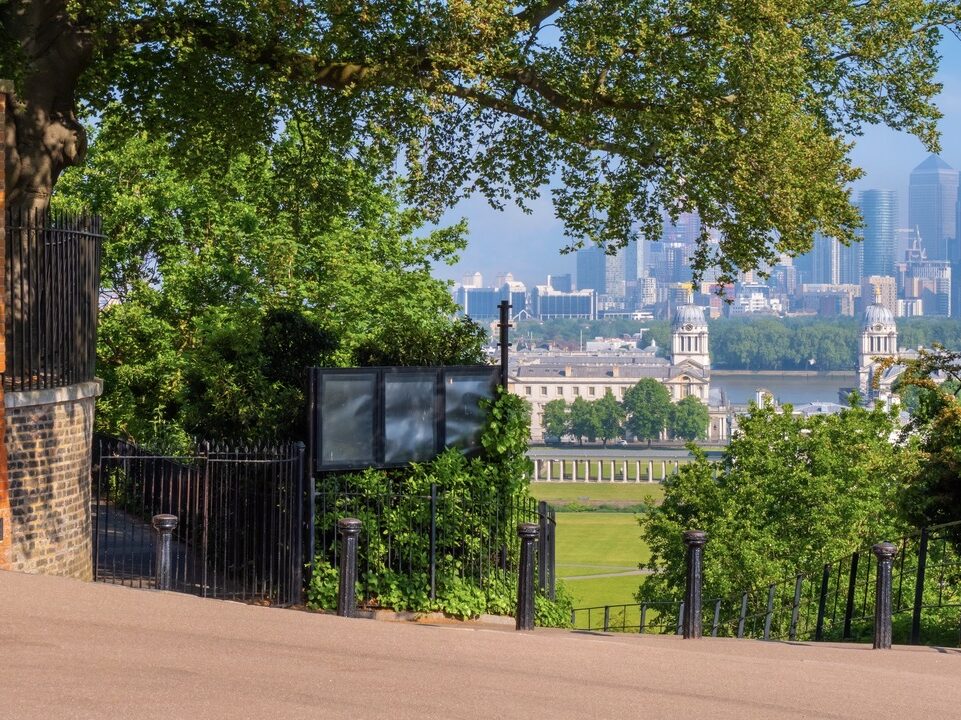
    From the hilltop, London spreads out in two directions at once. Below lie the historic buildings of the Old Royal Naval College and the National Maritime Museum. In the distance rise the glass towers of Canary Wharf, glowing at night with financial power.

    “The contrast is incredible,” Devoy says. Yet the pull of the park is not purely visual.

    View from Greenwich Hill. Image: Unsplash

    Paul, a 52-year-old London resident visiting the park on a quiet afternoon, struggles to explain why he returns regularly. “I don’t believe in all that energy stuff,” he says with a laugh. “But every time I’m here, I feel oddly grounded. Like this is where things line up. I can’t explain it.”

    Others describe a similar sensation in more deliberate terms.

    Jemima, 37, says she has been visiting Greenwich to meditate for several years.

    “I moved to South London about a decade ago,” she says, “and I always come back here when I want to feel grounded.”

    Experiences like these may not be measurable, but they are increasingly common in contemporary city life. Practices such as meditation, mindfulness, and embodied awareness have become part of everyday urban culture.

    In this context, Greenwich occupies an unusual position. It is simultaneously one of the most scientifically defined places on Earth and a location where many people report an intuitive response.

    Perhaps the two are not as different as they appear. Long before modern science, ancient communities observed celestial movements, tracked seasonal cycles, and chose locations that seemed significant in relation to land and sky. What we now describe as intuition once functioned as a shared method of understanding the world.

    Greenwich, in its own way, still reflects that intersection. Here, a line that exists only by agreement organises global time. Ships once navigated oceans using measurements taken from this hill. Satellites now orbit the planet guided by even more precise systems.

    And yet visitors continue to stand quietly beside the Meridian, looking out across the river, sensing something difficult to name. Measurement and meaning coexist here. The place where time begins is also, perhaps, a place where people pause.