Yilin Li investigates what it’s like living with everyday allergies
It can be difficult when your body overreacts to everyday things that most people barely notice. For millions of people in the United Kingdom, allergic reactions are a part of daily life, triggered by anything from grass and pollen to shellfish and animal hairs. While many symptoms are mild and manageable, others can escalate rapidly, becoming serious or even life-threatening. From subtle irritation to severe physical reactions, allergies exist along a spectrum that is often misunderstood. Yet behind each reaction lies a complex relationship between the body, the environment and the way we learn to live with both.
“Allergies and sensitivities are extremely common and irritating and uncomfortable, but not life-threatening,” Hammett explained. “However, an acute allergic reaction, anaphylaxis, can be serious and could prove fatal.”
Emma Hammett, CEO of the UK training organisation – First Aid for Life, says it is crucial to distinguish between everyday allergies and acute reactions. While the mild allergic symptoms are often managed with antihistamines and avoidance of triggers. But severe reactions require immediate action.
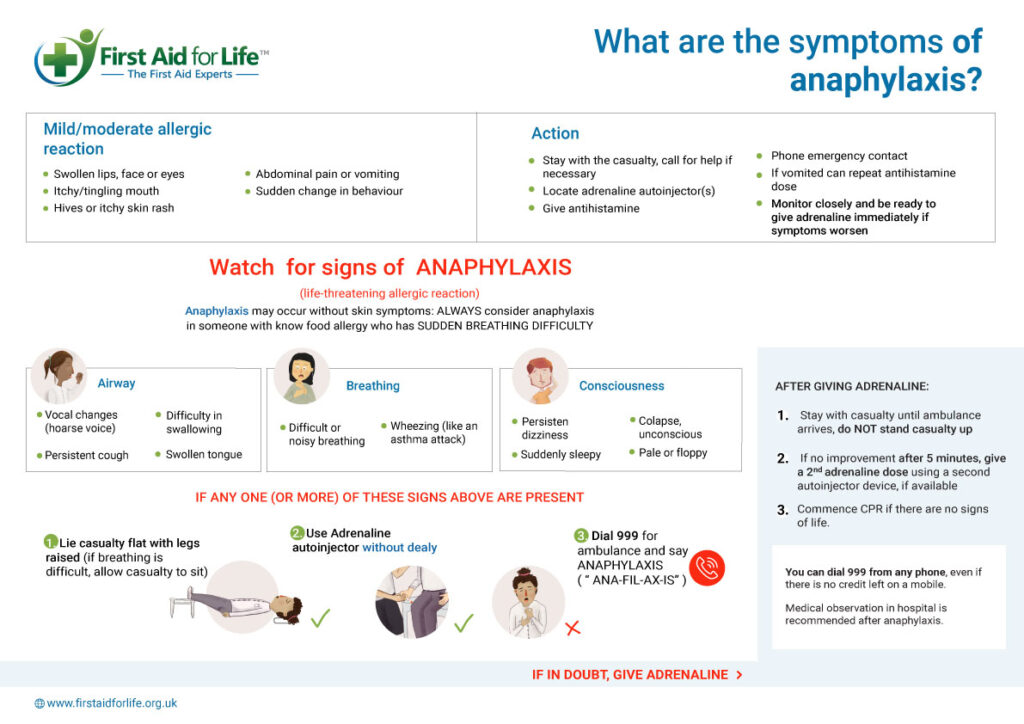
“Adrenaline should be administered as soon as you notice the signs of a severe systemic allergic reaction,” she says. “Always phone an ambulance after giving the adrenaline auto-injector.”
Hammett notes that food allergies are becoming increasingly common, which is why public awareness and first-aid training are expanding. From September, UK schools are legally required to ensure staff are trained to recognise anaphylaxis and administer adrenaline auto-injectors.
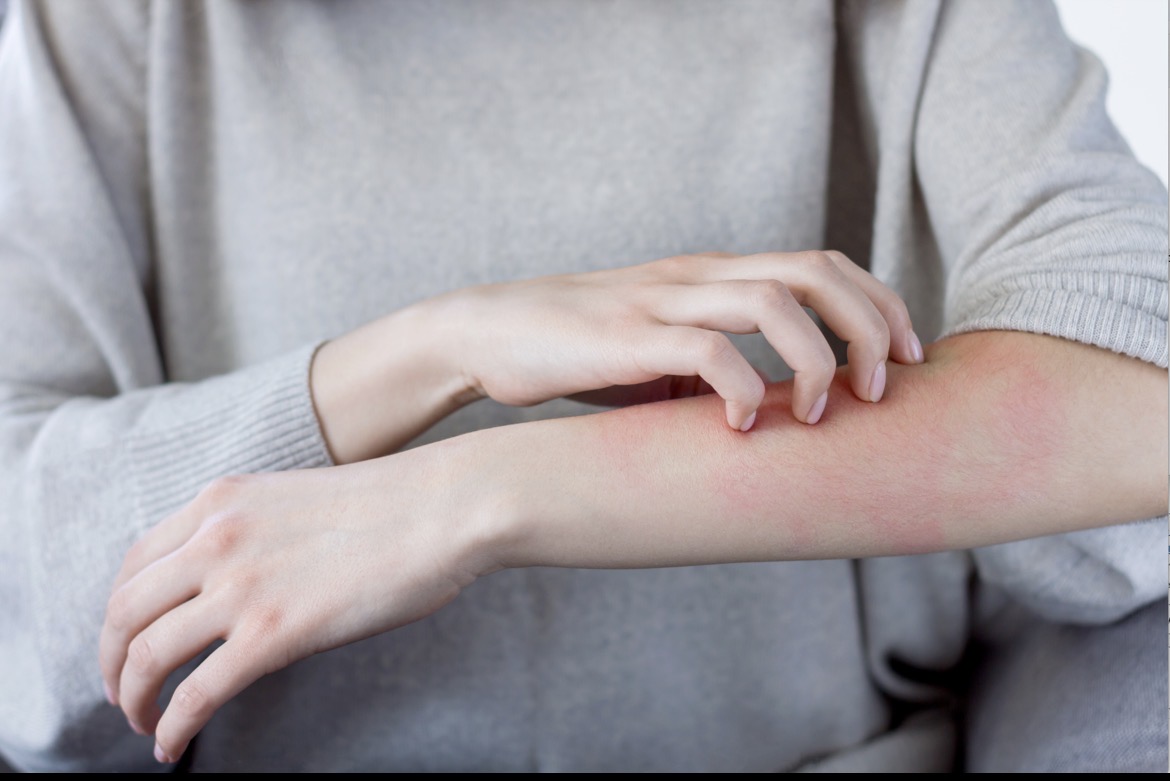
Allergies are often imagined as dramatic emergencies: swelling throats, hospital visits, urgent injections. But for many people, allergic reactions are quieter and far more ordinary. They appear in itchy skin after touching grass, a throat that tingles after certain foods, or sudden redness that spreads across the face without warning.
These reactions can arrive in the middle of daily life, during a meal, on a walk in the park, or late at night when the body should be resting. Yet they often feel strangely unpredictable, as if the body has mistaken something harmless for danger.
Why does the body sometimes react as if the world itself were a threat?

Dora Ni, a 21-year-old student, says the answer often appears without warning. She has lived with allergies since childhood, and her body can react suddenly to stress, lack of sleep, or even moments of anxiety in public.
“When I feel nervous, my face flushes intensely and becomes itchy and purple,” she says.
For Dora, tactile sensations became a visible source of shame. Because her reactions developed so rapidly, strangers in public can readily perceive her distress, like sudden facial swelling, arms flushed and itching over large patches. Yet Dora says the difficulty lies not only in the symptoms themselves but in how others perceive them. “Because not all reactions are life-threatening, people don’t always see it as serious.” Over time, she has begun to recognise patterns in her body’s responses. Sleep, stress levels, and emotional stability all seem to influence how severe the reactions become. ‘‘When I’m well-rested and emotionally stable, my reactions are noticeably less severe.’’ For her, stress does not cause the allergy itself, but it can make the symptoms worse.
Unlike Dora, Lia’s allergies developed slowly. As a child, Lia, a 21-year-old student living in London, loved animals and spent time around horses without any problems. But over the years, her body began to react.

“I wasn’t allergic as a child, but the more time I spent around animals, the worse it became,” she says.
Consequently, contact with animals now causes her eyes to itch, rashes to appear on her body, and even breathing difficulties. But it’s not just animals that she is allergic to; touching kiwifruit makes her throat tingle and grass triggers allergic reactions on her arms, particularly after exercise. ‘‘If I sit on grass, I get rashes all over my legs,” she says.
Lia manages her symptoms by carrying antihistamines, avoiding certain foods, and washing her hands carefully after touching animals. But the allergies have affected her in other ways: “I would love to have a farm when I’m older… but I can’t,” she says. For Lia, the allergy does more than irritate her skin. It quietly redraws the boundaries of the life she once imagined.
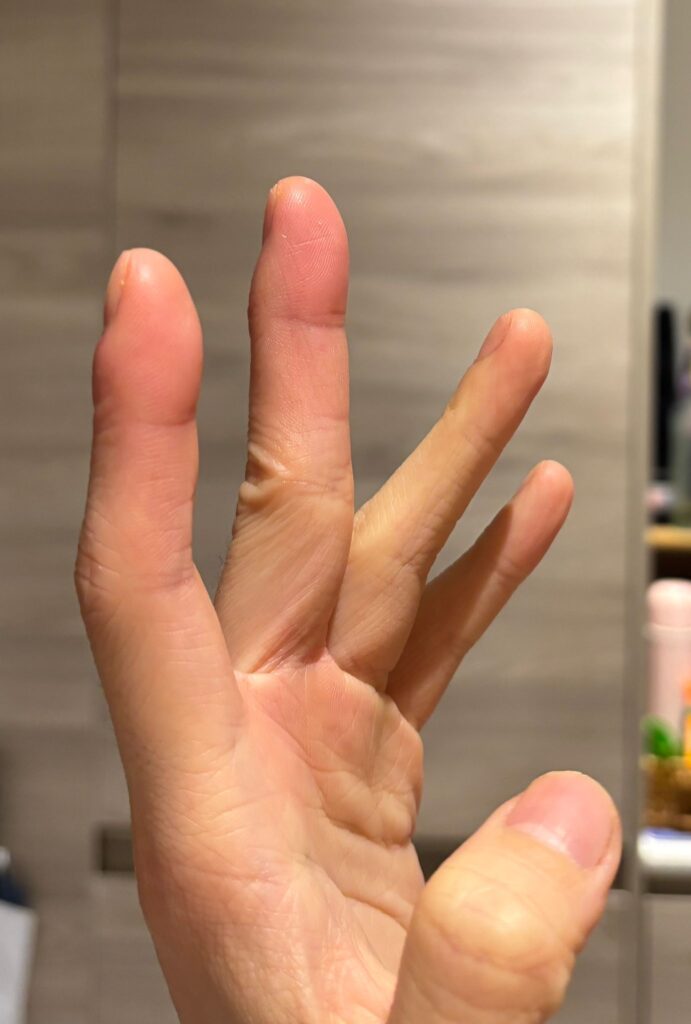
Joanna Chan, 23, a student, has a more pronounced allergic condition. Around the age of 15, despite having consumed seafood without issue since childhood, she suddenly developed an allergic reaction to raw and undercooked prawns.
Handling raw prawns without gloves causes her hands to swell and itch. Eating undercooked prawns triggers a more serious response. “My airways constrict, and my lips become very swollen and itchy,” she says.
Yet her attitude towards the allergy is surprisingly calm. “If something happens, I just take medication.” Because the trigger is specific and easy to avoid, she doesn’t feel the condition has dramatically altered her life. “It feels very normal to me.”
While these experiences differ, they also raise an important question: when does an allergy become dangerous?
For mild allergies, symptoms are often managed with antihistamines and avoidance of triggers, as Hammett explains. But severe reactions, though less common, require immediate recognition and response.
But most allergies people live with every day fall somewhere between irritation and danger – uncomfortable, unpredictable, but rarely life-threatening.
These three stories reveal how differently the body can respond to the same world. Allergic reactions are not signs of failure but forms of protection, sometimes imperfect, sometimes excessive. Living with allergies is akin to negotiating with the world. For Dora Ni, this means always carrying antihistamines. For Lia, it means relinquishing her dream of owning a farm. For Joanna Chan, it means understanding precisely where her body’s limits lie. Learning to live with allergies means learning where those boundaries lie and how to live alongside them.