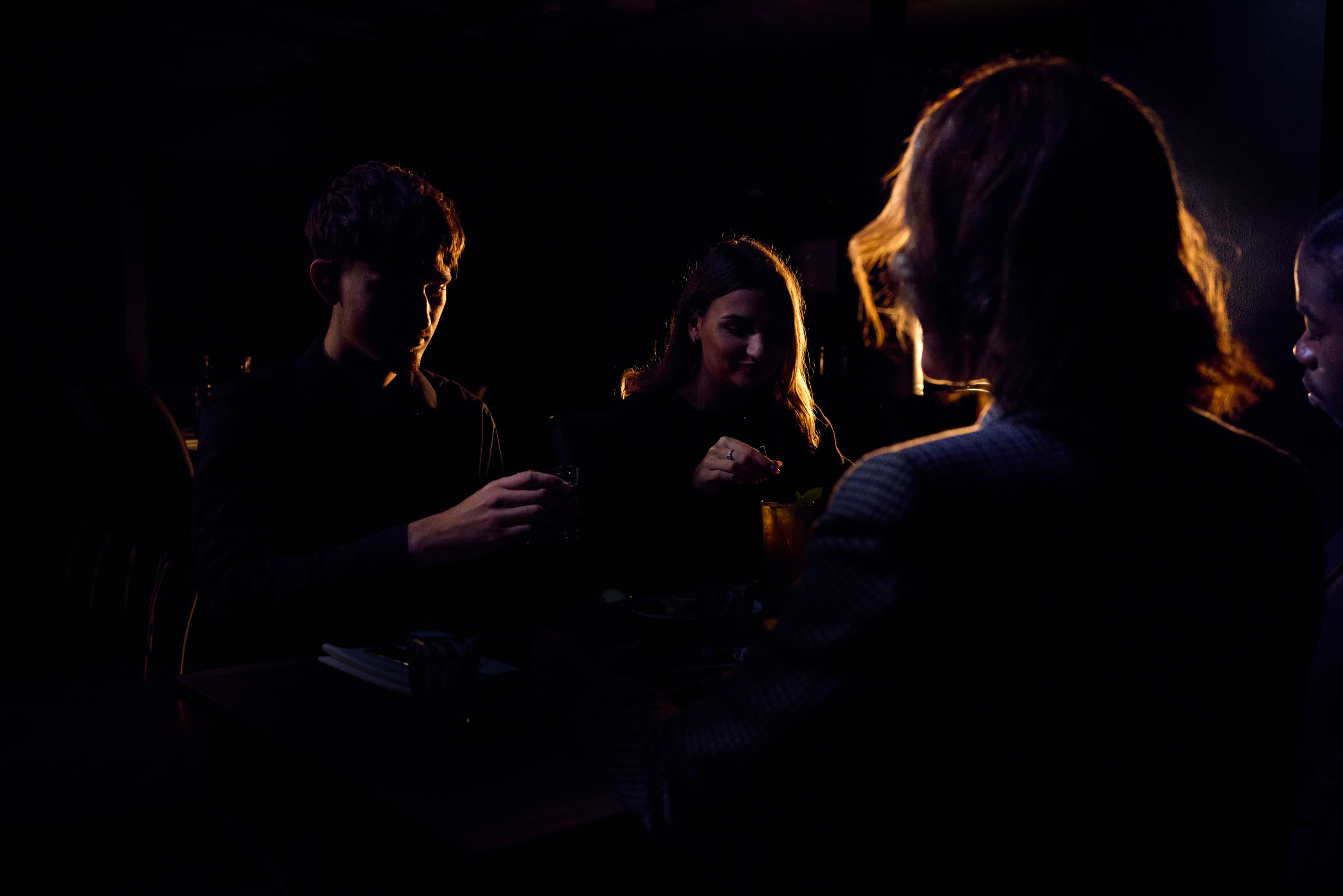
Yilin Li investigates how sound, touch, and trust take over in the dark
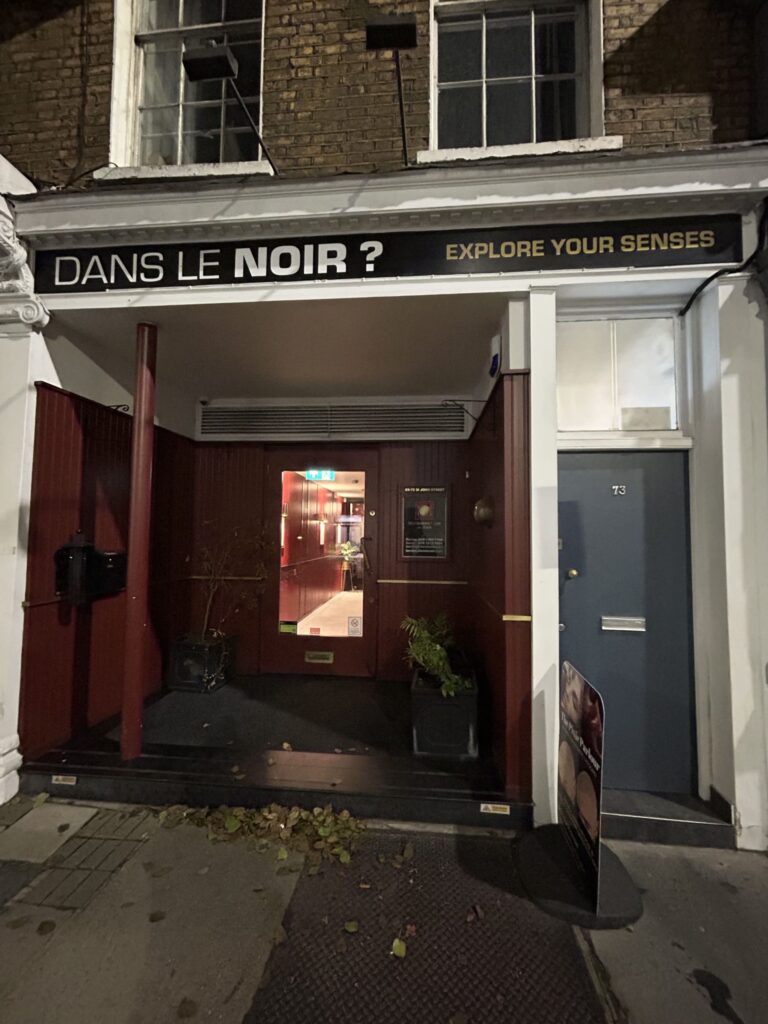
The moment I step into DANS LE NOIR?, warm light fills the waiting area. Glasses clink softly against the bar counter, citrus peel lingers faintly in the air, and a waiter asks if I would like something to drink. Before entering the dining room, the staff asks me to remove all electronic devices and leave them behind. This is to ensure my vision is completely obscured throughout the meal. In that instant, excitement and unease arrive together. I realise how quietly, yet completely, my sense of control has depended on the ability to see.
In the dining area, a visually impaired waiter named Ghow comes over to me. He informs me he will serve as my guide, escorting me safely into the dining area and serving the meals that follow. With my curiosity piqued, I follow Ghow into the dining space, and, after passing through several layers of heavy curtains, the world before my eyes is plunged into complete darkness.
This darkness isn’t merely dim light, but a complete void. I can no longer sense the size of the room, my position within it, or the presence of others nearby. Despite Ghow’s calm guidance, my body slows instinctively; my hands hover uncertainly in the air, wary of table edges, chair legs, or misplaced cutlery. In this environment, I can only navigate and sit down by following Ghow’s voice.
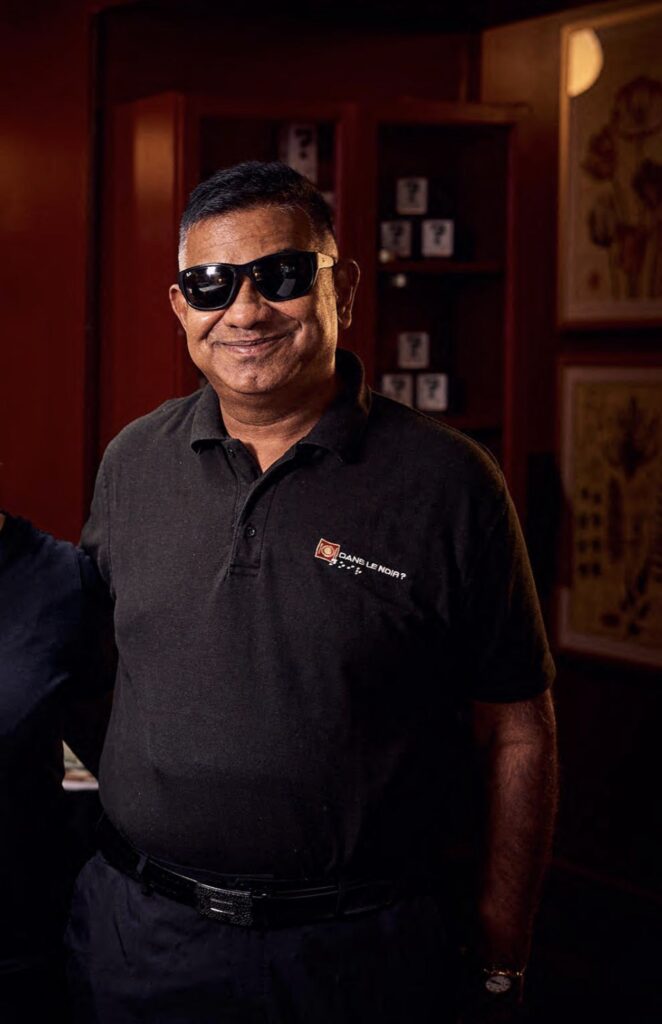
For Ghow and his fellow visually impaired colleagues, darkness is familiar territory, as sound replaces sight as a form of navigation. He calmly and confidently guides me, preventing me from falling, telling me when to turn left or right, when I am approaching the door, or when to walk slowly near the steps. He would signal to me to sit down, even telling me that the water cup was just a few centimetres away, and which direction the tableware is placed in my hand.
As we talk, he says my hesitation is unsurprising: ‘‘Most people slow down at first,” he tells me.
Unlike regular waitstaff, they don’t judge whether a customer has finished by seeing an empty plate. Instead, they listen. The cessation of cutlery clatter, the gentle clink of a cup being set down, or a customer initiating conversation all reveal the information that most waiting staff would ordinarily observe. The slightest sound becomes strikingly distinct. Because of this, the power dynamic shifts in the dark. Sound serves as a map for the visually impaired waitstaff, while for the customer, it offers reassurance by reducing uncertainty and helping them understand what is happening around them; when food has arrived, when staff is nearby, and when it is safe to move in the dark.
Once the dishes arrive, I realise how crucial touch became at that moment. I begin to rediscover the meal with my hands, tracing the rim of the plate to gauge its size, then cautiously searching for the cutlery. My fingers feel their way across the plate, identifying the food by touch, distinguishing between vegetables and meat based on texture and temperature. Every movement is slow.
When I take a bite, deprived of sight, I can’t even tell what I am eating. In my mouth, the food is reduced to temperature, crispness or softness, dryness or moisture, and the layered sensations of sour, sweet, salty, bitter, and umami.
My friend and I tried to work out what kind of meat it is and what ingredients may have been used, but since the meal is served as a surprise with no prior menu, we soon abandon the effort. When you cannot see the food’s appearance and do not know its name, it becomes purely a taste sensation in your mouth.
This approach to eating requires patience. It made me chew more slowly and pay closer attention to each bite. While this deepens my awareness of the textures and flavours, such as the softness of the main dish, it sometimes reduces the simple pleasure of eating, as the effort to concentrate replaces the ease of enjoyment.
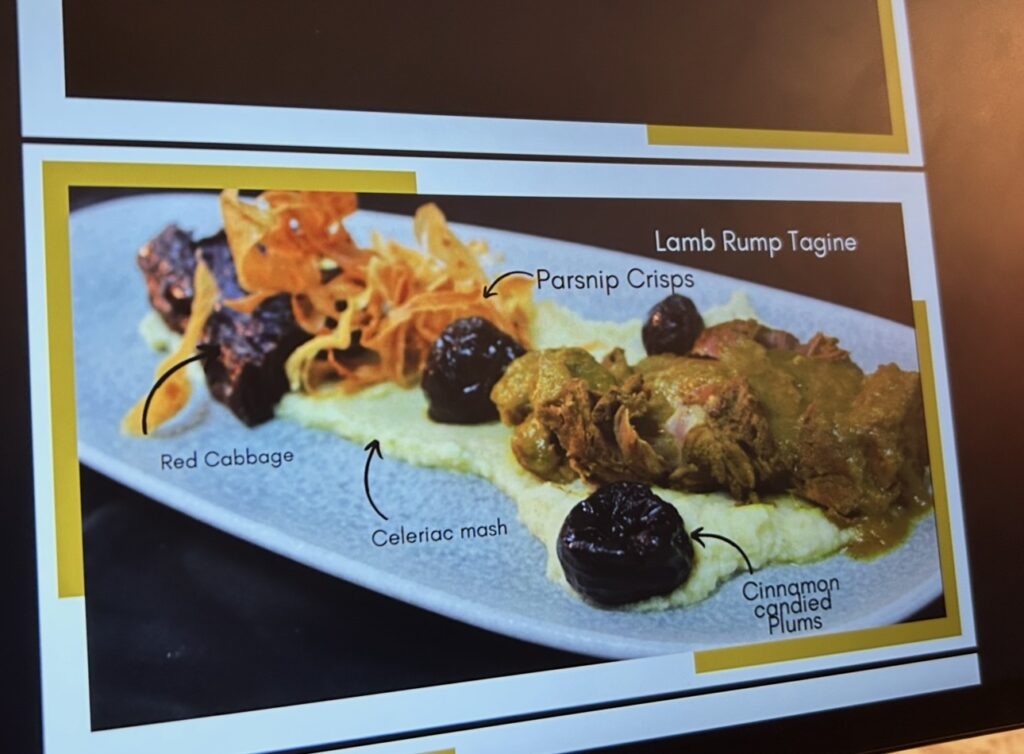
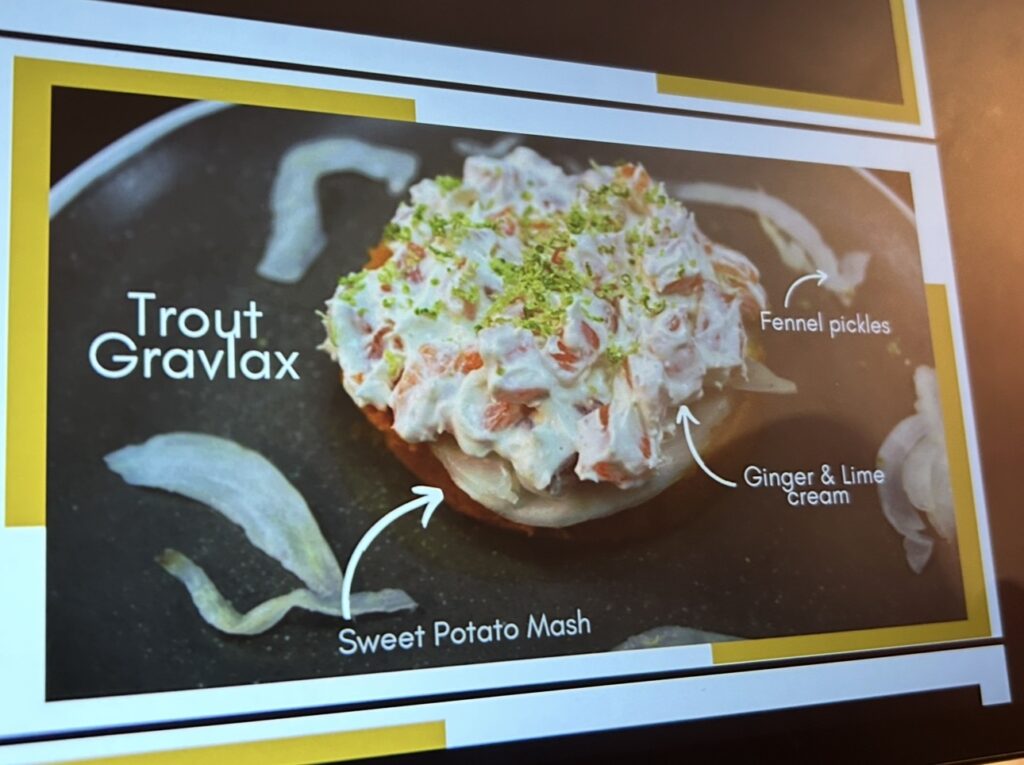
After the meal, Ghow led us back into the light of the waiting area. The menu is finally “decoded”. Our starter is trout gravlax, accompanied by sweet potato mash and fennel pickles. The main course is slow-cooked lamb rump tagine, served with celeriac mash, parsnip crisps, and cinnamon-candied plums. Many of my guesses have been wrong. I mistook the sweet potato mash for pumpkin purée and treated the lamb as stew beef.
While the revelations are amusing, once the darkness gave way to lamplight, I realised that sight had instantly reclaimed dominance; my heightened sensitivity of taste, touch, and hearing quietly receded, returning to the background.
Upon leaving, I feel certain that this should be on any foodie’s “to-visit” list, not because any single dish is particularly stunning, but because it offers a fleeting glimpse into another way of life. In unfamiliar, pitch-black surroundings, you must swiftly place trust in the waiting staff, in both sound and guidance; this cultivates greater patience and reliance on others. Beyond the dining experience, it offers a genuine glimpse into the lives of visually impaired individuals, with the restaurant itself providing employment opportunities for the visually impaired community.
When sight vanishes, eating ceases to depend on recognition and instead draws heavily upon our other senses. In darkness, our bodies listen, touch, hesitate, and relearn.
Leave a Reply