Dr. Megan Kenny – a feminist scholar and co-host of the Monstrous Flesh podcast – delves into questions of screen depictions of monstrous women with Katyayani Nath.
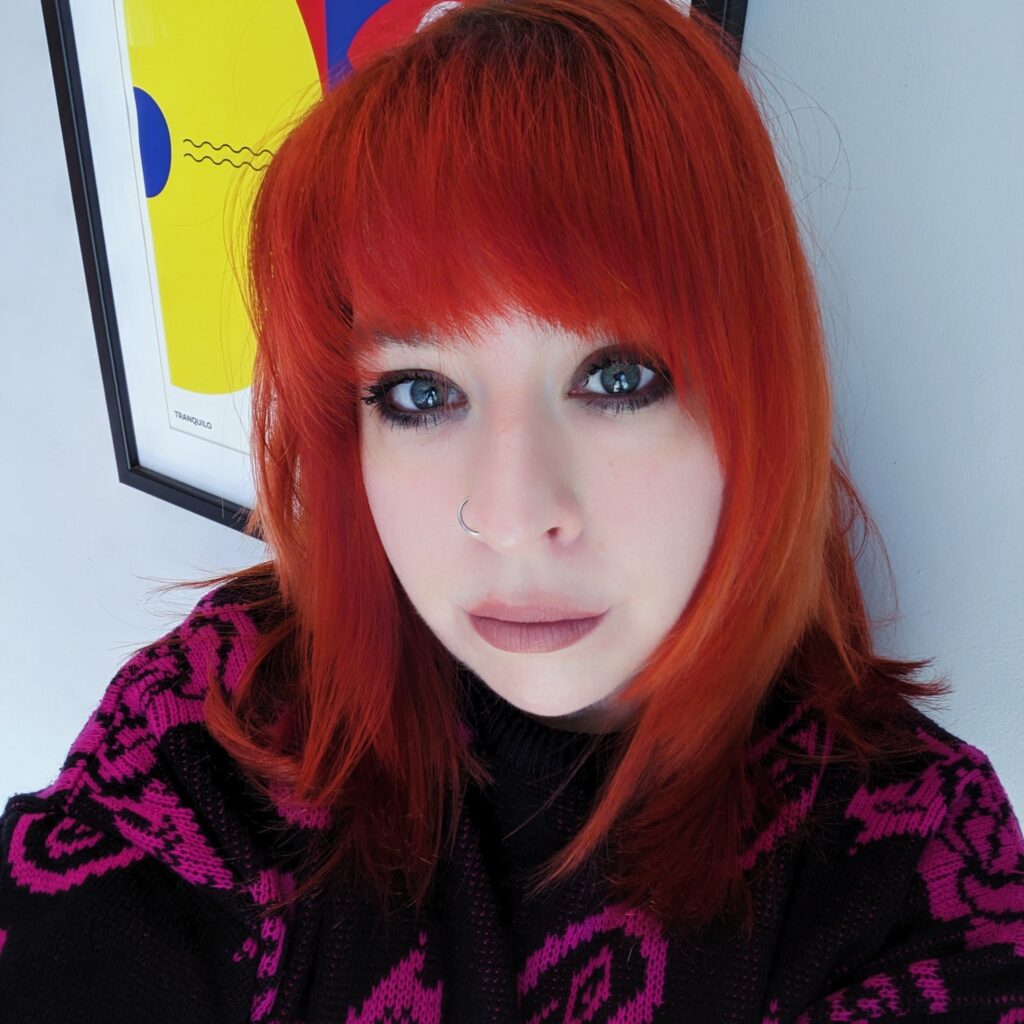
In 1993, feminist film theorist Barbara Creed published her study “The Monstrous-Feminine: Film, Feminism, Psychoanalysis” forming the first-ever framework to think about the women’s depiction as monsters in myths and movies because of their sexuality, body, and gender. On a chilly mid-January evening, Megan joined me on a video call to discuss, nerd-to-nerd, the depictions of monstrous women in film in the present day. Illuminated by a burnt orange sunset and mellow yellow lamps, we discussed what studying female’s narratives in film teaches us about tropes and stereotypes, the patriarchy and racism.
SlashHer: How would you explain the monstrous feminine theory or ‘the monstrous feminine’? What makes it so meaningful?
Megan: I think “the monstrous feminine” really taps into the idea of a “disruptive woman” or a woman that doesn’t conform. We wouldn’t have the monstrous feminine without Barbara Creed’s book, which still stands true despite the fact that we have moved past it. For me, it is now rooted more in the fact that it allows women to turn patriarchal structures that have made women ‘monstrous’ on their head. It allows us to embrace the fact that patriarchal vileness about women is rooted in fear and that we have had to carry the repercussions of that. Women’s bodies are framed as objects or as ‘disgusting’ and policed by the boundaries of that. It allows us to look at such women’s stories through the lens that embraces this, rather than distances us from it.
SlashHer: ‘Vagina Dentata’ aka “vaginas that have teeth”, Medusa’s gaze as a metaphor for getting erect, ‘Dune 2’s monster-head-popcorn-buckets that were so vaginal that it became a popular meme…what makes women’s bodies a sight and site of horror for men?
Megan: I think that men, or I suppose the patriarchy, fears what they don’t understand. Men are not encouraged to learn about women’s bodies. Hence there is, and has been, a mystery – the ‘unknowable female body’ – that makes us alien, unfamiliar, and thus even frightening. I also think that society has, since, benefited from making women’s bodies unknowable. When it comes to the likes of Vagina Dentata, it really comes from a fear that men lose their power and potency when they enter a vagina – they’re diminished or emasculated by it. This made way for the narratives that drove the witch trials – the suggestion that women had somehow seduced certain ‘innocent men’ or even the devil. I mean, you can trace it as far as Adam and Eve.
SlashHer: So, based on what you said, can we say that by taking control of the way that they depict women’s bodies in horror, men can take control of the thing they fear?
Megan: Yes, yes!
SlashHer: On a related note, how has studying this form of abjection brought you closer to understanding racism in horror – or even our daily lives?
Megan: I think everything that we have talked about in terms of the way that women are made monstrous and objects of disgust can be directly extrapolated to matters of race, class and even gender.
Particularly around racism, when you look at the colonialist history of the Western world, it benefited them, (again) to suggest that people from the countries that they were invading were less than human. I think it comes from fear and guilt, in that context. Think about the transatlantic slave trade on ships and how it was said that the slaves can bear it because they are “tougher” than we are. Racism is built on the idea that the person you’re trying to demonise and subjugate is less than you are. Much like, I think, men who are misogynists must have to squash some level of empathy to be able to treat women with such violence. To withstand the horror they are doing to them.
For my Vagina Dentata presentation, I found a case study from the war in Vietnam. American soldiers were visiting local sex workers and started to tell stories that they were hiding broken glass, sand, and razor blades in their vaginas to harm American GIs. They were described as misusing their ‘feminine wiles’ or female revolutionaries were even hiding and dropping bombs from their vaginas. This case study is a really interesting intersection of racism and sexism and how it can link together – the non-white woman’s body becomes even more abject, alien, and frightening. And this wasn’t even that long ago, this is in the 50s, 60s, and 70s
SlashHer: Thinking about movies like The Substance, I wanted to ask you about body horror. Overall, the movie had a strong feminist message about the appearance industry and the consuming effect of one’s obsession with their beauty. It was so profound – yet it still appealed to a certain gaze. I mean, she even threw up a tit. What do you think about this, the notion that body horror may appeal to or fall in line with the male gaze?
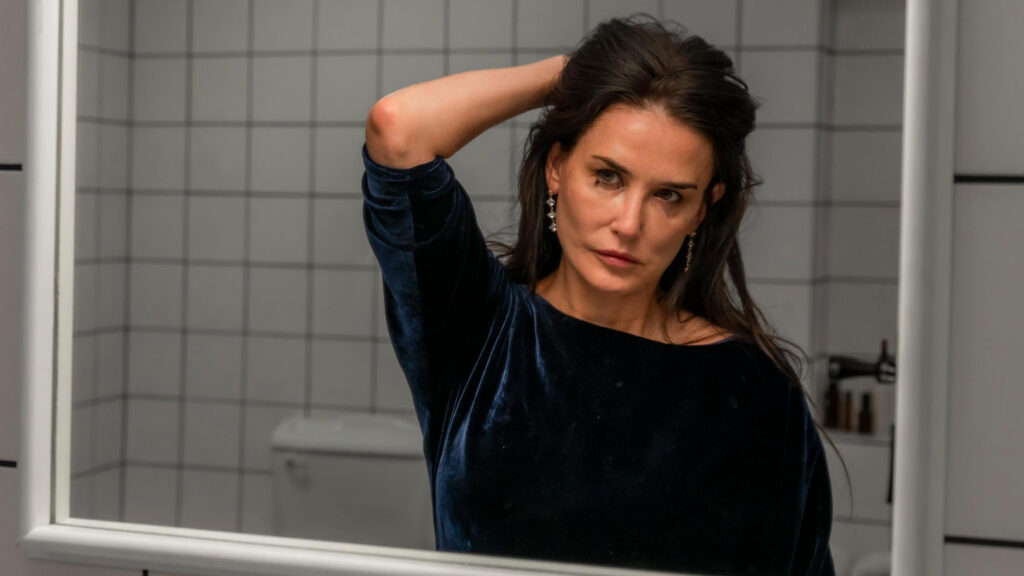
Megan: I’m a massive body horror fan. In fact, it is my favourite subgenre of horror. And I think that we haven’t got enough women’s stories of body horror, although there are a lot of interesting body horrors that feature
women’s bodies. It’s really important to remember that it can quite often be difficult to be a woman, a feminist, and a horror fan altogether. It’s getting easier because we are getting feminist horror but I think it’s very difficult, a lot of the time, to reconcile your experience with the art that is available for you to consume. The way you can interpret film, and the way that film characters can be reclaimed and re-interpreted is so important. For a movie like Possession, for example, there are people who say that it’s a misogynist film. Anna is not meant to be a feminist character. But when I watch it, I don’t see her in that way because I’m just so happy that she’s just smashing her life to bits, puking slime, and punching Sam Neill. And also, I suppose this is what we mean when we say “when the art leaves the artist’s hand, it’s up for interpretation”. We, as horror fans, must go ‘most men make horror that isn’t feminist but that doesn’t mean that we can make it feminist’ or take a feminist perspective by reinterpreting the character.
I would love to see women make more body horror like The Substance. I think it’s such an exciting medium for feminist film to work in because it disrupts everything that neo-liberal capitalism and the patriarchy throws at women from when we get our first dolly and kitchen sets, to magazines for teenage girls, social media and, you know, skincare. The patriarchy wants us frightened and concerned about our vessel. It is not rooted in a pleasurable desire to engage with the self. Rather, it is rooted in the fear of our ‘unmanageable bodies’. Body horror just allows you to smash through that and showcase the female body as unruly and refusing to obey.
SlashHer: What drew you to horror? Not just to study, but as a person?
Megan: I think my interest in horror is an extension of my childhood self who was absorbed in spooky things, and then, my nature as a woman who was never really good at following the rules and doing what she was told.
I was always a very morbid and spooky child. I was really interested in fairy stories which introduced me to the original fairy tales, which are darker and more violent. I was also blessed to have been born in the era of child-friendly horror like Goosebumps and Are you afraid of the dark?
[Over time] I continued to like horror but, you know, went and got a “proper job” and did all that. But then I met Clelia, who is the founder and director of Monstrous Flesh and teaches film courses. She had an online one that ran in the evenings. I just stumbled across it and thought it sounded really fun, especially since there’s no fun in writing in Psychology. I’d already been reading and reviewing academic work about film and horror but when I did the course, I thought ‘oh my god, this is my bag, I love this!’, and I started to write about it too. I’m particularly interested in horror that centers on women doing what they’re not supposed to be doing. Seeing women do that on screen is very exciting to me.
Dr Megan Kenny’s (She/They) PhD is an academic who writes about folklore, paranormal beliefs, cults and more. She is also the co-host of the Monstrous Flesh podcast, where they critically analyse film through the lens of tropes, movie magic, and behind-the-scenes. Their collective, Monstrous Flesh, further seeks to explore the role of women and non-binary people in horror through screenings and events for horror fans in and around Nottingham