
An archaic form of misogyny, synonymous to the Salem witch trials, still plagues the dalit women in India. Their only crime remains being born into the wrong family, yet their punishment includes physical torture, exclusion, dehumanisation, and death. In this article, Katyayani Nath explores the questions of when, why, and how these trials occur and persist.
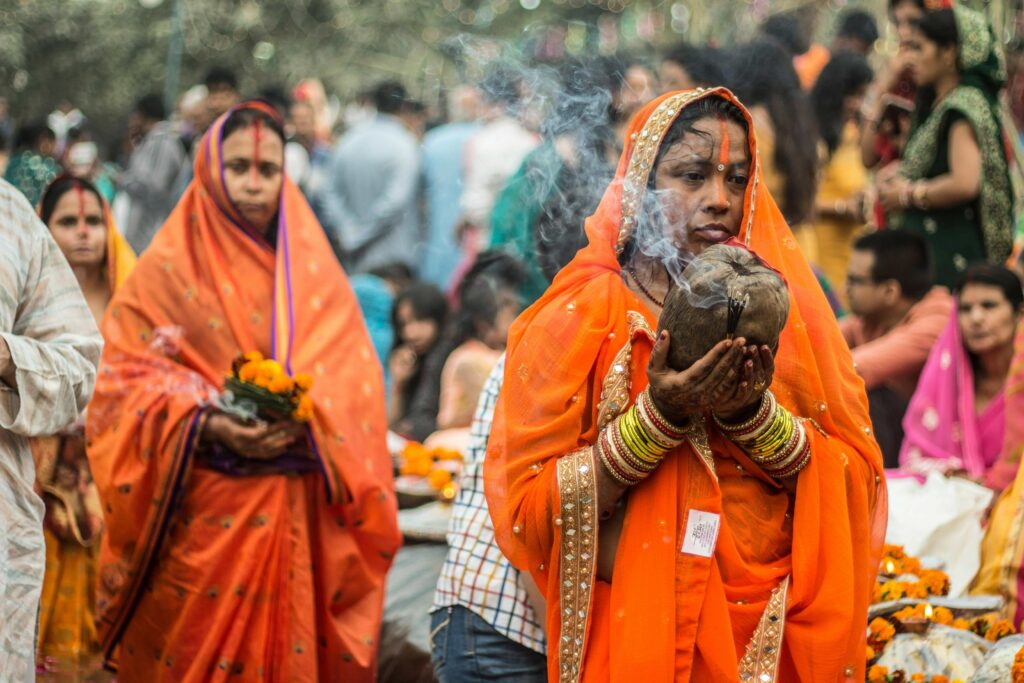
A chant rips through a dry, cold dusky morning in Jharkhand in 2005. Nine villagers storm the home of a woman, dragging her away from her wailing children by the hair. These villagers torture this woman in unspeakable ways for four days, including beating her with rods. The following police investigation reveals that the attacks were instigated by a local landowner who wanted to maintain his authority over the village. The chant was “She is a witch”.
Advocacy against Caste discrimination is synonymous to feminism: Dalit women face triple discrimination based on caste, class and gender. To contextualise this, Dalit activist Beena Pallical told the UN’s Human Rights Commissioner (OHCHR) in 2021 that “In India, around ten Dalit women are raped each day.”
Despite its archaic form, it is one of the most common ways of attacking Dalit women’s right to life remains the practice of witch-hunting and witch-trials. Between 2000 and 2016, it is reported that over 2,500 died due to witch trials in India. Most cases of witch trials, however, go unreported and the conviction rate is less than two per cent.
Caste, explained:
Caste discrimination is still the dangerous reality of a large part of the Indian population, helplessly tying them to the constant risk of violence and discrimination since birth. Those of the lowest caste are given the legal status of “Scheduled Caste” or “SC”s but are called “Dalits” in everyday speech.
According to the National Campaign on Dalit Human Rights, 1 crime is committed against a Dalit every 18 minutes and 13 Dalits are murdered every week.
Dalits face structural and physical violence alike: along with bearing unsafe working conditions, generational poverty, illiteracy, and police bias, Indian news is rife with headlines like “Dalit man killed for eating in front of upper-caste men” and “Dalits attacked for wearing the wrong shoes”
Declaring a witch
The process for declaring a witch is a bit too simple. First, a woman is arbitrarily accused of causing harm that has occurred in the community or to an individual such as deaths, disease, crop failure, and natural disasters. Before you know it, she is branded a witch, thought of as harbouring evil forces, and excluded socially by her village. Her case is tried and her persecution is tied to witch-doctors in the village who are identified through local rituals. The livelihood of these witch-doctors depends upon the trials and they forge convictions for bribes as little as Rs. 600 (£5). They are known by various names: khonses, sokha, janguru, ojha, etc.
“In these circumstances, superstition gains a force of its own.”
Why do these witch trials occur?
The aim of witch trials is to enforce personal enmity, sexual attraction, property ownership and power. Interestingly, this makes the elderly, widowed, and single women the usual target of the witch hunts.
According to academic Tanvi Yadav’s 2020 article ‘Witch Hunting: a Form of Violence Against Dalit Women in India”, one simple answer is that witch trials are “a weapon used by Brahmanical patriarchy to control resources and sustain caste hierarchy.” Brahmin is the highest caste in the caste system, ascribed to be the intellectually and spiritually superior breed of humans.
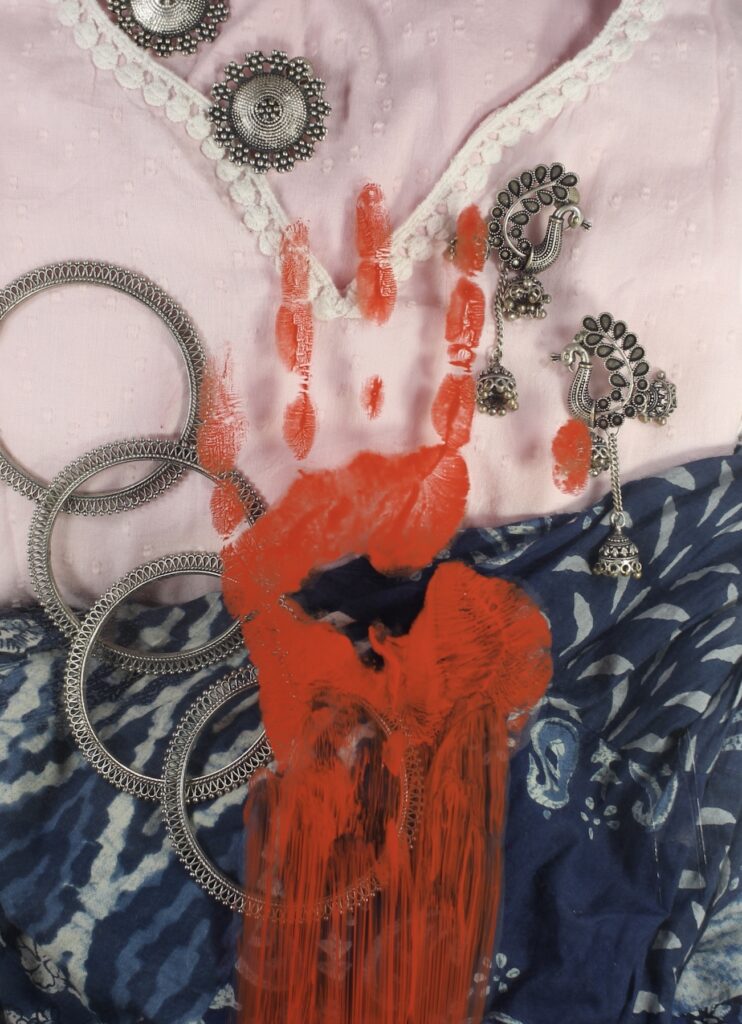
Yadav cited a case of Brahmanical and misogynist power-grabbing in her article: in 2012 a woman was branded a witch and tortured because the upper caste residents did not approve of her mother-in-law as the sarpanch (a mayoral sort of position in their local self-government) – especially after she refused to heed to their unreasonable demands. Their family was socially boycotted and the police “took their time” to file a complaint. Through years of activism and struggle, dalits have acquired a mandated position in educational, administrative and legislative
structures. But, by misusing rural indians’ deep connection to divine yet discriminative religious texts, witch trials become a tool to strip them of this power extra-constitutionally.
Further, as per National Crime Records Bureau (NCRB) data, 43 percent of victims are accused by members in their family. This shows that witch-hunting is even weaponised by men in their families to torment and usurp power from women.
How are they persecuted?
Those accused of being witches are mentally and physically tortured: their punishments ranges from social exclusion, name-calling and psychological manipulation to shaving their heads, blackening their faces, making them parade the town naked, lynching, burning them alive and stabbing them with rods until they bleed to death. Senseless displays of violence like walking on hot coals and screws are also recorded. Instances where women are made to eat or bathe in excreta become clear evidence of their subhuman status and the sheer vitriol harboured against them.
Why does this persist in the present day?
Often, this form of discrimination escapes the realm of political and legal persecution because it ties intrinsically to each individual’s sense of divine or occult. As we saw in aforementioned cases, it is even possible that the police and politically powerful men intentionally and strategically target women.
It can also be unjustly waved away as a morbid sort of coping mechanism for areas affected with strife.”These areas face acute poverty, with little or no access to the most basic health care, education and sanitation,” says Tara Ahluwalia, a social worker who aids victims of witch hunting in the village of Bhilwara. “In these circumstances, superstition gains a force of its own.”
Laws specific to witch-hunting have been passed in a handful of states like Rajasthan, Jharkhand and Bihar where these cases are prevalent. These laws, such as the one in Rajasthan, were passed as late as in 2015. They are abhorrently executed. In August 2017, ‘a 40-year-old Dalit woman was allegedly branded a witch, stripped, beaten up mercilessly and made to eat human excreta in Rajasthan’s Ajmer district. The village panchayat (local governing body) asked the attackers to simply take a bath in a pond to ‘wash their sins’.
Central legislation, like the 2016 Prevention of Witch-Hunting Bill, is still pending. It is also said to be weak by design: the punishments include fines ranging from Rs 1,000 to Rs 2,000 (£9 and £18) and prison sentences between three months to a year. Even now, witch-hunters are convicted under Section 323, that is, the same law is used to punish murderers of dalit women and someone who walks up to you in a crowded street and slaps you. To top it all off, less than 2 percent of those accused of witch-hunting are actually convicted, according to a study by the Free Legal Aid Committee.
Project Garima
In April 2020, the state of Jharkhand launched Project Garima, which aimed to eradicate witch-hunting by March 2023, but is an ongoing mission. The aim of the mission is to restore the Garima of affected women, which means “Dignity” in Hindi. It received an estimated Rs. 15 Crore (£1.3 mn) in funding from the Central Government. The scheme has deployed 25 groups called ‘Sakhi Mandals’ to help implement the project through street plays. “Once, during our performance in a nearby village, two women broke down after watching our play. Later, they approached us and narrated their own tales of surviving witch hunts. Women find it easy to approach and trust us because we are an all-women’s group,” says Neelima Tigga, who leads one of the Sakhi Mandals. Village-wide protection committees aid survivors of violence, aid centers have been set up to provide legal guidance, and help desks call survivors to check in on their emotional and financial wellbeing.