Fatma Fedai
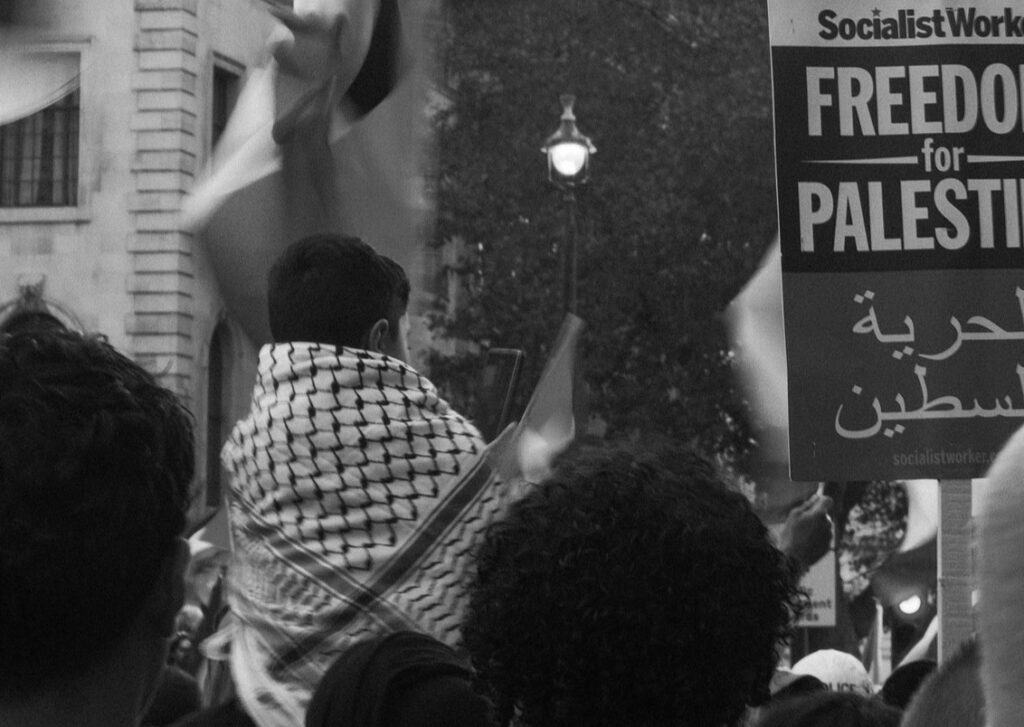
What we wear has always meant something. But right now, it’s speaking louder than ever, especially when it’s used as a form of expression for restricted voices
Earlier this year, an American student was asked to remove her keffiyeh or she would not be allowed to attend her graduation ceremony. She refused — insisting on using her keffiyeh as a representation of her solidarity for Gaza. The conversation that followed wasn’t about fabric, it was about politics.
Clothes have always signalled identity. Now, they’re signalling allegiance. What we wear carries messages that people interpret and express in new ways. They’re signals — read instantly, and sometimes controversially. Ordinary style choices such as hats, oversized trousers, and rolled-up hems have all become markers of political identity, understood through context rather than slogans. In Greenland, a simple piece such as a red cap, long associated with Donald Trump’s government and supporters, has even been worn ironically as a form of protest against Trump’s claim over the country. During a red caps protest, one resident, Lars Hermansen, told The Independent: “I want to show my support to Greenland and also that I don’t like the president of the United States.”
We see it everywhere, and while this is not a new phenomenon, what feels different now is the speed and intensity with which garments are read. Unlike a chant that can be drowned out or a social media post that can be deleted, clothing moves quietly through classrooms, workplaces, and city streets — visible, but harder to police.
“I feel that clothing is the physical embodiment of the identity of an individual and a collective”
While speech has risks such as arrests, school punishment, and job loss, clothing operates more subtly — acting as a workaround when outright expression feels risky. Policing clothing means policing the body itself — a move that is often more visible and more controversial than silencing speech — so this poses the question, is clothing more powerful than speech?
An item of clothing which has sparked controversy over the globe has been the keffiyeh. A traditional patterned scarf worn by many across the Middle East, originally worn to protect against sun and sand. The black-and-white version, historically tied to Palestinian identity, has become a global symbol of activism. Palestinian or not, people have now begun wearing it as a symbol of solidarity in response to the ongoing genocide in Gaza.
For many, the keffiyeh is not a trend, but a lived inheritance. For Palestinian-owned clothing brand Urban Pal, Palestinian clothing is about appreciation for the beauty, history, and craftsmanship that runs deep in Palestine.
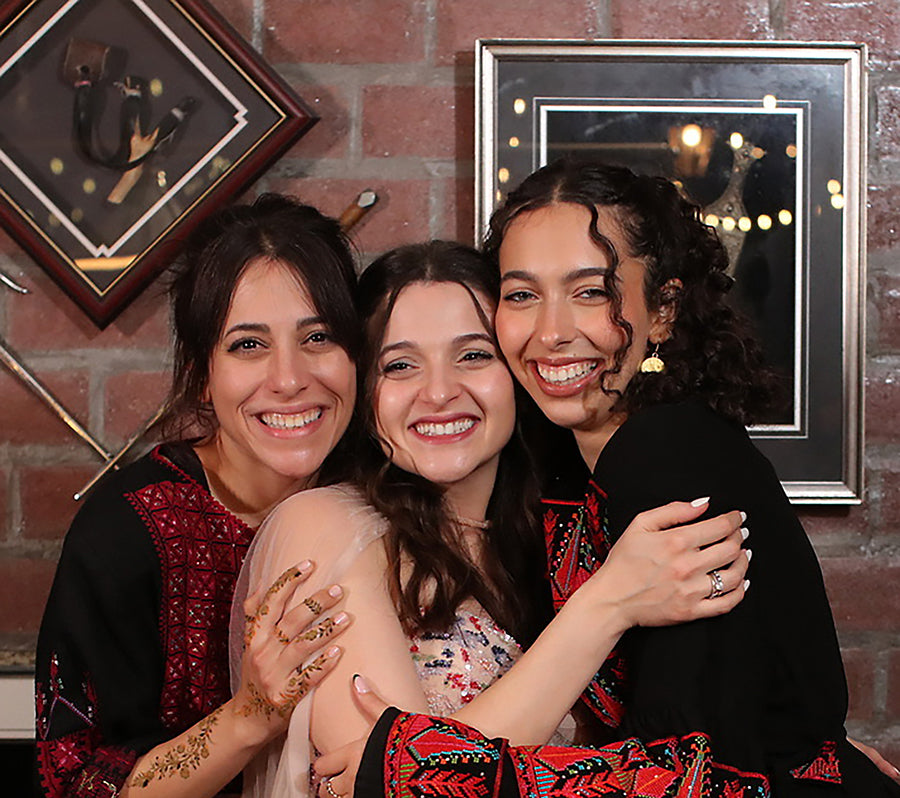
The founders say their aim is simple: to weave Palestinian culture into everyday lives. The brand further explains that their designs not only come from co-founder Tala, but they also use drawings shared by children in Gaza, who they describe as “shared their hopes and dreams through their drawings.” While the founders insist their work is rooted in culture rather than politics, they acknowledge that the current political climate has changed. Symbols once worn quietly are now read loudly. “Wearing these items naturally signals solidarity with Palestine and our people,” they say. Alongside visibility, the brand also supports the Welfare (Taawun) Association and supports Palestinian artisans. Despite only launching six months ago, Urban Pal has already seen a rise in global interest and demand, having customers spanning from the UK, US, and UAE. Their community continues to grow, they explain — showing the increasing appetite for Palestinian owned brands and a desire to wear clothing that holds significance.
Beyond its presence in fashion, politically recognised fabric carries weight for those who wear the keffiyeh and live its meaning in everyday life. For Miriam Suleiman, who is a Palestinian PhD researcher and associate lecturer at Goldsmiths University, the keffiyeh symbolises the past, present, and future — embodying the history of Palestinian struggle. “Since it represents my very identity, it’s hard for me to separate its [keffiyeh] symbolism into personal and political. The Palestinian identity is political,” she says. Seeing others wear the keffiyeh, she adds, brings a sense of hope — a reminder that Palestinian history cannot be quietly erased.
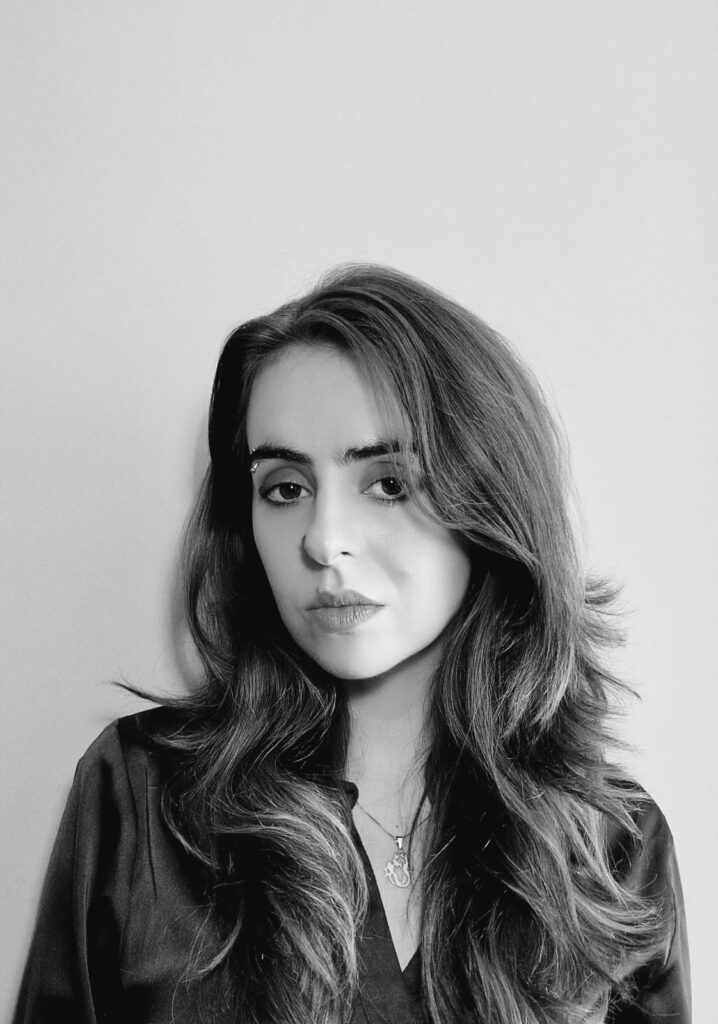
While companies such as Urban Pal highlight their overwhelmingly positive responses, describing their reactions as rooted in curiosity and admiration, the reaction to the keffiyeh isn’t always favourable. Suleiman has emphasised her own experiences with wearing the keffiyeh, pointing out that prior to 2023, wearing it wasn’t as popular nor was it such a provocation to others. However, after 2023, she explains how there was a surge in people wearing it, allowing others to gain more awareness on what it symbolised, making it riskier to wear. “I have been verbally attacked and threatened for wearing the keffiyeh,” explains Suleiman — highlighting how she has even witnessed others physically beaten for wearing the garment. As awareness grows, a scarf which was once overlooked or simply received a few odd stares becomes a loud and fixed stance.
As well as the keffiyeh, another piece of fabric that has been politicised is the hijab. From banning it to enforcing it, the hijab has become more than a scarf — it’s a statement both in devotion to religion and as an act of resistance in instances where it’s been controlled.
“Socially, I’ve found it hard to be myself. Around other Muslims, I feel pressure to appear perfect and around non-Muslims, I feel like I have to prove I’m normal”
says Aaye Alkarim, a 20-year-old hijab-wearing woman, who is based in London and has worn the hijab since age 11. She explains how for her, the hijab isn’t simply a personal choice but rather a visible symbol of her faith and identity. “Since the hijab has become a symbol of my religion, any Islamophobic stigma going around makes us hijabis targets,” Alkarim explains — for her, the hijab has become a form of quiet resistance against prejudice. Some prejudices go as far as being violent, seen in a case last year where two hijab-wearing women were hit by a car, stating it was intentional due to their hijab.
One country who has taken extreme measures to control clothing that is viewed as political is France. In 2004, the country introduced a ban on dresses that “conspicuously show religious affiliation”, followed by a ban on full-face coverings in 2010. France has heavily restricted the hijab and any other garment which may relate to it, framing the laws as an attempt to uphold secularism. For Alkarim, who has completed a recent visit to Paris, the impact of these restrictions was tangible. “In France, I felt the need to dress down my hijab and wear it in a turban style,” she explains, adding that she saw, what she assumed, was other Muslim women do the same. Alkarim explained it was very rare to see a fully covered Muslim woman in France, attributing it to what she perceived as limited public tolerance. France is not alone — Switzerland has begun following in the same footsteps by banning full-face coverings in 2021. Despite the restrictions, Alkarim explained how the hijab continues to be a silent form of communication, as seeing other women wearing an adaptation of the hijab evoked a feeling of connection.
Still, symbolism has its limits. Suleiman warns against reducing the keffiyeh to fashion. She argues there’s an issue of performative activism. “It is not a trendy accessory, it’s a symbol of the oppressed fighting for their self-determination and freedom,” she says — setting out a reminder that wearing it alone is not enough.
Clothes don’t shout. They don’t need to. They move quietly through classrooms, airports, and city streets — carrying messages that can’t be muted. For some, that’s exactly the point. A keffiyeh worn despite the risk, a hijab adjusted but not removed. These are not trends but deliberate and visible choices.