Lauren Perera
Food has never just been about taste or trends. It’s always been about power. Who gets to cook it, who gets to sell it and who gets to make money from it
Walking through East Dulwich the other day, I paused outside a small Sri Lankan restaurant. Nothing out of the ordinary, until my eyes landed on the menu: avocado on toast. I had to do a double take. Avocado on toast, in a Sri Lankan restaurant, in London. It’s the sort of thing that makes you laugh and groan at the same time. As someone half Sri Lankan, it hit me harder than I expected. My culture, my food, my history, neatly repackaged into something palatable for a white, middle-class audience and then sold back to me at extortionate London prices. If there was ever a clear sign that culinary gentrification is at an all-time high in London, this is it.
And it’s everywhere. Go to Hackney, Peckham, Shoreditch, anywhere that has been ‘discovered’ in the last decade, and you will start to notice it. More cafés serving turmeric lattes, or “ceremonial grade” matcha with soy milk. It’s all carefully curated for people who want a taste of the exotic without any of the messy history, colonial past, or community that made it possible.
International flavours have been made safe, guilt-free, and most importantly, Instagrammable. Centuries of struggle and survival turned into aesthetic content for your Instagram story.
These dishes didn’t just appear out of thin air. They came here with immigrant communities, people who built lives in Britain when they weren’t exactly welcomed with open arms. They opened shops, restaurants, and market stalls and kept their cultures alive through food when everything else was being taken away. The story of London’s food scene is the story of the people who built it, and how easily that history gets erased once it becomes profitable.
To understand how this erasure actually happens, step by step, I spoke to Joe Hoover, a political theorist at Queen Mary University, about this. He told me, “Restaurants and food businesses play a bigger role in gentrification than most people realise” Before an area gets gentrified, local restaurants, shops, and markets aren’t just places to eat; they’re vital to the local economy and provide crucial social and cultural spaces for residents. These places often serve diverse international cuisines or keep working-class food traditions alive.
At the start, this can work in everyone’s favour. Food attracts attention, brings in visitors and even draws in new residents. Local businesses see more customers coming through the doors. But it doesn’t last. Once a neighbourhood restaurant becomes trendy and starts attracting the Instagram crowd, Hoover says, “long-term residents may be excluded, see rising prices, and even feel alienated from their neighbourhood”
And that is when the money arrives. New residents, people with capital, connections, business plans, spot an opportunity and decide to open their own versions, but with fancier branding and deeper pockets. Your local pub is suddenly competing with a new place that’s charging £9 for a pint. The family restaurant that’s been on the high street for decades faces off against a corporate-backed spot serving similar food, just “adapted to the tastes of new arrivals”, as Hoover puts it.
It’s worth saying that gentrification doesn’t always fit the stereotype. Yes, often it’s white middle-class people moving into working-class communities of colour. But not always. Sometimes, the new restaurant owners are second or third-generation immigrants who grew up nearby and went to University, or middle-class families from the same ethnic background as the long-term residents. They’ve just got more money and better business connections. Either way, rising rents force out the working-class families, elderly residents and small business owners who’ve been in the neighbourhoods the longest.
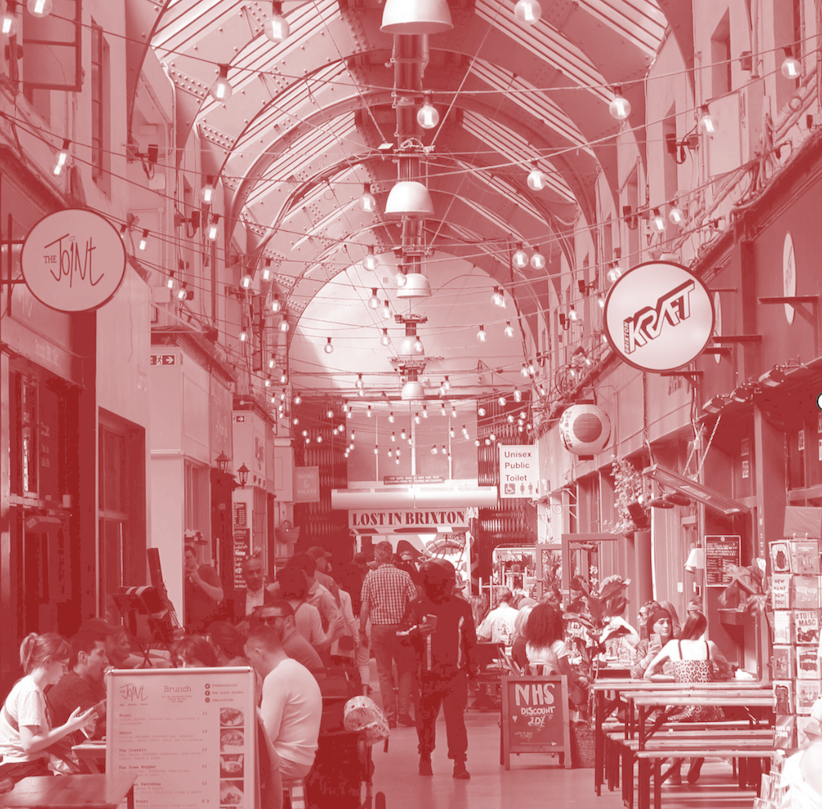
But the cycle doesn’t end there. Give it a few more years and the chains move in. Waitrose, Gail’s, Pret. They push out the decades-old family businesses and even the newer restaurants that opened during the first waves of gentrification. For example, commercial rents for small retail units in Brixton have tripled since 2006. None of it survives once the chains decide an area is worth their investment. There’s a running joke among Londoners: you know a neighbourhood’s been completely gentrified when a Gail’s or Pret shows up.
This pattern isn’t unique to London. Maximillian Schrobenhauser, a PhD student at the University of Münster, has watched this pattern repeat itself across cities worldwide.
“Gentrification has not disappeared, it continues to haunt cities across the globe.”
What makes food central to this process, Schrobenhauser explained, is that it works on multiple levels at once. You can see gentrification, smell it, taste it. Trendy cafés and restaurants are often the first signs that a neighbourhood is being changed. “Gentrifying cafés, restaurants, and street markets frequently appear as early outposts of transformation, signalling to residents and local businesses that a neighbourhood’s identity is in flux.” Long before the luxury flats go up, before property prices spike, the food changes. Food spaces reveal the sensory and affective textures of neighbourhood change; they function as markers of urban change.
But culinary gentrification isn’t just about new restaurants replacing old ones. It’s about power, ownership, and who gets erased in the process. Alejandra Alvarez from Latin Elephant, a London charity advocating for Latin American and migrant communities affected by urban regeneration, knows how this reaches beyond menus and aesthetics. She has seen firsthand how food businesses that once served as cultural anchors are increasingly pushed out as neighbourhoods are redeveloped.
For Alvarez, restaurants and food aren’t side effects of gentrification, they’re central to how the whole process works. “Migrant and racialised-owned cafes, restaurants and food shops have long functioned as a cultural hub and vital social infrastructure”. These spaces provide affordable food, informal support networks, and a sense of home, all of which are threatened as rising rents, redevelopment, and the arrival of “trendy” destinations push out long-standing businesses.
What Alejandra has witnessed in Elephant and Castle is how food becomes a weapon of displacement. There’s a clear shift, she says: “from every day, community-serving food to curated, destination dining aimed at newcomers and visitors.” There’s nothing quite like a good food scene to make a neighbourhood feel alive, and that’s exactly what developers rely on. It’s how a neighbourhood can go from being unknown to being the next place everyone wants to be. “Restaurants are particularly attractive to developers because they create buzz, contribute to place-branding, signal lifestyle and cultural capital”, says Alvarez. “Food becomes a tool within urban renewal narratives of ‘revitalisation’, often masking the displacement of long-standing businesses,”
Everyone thinks that when a neighbourhood gets all these exciting new restaurants that the neighbourhood is thriving. But what gets left out is the people who actually created that food culture. They can no longer afford to live or work there. For Alvarez, “restaurants and food are not neutral; they reveal whose cultures and needs are valued in planning decisions, and whether migrant-run businesses are genuinely supported to remain or pushed out once an area becomes profitable” Developers are selling a lifestyle, an experience, a version of diversity that’s been carefully curated and sanitised. And food businesses become a window into who that neighbourhood is really for now.
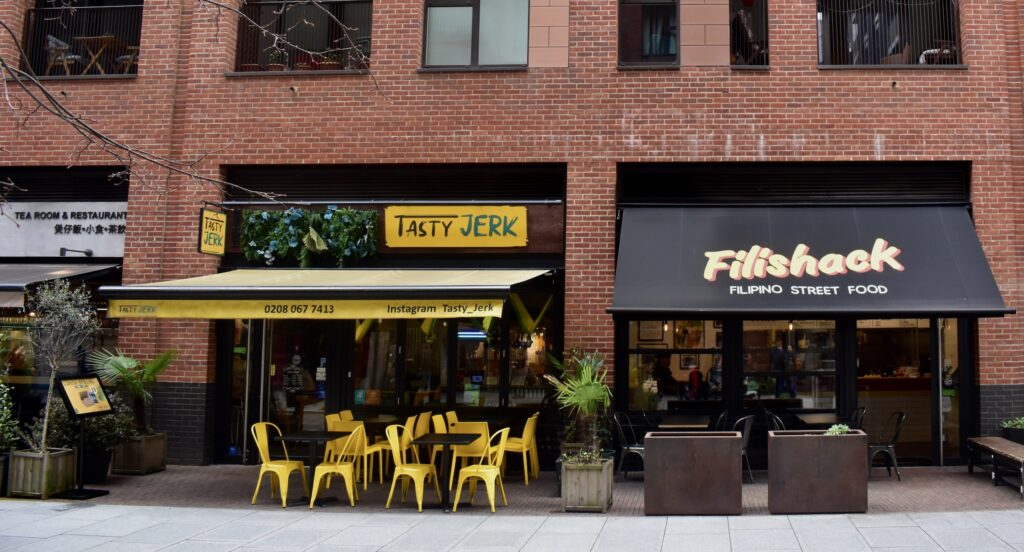
The loss of these spaces has ripple effects that go far beyond food. When the shopping centre in Elephant and Castle was demolished in 2020, it wasn’t just the shops that disappeared; it was, as Alvarez puts it, “a vital space for the community”. Markets and cafes “often function as community anchors, especially for migrant and working-class residents,” she says, “so their loss has impacts that go far beyond food, affecting social networks, informal support systems and everyday accessibility” But losing those spaces doesn’t just mean losing places to eat, it means losing the community that built them.
What gets lost is often invisible to newcomers. Alvarez describes how the impact operates “across multiple dimensions. It is intergenerational, as knowledge and traditions tied to specific places are disrupted; linguistic, as spaces where particular languages circulate informally disappear, and social, as cafes and markets that once functioned as sites of care, information sharing and mutual support are eroded” In other words, gentrification doesn’t just change the food, it severs the connections that held communities together.
Here’s the ironic thing: sometimes the celebration of “authentic” ethnic cuisine and food cultures is exactly what is destroying them. “Recognition of diverse ethnic cuisines can generate pride, income, and wider appreciation for migrant-run food spaces” Alvarez says. “On the other hand, that same visibility can attract speculative interest, raise rents, and accelerate displacement” A restaurant gets a glowing five-star review or goes viral on TikTok, and before you know it, the rents in the area are creeping up. The place that survived for decades on the strength of its community gets priced out by the very attention that was supposed to celebrate it.
So what can actually be done about this? It’s hard to know where to start, but Alvarez has some straightforward ideas: give small traders affordable long-term leases and rent, let communities run their own markets, and actually include local residents in planning decisions properly, not just as an afterthought. “Without these protections,” she warns, “food-led regeneration risks reproducing displacement while celebrating diversity only in appearance”
The next time you’re scrolling through Instagram looking for somewhere new to eat, or reading a review of the latest ‘hidden gem’ restaurant, it’s worth asking yourself: who was here before? Who built this food culture, and are they still around to benefit from it?