Ailin Khassen
From ancient turnips to milkshakes, food has long worked as a weapon of dissent — transforming everyday objects into acts of defiance. In the age of viral spectacle, these edible projectiles form a symbol
If you think food-based protest has fizzled out in recent years, think again. As recently as December, demonstrators turned the Tower of London’s Crown Jewels display into the latest target — this time opting for the distinctly unusual choice of apple crumble.
In the viral-stunt era, the logic is simple: food flies, the point lands, and the footage does the rest. A hurled dessert can compress a political argument into a single, instantly readable image that travels far beyond the room in which it’s thrown. And because it tends to be more symbolic than harmful, it can register as disruption without tipping, for many viewers, into the category of ‘real’ violence.
That sweet spot between spectacle and calculated restraint is exactly why food keeps reappearing in today’s activism. Its practicality is part of the appeal, since everyday ingredients are cheap, familiar, and satisfyingly messy when the goal is to grab attention fast. From throwing food at controversial public figures to pelting famous artworks and symbolic objects, sandwiches, eggs, tomatoes, pies, milkshakes, spaghetti, and apple crumble have long doubled as tools of political dissent. The question isn’t why it’s back, it’s why it never really went away.
How far back does throwing food and drink in protest really go?
Food has long served as a weapon of dissent. Written records trace it back at least as far as the 60s CE, when the people of Hadrumetum reportedly pelted the future Roman emperor Vespasian with turnips in anger at his economic policies. It is an image that feels almost comic — root vegetables flying through the air — yet the symbolism is anything but trivial.
Food occupies a uniquely charged position in human society. It represents sustenance, care, hospitality, and shared belonging. Eating together is to participate in a social bond — so throwing food, and deliberately ‘wasting’ it, flips that meaning on its head and actively rejects that bond. It signals a refusal to share in what the community offers, or to accept the legitimacy of those who claim authority over it.
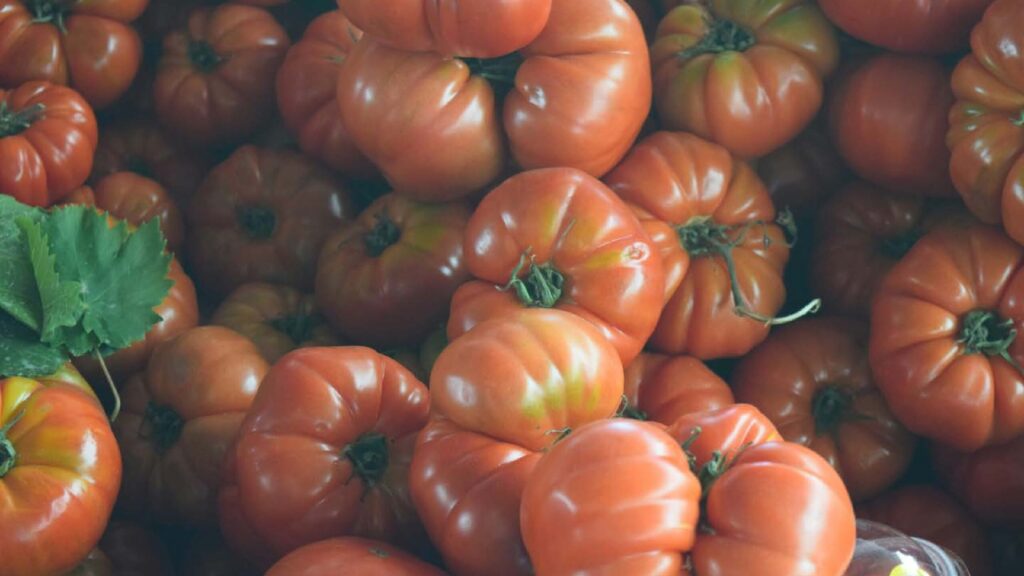
Later examples show the same logic at work. In the eighteenth century, rotten eggs became a weapon of contempt in religious and political conflict on the Isle of Man. Accounts by the preacher John Crook, who arrived in 1775, describe how eggs were used to attack and intimidate early Methodists on the island.
In that sense, using food as a weapon of protest is not merely an act of irritation or spectacle. It is a way of rejecting what might be called the hidden debts of social life — the expectations of loyalty, gratitude, and compliance that bind rulers and ruled. In Vespasian’s case and in the attacks on the Methodists, the gesture carried the same blunt public message: we will not swallow this — a rejection of their politics and presence in public life.
What makes food and drink such potent protest tools?
Peter Gardner, co-author of Symbolic Objects in Contentious Politics, puts a name to what’s happening here. Food and drink can operate as “symbolic objects”, ordinary items that carry emotional force and invite collective response. Their impact lies less in what they do physically than in what they say socially, condensing feelings such as contempt and moral refusal into a gesture others can easily recognise, repeat, and rally around.
He points to the UK’s brief ‘milkshaking’ wave around the 2019 European Parliament elections. After a milkshake was thrown at Tommy Robinson in May, similar incidents followed — including against Nigel Farage — and the drink became a widely understood shorthand for public contempt. Later that year, Collins Dictionary even recorded the shift by recognising the term as a verb, defined as “throwing a milkshake or similar drink over (a public figure) in order to humiliate him or her”.
Combined with its accessibility and symbolic potency, food and drink become ready-made tools for signalling disapproval and humiliating not just public figures, but institutions too. That’s what gives these gestures their afterlife. Once a particular object becomes a recognised sign of dissent, it turns into a shared script — something others can repeat without having to restate the argument — until the act itself comes to stand in for a wider political mood.
Why does this tactic work so well in the social-media era?
Food projectiles hit with a kind of primal clarity. They break basic social rules and expectations about where food belongs, and the surprise is part of the point. A tin of soup doesn’t ‘belong’ on a gallery wall any more than a milkshake belongs on a politician’s suit. The transgression is immediate, and in an attention economy built on instant comprehension, that immediacy matters.
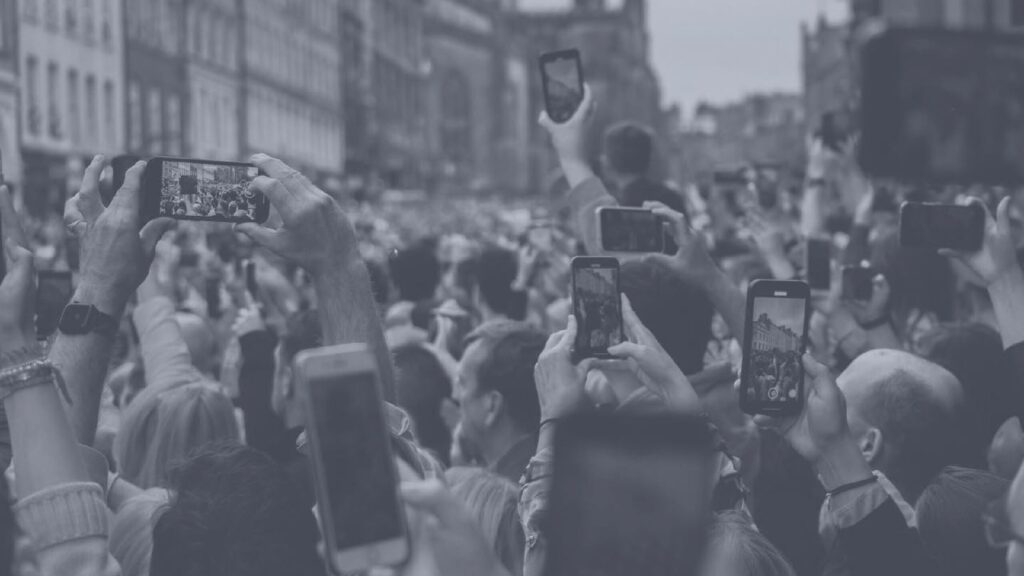
Ekaterina Gladkova, a lecturer in sociology and criminology at Northumbria University whose work looks closely at food politics, argues that these actions carry an air of absurdity, even carnival. That tonal unexpectedness helps them cut through the noise, turning protest into a spectacle people feel compelled to watch, share, and argue over. Just Stop Oil’s gallery actions were engineered to do exactly that — staging a provocation that’s hard to unsee. Why do we protect paintings behind glass, but not protect a liveable planet? Whether the comparison feels persuasive or outrageous, it pulls audiences into the question, and that forced engagement is precisely the point.
Does it actually achieve anything beyond disruption?
Whether it ‘works’ is a slippery question, because it depends on what success looks like. Direct action can be extremely effective at capturing attention — and forcing an issue into the news cycle — but it can also harden opposition. Take Back Power’s recent stunt using apple crumble at the Tower of London is a good example. Launched as a new non-violent civil resistance group, the movement urges the Government to establish a permanent citizens’ assembly — with powers to tax extreme wealth in the UK — as a way of rebalancing political influence. The action undeniably amplified discussion about socio-economic inequality in Britain, yet it also appeared to dent support for the movement among those who saw the tactic as disrespectful or counterproductive.
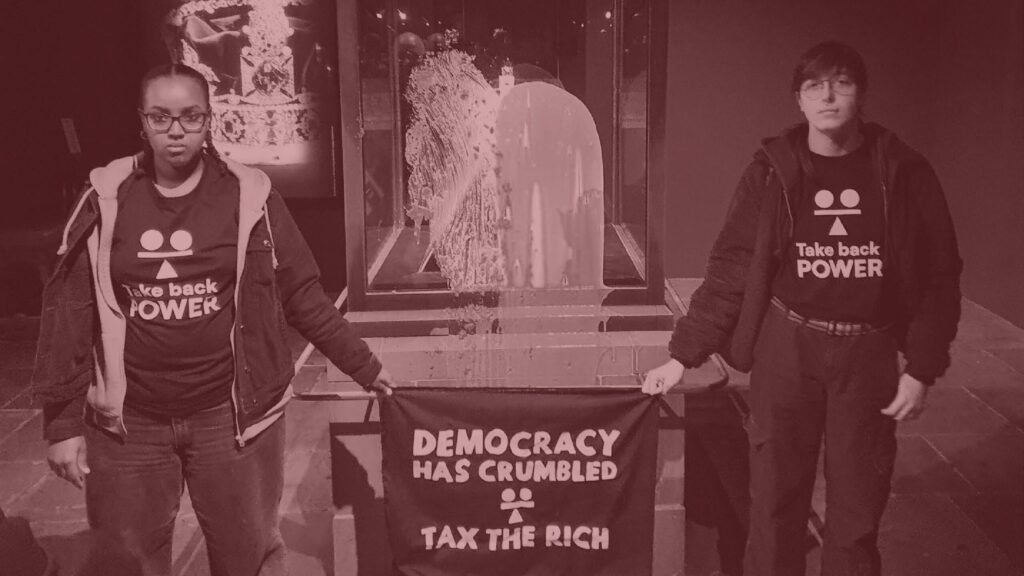
For Zahra Ali, who threw apple crumble and custard to symbolise a “crumbling democracy”, that trade-off is worth it. She argues that conventional forms of protest — petitions, permitted rallies, marches — are easy to ignore. “Politicians don’t care, and neither do the media,” she says. “We have to make them listen.” In her view, direct action is deliberately provocative because provocation is what breaks through: moments like the Tower of London protest generate international headlines, and those headlines, she insists, create space to talk about the movement’s demands.