Ailin Khassen

For multidisciplinary artist Vidushi Arya, eating, gathering, and navigating the city are integral to her creative practice
In August 2024, Vidushi Arya graduated from the Royal College of Art with an MA in Visual Communication and stepped straight into London’s creative industry. Since then, she has built a practice that treats branding as more than aesthetics, developing visual identities and digital narratives rooted in culture and the everyday rituals. But beyond the studio, it’s food that anchors much of her thinking: the spaces we gather in, the names we give dishes, the flavours that travel across borders, and the politics embedded in how we eat.
Working across graphic design, strategy, curation, and writing, Arya approaches visual identity as a shared language — one that can hold multiple perspectives and tell stories through migration and memory. “I grew up with a colonial mindset in post-colonial India, and now I live in the UK,” she tells The Cause. “In my work, I try to draw inspiration from the friction and overlap between those lived experiences.” That sense of in-betweenness also shapes how she moves through London — especially its cafés and neighbourhood restaurants.
Her recent work brings her love of food and design into focus. As creative director for XTCY, an Indian energy drink, she’s defining the brand’s visual language and its cultural positioning. “I’m led by curiosity — by projects where culture, identity, research, and design overlap — and food keeps me inspired,” she says. “It’s one of the most immediate cultural languages I know, and it continues to shape what I’m drawn to and how I work.”
Have any of the food spaces you frequent influenced your creative work?
Definitely, especially the ones that are doing more than just serving food. I’m really drawn to community-led cafés and kitchens that double as gathering spaces. You can feel when a place is built on care rather than polish. I’ll sit there for hours sometimes, just taking it in — listening to conversations, watching how people greet each other, and noticing how they come back not only for the food but for that feeling of familiarity.
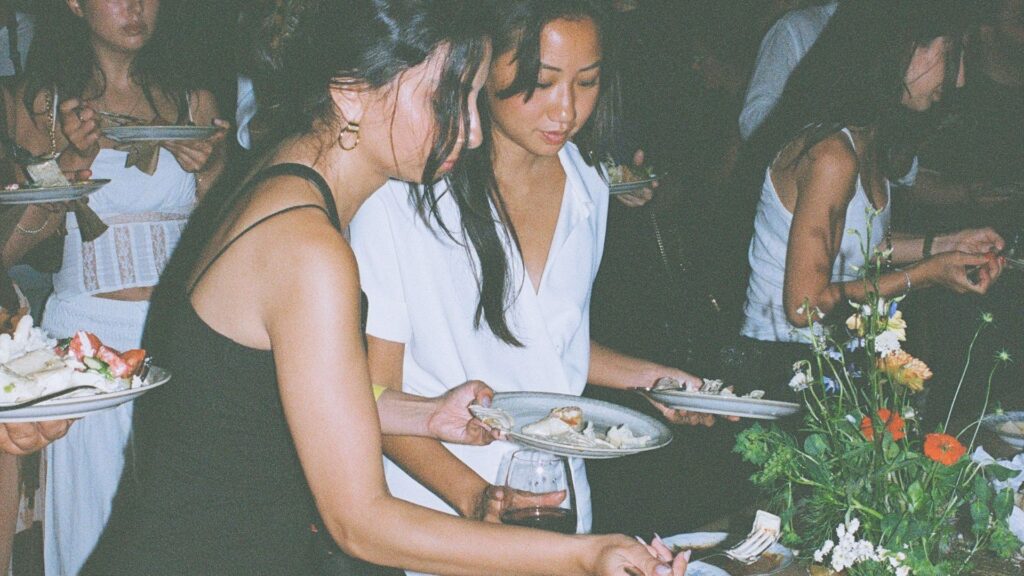
It’s had a huge impact on how I think about design. It reminds me that meaningful work doesn’t always need to be loud or overly designed. Sometimes the value is in how quietly it supports community — creating spaces where people feel comfortable and connected.
What foods or rituals keep you connected to home and ancestry? Are there places in London that help you revisit those memories?
Food rituals from home are deeply tied to memory for me — not the big, special-occasion meals, but the everyday ones. Shared plates, slow cooking, those familiar spice combinations hitting hot oil and instantly changing the air in the kitchen. It’s less about celebration and more about the quiet routines of cooking and eating together that create a sense of belonging.
In London, it’s usually the small, unpretentious South Asian, Middle Eastern, and East Asian spots that bring that feeling back. Places where food is prepared not as performance, but with care and intention for the communities they serve. Somewhere you can sit, talk, and feel nourished beyond the plate. And honestly, sometimes it’s not even about eating — I’ll just walk past a kitchen and catch that layered smell of spices in the air. The cuisine might not even be Indian, but something about it instantly reminds me of home. It’s like muscle memory.
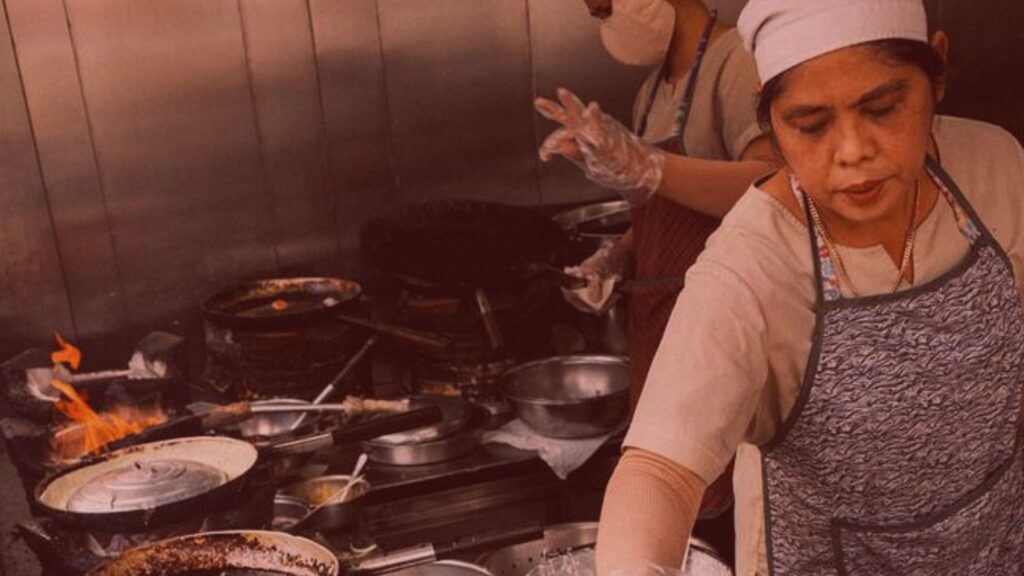
Hospitality is a huge part of it too. In Indian culture we grow up with “Atithi Devo Bhava” — the idea that a guest is akin to a god. So whenever I feel that same warmth and generosity here, whether it’s in a restaurant or a neighbourhood shop, it brings back that same comfort and familiarity.
Are there any food or drink spots you actively support because they align with your ethical and political values?
Yes, I’m quite intentional about where I choose to eat. I love food markets because culture feels most alive there. It’s where cuisines evolve, adapt, and sometimes genuinely surprise you. And I really try to put my money where my values are. In a city like London, ‘ethical’ can sometimes become a vibe or a marketing line rather than something actually lived, so I’m drawn to places with strong community roots — immigrant-run spots and businesses where the people behind the food are visible and connected to who they’re serving.
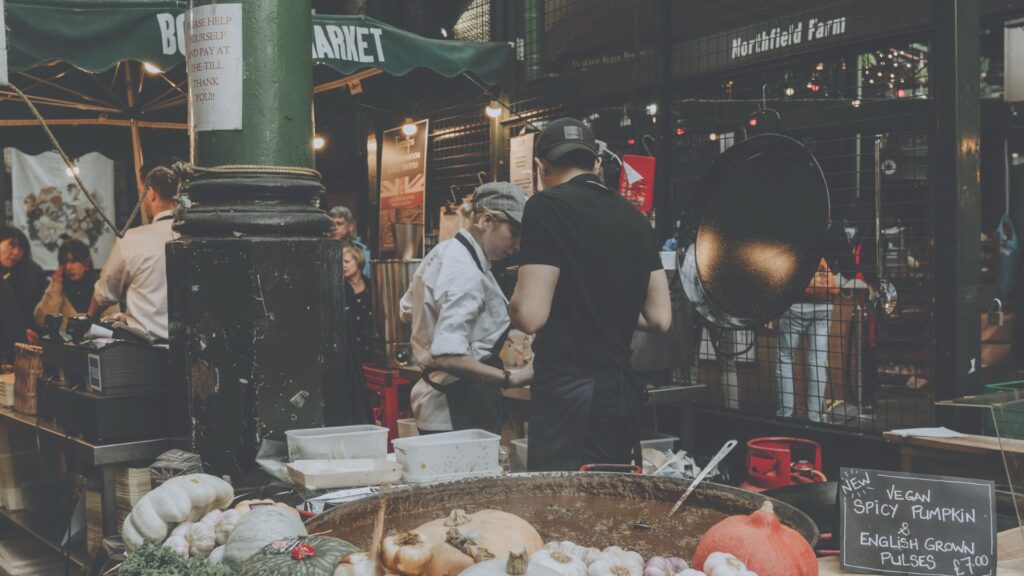
If you look closely, London’s food landscape reveals the city’s inequalities, solidarities, and layered cultural histories. You can sense, almost immediately, when a place is built on care, and that matters to me. Some of my favourites are Horn Ok Please at Borough Market, Fat Phuc Noodle Bar, 222 Vegan Cuisine in Chelsea, and Tamil Prince in Islington. I also love smaller neighbourhood spots like Crazy for Coffee in West Kensington and Sudu in Queen’s Park. There’s confidence in the food and pride in the culture with no urge to dilute it for anyone.
Do you think food spaces can act as sites of care and resistance, particularly for diasporic or marginalised communities?
Absolutely, I think they already do. For many communities, food spaces become places of care. They’re where people check in on each other, share information, swap recommendations, and keep traditions alive. A lot of that support happens quietly and informally, in ways institutions simply can’t provide.
And there’s real resistance in that, too. Just choosing to cook food the way you always have — keeping the name, the spice level, the ritual — can be powerful in a city where there’s constant pressure to dilute or commercialise culture into something more ‘palatable.’ Holding onto cultural authenticity takes intention. That’s why those spaces feel so meaningful to me. They remind me to carry that same care into my own work and to be intentional in how I communicate culture through design.