Wild Garlic
Our series on the bizarre and wondrous healing properties found in nature

Historical context
People have historically turned to garlic as somewhat of an anti-inflammatory vegetable for centuries.
It is especially popular in the subcontinental homeopathic and alternative medicine space. Beyond using it to add a pungent kick to South Asian cuisine, temper daals and as the base for many curries, traditionally, in Pakistan and India, some natural medicine practitioners use garlic as a natural, holistic healing medical intervention.
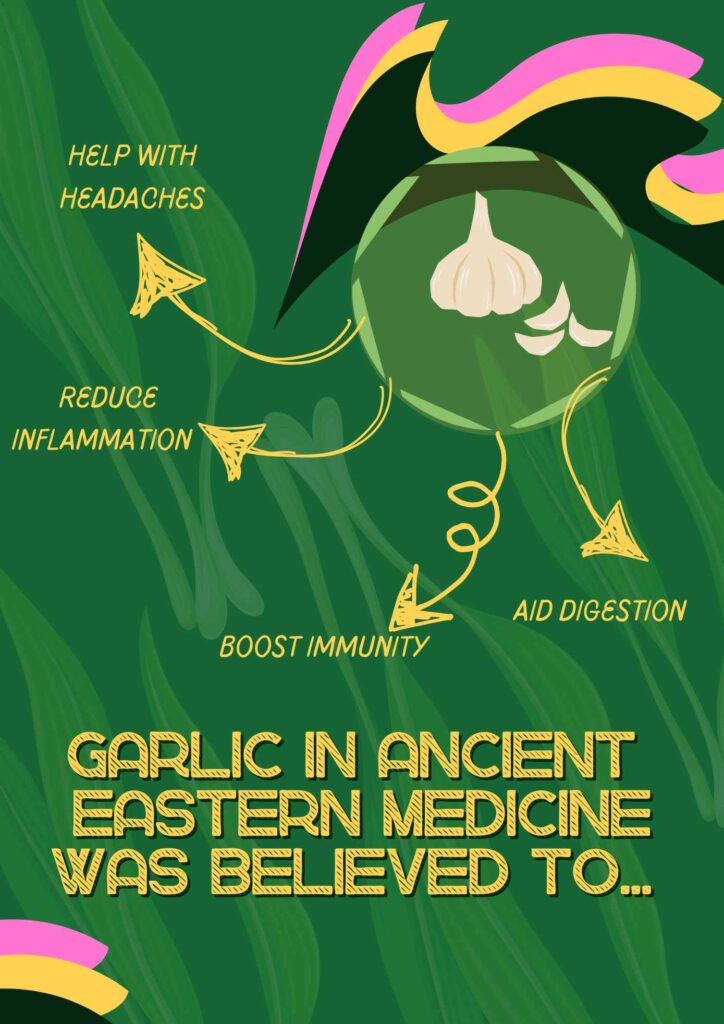
Some preparations of garlic in Unani Tibb are more elaborate than others, and the complexity ranges from the simple – swallowing one raw garlic clove on an empty stomach every morning – to the complex – such as an intricate preparation of garlic-infused mustard oil, a popular remedy prescribed for hair growth. Extracts from dried garlic bulbs were thought to be a potent remedy to regulate menstrual cycles and aid digestion.
Eastern medicine practitioners claim garlic has the potential to manage symptoms of high cholesterol and address various skin conditions, though further clinical trials are warranted to substantiate these findings.
Unani Tibb, an Eastern medicine system widely practiced in South Asia, claims garlic has a purported alkalising effect on the body. Based on a medieval belief system that the body has four humours (blood, phlegm, and yellow and black bile) garlic, Eastern medicine practitioners say, helps keep a balance in place by allegedly ‘cleansing and purifying’ the blood and expelling excess phlegm from the body.
Usage and evidence
While we can’t speak to garlic’s ability to ‘purify’ the blood, some of the potential health benefits of garlic are beginning to be supported by science. Emerging research points to garlic’s anti-inflammatory properties, with 2024 research exploring its use in managing cardiovascular diseases. Recreations of some ancient remedies have even found that in unique preparations, garlic has been effective at treating diseases, such as MRSA.
There may also be some evidence of garlic as an antifungal, antimicrobial supplement. Studies point to garlic’s potential health benefits, particularly in weight management, modestly lowering blood pressure and possibly decreasing the ability of blood platelets to form clots.
Most of the positive effects come from Allicin, an organosulfur and colourless oil found in garlic. Still, many studies are based on patients consuming garlic compounds or extracts of aged garlic in high amounts, meaning cooking with a couple of cloves will not have the same impact.
When it comes to the documented health benefits of garlic, separating fact from fiction is important, and more clinical trials are warranted to substantiate these findings. It is important to consult a doctor and seek adequate medical intervention.
How to use it
- Try adding extra garlic cloves when simmering a broth before you get a cold. While there is inconclusive evidence to show garlic’s impact on flu-like symptoms, it is generally believed to help boost immunity by reducing the severity or frequency of infection.
- One study suggests consuming one clove of garlic a day (raw) to help thrombosis.
- For indigestion, Eastern medicine promotes blitzing together garlic and milk. Boil the mixture until it is reduced to one third; strain and drink after each meal.
- For a headache, a popular folk remedy is to crush a clove of garlic and mix it with olive oil, then apply it to the temples. Alternatively, boil a handful of garlic cloves for half an hour, then dip a tea cloth in the water to place over your head once it cools.
NOTE: This article is for educational and informational purposes only and does not constitute providing medical advice or professional services. Always seek the advice of your doctor or other qualified health provider regarding a medical condition.