Earth Nurse: Elderflower
Elderflower
Our series on the bizarre and wondrous healing properties found in nature
Historical context
Many of us are familiar with the idea of yin and yang. Traditional Chinese Medicine has this restorative balance between opposing energies at the heart of its philosophy.
While yin and yang – or, for that instance, any paradoxical energies such as happiness and sadness, or stress and peace – can promote wellness if they are balanced and flowing freely, TCM believes that even minor imbalances to this delicate framework and disrupt our life force and energy, known as qi (pronounced chee).
Flowers – ranging from magnolia blooms to chrysanthemums and lotus stalks – have been used for centuries within TCM, often in concoctions such as herbal teas. In fact, TCM has one of the most robust flower-derived dietary medicine traditions of all the holistic healing frameworks.
Often, it’s the acrid and bitter taste of these sweet-smelling flowers that is believed to have a positive healing effect. Herbalists often turn to elderflower to treat cold and flu symptoms, especially congestion and fever. And, as with many things that come to the fore when one becomes well-versed with the rhythms and cadences of nature, in a sort of divine dance, the creamy spray of flowers blooms in perfect time to help alleviate pesky hay fever symptoms.
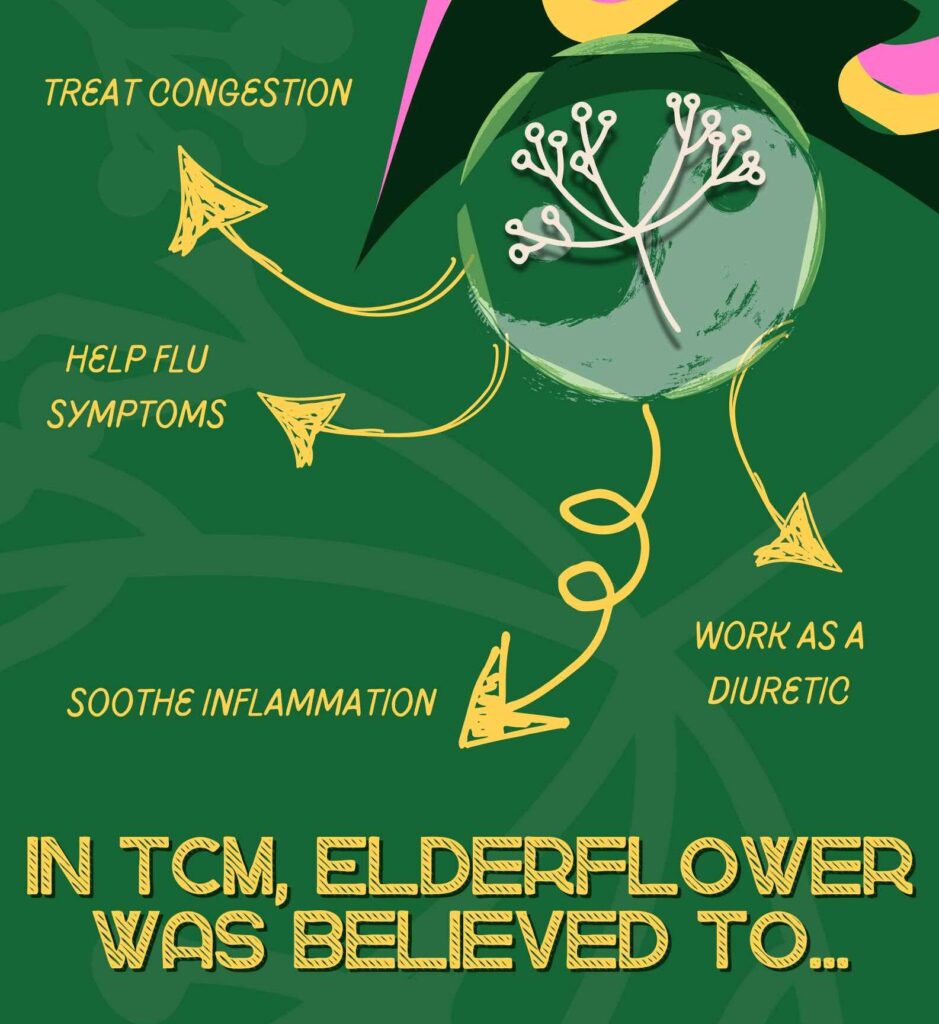
While the UK may associate elderflower most with cordials and sorbets, it has long been used in vinegar form to soothe a sore throat, as a floral water for skin and eye conditions, and to soothe inflammation. However, in Chinese medicine systems, its functionality lies in its ability to diffuse and ‘float’ upwards through the body to dispel phlegm and pathogens from the body.
Usage and evidence
Elderflower’s musky, floral notes make it one of the most palatable flower-infused medicinal concoctions in TCM – and it’s plentiful in the summer months.
TCM celebrates Elderflower as a way to dry ‘dampness’ or congestion within the body, and transform phlegm in the upper part of the body to regulate the Lung Qi and remove stagnant congestion or blockages.
In TCM, this impact is believed to be a result of elderflower’s ability to induce sweating and thereby warm up, then cool down the body. It is also thought to relieve edema and reduce excess water retention as a diuretic.
Here’s how Briar foragers can benefit from centuries-old wisdom to use Elderflower for detoxification and begin to feel lighter and sprightlier starting today.
How to use it
For medicinal purposes, elderflower blooms are mainly used in an herbal tea form, either on its own or mixed with another herbal tea.
- Add elderflower blooms in a steaming cup of herbal tea and allow it to steep for 10-15 minutes with a lid on. Chamomile tea works best.
- To enjoy elderflower tea on its own, put one spoon of dried elderflowers or two spoons of fresh blooms in nearly boiling water and leave to steep for 10 minutes.
NOTE: This article is for educational and informational purposes only and does not constitute providing medical advice or professional services. Always seek the advice of your doctor or other qualified health provider regarding a medical condition.