Fennel
Our series on the bizarre and wondrous healing properties found in nature

Historical context
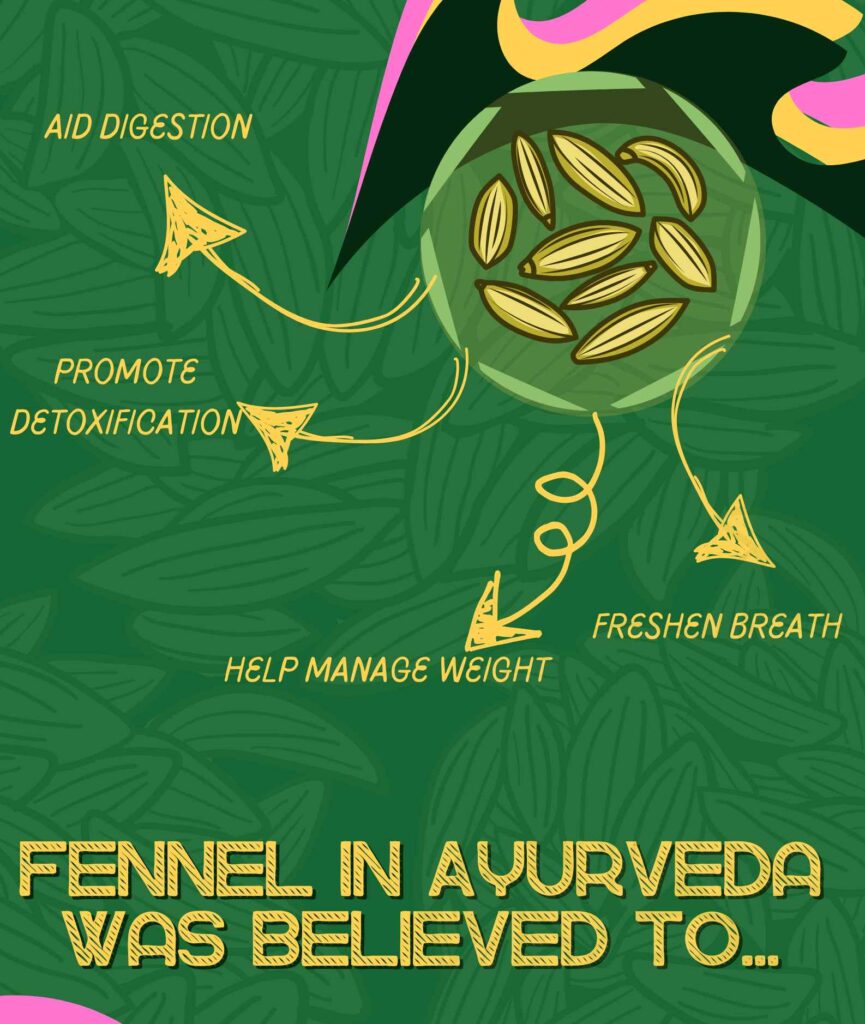
Fennel is anecdotally valued by many as a digestive aid. Culturally, chewing fennel seeds is a common practice for many Indians and South Asians – a sort of natural, after-dinner mint to cleanse the palate. In India, many families keep a mixture of lightly roasted, sweetened fennel seeds on their coffee or chai tables. In fact, sometimes fennel makes its way into the tea itself, imparting a delicately sweet, licorice-like flavour to the beloved staple. Many Indians associate fennel seeds with digestion, detox and weight loss because they believe it is soothing to the stomach and ‘cooling’ to the body.
This association is entrenched in the common belief systems by Ayurvedic practices.
Stemming from the Sanskrit words for life and science/ knowledge – (ayur) and (veda) – the ancient Ayurveda system of medicine embodies a holistic approach to healing. In its loosest translation, Ayurveda means the knowledge of life. This approach to health stresses the interconnectedness and delicate balance between the body, mind, spirit, and environment.
Fennel features prominently in many Ayurvedic preparations for its purported effect on the digestive fire, or Agni. It has also long been used in the Ayurvedic wellness space as a claimed lactation aid for nursing mothers, as well as to reduce bloating and cramps.
Usage and evidence
Some studies even outside of Ayurveda suggest fennel has potential positive health benefits because it is a source of folate and vitamin C.
However, it is important to remember these nutrients are only present in trace amounts, and it is unlikely that one would consume enough fennel to reap these purported health benefits.
Newer studies are exploring the estrogenic effect of fennel seeds, possibly leading to hormonal PCOS treatment in the wellness space.
Further clinical trials are warranted and, as always, adequate medical advice should be sought to treat any medical conditions. Pregnant women should avoid taking very concentrated forms of fennel, such as fennel oil or fennel supplements.
How to use it
In its seed form, here are some ways Briar readers can use fennel for wellness.
- Steep one tablespoon of fennel to brew fennel tea. Add ginger and lemon to help boost its purported digestive properties.
- Or, take it a bit further and make an Ayurvedic CCF tea that is widely prescribed by practitioners as it is believed to help ease constipation. CCF stands for cumin, coriander and fennel – simply add half a teaspoon of each to boiling water, continue to boil for 5-10 minutes and strain. Keep the liquid in a warm thermos and sip throughout the day. Remember, fennel often acts as a diuretic and may not be suitable for everyone.
- Similarly, some ayurvedic practitioners recommend boiling fennel and a pinch of fenugreek seeds in water until the mixture is reduced to half and drinking it first thing in the morning (ideally before brushing your teeth). They believe this leads to reduced bloating.
- Try cooking with fennel bulbs. Use them as you would use garlic – sliced, crushed, for tempering or even roasted and sauteed with green beans.
- Lastly, try chewing on fennel stalks or seeds to make your breath fresher. Keep fennel seeds accessible to munch on and reach for naturally, as you would for a far unhealthier mint.
NOTE: This article is for educational and informational purposes only and does not constitute providing medical advice or professional services. Always seek the advice of your doctor or other qualified health provider regarding a medical condition.