ID Guide: Honeysuckle
This is a slightly more difficult beginner’s forage as not all of the plant is edible, so you have to know which parts to take.
Common names: Honeysuckle, woodbine
Latin: Lonicera periclymenum
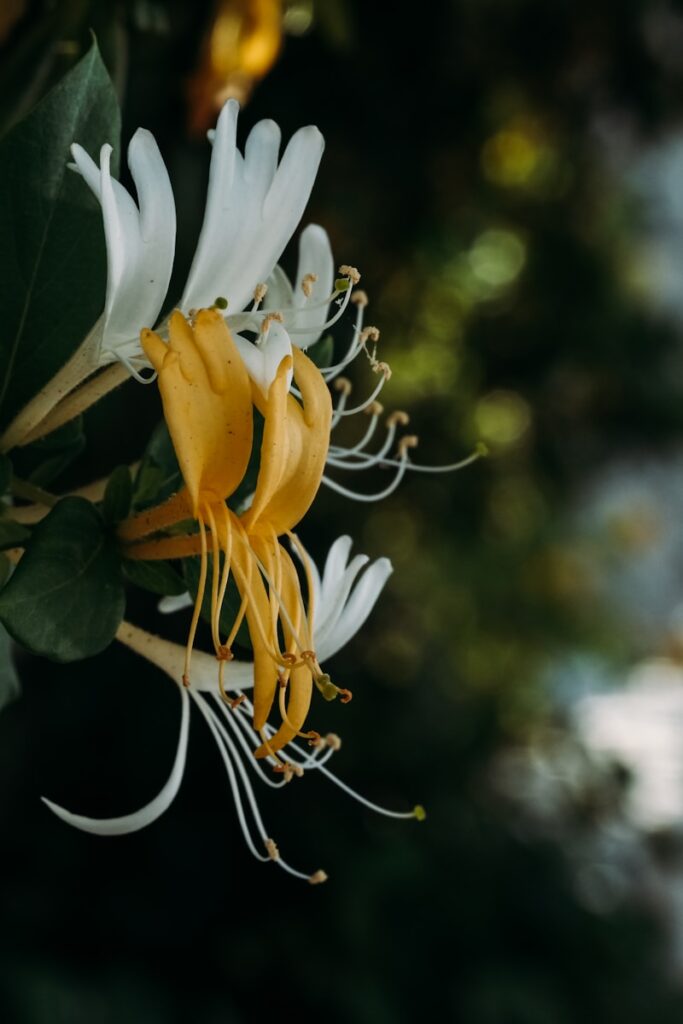
The honeysuckle flower has a delicious smell that lures you in, and fortunately, it tastes as good as it smells!
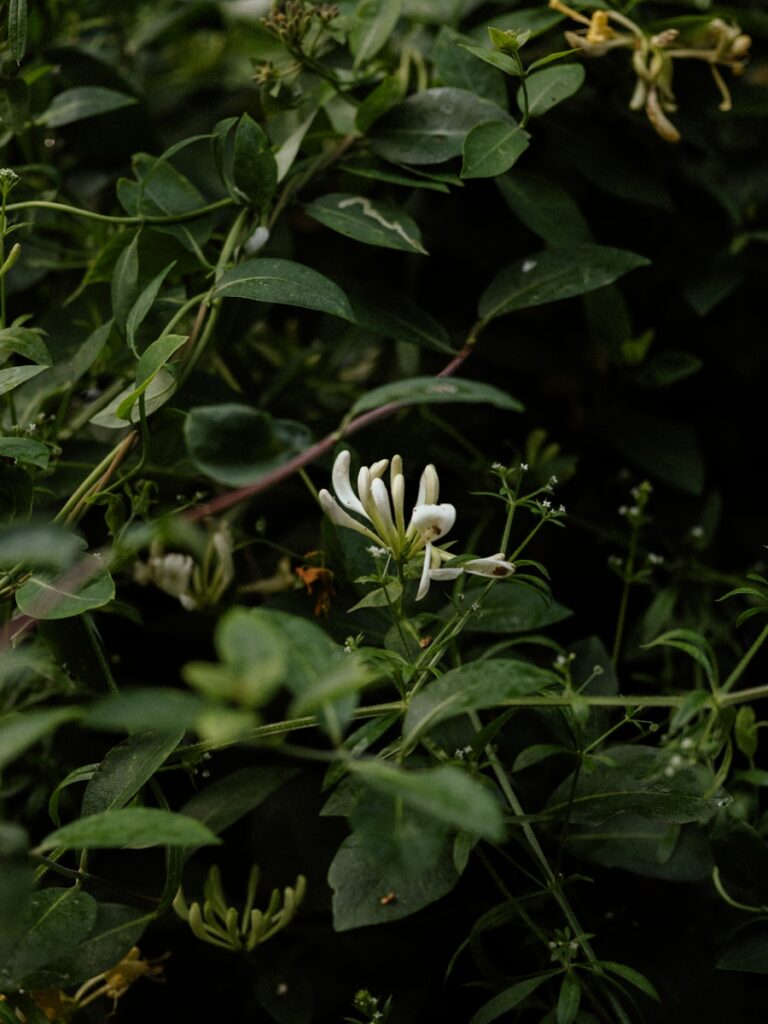
Honeysuckle is a fragrant wildflower that has a distinct honey-sweet taste. It can be found easily in the summer months growing wild, usually in wooded areas, and is often planted in gardens and parks due to its appealing fragrance.
The most common form that the plant grows in is a climbing bush. It has distinctive trumpet-shaped flowers which are the bits to forage. A small amount goes a long way with honeysuckle so be careful not to take too much – it is a common pollinator plant and a favourite for bees.
Only pick the opened trumpet blooms, remove any stems and the calyx (the tiny middle green part). The flowers can be used to infuse water, jams, syrups and vinaigrette.
They occasionally fruit berries in summer but do not eat the berries! They can be toxic. There are over 180 variants of honeysuckle and some are completely safe to eat, but for beginners stick to the nectar which is always safe.
Commonly mistaken with…
There are no commonly mistaken plants for this flower, but due to the number of variants of honeysuckle be careful not to eat the leaves or berries and just seek out the nectar from the trumpet blooms.
Happy picking!