ID Guide: Jelly Ear
Common names: Jelly ear, wood ear, cloud ear
Latin: Auricularia auricula-judae
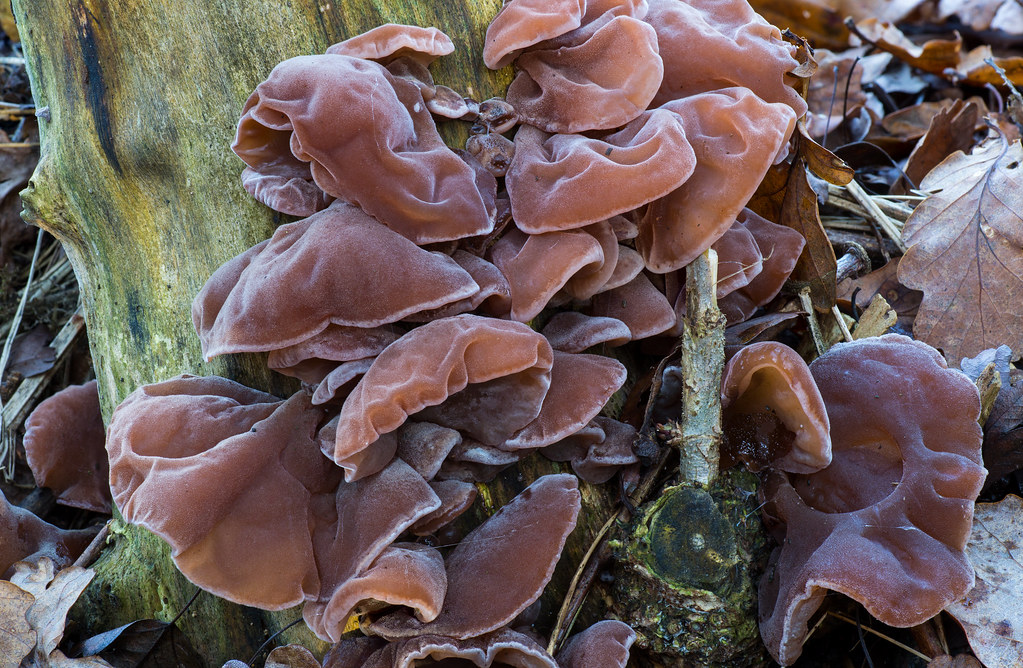
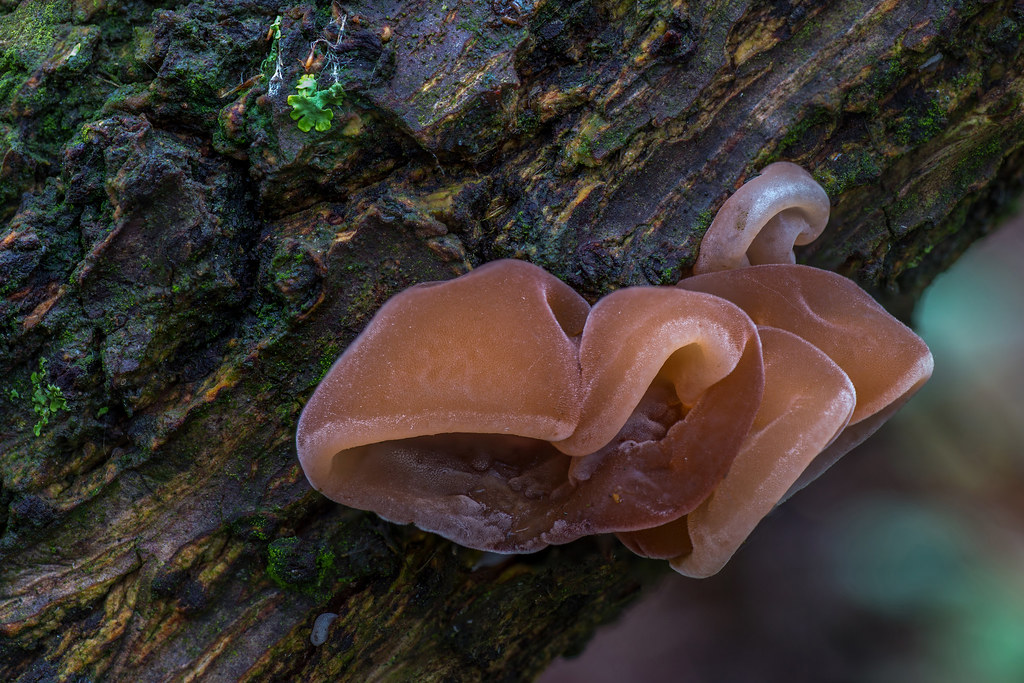
Appearance: Most notably, this fungus is remarkably similar in appearance to an ear. It is roughly semicircular, cupped, and textured with ridges. It can be anything from a light orange to a dark, chocolatey brown colour. It is wobbly and gelatinous.
Where: The fungus usually grows on trees in wooded areas. It is most common on elder trees, but will also grow on other hard woods such as beech, ash and sycamore.
How to forage: It is very easy to pick – simply pull the whole mushroom head off the tree with your fingers.
When: All year round!
How to use: Jelly ear goes very well in Chinese cooking. Some Chinese recipes even call for this mushroom specifically. It is not very flavoursome, so make sure the recipe includes some good seasoning!
Commonly mistaken with…
Because the mushroom is so distinctive, there is nothing it is commonly mistaken with.