
Y2K is making a comeback, but this isn’t just another trend cycle. As fashion leans harder into the past, nostalgia is turning into one of the industry’s most profitable tools.
At Paris Fashion Week in 2026, the 2000s were not just a reference; in fact it heavily influenced the runway. Chanel’s Spring/Summer 2026 collection features low-rise skirts and relaxed waistlines that are reminiscent of the early 2000s style. Across the same season, designers like Courrèges and Dior were also diving into low-rise jeans and body-hugging cuts. At New York Fashion Week 2026, shrugs, scarves, and hyper-styled layering came back with surprising consistency, even though they were once thought to be just passing trends.
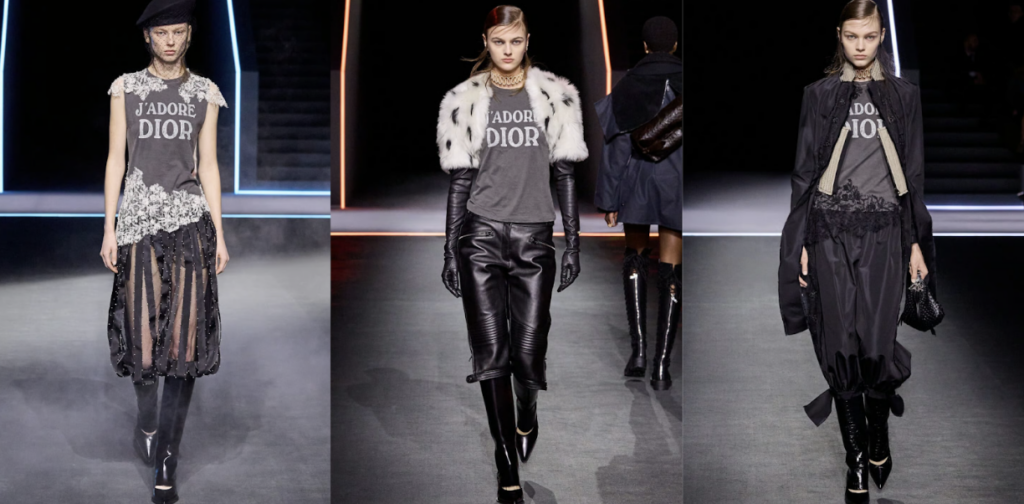
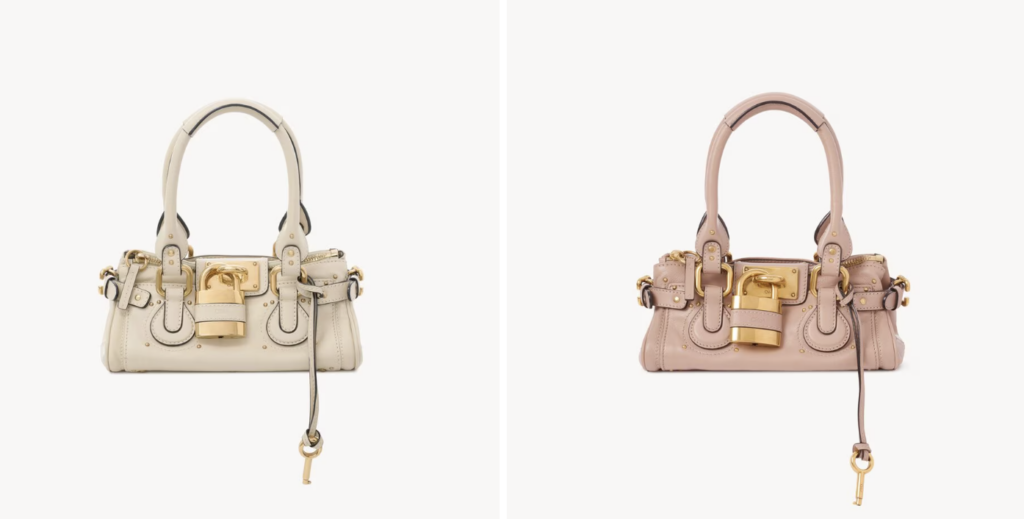
The “J’adore Dior” T-shirt that originally debuted in 2001 by John Galliano was reintroduced by Maria Grazia Chiuri at the fall 2025 show held in Paris as a staple piece, as opposed to a simple reference. Additionally, Chloé’s Paddington bag was essentially the same product as first offered in 2005. Fendi presented both the baguette bag and the Spy bag with minor changes while keeping the aesthetic intact.
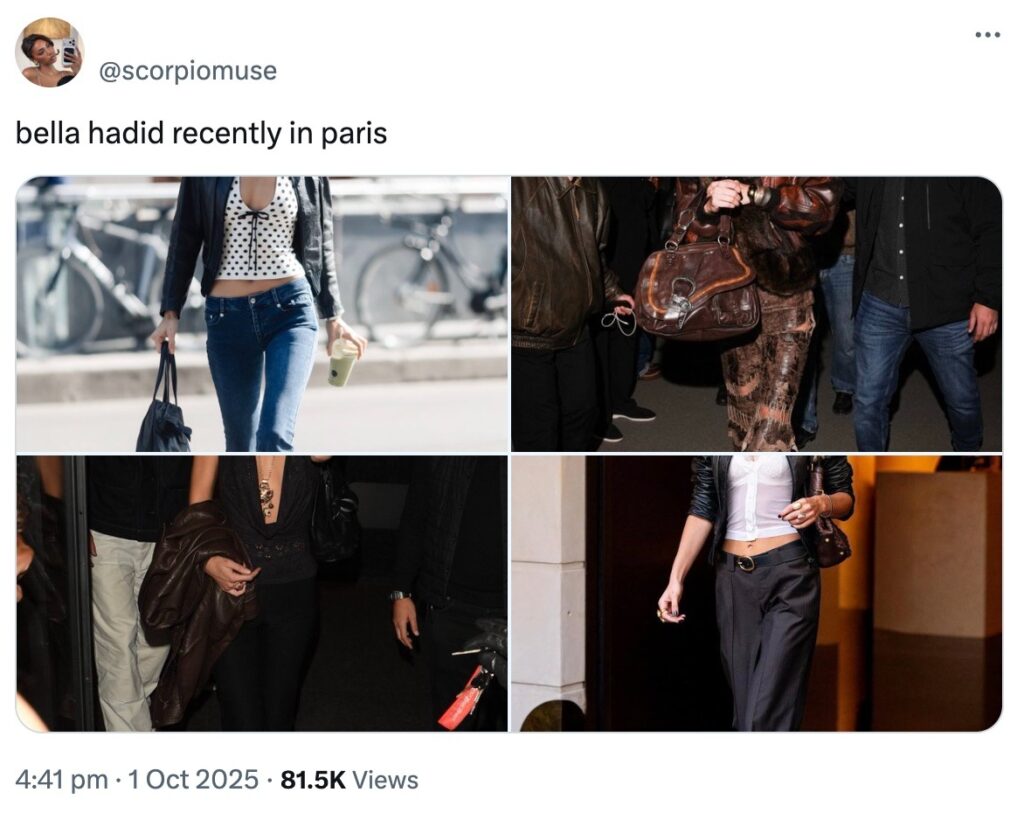
This isn’t just about designers taking a stroll down memory lane; it’s really about how closely they’re copying styles from the past. The Y2K revival isn’t just a trend creeping in from the edges anymore; it’s now leading the industry, driven by major fashion houses, global runways, and high-visibility moments. This pattern persisted outside the runway, too, for example, in 2025, when celebrities like Bella Hadid were photographed in low-rise capri pants and halter tops on Paris streets or at Coachella 2025, when Tyla styled a vintage Dolce & Gabbana outfit from Spring 2000. This creates an interesting contradiction in today’s fashion world. While the industry pushes for fresh ideas, it seems to be stuck in a loop of repetition.
@doncirdo How can we not recognize this rhineybra and the skirt go so obviously with it #tyla #coachella #fashiontiktok #foryoupage #dolcegabbana #fashion #foryou #fyp ♬ son original – DON CIRDO
Video credits: @doncirdo on TikTok
The return of Y2K is often explained through nostalgia, and rightly so. There is an undeniable emotional pull in returning to a moment that feels familiar and more expressive. However, nostalgia alone cannot explain why the same silhouettes, the same bags and even the same graphics are being reused with such precision across multiple fashion capitals at once. What we are seeing is more than just memory coming back; it’s a system that works. Fashion is not looking backwards because the past is better, but because it is safer. This is further explained by Dontae Catlett, a digital creator on social media, who calls this system “marketing psychology”.
Video credits: @dontaecatlett on Instagram
To understand why the Y2K revival persists, it is necessary to look beyond aesthetics and into economics. The early 2000s offer fashion a rare advantage. They are close enough to feel familiar, yet distant enough to be recycled. Their key elements are already embedded in our cultural memory: low-rise jeans, logo bags, baby tees and metallic finishes.
Alok Kumar, founder of Thore Network and market strategist, says: “The past is the most predictable asset a brand has. If something worked once, the probability of it working again is significantly higher than launching something entirely new. This isn’t nostalgia. It’s risk management disguised as creativity.”
He goes on to explain: “Consumers don’t have time to learn new aesthetics. If something is instantly recognisable, it moves faster. Recognition has become a form of currency.”
This is where the Y2K revival shifts from cultural phenomenon to economic strategy. Brands are not simply inspired by the past; they are systematically extracting value from it. The growing dependence on archival design has created an archive economy. Kumar explains: “In an unstable economic climate, brand archives function as intellectual property banks. Past designs are slightly modified and resold at higher price points. This way, nostalgia just becomes monetised memory with built-in cultural capital.”
As a result, creativity gets lost. Designers don’t have to think of completely new futures anymore. They just end up repackaging the past in ways that feel different enough to sell again. A Vogue analysis highlights how brands are increasingly reusing early-2000s pieces because they already carry cultural recognition and proven desirability.
Despite this, fashion continues to present these revivals as innovation by using terms like “reimagined” or “reinterpreted”. This means that fashion relies on the illusion of moving forward, when in fact, it is moving in circles.
Rashmi Agarwal, a fashion designer and boutique owner with over a decade of experience, sees this clearly from within the industry. “There’s a difference between inspiration and replication. The clothes, the accessories, even the styling that we are seeing now, are all too familiar. There are designers trying to do new things, but they don’t always get the same visibility. The market is focused on what sells quickly.”
She explains that the need to make money often wins out over the desire to be creative. “If I design something completely new, I’m taking a financial risk; If I reinterpret something from the early 2000s, I already know there’s a market for it.” Hence, innovation becomes secondary and takes place within more narrow boundaries.
If brands are driving the supply of nostalgia, Gen Z is driving its demand. Their relationship to Y2K is very different from what previous generations experienced. For many young consumers, the early 2000s are not remembered firsthand. Instead, they discover it through images, social media algorithms, and resale sites. This gives rise to a unique kind of second-hand nostalgia, an emotional attachment to a time they never personally experienced.
Jeanne Tiger, a media student and fashion enthusiast who actively experiments with Y2K aesthetics, describes it as a process of discovery. “I don’t think it’s just about liking how it looks. It feels like you’re stepping into a moment that already has meaning. Even if you weren’t there, you feel connected to it.”
For Tiger, thrifting is central to this experience. “When I find a piece from the early 2000s, it feels more real than buying something new that’s trying to look old. There’s history to it, but not everyone cares about that difference.” Nostalgia creates the appearance of authenticity, but that authenticity is often controlled by those with the power to reproduce it.
Video credits: @clo3simone on Instagram
However, she also recognises the role of social media in shaping this aesthetic. “A lot of what we think is Y2K is actually curated by big fast fashion brands and influencer culture. It’s not the actual 2000s but an edited version of it.” Her views are also reflected among other teenagers who are also taking part in this trend.
Video credits: @inprintwetrust.co on Instagram.
Data backs up this trend. Recent reports indicate that Gen Z consumers are leading the comeback of early-2000s fashion, tapping into both second-hand markets and new retail options. They’re mixing nostalgia with digital culture and sustainability messages. Secondary research in trend analysis shows that social media plays a significant role in sustaining this engagement, as platforms tend to favour content where visual repetition encourages adoption among its users. A simple search for “Y2K” on TikTok has generated over seven billion views. This creates a feedback loop. Runways produce nostalgic looks, influencers promote them, algorithms circulate them, and consumers adopt them. In response, brands respond by producing more of the same. Over time, this loop starts to narrow what we view as fashionable.
Nostalgia might seem like a shared experience, but its economic perks aren’t spread out evenly. Rashmi points out this disparity: “Big brands have the power to take something from their archive and make it relevant again instantly. They use their brand history as a major selling point to charge top dollar for repeated designs. Independent designers don’t have that advantage. We have to create demand from scratch. Vintage sellers operate in a parallel economy, often without institutional backing, and consumers pay for ‘new’ versions of what already exists.”
The ongoing fascination with Y2K raises a bigger question – if fashion continues to rely on the past to secure its future, can it still claim to be forward-looking? As Kumar bluntly puts it: “Innovation is expensive. Nostalgia is cheap. As long as the market rewards familiarity, brands will keep choosing the safer option.” In many ways, this revival is almost predictable, with experts noting that fashion tends to operate on about 20-year cycles. However, what fuels this trend today goes beyond just timing. Economic pressures, the rise of digital culture, and shifting consumer behaviours have come together to favour what’s already familiar, turning nostalgia into a dependable strategy rather than just emotional comfort. The heavy reliance on past trends stops designers from trying something new and unseen. The real question now isn’t whether fashion will continue to look back, but whether it will find a way to move beyond it.