
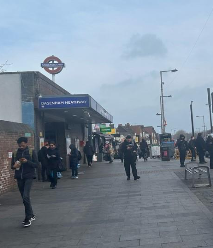
High streets are on an all-time decline, and it’s only beginning to get worse – here is why a range of local shops are vanishing.
The high street used to be the hub of towns and cities throughout the United Kingdom, where people went shopping, made friends, and fostered a sense of community. Many of these streets now convey a different narrative. As rising costs, shifting consumer habits, and the dominance of online retail transform Britain’s town centres, empty shopfronts, “To Let” signs, and closed companies have become more prevalent. While businesses like Amazon have revolutionised the way consumers shop, conventional shops find it difficult to match the ease of digital marketplaces. The demise of independent stores and established chains has spurred a broader discussion about the future of the British high street and what its decline means for local communities, economies, and identities in places like London and smaller towns across the nation.
The extent of the transformation occurring throughout Britain’s high streets is demonstrated by a recent study. According to a PwC analysis, hundreds of retail stores have closed in recent years due to rising costs, decreased footfall, and online shopping competition. Even after accounting for new store openings, the UK recorded approximately 12,804 store closures in 2024, or about 35 closures per day. At the same time, consumer habits continue to shift toward online purchasing, with digital sales making up nearly 28% of total retail spending. These numbers highlight the mounting strain on physical stores and indicate that, to be economically and socially viable, many town centres will need to rethink their role beyond traditional shopping.
Locally, the British high street’s decline can be observed in places like Dagenham Heathway. Over the past ten years, Dagenham, which was once a bustling shopping centre serving the nearby Becontree estate, has seen a slow decline in the number of operating businesses and services. Nine of the 101 retail premises in Dagenham Heathway were found to be empty in previous surveys conducted by the London Borough of Barking and Dagenham, resulting in a vacancy rate of around 8.9%. The high street has been impacted by local closures in more recent times. For instance, bank branches like Halifax revealed plans to close their Heathway store in 2024, after the earlier departure of other institutions, including Barclays and Lloyds. These closures provide an example of how Heathway’s retail environment has changed more broadly. Major businesses like Boots and Iceland are still present in the shopping centre close to the district line station, although several of the units are still empty and up for rent, indicating a decline in the market for conventional retail space.
Local officials are currently contemplating extensive renovation of the shopping centre area in response to dwindling activity, including plans to eventually remove portions of the complex from the 1970s and replace it with new housing and mixed-use areas. Together, these developments show how local business hubs like Dagenham Heathway are being reshaped by the forces affecting high streets across the country, including growing expenses, shifting consumer preferences, and the expansion of internet shopping.
Although local officials in the borough agree that Dagenham Heathway requires significant revitalisation, they contend that redevelopment and investment can prevent decline. The London Borough of Barking and Dagenham Council claim that the region is still one of the borough’s most significant town centres and is currently the subject of long-term plans intended to revitalise it. The goal to “redevelop the existing shopping centre and reinvigorate Dagenham Heathway as a thriving, welcoming, and sustainable hub” for the neighbourhood is outlined in a recent planning consultation.
Due to the borough’s severe economic problems, local political leaders have also stressed the need for investment. The borough is “one of the most deprived in the country and needs investment,” according to former council leader Darren Rodwell, underscoring the significance of redevelopment initiatives to boost the local economy and assistcompanies. New housing, enhanced pedestrian areas, and roughly 4,800 square meters of new commercial space are among the plans associated with regeneration funds that local authorities hope will help draw businesses back to the area and protect jobs.
Therefore, local officials believe that the Heathway’s future lies not in keeping the high street precisely as it was but rather in turning it into a mixed-use centre that combines community spaces, housing, and retail. Residents and business owners are invited to participate in public discussions that were started in 2026 to help shape this redevelopment, which reflects the council’s belief that the high street can continue to play a significant role in community life if it adjusts to contemporary economic realities.
While local authorities continue to stress the importance of regeneration, many residents believe the transformation of the Heathway has been too slow to prevent its decline. For long-time locals, the high street no longer resembles the busy community centre it once was. Mohammed Amin, a fishmonger at Heathway Seafood Centre who has worked in the area for years, says the change has been gradual but unmistakable. “The character of the Heathway has already shifted significantly,” he explains, pointing to the steady disappearance of long-standing retailers and the growing number of empty units. As familiar shopfronts vanish, he says, there are fewer reasons for people to visit the area, and with that decline comes a loss of everyday social interaction that once defined the street.
Similar complaints are voiced by other locals, especially regarding the loss of vital services that formerly served as the high street’s focal point. According to locals, Heathway’s function as a shopping centre and a gathering spot for neighbours has been undermined by the closure of banks, independent shops, and well-known chains. Retired pensioner Jannet Samuels, who has resided in the borough for many years, expresses obvious annoyance at the developments. She claims that, “Heathway is on the road to decline. There are no more cash machines, so we have to compete for one. The council must take decisive action because this is a dire situation.” Her remarks are representative of a larger worry among senior citizens who depend on these services and now feel more and more left out as more routine transactions are conducted online.
For others, the problem is both practical and emotional. Another local, Sally Godfree, says she wants to be proud of her neighbourhood but finds it harder as the high street becomes less distinctive. She says, “I want to feel proud of my local area, but it gets harder when shops close, and there’s less of a community feeling.” Speaking with severallocals reveals a consistent theme: the demise of the Heathway is also about the deterioration of shared places and local pride, which goes beyond economic data and reconstruction plans. For those who grew up near the high street, its dwindling existence symbolises not only the closing of businesses but also the gradual loss of a neighbourhood icon that previously served as a unifying force.
Bolanle Morafa, a Dagenham council worker, believes significant changes are on the way for the region, citing an ambitious long-term goal to transform the town. She reveals that the council is working “tirelessly” behind the scenes to transform Dagenham by 2030. According to Morafa, these activities are part of a larger strategy to enhance infrastructure, housing, and opportunity for residents. She underlines that the modifications are more than merely cosmetic, and that they are designed to have a long-term influence on the lives of borough residents. “The Dagenham we all know is likely to develop and enter a new age,” she says, implying a departure from the area’s conventional image in favour of something more modern and vibrant. While Morafa agrees that change might create anxiety, she insists that the council’s top duty is to support the existing community while moving the area forward. Her views reflect the council’s broader intention to strike a balance between regeneration and the preservation of Dagenham’s identity and culture.
Dagenham Heathway’s future, like that of many high streets across the country, is now a delicate mix of decline and reinvention. The empty shopfronts and dwindling foot traffic tell one story, but the perspectives of residents, business owners, and municipal officials show something more complex, a community trapped between what it once was and what it is being expected to become. Regeneration plans promise rejuvenation, but they also raise deeper questions about whether transformation can truly sustain the feeling of community that previously marked the high street.
What arises is a conflict between advancement and preservation. Policymakers see redevelopment as an opportunity: additional housing, investment, and the ability to rethink urban space for a changing economy. For many inhabitants, however, the high street is more than just a place of commerce; it is also a repository of memories, of routine, familiarity, and social connections. Its progressive deterioration is felt not only financially, but also in the subtle loss of daily encounters that previously gave the region its rhythm and personality.
Dagenham’s story ultimately mirrors a national moment of crisis. High streets across Britain are being forced to confront the realities of digital commerce, changing lifestyles, and economic pressures. Survival, it appears, will depend not on reverting to the past, but on reinventing purpose creating spaces that are as much about living, gathering, and community as buying. In this sense, the future high street may look very different, but its success will be determined by its capacity to bring people together.
As Dagenham approaches 2030, the outcome of these changes is uncertain. Investment and ambition may change the physical landscape, but whether they can restore a sense of place is a more difficult question. The true test will be not how much is rebuilt, but how much significance is preserved in the process. If the high street is to survive, it must become more than just a renovated place; it must be lived in. As cranes rise and plans are put in place, a quieter issue looms beneath the speed of change: what, if anything, risks being left behind as the high street is rebuilt for the future?
Leave a Reply