
From cooking dinners to hosting potlucks and parties, our homes should be the means to facilitate friendships today.

Image: David Schultz, Unsplash
We’re now in a strange era, where digital interactions seem to have overtaken in-person interactions. It seems that more and more people are opting to FaceTime or text rather than meeting people face to face. It’s so easy to reach out digitally when everyone is one text or a call away. The consequences of this? Convenience over effort. And with the digital takeover in the last couple of years, it feels inevitable that many people are losing the art of hosting gatherings in their homes. As we navigate the post-pandemic world, it’s important to remember that while technology is crucial to the modern-day era, our lives are not meant to be lived behind a screen in isolation, as we did during lockdown. We must socialise and reconnect with society in person to maintain our well-being; after all, human beings are social individuals.
Where are the house parties?
It was after a long afternoon of scrolling through apps like Dice, Eventbrite and Fatsoma, searching for that one event to fill our weekend, that my friend suddenly turned to me and asked, “What happened to house parties?”
She hasn’t been the only one to ask this question; in fact, it echoes throughout Gen Z, both online and in person. It feels like almost everyone has noticed the decline of The House Party. Somehow no one is willing to host, but almost everyone is dying to attend. Now there could be several reasons for this, such as people not being able to afford the spaces for a house party anymore, poor party goer etiquette leading to more reluctance on hosting (who wants to deal with damaged furniture post-party?) or people simply losing the art of hosting a successful party.

Image credit: Jack, Unsplash
Laiba, a 22-year-old post-graduate business student, thinks we are in a house party deficit because people are struggling to buy their own homes: “Genuinely, who can afford a house anymore?”. She is not alone in that sentiment with answers in an informal survey I conducted stating reasons like not being able to afford a house or a space big enough to host a gathering of 50+ people. In fact, recent studies have shown that less than 40% of people ages 25-34 own their homes today, a sharp decline from the previous decades.
When asked about why many young people may be reluctant to host parties, Abbie O’Neill, 21-year-old Goldsmiths university post-graduate student, says, “We’re all renting and parties are messy, so we’re worried about stuff like stains in the carpet or broken furniture. Airbnbs are very expensive to rent as well, especially in cities”.
Despite the reluctance to host them, people still long for house parties with over 80% of 21 participants in our survey answering yes when asked if they’d attend a house party today. In an era of eye-watering admissions prices for night life events, people are reminiscing the times when the only cost they were concerned about were the drinks they’d bring to a party. According to my survey answers, house parties have been where many people have met or hoped to meet current friends and partners. It’s a casual place to meet new people without worrying about being turned away at the door by bouncers for not meeting dress codes or paying exorbitant entrance fees potentially reaching up to £30.
From casual conversations on sofas to sharing a pack of cigarettes in the garden or mixing drinks in the kitchen, fixing makeup and hair in the bathroom together or even playing card games at the table, this is how house parties bring people together.

Image credit: X post from user @_tahs1n
Bringing back the cosy dinners.
Not every gathering at home must be a huge affair. In fact, hosting a small dinner party with friends could be a great way to build community and strengthen friendships with others. According to a report from University College London, there’s nothing like sharing a simple, tasty meal with friends to make people feel closer. Zaynab, a 21-year-old dentistry student, says, “I’m always busy nowadays, I don’t always have time to get ready to go out for a meal, so I invite people round instead”. Having been invited to a few small dinners with friends, I can see the appeal. It can be a low-pressure, intimate gathering where no one is worried about dressing to the nines. You’re just happy to spend time with your mates.
While it can be a relaxing experience, it may also be a fun way to show off hosting skills for guests by tapping into your inner Martha Stewart and becoming the Hostess with the mostest. Hosting regular dinners in your home might be a great way to encourage face-to-face communication, as 60% of participants in my survey said they’re more likely to share news or catch up with friends digitally rather than in person.
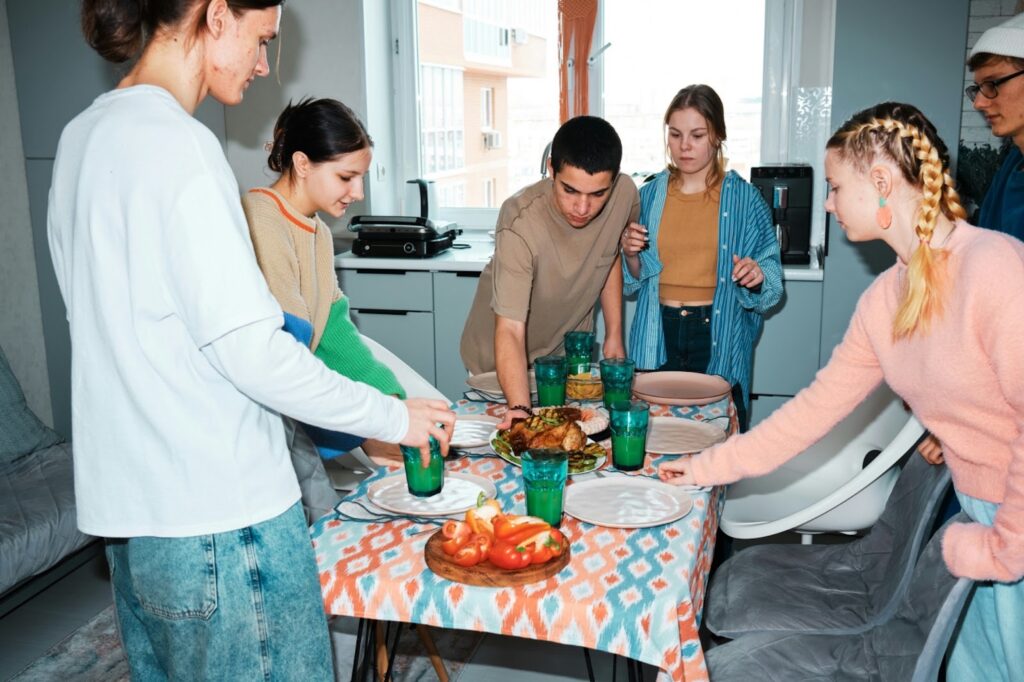
Image: Andrej Lišakov, Unsplash
Potlucks, Fundraisers and community
Today, it seems like potlucks are slowly regaining their popularity, especially amongst younger people, often going viral on social media platforms like TikTok and Instagram with the help of creators like @shaiie_foeva, known for her comedic, extreme judgments on people’s food contributions.
With the rising popularity of people hosting potlucks, the role the home has to play in facilitating friendships and community becomes much clearer. According to a study from R.I.M Dunbar, people who often eat socially are likely to “feel more engaged with their communities” and also feel “happier and more satisfied with their lives”. This goes to show the importance of communal cooking efforts and breaking bread together socially at home.
Social media has shown that potlucks are also a great way to appreciate diversity in different cultures and identities. People from different backgrounds can bring their cultural dishes to gatherings and share them with their friends. This could be an opportunity for the discovery and cultural appreciation of different dishes, which I personally experienced after attending a potluck dinner that included Pakistani, Indian, Congolese and Nigerian food.
Sherin Rajan, a 22-year-old radiology student in Carlisle, reflects on her past experiences with potlucks and says, “Potlucks can be quite fun” and that it’s an easy way to our cooking without too much pressure.
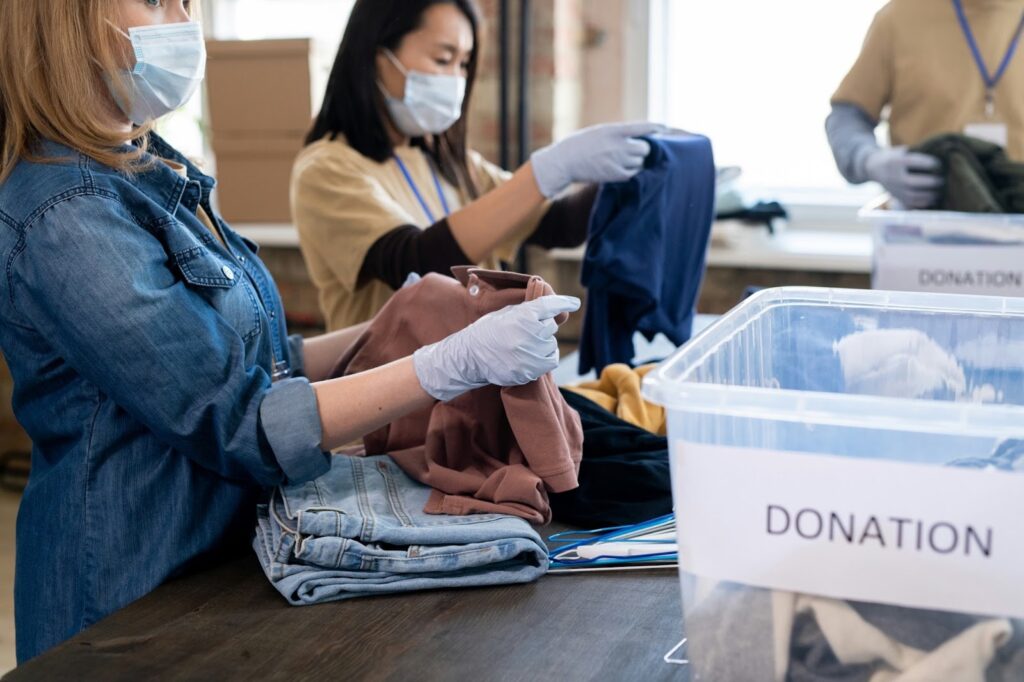
Image credit: Getty Images, Unsplash
Fundraisers hosted in the home seem to be declining in popularity as people today seem to be opting for more digital options like GoFundMe, but they could be another way to build community amongst people sharing a common goal. Getting together with friends and new people to support a cause could be an effective way to strengthen community bonds and share your passion.
Fundraising at home could also cement our collective identity, especially when in support of local causes that are important to us, such as medical support, times of crisis, supporting local charities. What better way to define shared values than coming together to support those in need?
Above all, it’s more than potluck dinners, fundraisers and parties. It’s the fact that regular face-to-face meetings with people is linked to improved mental health and wellbeing, according to Dr Harry Cohen for Psychology Today. Therefore, meeting at easily accessible places like someone’s home could be a great way to promote social connections and well-being.
As we continue to venture further into this digital age, we may be forgetting the power of face-to-face connection and the simple yet vital role the home can have in building our friendships and communities. Priya Parker, author of ‘The Art of Gathering: How we meet and why it matters’, once stated, “Gatherings crackle and flourish when real thought goes into them”. This just goes to show the power of intention when it comes to giving gatherings a purpose and a place to be held. Digital connection simply cannot replicate this.
Leave a Reply