
The key to a person’s heart is through their stomach, and no home is complete without a kitchen. No two kitchens are the same- every utensil and ingredient tells a different story. Come on a journey with us as we explore the stories behind traditional pots and pans in kitchens across the globe.
Paellera, Spain
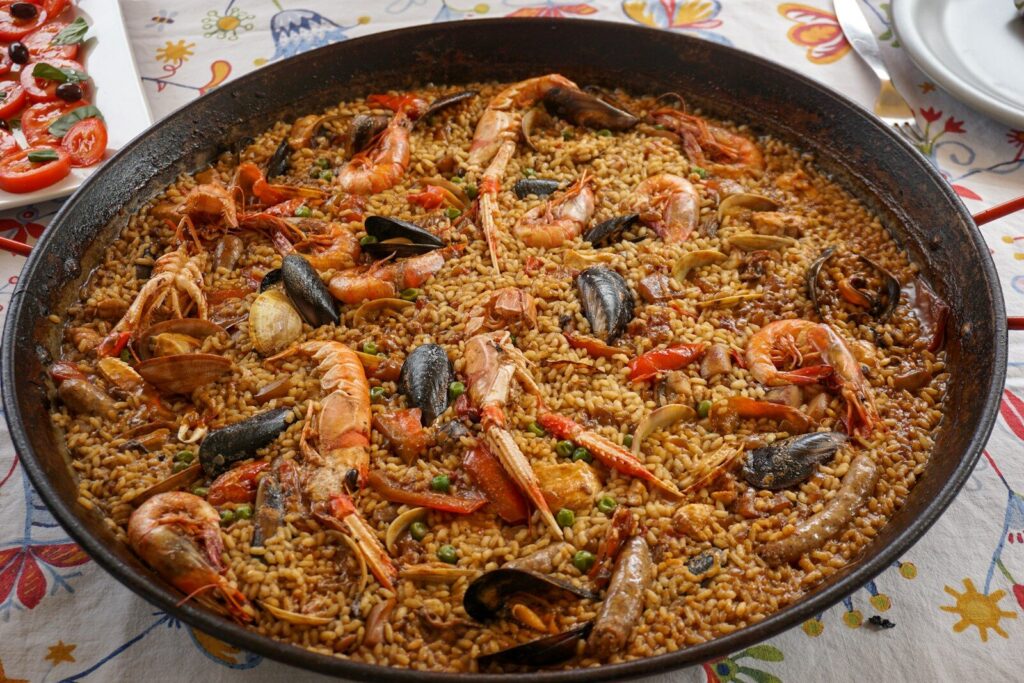
Image: Sandra Wei, Unsplash
Have you ever heard of “paellera”? If you know the dish paella, this is the pan they use to make it. Paella pans are always large, round, and have a flat bottom as they are cooked in an open fire. The large surface area allows the food to be cooked evenly across the entire pan.
Paella was eaten by farmers who used a large pan to feed everyone. The paellera would be placed in the centre, and everyone would eat from their section with their spoon. The two handles on the side of the pan allow you to have a balance when cooking and make it easier to carry the heavy pan without accidentally burning yourself.
The pan is designed to be placed in the centre of the table, from which everyone eats directly. The magic of the paella pan lies in its shape. Its wide, gently sloping surface creates an exceptional balance between perimeter and volume, allowing the liquid to evaporate evenly and rapidly. This means the rice cooks in a thin, unified layer, capturing flavour at the same pace from edge to centre. This shape and form are not accidental—it is the defining soul of the paellera.
Unlike ordinary frying pans, the paella pan is designed with one purpose: to cook rice and other ingredients in perfect harmony. Today, Paella is a tradition across Spain and is symbolic of love, unity, and most importantly, community.
Ite Igwe, Nigeria
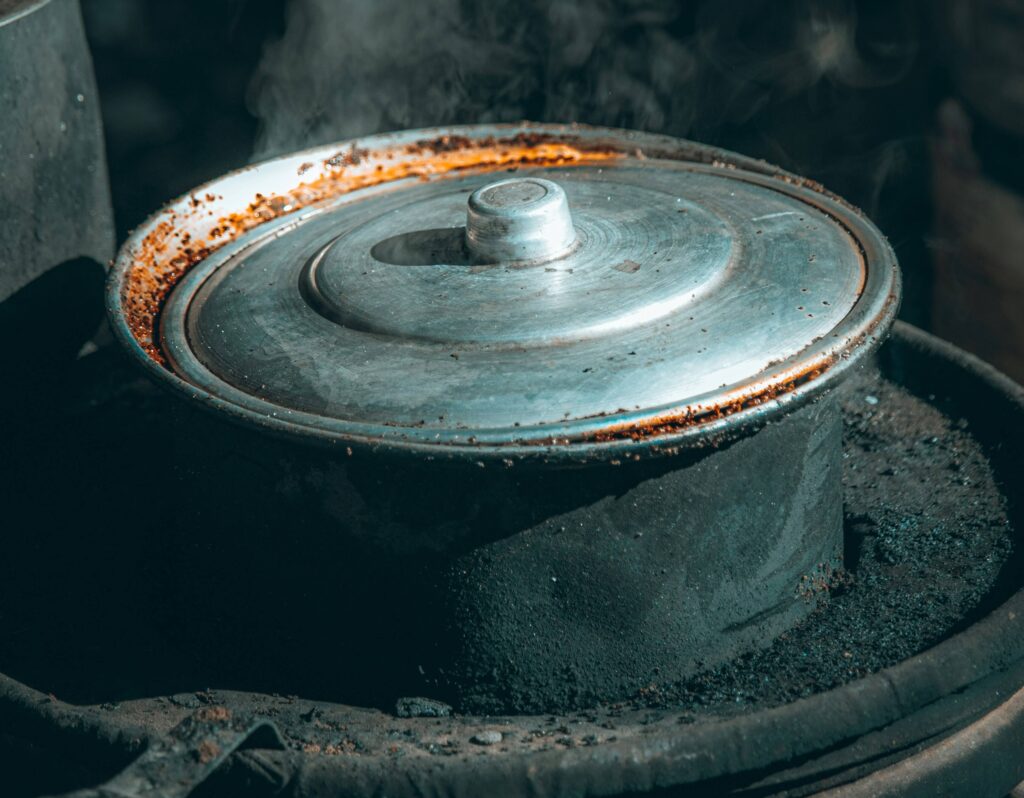
Image: Umar Farooq, Unsplash
No matter where you are in the diaspora, Nigerians will probably picture the same pot when thinking of the classic dishes that their families cooked that remind them of home. A staple in almost every household in Nigeria, and probably in Africa as a whole, Ite Igwe (meaning metal pot in Igbo) is responsible for many classic dishes in Nigerian culture.
The history of Jollof rice is often debated, with many countries from West Africa claiming to have created the popular dish. What is undeniable, however, is that jollof rice has become the face of Nigerian food to the rest of the world. Known for its vibrant orange colour as well as its rich, smoky and spicy flavour, jollof rice is a staple in Nigerian homes and parties.
Hardly will a birthday party, wedding or Nigerian Independence Day celebration go by without jollof rice being set out on tables, and you can almost guarantee it will have been prepared in Ite Igwe. Ite Igwe’s design allows for large proportions to be prepared, making it perfect to use for family and community gatherings.
“I have very fond memories of my mum and other aunties gathering all of us around to dish out our food from that pot”, Munachiso says. “It always reminds me of home”. It’s a labour of love, all prepared in Ite Igwe and often eaten out of the same pot as a family, bringing everybody together. Ite Igwe is a pillar of family, food, and culture in Nigeria.
Pressure Cooker, India
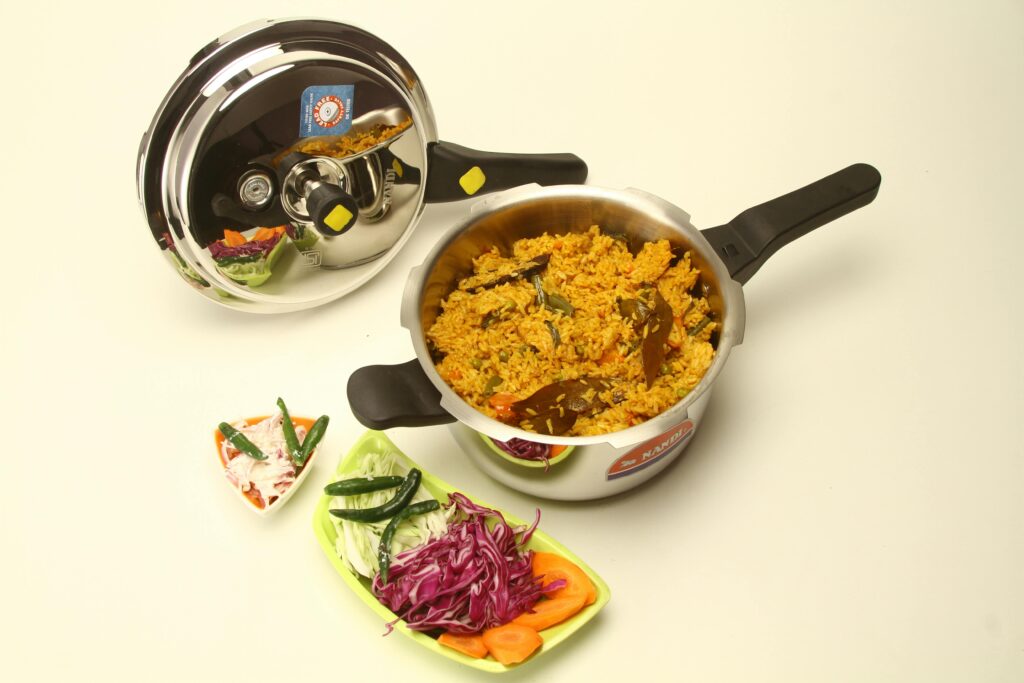
Image: Milton Das, Pexels
Every Indian kitchen is characterised by the scents of various spices, the sounds of sizzling ingredients, and, almost inevitably, the smoke and whistle of a pressure cooker going off periodically. Despite the diversity in traditions across India, there is one utensil that transcends boundaries and is universally precious across the country- the pressure cooker. While the pressure cooker was first commercially produced by Georg Gutbord in Germany, these handy devices quickly gained popularity in Indian kitchens upon their introduction in the mid-1950s and are now a staple of every Indian kitchen.
Shreya Agnihotri, an international student, says, “I grew up hearing the sounds of the pressure cooker’s whistle going off in the kitchen. Even when I used to live in Oman, our family had brought our pressure cookers with us.” Now, having moved from Lucknow, India, to London, she adds, “It would not feel like home if I didn’t get to cook all my comfort dishes the same way my mom does when I’m back in India.”
In a country known for its stews and curries, the pressure cooker helps cook lentils, meat, and rice quickly, therefore saving both time and money in kitchens for homemakers. One comfort food that makes the entire country think of home is khichdi- a warm, spiced porridge made with rice, lentils, and some vegetables. As a staple across states, khichdi is one of the first solid foods given to babies and is often eaten when unwell or homesick.
Today, the pressure cooker has stood the test of time. It can be seen (and heard) in every household and brings with it the joy of a warm, spiced, and hearty meal.
Onggi, Korea
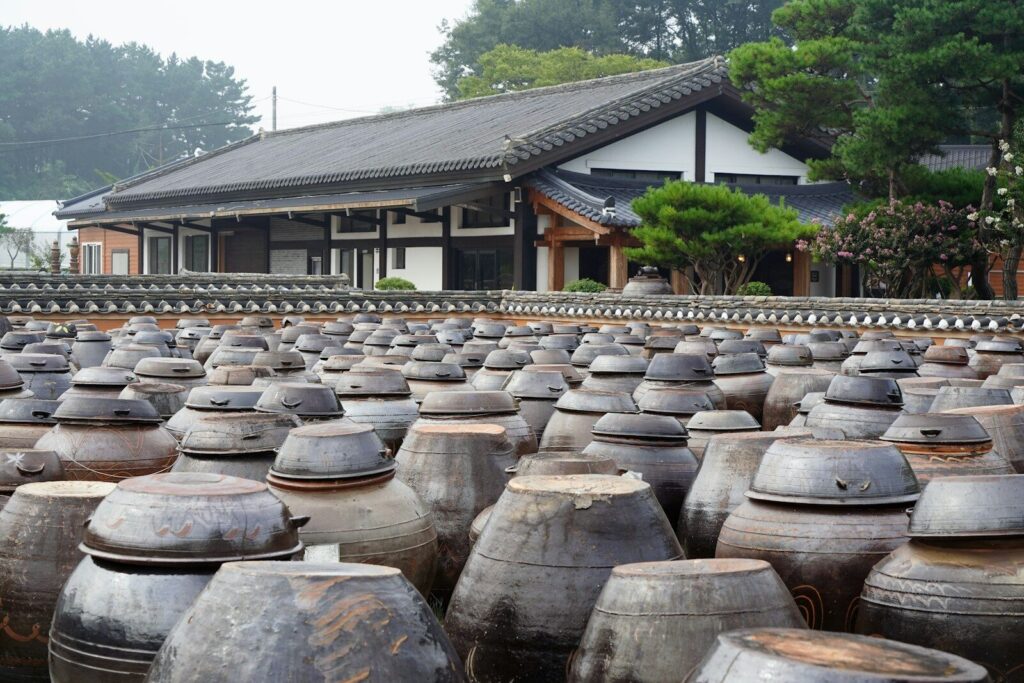
Image: KS KYUNG, Unsplash
Tradition is often found quietly fermenting in a clay jar on the balcony rather than framed on a wall in Korean homes. The onggi is much more than just a cooking tool. It is a porous earthenware container used to keep fermented pastes and kimchi. It represents heritage, patience, and the steady, quiet rhythms of domestic life.
Kim Sun-hee, 70, told me that the onggi had its own personality. She described how the breathable clay naturally controls moisture and air, saying, “Onggi is not a pot to us, it is almost a living thing.” This makes it possible for kimchi to ferment uniformly during Korea’s harsh winters and muggy summers, something that a plastic tub cannot do. Tradition and science collide in its curved, earthy walls.
However, the significance of the onggi extends well beyond fermentation. Sun-hee’s jars contain memories spanning decades. When she got married, her mother gave her one of these along with the words, “A home begins with good kimchi and a good heart.” Even now, when she tells her grandchildren to never use metal spoons inside and to lift the heavy lids carefully, she still says that line.
Every November, her family gets together to fill the jars as part of the communal ritual of making and storing kimchi, known as gimjang. This custom unites four generations of women. Its legacy includes even the hilarious sounds of her grandchildren tapping the onggi lids.
The onggi, a clay pot that lives, remembers, and silently keeps a home’s heart beating, stands out as an example that may influence not just flavours but generations of families, and help build a home full of memories and traditions.
Güveç pots, Turkey
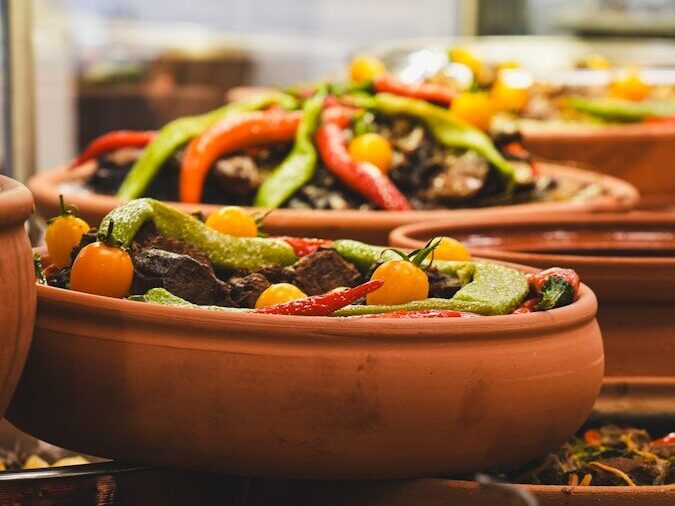
Image: Hakan Çınar, Unsplash
Turkey is famous for its diverse cuisine, known for its rich flavours and even richer history behind how these dishes are prepared. Güveç pots are a traditional family of earthenware pots historically used in Balkan, Persian, Levantine and Turkish cuisine. The people of Sorkun, a village in the İskilip district of the Çorum province in Turkey, have specialised in the production of güveç pots for centuries, made from locally dug clay.
Güveç pots are a few inches tall and can range from having a glazed or unglazed finish. The people of Sorkun traditionally kneaded clay combined with straw, hay, sawdust or wood ash to craft these pots. They are then hand-shaped and smoothed out to make the surface non-porous, so that stews can settle into the pot with ease. After the pot is completely dry, it gets glazed and kiln-fired. Güveç pots hold a huge significance to Turkish cuisine and culture; the pots host a variety of dishes, which are also, confusingly, named Güveç.
Ever since I was a child, I remember the distinct smell of meat, tomatoes and spices coming from these pots. Families all across Turkey and the Turkish diaspora continue to use the same Güveç pot for decades.
Leave a Reply