
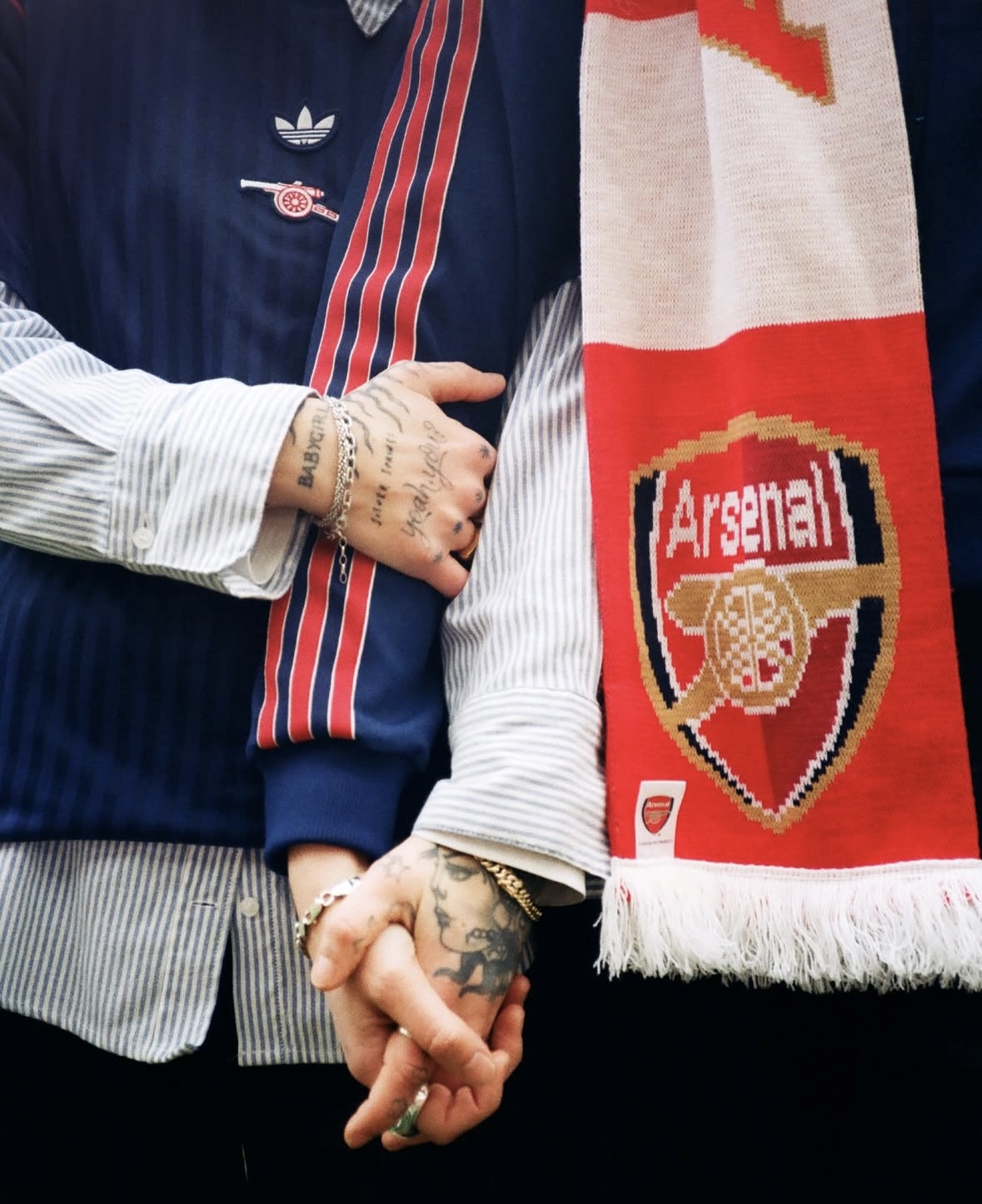
From the terraces to the Grammys – how football kits are taking over the fashion industry.
Football kits, once reserved for 90-minute match-days, are having a major moment in the current fashion scene. Appearing anywhere and everywhere, from brunch, to work and even high-end events: just take Kendricks’ full Martine Rose look from the Grammys. So gone are the days, seeing football shirts on the backs of men in the local boozer, and in with the days of seeing football shirts on the runways and worn by the most trendy people on the scene – We’re talking UAL, Goldsmiths and Central Saint Martins!

Football games are no exception, turning into fashion shows, where the crowds of fans could be confused for a London fashion week audience, and the amount of runway ready fits you will encounter upon arriving (all of which incorporate some kind of football memorabilia) will have you second-guessing where you are.
@Lydia Garnett
The revival of the 90s that has seen the comeback of cultural icons Oasis, Blur, and Pulp, plays a huge part in this resurgence – leading to a trend known by Gen-z on TikTok as ‘Blokecore’, headed by the inclusion of football shirts in an everyday outfit.
Liv, 20, said that she feels “football merchandise is now less about wearing the team you support, and more about wearing the merch ironically as a fashion statement”
Resale platforms like Depop and StockX have felt the positive impact of this trend. Depop reported a 294 per cent increase in searches for football shirts during the 2024 Euros, and StockX saw a 68 per cent rise in sales of football jerseys year-on-year, making it clear that football merchandise is no longer limited to items of sportswear but now is a a key player in the blending of sport and fashion.
Whether it be a retro shirt (often worn by those who weren’t even born when the shirt was in circulation), or tracksuits, once worn to train in by the players, now being worn à la mode, the evolution of football shirts has grown from being simple symbols of fandom to fashion statements – and it’s hard to ignore.
“I get why people wear football shirts as fashion, but for me, it’s always been about showing my support to my team. I’m not too keen on people wearing them just because they look cool – especially if they don’t even follow the sport” – Tilly, 20
Arsenal FC (among many other football teams) is taking advantage of this phenomenon, by creating their ‘Retro Collection’ – re-released items such as shirts, scarves and old memorabilia from the previous generations of famous Arsenal eras. The manager at The Armoury (Arsenal’s flagship store), who declined to be named, revealed that the most sought after shirt was the 2003/04 ‘Invincible’, from the year Arsenal won the Premier League undefeated, instead of this season’s offering. “Not only is it a beautiful shirt, but for many, it holds a memory that unfortunately Arsenal fans can only look back on and reminisce,” he says.
Football clubs are not alone in driving this trend with designers Wales Bonner and Martine Rose, drawing inspiration from football culture in their recent collections. Wales Bonner’s collaboration with Adidas, highlighting the intersection of sport and style, using the historic football boot design while making it distinctly modern. Similarly, Martine Rose’s menswear collection takes the bold, oversized fits and graphic logos that dominated football kits in the ‘80s, 90s and early 2000s and brings them into the fashion of today.
Take Grace Wales Bonner, who graduated Central Saint Martins 11 years ago and has grown her London-based Wales Bonner label ever since, forming a collaborative partnership with sports giants Adidas. She’s made football kits a running theme in her fashion portfolio.
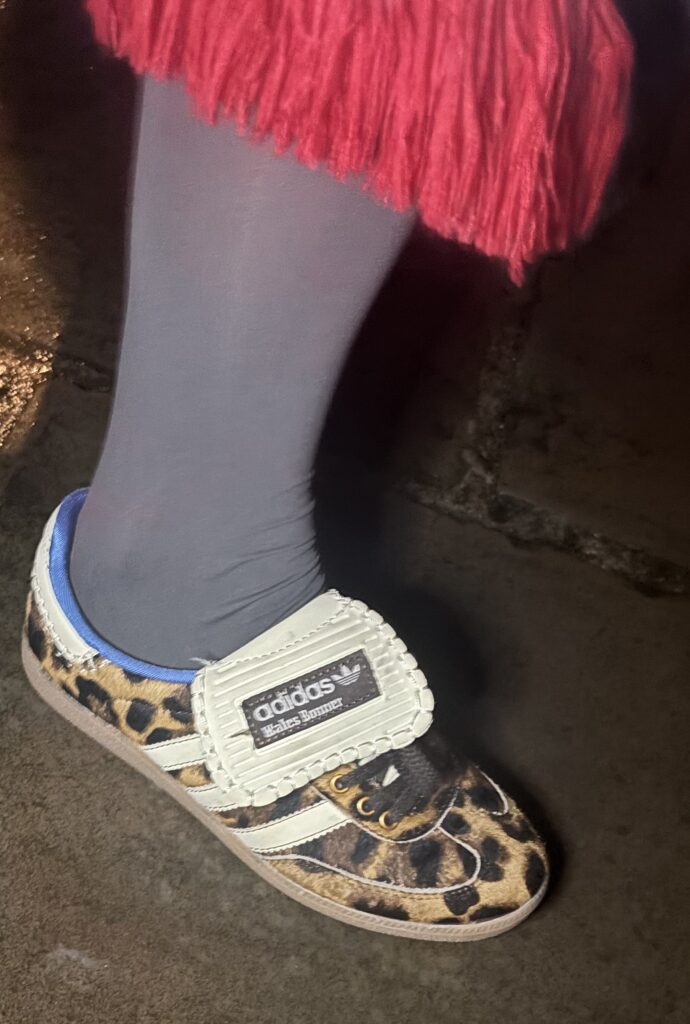
Her collaboration with Adidas was the talk of the terraces, taking classic football boots and making them into a super stylish, wearable everyday trainer. The standout design being an extra piece of material that covers the laces (the tongue) – created to help footballers improve their shots, by stopping the bow of the laces from affecting the flight of the ball.
Taking the original design of the Adidas samba, this key piece of the retro football boot, as well as the ever-popular leopard print and combining them to make one of the most popular shoes on the market.
Talking to Hypebae in 2023, she said: “I think I’ve grown a bit around football… I’ve always been quite aware of it. Growing up, my family supported Arsenal… I’m very interested in the idea of finding elegance and beauty in the design language and in the history of the sport”
Designer Martine Rose has also been changing the meaning of football gear for years. Her collections are known for being oversized, boxy cuts that echo the hypermasculine fits seen in ‘90s football kits. One of her most popular items – an oversized white shirt, with ‘MARTINE’ written across the front centre like a sponsor on a football shirt and an emblem in the top corner, identical to that of a football badge on a football jersey. Rose repurposes the bright, bold colours, graphic logos, and heavy sponsorship branding elements of a classic football shirt, turning it into streetwear. The football inspiration is undeniable.
“For me, football highlights the power of youth culture, it can change politics, it’s very powerful…That’s why all of my collections always feature that” Martine Rose said speaking to SHOWstudio in 2021.
And it’s not just about wearing a shirt with your favourite player’s name on it. Scarves are potentially the item of football gear that has taken the fashion world by storm, the most. Once worn as a practical item, to keep warm in the stands, they also worked as a visual show of support, with fans stretching their scarves as far as possible, to create a wall of colours and logos, waving their favourite teams colours in a synchronised fashion.
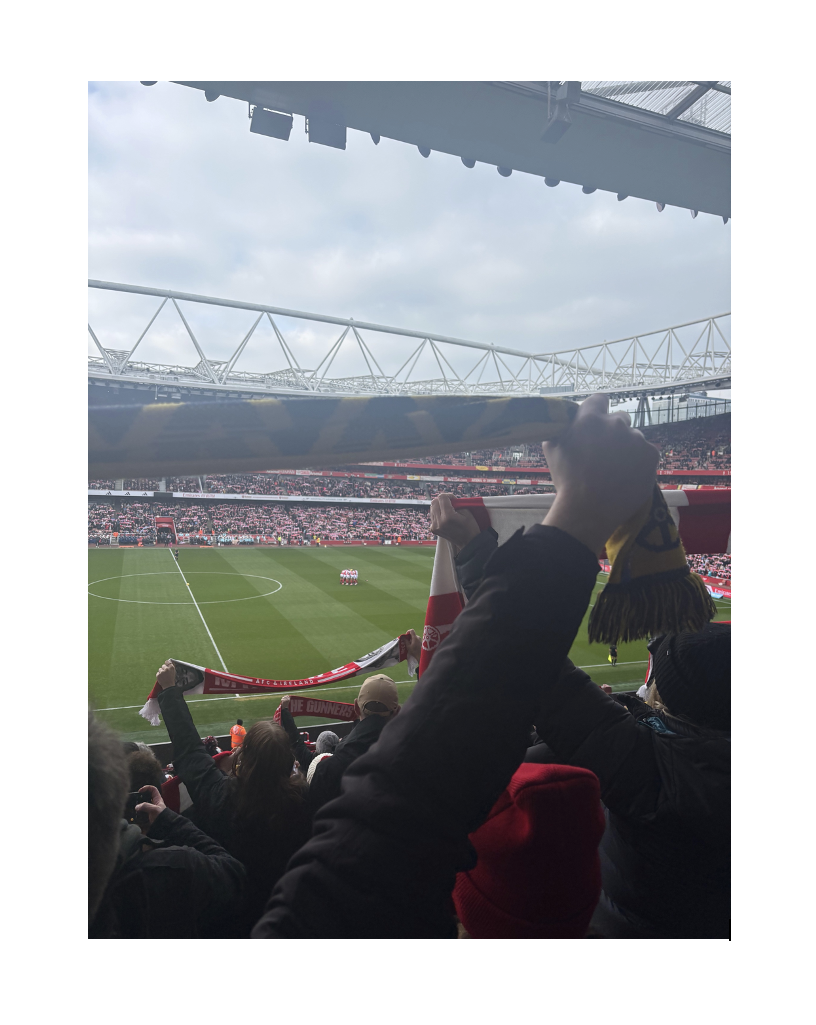
“My favourite part of the whole match is at the beginning of every game, everyone holds up their scarves and sings the chorus to ‘North London Forever” – Ally, 25
Available in multiple different designs, football scarves stand out with their bright block colours and bold block lettering featuring team names and badges. For example Chelsea’s infamous blue and white design, or the more recently popularised pink and baby blue of Dulwich Hamlet – you can’t go to Dulwich without seeing at least five people wearing one (even on days that aren’t game day!). Inspired by the visual riot on the terraces, brands such as Burberry, Vetements, Supreme, Palace and Stussy, have started to create their own.
“I’ve got a collection of scarves from different clubs. Some I wear for style, but others are from matches I’ve been to” – Emma, 26
But is this more than just a fashion trend? Some believe it’s about more than just a trend, it’s about tapping into something bigger: a feeling, a moment in time, a cultural phenomenon. Highlighting Martine Rose told Issue 10, “the connection between football and fashion is just culture”. Football kits are an emblem of togetherness, nostalgia, representing a time when culture felt exciting.

But one thing is for certain, wearing football kits will never go out of fashion for football fans. For now, everyone and their mum is wearing some form of football kit, whether they know it or not. What was once purely about supporting your team, has transformed into a fashion statement. So when you see someone supporting a team’s shirt, don’t ask them to name any players from the team they are wearing…