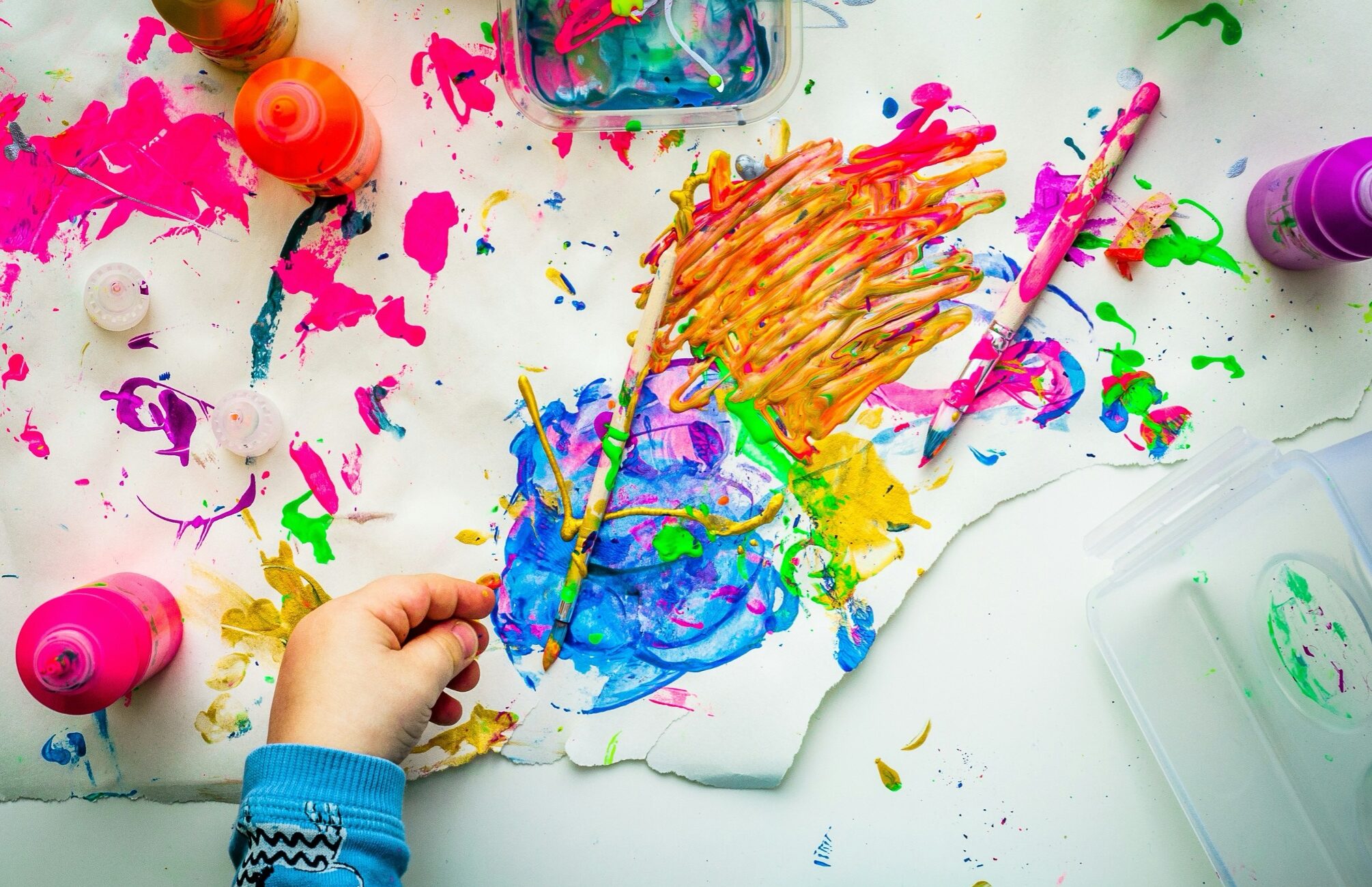
Photograph: Unsplash by Dragos Gontariu
“Drawing helps me create my own world, where I can live in my own imagination and feel safer and happier; I often draw for escapism,” said Josh during our interview. He is a 20-year-old who has struggled with anxiety since secondary school. The one thing that has helped him through this was his passion: drawing. Secondary was when his anxiety was at its peak though; dealing with anything outside of his comfort zone was a source of panic for him, even with things as simple as asking for the bill or going up to a cashier on his own.
He always thought to himself, “will they laugh at me? Am I going to embarrass myself? Will I say something wrong or say it in the wrong way? Will I stutter? Will any words even come out of me?” These thoughts accompanied him in every unfamiliar situation, shattering his confidence. But at the end of each day, he got all the comfort and confidence he needed when doing his favourite thing. Josh highlighted, “drawing always made me feel confident. I’ve found it to be therapeutic – just splashing my ideas, thoughts and feelings onto a blank canvas. I draw whenever I get an idea in my head or I see a piece of inspiration somewhere, but when I’m anxious, sad or angry, it’s also a very helpful escape that always calms me down.”
***
Art has always been an underrated form of therapy, often not taken seriously by many people. Dr Amy Hill, a Creative Arts Therapist and her expertise is at treating children and young people, described such thinking as “dismissive” and highlighted that, “there’s a lot more neuroscience that’s been discovered nowadays that has more evidence about how art therapy works in terms of the brain… we can actually create new pathways and new ways to be or see things. So, it’s incredibly healing.”
For example, a recent 2024 study led by Frontier Economics and UCL’s World Health Organisation Collaborating Centre for Arts and Health reveals that engaging with art has the power to reduce symptoms of mental health conditions, like anxiety and depression, alongside its other health benefits that improve overall well-being. Additionally, an article published by Crown Counseling states that, “studies show that art therapy helps in reducing symptoms of anxiety, depression and stress by 73% – especially amongst children diagnosed with autism spectrum disorder (ASD).”
Dr Kelly Jayne, a consultant art psychotherapist with a speciality in treating complex trauma and dissociation, whom I also interviewed to get her perspective about the matter explains, “art therapy can really help people to communicate if they find speaking really difficult and therefore it can be really helpful for people who have learning difficulties, low self-esteem or social anxiety, or people that don’t feel able to use their voice because of whatever reason where they’ve been encouraged to not speak up. So, the image can then be the voice for people, and that’s really empowering as well.”
***
Creating a painting can also bring back old memories you’ve forgotten, memories that are still connected with current struggles that you are trying to overcome. How does that help with mental health conditions though?
Dr Jayne highlights, “the image helps us to find meaning, understanding and urgency in what we might otherwise try to avoid in ourselves, because it’s too painful, because of the trauma or emotional content of that particular memory.” In other words, drawing helps us process these buried memories that our brain chose not to deal with because of the pain they carry. So, by processing these memories in a safe and creative environment, this can treat, or at least reduce, symptoms of certain mental health conditions, like anxiety and trauma.
We’ve seen this in the case of Claire, a 22-year-old who has struggled with adolescent trauma and emotional dysregulation. She shared her experience in an interview five years ago, while she was receiving art therapy, which was published on the British Association of Art Therapists’ (BAAT) website. At the time of the interview, Claire had been receiving art therapy for nine months after trying six other forms of therapy, mainly talking therapies, but it was art therapy that worked best for her. She said, “art gives me a way to visualise what’s going on and makes sense of it, because I find [it] quite hard to make sense of my head, so it helped me visualise what was going on.” One of her drawings was a representation of how she feels about her mind, which she always referred to as “very messy.” This messiness, she explained, blocks her from accessing anything in it, especially the things her illness doesn’t want her to think about.
In Claire’s case, art therapy was the reason she completely changed her worldview. As she said, “I spent a long time thinking that I wanted to die, and it was the only way. But now I realise that I owe it to myself to live, and it’s actually just my illness telling me that.”
***
It’s a Sunday evening, you’re 6 years old and you’ve just got back to finish colouring the drawing you started in the morning. Your biggest worry in this moment is your mom forcing you to go to bed because it’s already past your bedtime. Art therapy helps us revisit this simpler time in life by doing the same thing we did then.
Dr Jayne describes this as, “reclaiming the primitive child within ourselves.” This is her different perspective on art therapy, which she believes is one of the reasons it’s so therapeutic. She explains, “a child will sit there with crayons, exploring art materials and they’re using that to express themselves before they get to the verbal language. So, it’s something that we’re automatically as humans, already dispositioned and programmed to do. So, when people engage in art psychotherapy, it’s like reclaiming the self before the world got to them and getting back to that place … it’s a really amazing moment when that happens.”
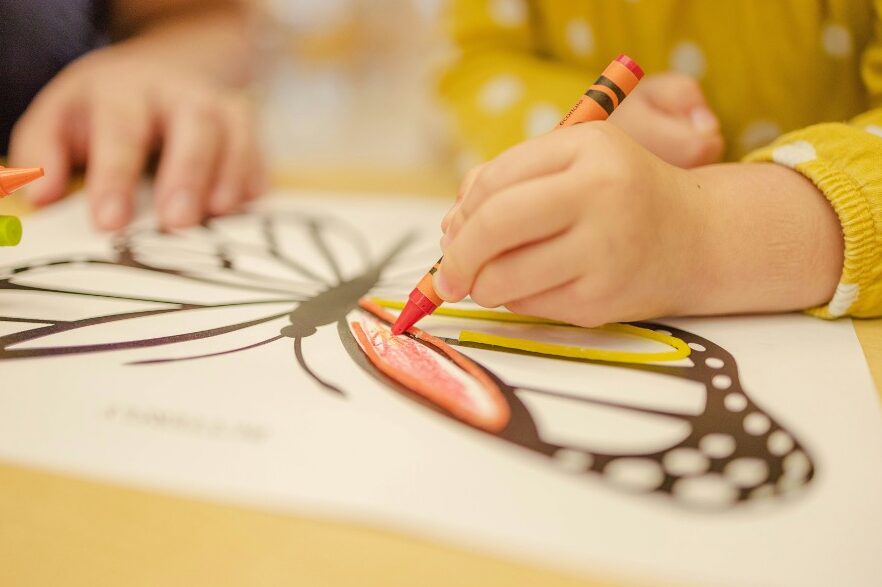
Photograph: Unsplash by Lucas Alexander
***
The true beauty of art therapy, and what really makes it stand out, is being able to express everything you’re feeling to someone without saying a single word. So, you get the benefit of getting all the heaviness off your chest without needing to share private details that you may not be comfortable talking about. Can art completely compensate verbal expression though? Dr Jayne describes art as our primitive language, which is universal, while verbal language, she says, is secondary. But she highlights that “they both have different functions and there’s a choice of how to communicate, so they’re both useful in their own places.” She explains that verbal language can be helpful in art therapy when someone wants to interpret their pieces, and in some cases, the drawing itself can bring out the words that they hadn’t been able express before.
If you’re sitting there thinking, “art therapy is not really an option for me, I can’t even draw a stickman properly,” both Dr Jayne and Dr Hill have highlighted that this is definitely not a problem and art therapy is for everyone. Dr Hill explains, “when it comes from a place of wanting to just express yourself; it doesn’t matter. It’s totally about the process and how it makes you feel and what it speaks to you, not about the finished product. Art therapy covers, a lot of different creative mediums besides drawing, like, sand tray, puppetry and poetry.”
Art, in all its shapes and forms, is an essential part of life. It can be your voice when you don’t have one, and it can help you process memories and feelings you only begin to understand after seeing or creating an artwork that reflects the mess inside you. Whether it’s your hobby like Josh or your chosen mode of therapy, art is always there for you to turn to when you need support.