On June 21st 2026 the Northern Hemisphere will experience its annual Summer Solstice, when the sun is furthest from the equator blessing us with the longest day of the year. Ancient societies around the world saw the Summer Solstice as the dawn of a new beginning as the veil between natural and mythical worlds grows thin and nature is born anew.
In recent years, the event has seen a resurgence with thousands gathering to see the sunrise at Stonehenge in Salisbury or the dance around the myriads of Maypoles in Sweden. For many, these events are an opportunity to connect with nature and bring some ancient magic into modern life. But beyond the celestial celebrities like Stone henge, lesser-known Solstice celebrations hold a unique modern significance for everything, from local pride to socio/religious liberation. Hens’ Teeth has rounded up some of the most obscure but significant celebrations both near and far.
Yhyakh (ee-hee-ak): How the world’s coldest inhabited region celebrates the longest day
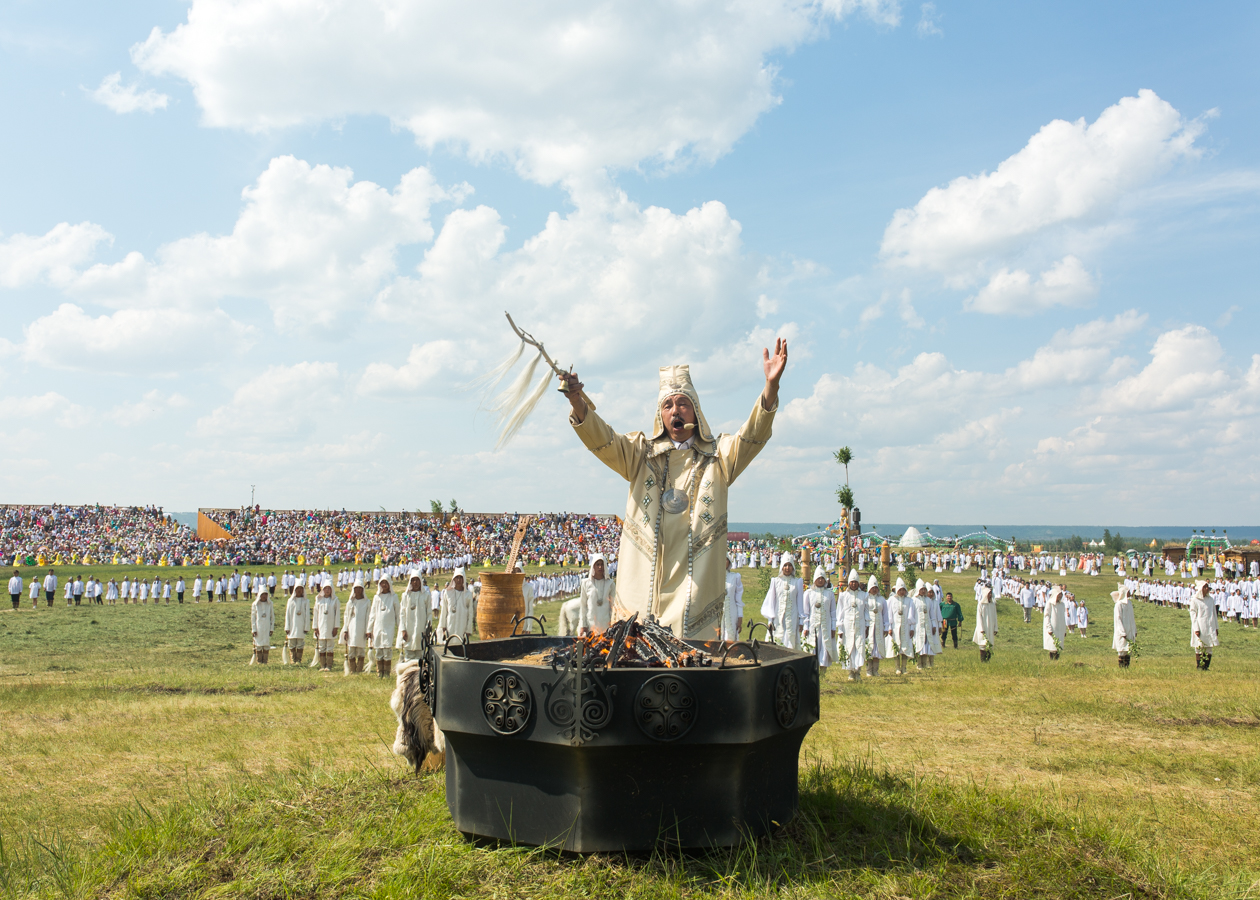
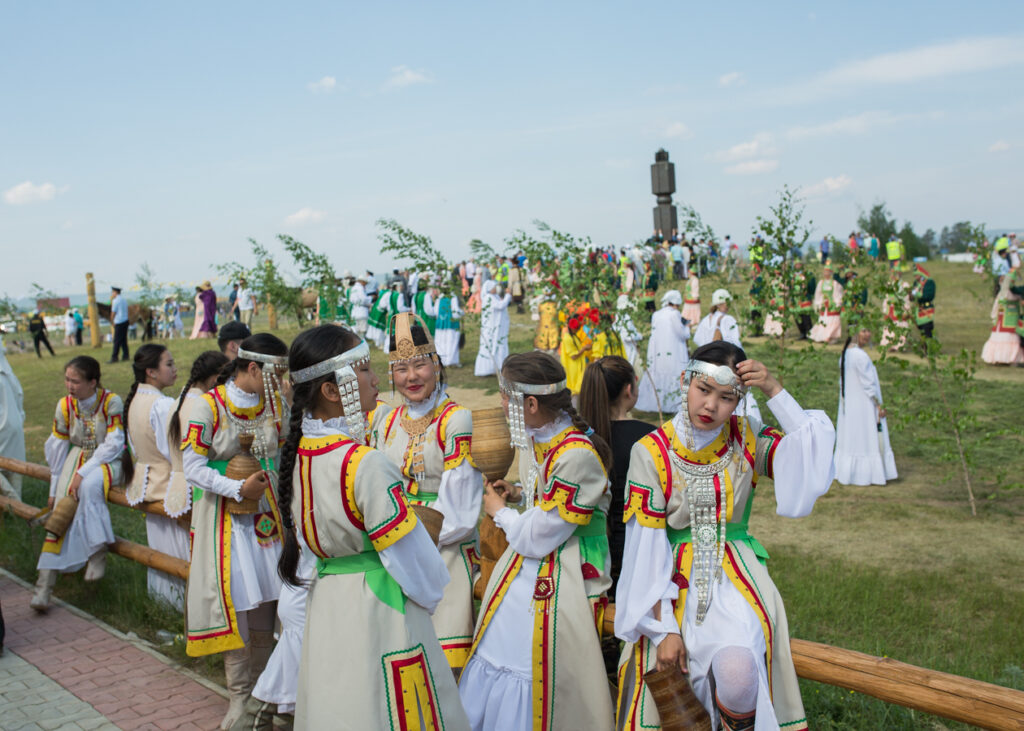
In Yakutia, one of the coldest corners of Russia, the Sakha (pronounced: Sah-ha) people gather to celebrate the Summer Solstice, which is also seen as their cultural ‘new year’. Descended from Nomadic people who travelled the great Eurasian steppes for thousands of years, the Sakha are a Turkic group distinct from European Russians.
“The major point of the Yhyakh [Summer Solstice] is to feel the close relation between humans, animals, the landscape and benevolent deities,” says Csaba Mészáros, head of the department of non-European studies at the Hungarian Institute of Ethnology. He spent many years living with the Sakha people. “The Yhyakh is one of the best ways to seal this closely knitted relationship between all living beings together.”
The local community gathers to celebrate by sharing the sacred dairy drink Kymys (him-us), competing in Sakha sports and dancing the Ohuakhai (oh-hoo-oh-hai) – a combination of dance and poetry. Each Ohuakhai is led by a ‘teller’ who improvises lyrics for the other dancers to then sing back.
“If you are a very good teller, you can have a very long Ohuakhai. It can sometimes be very funny because they can make fun of people who dance there,” says Mészáros.
They depend on the sun, and they want to ‘meet’ the sun again and again. It is about ‘collecting’ the sun and sealing this bond between the Sakha’s and the sun.
Csaba Mészáros
The Yhyakh climaxes when the Sakha gather and face their palms eastward to meet the sun when it rises at 2am.“[In Yakutia] It is important to always renegotiate your good relationship with the sun, which gives life, which brings the vegetation into life, by which you can feed your cows and horse,” says Mészáros. “They depend on the sun, and they want to ‘meet’ the sun again and again. It is about ‘collecting’ the sun and sealing this bond between the Sakha’s and the sun.”
Mészáros explains that although the complex traditions of the Yhyakh vary between villages, the ultimate meaning to the Sakha people is one of pride for their distinct culture. Although celebrations vary across communities, the Yhyakh is a great source of Sakha pride.
“You live in Russia, a country where celebrations of ethnic pride are often only staged. Every day it is very difficult to represent yourself, to live your [Sakha] way of life. At this event you can openly be Sakha.”
To learn more about the incredible Yhyakh traditions such as Khapsagai wrestling try this video.
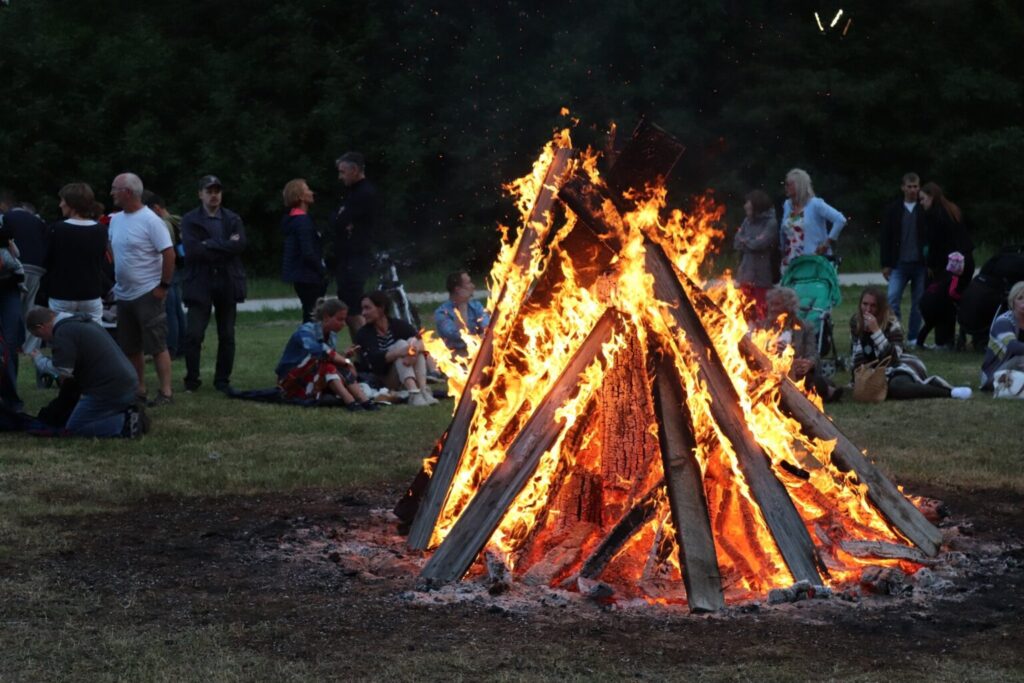
Jaanipäev: Where Pagan History Still Burns Bright
Estonia’s Solstice holiday of Jaanipäev (yan-ee-pev) is celebrated around the bonfire. Whether it’s a small family affair or a large communal inferno shared by an entire village, people prepare well in advance by collecting enough firewood to sustain the blaze until dawn.
“Jaanipäev is undoubtedly one of the most beloved holidays for Estonians, perhaps even the most cherished celebration alongside Christmas,” says Maret Tamjärv, researcher-curator at the Open Air Museum of Estonia. “Jaanipäev is marked by a plethora of things; joy, music, dancing, singing, an abundance of food and drink. Riding on the swings, tests of strength and skill, folk costumes, youthful excitement and romance. At larger bonfire gatherings, popular bands perform, people dance and celebrate into the early morning hours.”
The midsummer bonfire, symbolising the sun, was believed to purify and protect, while also encouraging strength, fertility, and growth.
Maret Tamjärv
Like much of Europe, Jaanipäev is rooted in ancient pagan beliefs in the power of the sun. “Around the Summer Solstice, the sun reaches the height of its power, the days are exceptionally long, and the night is scarcely dark at all. The midsummer bonfire, symbolising the sun, was believed to purify and protect, while also encouraging strength, fertility, and growth,“ says Tamjärv.
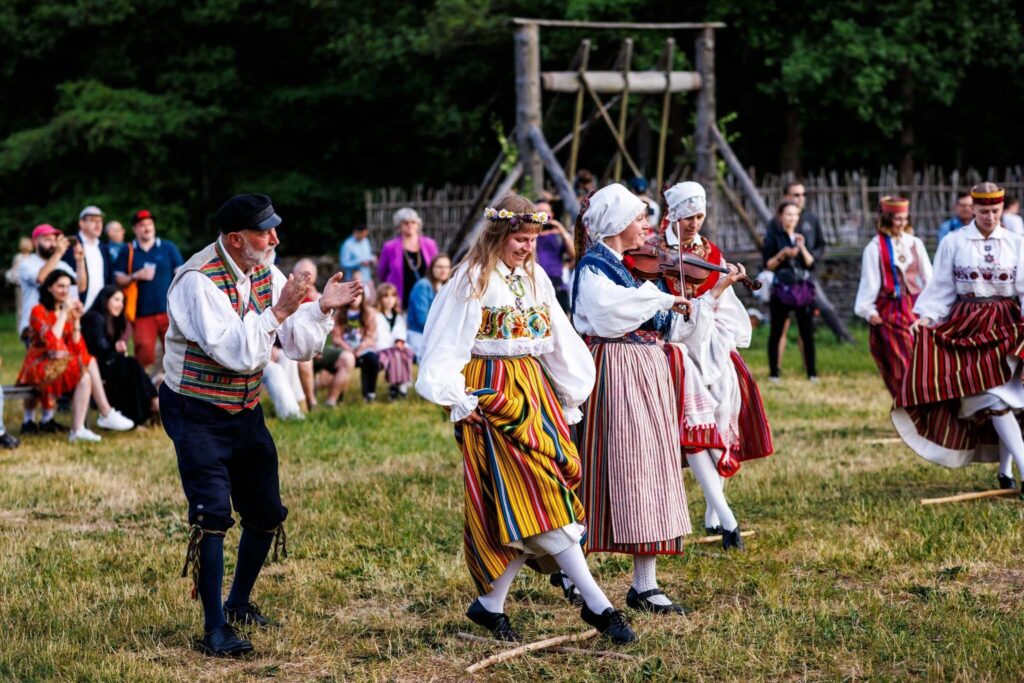
For modern day Estonia, Jaanipäev is a time for reconnecting with nature.
“In earlier times, many beliefs and customs were associated with the power of summer nature, such as the perceived magic of plants and midsummer dew, the gathering of medicinal herbs, and the making of sauna whisks,” says Tamjärv. “I believe that, in their hearts, Estonians still retain a deep connection to nature.”
To learn more about Jaanipäev such as tale of Koit Ja Ämmarik listen to the As Rare As Hens Teeth Podcast.
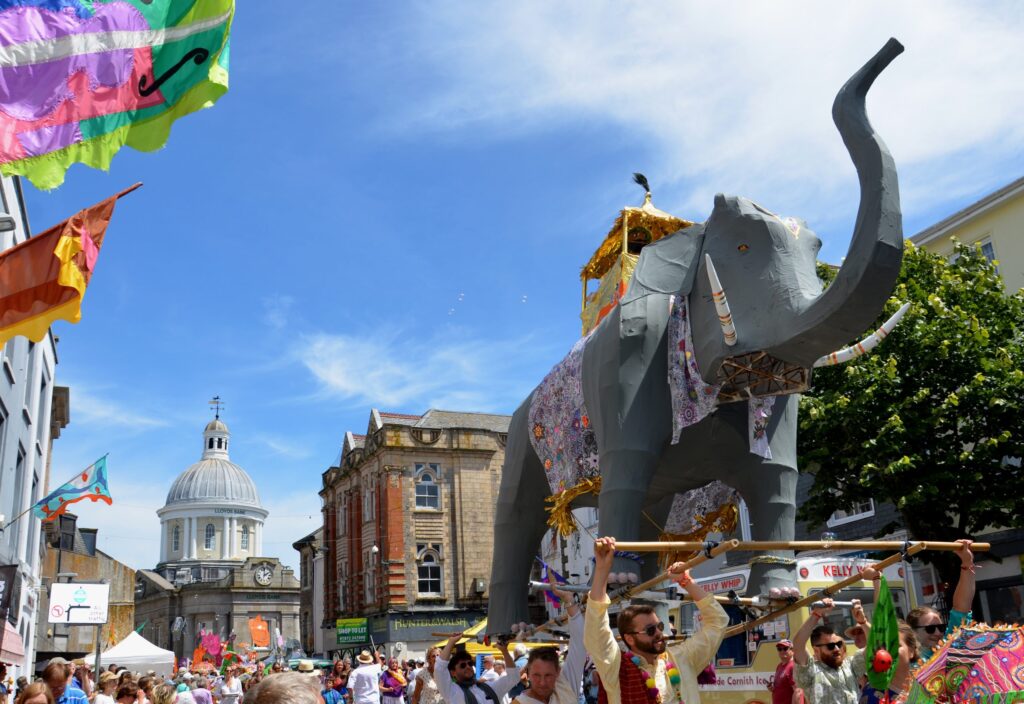
Golowan : Where Ancient Traditions are Revived to Restore Lost Local Pride.
Golowan (gol-low-an) is a multi-day affair involving processions of floats through the town of Penzance as well as many ancient Pagan traditions, updated for the modern day.
“Cornish towns can be pretty bleak, [Golowan] is a chance to make the place shine and give people a sense of belonging, a sense of identity and place,” says Martin Venning, the operations director at Golowan festival.
There would have been mayhem 250 years ago. There’s elements we’ve made safer but there’s still a bit of mayhem and I think that’s really important.
Martin Venning
Today Golowan has all the mainstays of a modern festival, DJ sets included. But it also features odes to Cornish pagan folklore such as its ghostly horse skull wearing mascot: Penglaze the Oss.
“The Golowan Band will come across the harbour and knock on the big doors of the historic barbican building,” says Venning. “Suddenly, the Oss Penglaze comes bursting out of these doors and leads the serpent dance.”
The Serpent represents the cycle of life and the cycle of the seasons, explains Venning. “Two people from the head will form an archway and say ‘an eye, an eye’ which is the eye of a serpent. Then the tail will start feeding through the head until it gets into a big tangle, and then it starts again.”
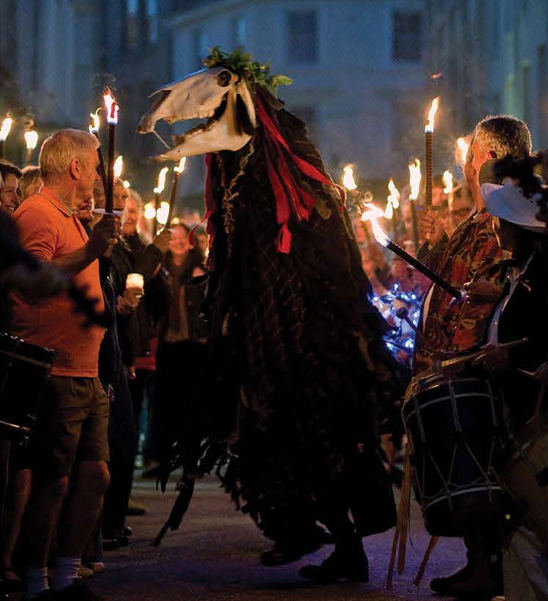
Venning says the modern celebration has elements of the old mixed with the new. “There would have been mayhem 250 years ago. There’s elements we’ve made safer but there’s still a bit of mayhem and I think that’s really important.”
To learn more about the myriad of Golowan celebrations, such as the Mock mayor election, go to golowanfestival.org.
Tiragān : The Zoroastrian celebration that has found new meaning as a statement of secular resistance.
As a historically water-stressed country, Iran’s Summer Solstice celebration of Tiragān (teer-gaan) is all about celebrating and praying for the rain. Tiragān falls on the first day of the Iranian month of Tir and commemorates the god Tištrya’s victory over the “demon” of drought in ancient Persian mythology.
Some wore bracelets of several colours, to suggest that the rainbow will come and with it, the rain.
Dr Saeed Talajooy
“Tištrya was the one who releases the global or universal waters so that the rain can come,” says Dr Saeed Talajooy, senior lecturer at St Andrews’ School of Modern Languages.
“For the celebration of this, people [would] sprinkle water on one another to say: ‘We hope that drought will never come back.’ Some wore bracelets of several colours, to suggest that the rainbow will come …and with it, the rain.”
Like Christmas in the Western World, modern day Tiragān has long outgrown its ancient rituals and become a universal celebration. That includes street parades and dancing that vary highly from place to place. Since the Islamic Revolution of 1979, Tiragān has found new meaning as a form of resistance against the regime.
“Nowadays, it has become a point of making a distinction between yourself and the Islamic government,” says Talajooy. “Many secular people, celebrate Iranian holidays [like Tiragān] as a form of resistance, but they do not celebrate, Islamic holidays because they believe they are not ours.”
To learn more, such as the tale of the legendary, Arash Dr Talajooy recommends www.iranicaonline.org.
Featured Photo Credit: Alexey Vasilyev