“There’s people that fish and then there’s fishermen to the core,” says Dave Densmore as he takes the stage at the packed Liberty theatre in Astoria. His voice is gravelly and honest as he shares his poem “Heaven and Hell,” about divorce, losing a son at sea and hanging on to the end of your rope. “Guess I’m talking mostly to myself as I spell this bit of philosophy, because I’ve found my greatest enemy and ally, is in fact actually just me,” he tells the gathered crowd of hundreds. When he takes a final pause, the attentive audience erupts in roars, hoots and hollers.
It’s late February, the one weekend of the year where skippers, deckhands, grizzled vets and greenhorns flock to the FisherPoets Gathering in Astoria, Oregon to celebrate lives shaped by the sea. Founded in 1998 by Jon Broderick, 72, a Bristol Bay setnetter and retired school teacher, the gathering was inspired by poetry he encountered in the Alaska Fisherman’s Journal and by the National Cowboy Poetry Gathering in Elko, Nevada. Over the years, it’s garnered a devoted following. “People are hungry for it,” says Jon. “We hear over and over ‘it’s authentic, it’s real.’” Jon describes deep friendships formed in fisheries over the years, often scattered across distant ports and seasons. “People come to the gathering and run into people they haven’t seen in decades,” he says. “It just snowballed. We never had to twist anybody’s arm.”
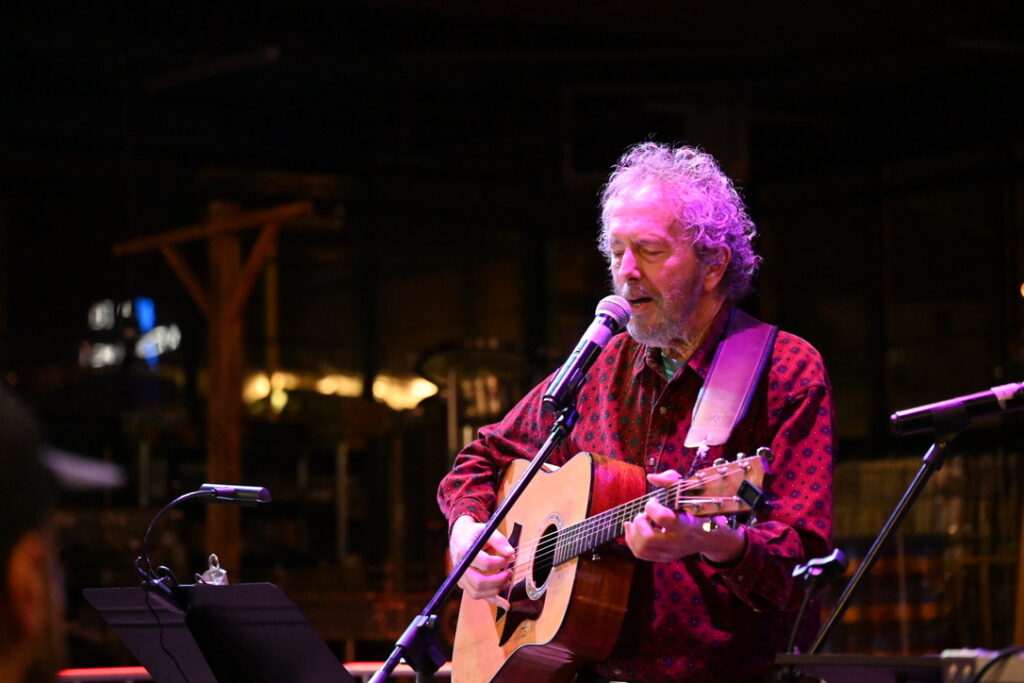
Bob Gudmundson performing at FisherPoets Gathering 2025 photo by Jeff Taylor
Despite the gathering’s success, Jon knows that similar spaces are becoming increasingly rare. “I’m not too much longer for this world and I worry that my feelings are a reflection of being an old guy,” he says. “But I think oral traditions are dying because people rely on tech now. There’s this myth that fishermen are out on the radio sharing poems, but that just doesn’t happen very often. What really happens is, we’ve got this event every February, and we’ve got to get something together for it.”
Jon is cautious not to mythologize the tradition. “Very few poems from the FisherPoets Gathering are good enough to stand alone on a printed page,” he says. “But it doesn’t matter. For fifteen minutes, people are quiet, and somebody gets to tell a version of their experience. I don’t know where else in the world that happens.”
There’s people that fish and then there’s fishermen to the core
Among those drawn to Astoria was Katrina Porteous, 66, a poet and historian on England’s Northumberland coast, where the fishing communities she’s spent decades documenting have nearly disappeared. “There was this remarkable sense of it all being one community,” says Katrina, describing the FisherPoets Gathering. “All the little inshore fisheries have their own cultures and language, but share a real sense of stewardship for place and resource.” While her Northumberland fishing community would have never used terms like “sustainability,” Katrina says they understood the sea as a resource handed down by their forefathers and which they meant to hand on in turn. “That sense of continuity and care, listening to nature and not thinking of ourselves as the boss of it, came across strongly from the fisherpoets in Astoria and of course, my own fishers at home.”
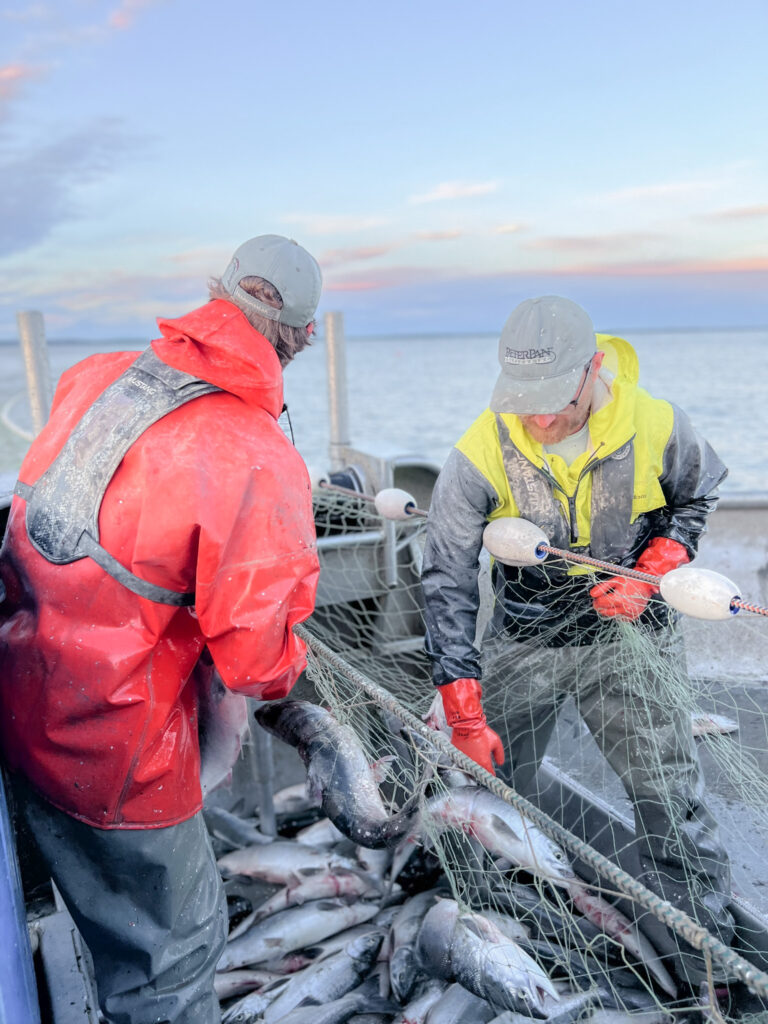
Katrina moved into her grandmother’s house in Beadnell, a coastal village, nearly forty years ago. “When I first came to live here, I wanted to write about what was outside my window: the sea. I thought the best way to do that was to talk to the people who really knew it, the fishermen who sat outside in their tarred black huts telling stories.”
For the next decade, she spent as much time as she could with the fishermen. “They didn’t have a lot of their own poetry, but what was most striking to me was the oral tradition of storytelling,” she says. “They were telling stories all the time, often about people their fathers or grandfathers remembered, men who had died before they themselves were born.” Katrina was also struck by their dialect, one that she initially found to be almost incomprehensible. “I was an outsider. It took a long time to understand it properly,” she says, describing it as broad, descending from seventh and eighth century Anglo-Saxons. “It’s a beautiful way of speaking, so to me, just their storytelling was a sort of poetry.” Though these days, that version of the dialect has nearly died out.
Rising property costs, which have made it difficult for fishermen to remain on the coast, combined with environmental regulations, have fractured Beadnell’s fishing community. “Gradually I felt that small boat fishing, that way of life, was clearly coming to an end,” she says. “This is the first year in my village where there are no boats trout-netting from the harbour. The last fisherman to fish from here died earlier this year.”
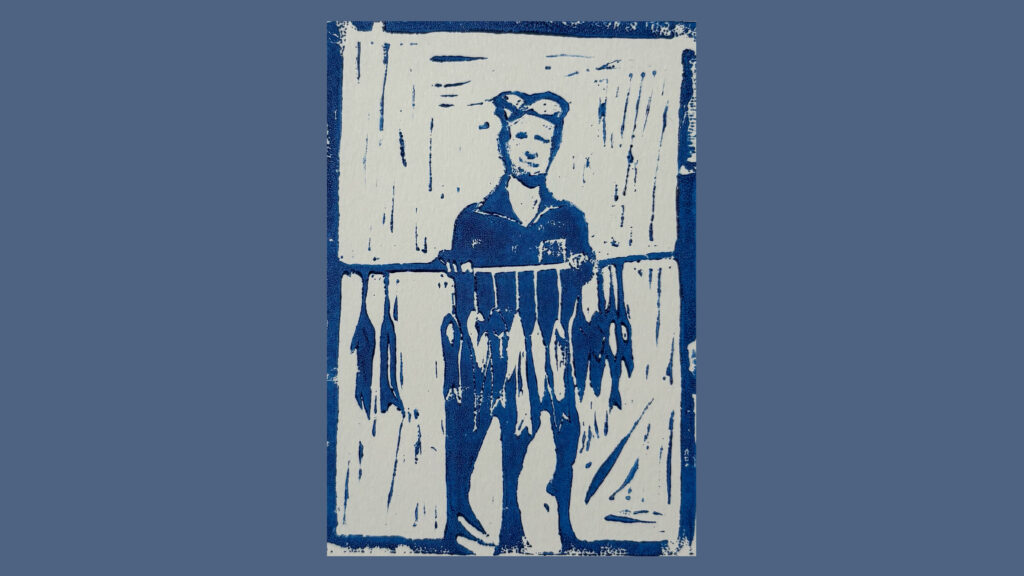
Across the world in distant oceans and ports, other fishing communities are feeling similar effects. “Naturally, people have passed on,” says Jon of his American fisherman friends. “John Campbell, a fisher poet from the east coast of Rhode Island, died during the pandemic. We wanted to memorialize him, so during the pandemic Zoom gathering, we read Campbell’s stuff.” Lovingly referred to as ‘Campbell’s Last Set,’ the tribute has since become a mainstay. “It’s a way to honor people whose poems would otherwise just disappear.”
As elders pass on, a new generation of fisherpoets is already at work. “A lot of the people who are powering the next generation of fisher poetry are young women,” says Broderick, adding that it’s “changed a bit of the flavor” but overall is a healthy thing. “You can get into the heart of people, either obliquely or wide open. I think most men choose to be oblique, but by and large, women are a lot better at being reflective and self-examining.”
For fifteen minutes, people are quiet, and somebody gets to tell a version of their experience. I don’t know where else in the world that happens
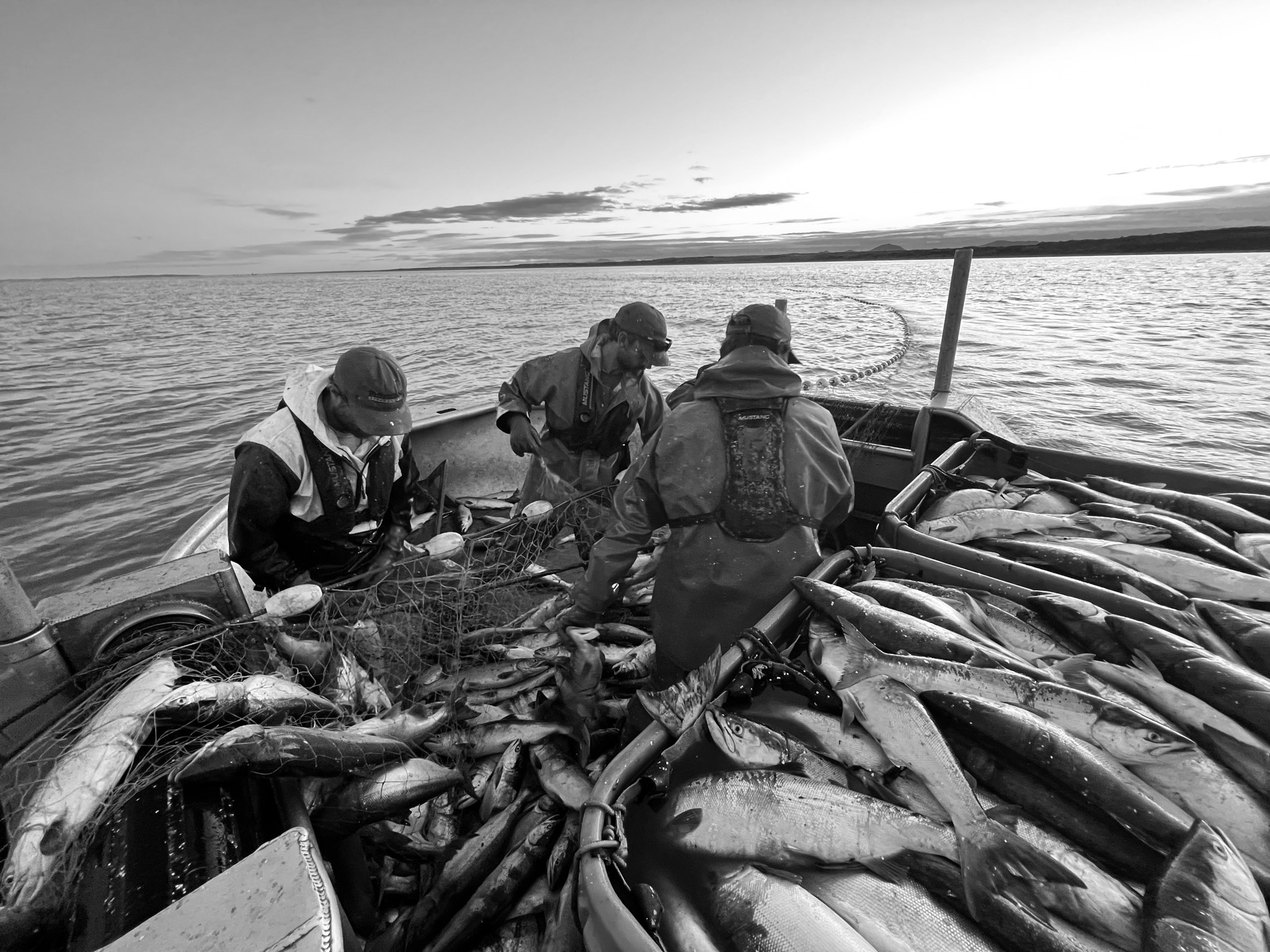
Maggie Parish, 32, grew up setnetting in Alaska’s Bristol Bay and is one of the young women carrying forward the tradition. “It’s historically been popular for women because you live on shore and get to see your kids every night, but it’s kind of invisible because we’re all scattered on remote beaches, living in our little cabins and fishing our nets.”
At 20, Maggie became one of the youngest female skippers in Bristol Bay, buying a drift boat and leaving shore-based setnetting to chase salmon runs across the open water. “At that time, only about 1 per cent of the skippers were women,” she says. “Now there’s way more, but I think it’s really hard to believe you can do something unless you see someone that looks like you doing it.” Maggie says that as more women of her generation have become skippers, they’ve intentionally hired other women as crew and empowered them to run their own boats.
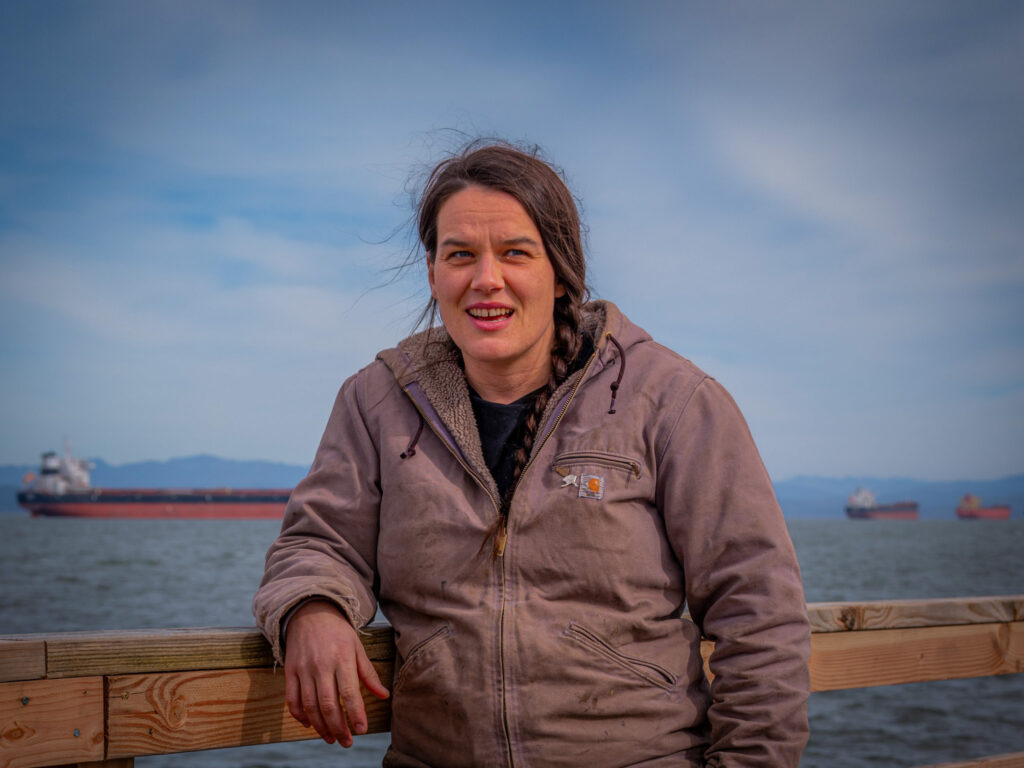
For Maggie, the FisherPoets Gathering has introduced her to more women in commercial fishing and helped her feel less alone. “Listening to women in my mum’s generation sharing poems about Alaska in the ‘70s and ‘80s gives me chills,” she says. “These were women who couldn’t get a credit card or take out a loan without a man signing it. They were fighting that level of patriarchy to start a fishing business.”
It’s the kind of inter-generational reckoning that drives her own work. “Some poems just come out of me and I can’t help it, but other times, I want to tell a story or I have an internal dilemma I want to share,” says Maggie, referencing a poem she recently wrote called Icarus. “I have a two-year-old son and it’s wonderful to watch him go out on the boats and be excited about the motors and fish, but at the same time, just last winter, a 19-year-old in our community died on a fishing boat,” she says. “I have a lifelong back injury and I know my mum holds a lot of guilt that it happened while I was fishing. That tension is a shared feeling for a lot of fishing families.
When I write about it, I hope I can help all of us process and work through these dilemmas.”
Featured Photo by: Perrie Broderick