Vicky shakes out her hands as drops of perspiration pool in her palms, resisting the humid Cuban air. “I’m a woman, and this is not my culture.” Vicky knows she needs to be on the periphery here. Academically, she is well acquainted with the taboo of women playing the consecrated batá drums, or fundamento, in a religious Santería ceremony.
“This is where this music was born. It’s where it reaches its climax. I’m going to experience the most amazing batá music and singing here”, she reminds herself.
As the tympanic rhythms and songs layer one after another, Vicky observes as a babalaow, an Ifá priest, becomes initiated into the Añá brotherhood by a master drummer, an olúbatá, who reaches over to place the babalaow’s hands to help him play.
As the drumming and music escalate, the profundity of how central the music is to the religion dawns on Vicky. She also realises that, unlike the babalaow, who are not required to know how to play, she actually would know what to play in this ceremony.
A quiet joy engulfs her at this realisation. Not because she was particularly gifted, but because she realised that the last few years of hard work had enabled her to acquire this rarefied knowledge.

Vicky, or Victoria Jassey, 58, had been playing Afro-Cuban batá drums for several years before she got to experience her first Sanetría ceremony in Cuba. Simultaneously, more than 7000 kilometres away, in London, Vicky and her partner, David Pattman, 65, had launched Bombo Productions in 2007 to teach and promote Afro-Cuban music.
A self-taught professional musician, David’s roots began in Jazz before he progressed to Latin music, and says that the draw for him to Afro-Cuban folkloric music was the drumming due to the innate percussionist within him. After a few trips to New York, where he experienced salsa music, he made his way to Cuba in 1993.
When he heard the religious batá drumming and music in its native environment he says, “Hearing it for the first time…something immediately got to me…these things are inexplicable sometimes, they just call you, and you can’t do anything about it. You realise, that’s what you have to do.”
Through this innate draw to Afro-Cuban folkloric music, Vicky and David found a kindred spirit in one another through the small but vibrant UK Afro-Cuban music community. As lifelong students, they have emerged as champions for this style of music, describing their role as “mediators” for Afro-Cuban music in the West.
Emphasising their depth of respect and scholarly pursuits in the art form, Vicky says, “We use music as a vehicle to create community…but we are not experts…because we didn’t grow up in it. We have a bit more knowledge than other people…and we can impart that.”
In every communication with Vicky and David, their reverence for the complexity of Afro-Cuban folkloric music emanates. This sentiment has been passed on to their students, and it flows deeply within the community. Though the community practice secular Afro-Cuban folkloric music on non-consecrated batá drums, there is something sacrosanct in the community’s approach to the music. This quality can be felt during the free Afro-Cuban music night that Bombo Productions started convening more than 20 years ago. Although the event has had a few iterations, from a tiny salsa basement bar in Tottenham Court Road to its most recent venue at The BBE Store in Hackney, the core respect for Afro-Cuban folkloric music and culture has remained constant.
From the first time Vicky heard a cassette tape of West African music as a young girl, to becoming hooked on Cuban percussion in her late twenties, she felt an inexplicable draw to this style of music, particularly batá drumming.
“I was totally and utterly obsessed for the first seven or eight years,” she says. “I didn’t listen to any other type of music. I just would have it on my Walkman, listening to songs over and over again.”
Vicky’s obsession led her on a journey spanning over 20 years during which time she completed a Masters and a PhD to deepen her understanding of Afro-Cuban music, and she has travelled to Cuba more than 15 times. She also met her partner, David, one of the UK’s leading Afro-Cuban percussionists, through this music.
Vicky was shaken, however, by a “watershed moment” in 2009, which forced her to see the “glass ceiling” in the art form. A credible religious leader, Javier Campos, came to the UK, and she was taken aback when he stated, “Women cannot play these drums.” Turning to David, Campos then said, “And if you, as a male…play alongside women in a religious ceremony, you will not touch my drums.”
Seeking to answer the question of whether women can play non-consecrated batá drums, known as aberikulá, in religious ceremonies, fueled Jassey’s PhD in Ethnomusicology. Despite facing criticism for her research in the Afro-Cuban community in the UK, in Cuba, she found the opposite. She was being invited to play batá for dance classes at the Teatro America, Havana, and even to play aberikulá in religious ceremonies.
Afro-Cuban folkloric music has traversed oceans and continents because of the brutal transatlantic slave trade. In her PhD thesis, Vicky says that by the mid-1880s, the predominant population in Cuba was Black, creating a “fertile ground” for trafficked Africans to practice their spiritual traditions and associated musical practices.
By the 1960s, despite waves of religious and political leaders seeking to root out indigenous practices, a “secularisation” of Afro-Cuban art forms was emerging, states Vicky in her thesis. This resulted in the art form becoming more “desirable for white, non-religious spectators” and led to “state-mediated exoticisation and folklorisation of tradition”.
Batá drumming, is an important musical practice within the religion of Regla de Ocha, or Santería, originating from Yoruba, òrìsà [deity] worship. “The religious strand of it [Afro-Cuban folkloric music] goes right back to Africa”, David explains. “In the case of the batá drums, there is a straight line to Yorubaland, which is now Nigeria…you’re singing the same songs that they were 100 to 150 years ago.”
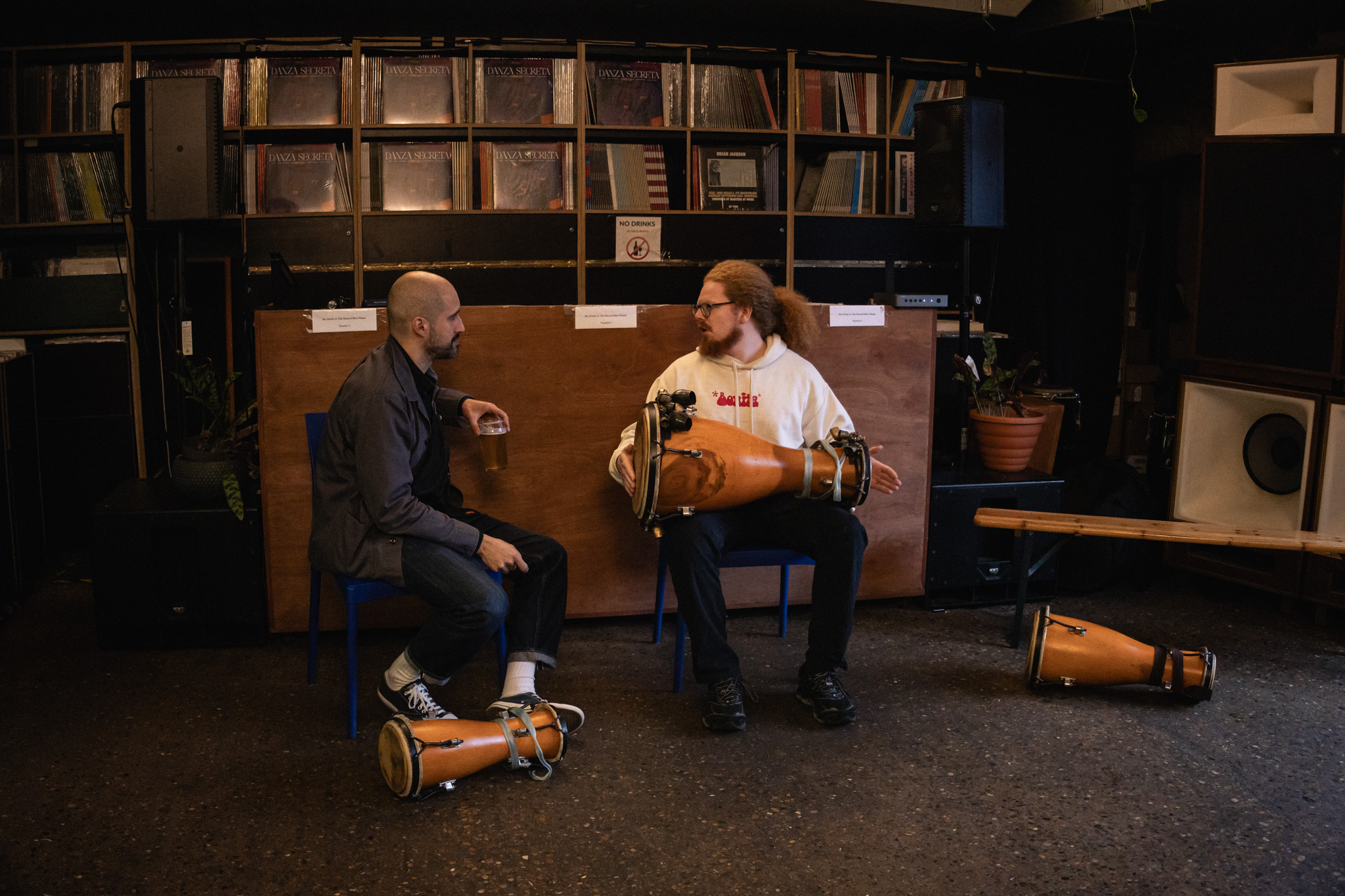
Vicky and David have tried to ensure that the Afro-Cuban music night reverberates with this heritage. Their student and professional musician, Richie Sweet, 26, whose shock of ginger hair hints at his Irish heritage, is conscious of not being “disingenuous” as an outsider to the art form.
“It’s a science…the way in which the rhythms are composed and all of the musical context inside it is so complicated…I don’t think it gets enough respect for how complex and deep the tradition is”, says Richie.
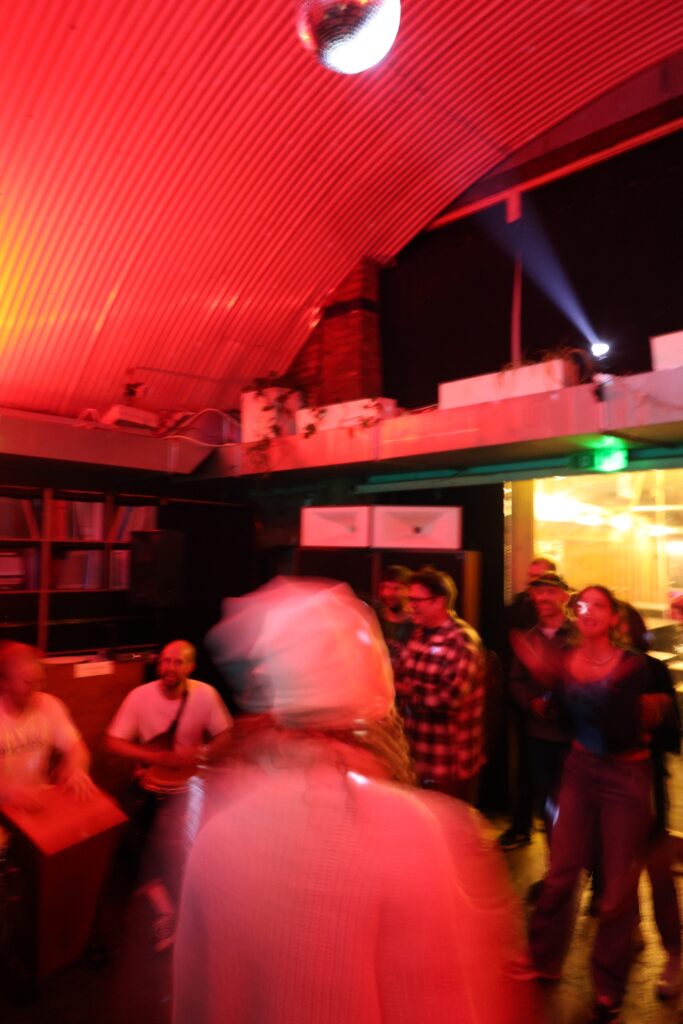
Gaspar Sena, 37, a professional musician and lifelong student of bata drumming, along with Richie, have been carrying on the tradition of the Afro-Cuban music night with a reinvigorated monthly pace since May. “Richie and I are now taking it over in an attempt at trying to get it happening again once a month”, Gaspar explains, as Vicky and David, now spend half the year in Spain conducting music workshop retreats.
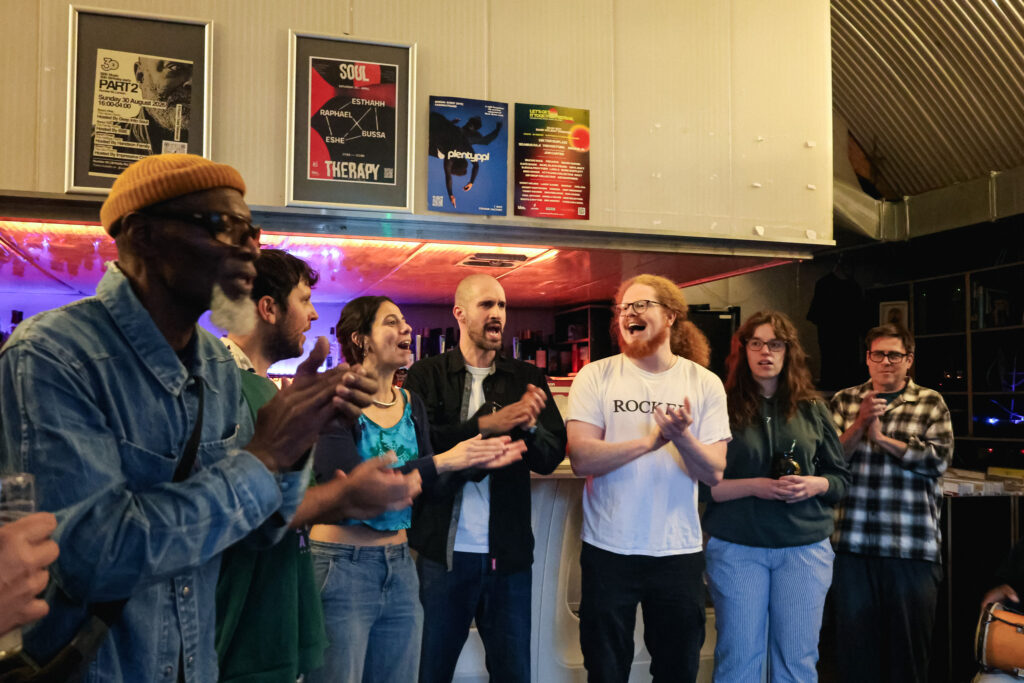
The evening starts with a few familiar faces, and then percolates into a trance of percussion, billowing songs, swaying bodies, and embracing friends. When a kitschy disco ball lights up the small venue, the music reaches a crescendo and trained Afro-Cuban dancers portray some of the divine orichas. Emmanuel, 24, one of the dancers, says that these events are enhanced by “the skill of the percussionists.”
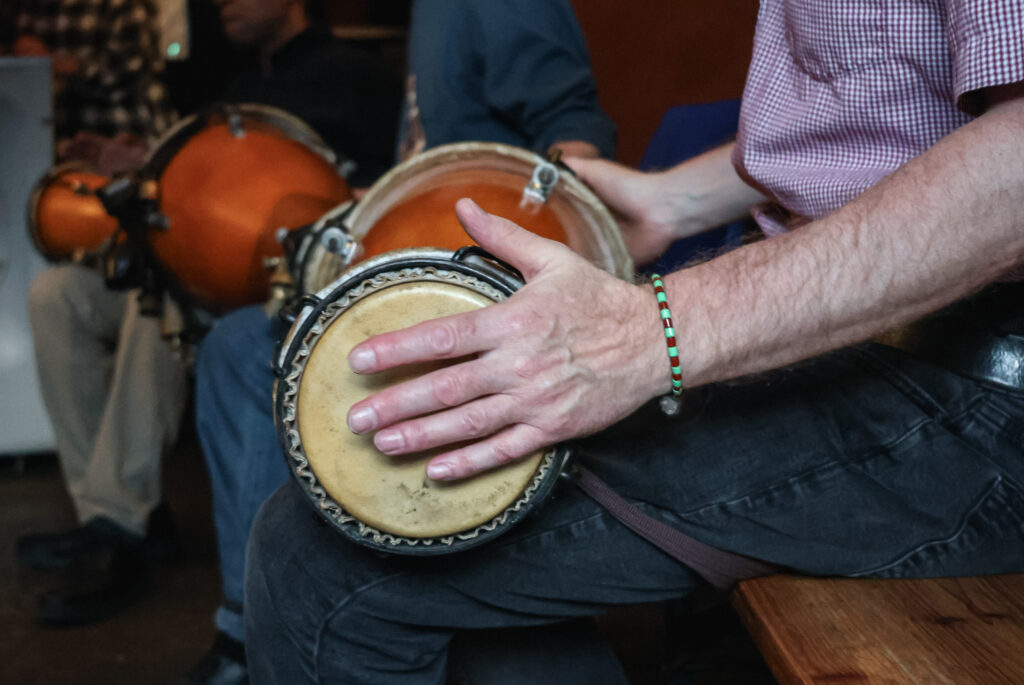
These events are free, but the one rule is that everyone must participate. “Clap your hands, stamp your feet, hum along even if you don’t know the words”, says Gaspar, but he advises, unless you are trained, avoid the batá drums. Paul, 64, an Afro-Cuban music night regular, says, “The music exists without any kind of requirement for commercial fulfillment…people come together because they love the music, they enjoy the vibe, and the energy is really good.”
Music students like Charlie, 23, get to experience this style of music live, which he may not have had the opportunity to do otherwise. “It is different to everything else you hear, but it feels very authentic and true and non-performative”, he says.
“This community is very open — it is not only for Cubans”, says Luanda Pau, a professional Afro-Cuban dancer who has been integral to spearheading this community since its inception. “People from many backgrounds join with love and respect for the culture.”
As a city that has been shaped by the food, culture, music, and more of diaspora communities, the existence of the Afro-Cuban music community feels like a natural part of London’s landscape. The difference is that this community was created and is convened by an outsider demographic, whose depth of reverence, practice, and study of the art form that draws them together brings a unique energy. Luanda captures the essence of this, saying, “This community represents identity, healing, culture, memory, and joy. Afro-Cuban culture is not something that lives only on stage… it lives through people coming together.”
With a lifetime of experience between them, approximately 65 years, practicing, performing, teaching, and studying Afro-Cuban folkloric music, whether Vicky and David should be considered as outsiders to this art form anymore is a matter for debate. However, it is irrefutable that through their efforts and the energy of the community, Afro-Cuban folkloric music now holds a unique space to be experienced in the UK, outside of Cuba.
Over time, Vicky has become conscious of protecting what she, David, Gaspar, Richie, Luanda and many others have created over the years.
“If it suddenly becomes really popular, that would kill it almost straight away. It’s very sensitive. It’s very specific, and it really speaks to some people; it’s definitely not mainstream”.
To get details on upcoming Afro-Cuban music nights check out Bombo Productions on Instagram: bomboproductions
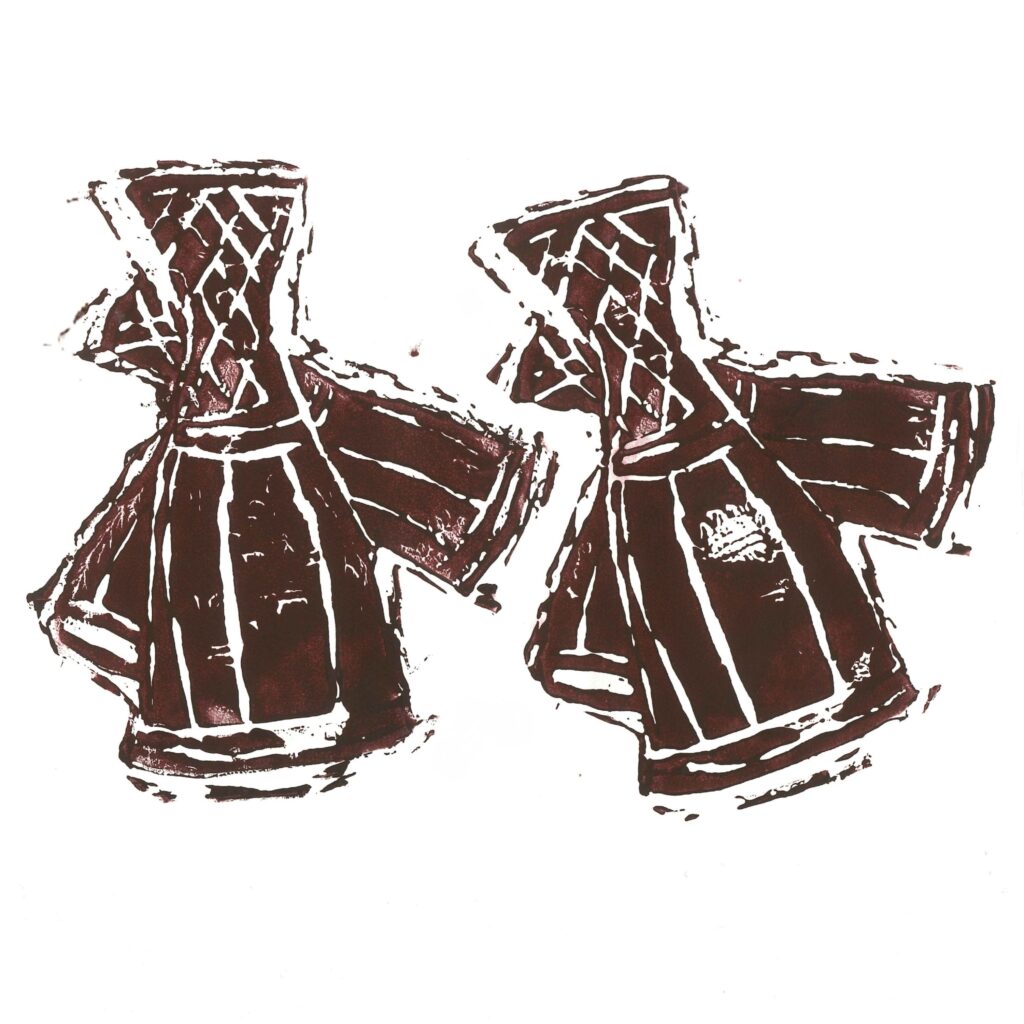
We use music as a vehicle to create community.
Photos by Harper Mahood and illustration by Meena Iyer