“Welcome, welcome, welcome!”
I’m startled by this raspy voice. The whimsical cave and forest I had constructed in my imagination crumble and are replaced by visions of an old peddler woman.
The wizened voice belongs to Anna-Saqqara Price, 60, a Priestess of Avalon and the Director of Glastonbury Goddess Temple, who invited me to join a session at the Goddess Temple, virtually. Feeling like a voyeur, I peer into the intimate space through my Zoom window, unsure whether I need to continue keeping my eyes shut.
I see Anna-Saqqara, wearing a voluminous, speckled feather headdress, but her eyes are firmly shut, so I follow suit and continue to listen. Anna-Saqqara’s theatrical tones undulate as she moves in and out of different descriptions and characters: a magical forest, a misty lake, an old crone, an ethereal goddess, flames of redemption.
The guided session ends with participants sharing their experiences and revelations.
Faiths like the Goddess movement in Glastonbury are part of a growing trend in alternative religions in the UK. More than 100,000 people were reportedly following a religion related to Paganism, according to the 2021 census in England and Wales. Though Glastonbury is famed for its extravagant music festival, over the years, it has become an epicentre for people following unorthodox belief systems, such as the Goddess movement.
Like Anna-Saqqara, fellow Priestess Bee Helygen, 65, also resides in Glastonbury. She too, trained as a Priestess of Avalon at the Glastonbury Goddess Temple, but the main goddess she serves is called Cerridwen. The Goddess movement follows the Wheel of the Bridannia, within which both the Lady of Avalon, Cerridwen, and other goddesses are expressed.
Bee relocated to Glastonbury as she loves the landscape and feels it is a place of “historical sacred significance”. For Anna-Saqqara, settling in Glastonbury felt like she was “connecting to the land and learning to bring in all those strands from past lives to root.”
After joining one of the most visible Goddess communities in the UK, Anna-Saqqara stayed within the Glastonbury Goddess Temple as its Director, after the founder Kathy Jones stepped down, and Bee branched out to create the Temple of Cerridwen. Professor of History at Bristol University and author of Pagan Britain, Ronald Hutton, said in The Telegraph: “Pagans today generally do not have…distinctive clergy, although its groups may have leaders”. Becoming a Priestess today in the Goddess movement comes with none of the recognition or the regulatory checks required to become a Catholic Priest or an Islamic Imam. However, women like Anna-Saqqara and Bee have dedicated years of their lives to pursuing this vocation, and they are attempting to chart this new territory.
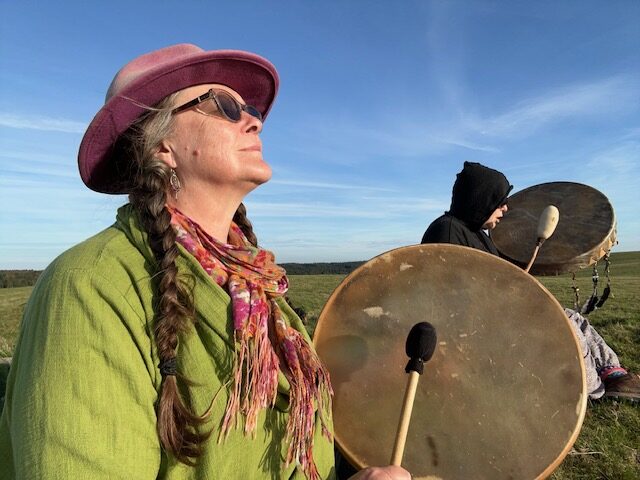
After graduating from an arts course in the 1980s, Anna-Saqqara went on a bacchanalian European sojourn. She created performance art in Berlin, and took a job planting tulip bulbs in Holland, but the heady lifestyle left her feeling “splattered”.
“I think I had a breakdown because of the amount of drugs I had imbued”, she says.
When she came back to England, looking to heal her fractured mental health, she found solace training in various therapeutic practices like massage therapy and Reiki, and she did Shamanic training with Native American elders visiting the UK.
After joining a community of “international hippies” called the Rainbow Fair, she adopted a distinctive new name: “Saqqara meant the fire ray”, she says, “I’m a fire horse, I’m a Leo, that resonated with me.” Her interactions with the Goddess movement began in the early 2000s once she moved to Glastonbury, and in parallel, she made a series of trips to Egypt. When she visited Saqqara in Egypt, she says it felt like kismet. She became aware of her “priestess self” through a past life connection, and she was “initiated as a Priestess of Isis and as a Priestess of Hathor”.
After being initiated as a Priestess in Egypt, back in Glastonbury, Anna-Saqqara says, “I started to be able to connect to the sacred sites here, and it started teaching me about my land, that indigenous Celtic expression of soul.” Therefore, in 2012, she felt the natural next step for her was to self-dedicate as a Priestess of Avalon.
It doesn’t just become about the Goddess, but about being more awake in the world.
Bee’s call to the Goddess began with a profound yearning beyond herself in the early 90s: “I was a wife, I was a mother, and I was a manager in a big American company, and yet who was I? It got to the point where I was really desperate, and I kept calling out to the void.”
Her happiest childhood memories were spent with her Spanish Gypsy grandfather in Germany, who she says was a ‘brujo’ or sorcerer: “He was the one who taught us all the beauty of nature…He used to take us on these walks and would show us which plant could cure what.”
Whether it was these Pagan seeds planted by her grandfather, or her grounding in an alternative faith for a decade after becoming a Wiccan Priestess, one way or another, when the Goddess Cerridwen called out to Bee, she was ready to answer.
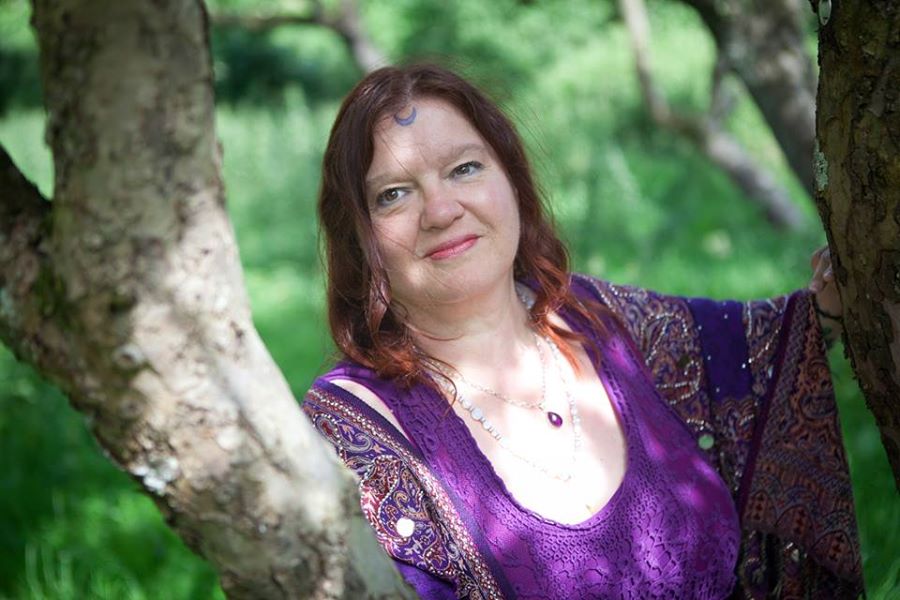
Cerridwen revealed herself to Bee through a series of “prophetic dreams” in 2003, she says. Appearing as a dark, cloaked figure, she describes Cerridwen beckoning to her and demanding her to “Step up!” Over the next few years, Bee studied deeply and built a spiritual bond with her Goddess until she was ready to test her faith.
“I devised my own initiation. Initiation is either translated as a beginning or as an ordeal. You have to create a ritual that taxes your strength. You have to be prepared to die,” she says pointedly.
At dusk on the 9th of October 2012, Bee swam across North Wales’s largest natural lake, Llyn Tegid, naked. Llyn Tegid, legends say, is where Cerridwen lived, and the lake was named after her husband. After performing a secret ritual on the other side of the lake, she made the perilous swim back in the pitch dark. Initiating herself as a Priestess of Cerridwen, for Bee, was irrevocable. “I came back changed, and my priorities shifted. It doesn’t just become about the Goddess, but about being more awake in the world.”
As the Director of Glastonbury Goddess Temple, Anna-Saqqara earns a modicum income, though occasionally she says, “I still have to ask for help from friends, and parents…if something goes wrong.” Before this, she was supplementing her Priestess work by doing live-in care work. “I did that for many years, and that supported my training and my life at that time.”
Bee says that she is in a more “privileged position” as she does not need to earn a living from being a Priestess, as she continues to work in the “mainstream”. For this reason, she has not given her legal name, as she does not want to be discriminated against in her conventional jobs in schools and hospitals.
Bee has established her own training company, Swynwraig Training Ltd, offering training alongside formal accreditation from the International Practitioners of Holistic Medicine. So far, Bee says, she has trained 150 Priests and Priestesses, who “have all had to create a professional portfolio where people can see the ceremonies they’ve created and conducted. They must have evidence.”
Anna-Saqqara says, “I don’t need accreditation to be who I am. I don’t need that external confirmation. Part of my journey as a Priestess is finding that inner accreditation.” Currently, the Priestess of Avalon training provided by the Glastonbury Goddess Temple is not accredited, but a spokesperson for the Temple confirmed that they are exploring options to get formal accreditation.
With growing numbers of Pagans across the UK, Bee feels it is now time to embrace a more formal, considered approach to alternative faiths like the Goddess movement.
“For me, I would like to see a Priestess at the same level as a Vicar, or Imam”, she says. This credibility is perhaps linked to a more ethical, even philosophical truth, for Bee: “If you believe that you can do good, you must also believe that you can cause harm.”
If you believe that you can do good, you must also believe that you can cause harm.