In the heart of London’s glamorous Mayfair district, behind the velvet ropes and exclusive facades, lies a hidden world of opulence and excess. These clubs, often frequented by big spenders, rappers, and footballers, exude an air of exclusivity that draws in crowds seeking a taste of the high life. However, beneath the surface of luxury and privilege lurks a darker reality—a culture of misogyny, racism, and discrimination that is all too often swept under the rug.
At the forefront of this culture are the door ladies, gatekeepers of the club’s exclusivity, who wield immense power in deciding who is allowed entry and who is turned away. Operating under the guise of discretion, these door ladies have been known to deny entry based on arbitrary criteria, including race, sexual orientation, and body size. This practice, known as door lady culture, perpetuates a toxic environment where discrimination thrives unchecked.
“We’ve all heard stories of girls being turned away from these clubs for reasons that have nothing to do with their appearance or behaviour,” remarks Sarah, a young white girl who frequents Mayfair clubs. “It’s frustrating and disheartening to see how easily these door ladies can wield their power to discriminate against certain groups of people.”
Echoing Sarah’s sentiments is Mia, a young black woman who has experienced firsthand the discriminatory practices of Mayfair clubs. “As a black woman, I’ve encountered racism at the doors of these clubs more times than I can count,” she shares. “It’s disheartening to be judged solely based on the colour of my skin, especially in a city as diverse as London.”
Misogynoir, a term coined to specifically address the intersection of racism and sexism faced by black women, is a pervasive issue within Mayfair clubs. The discriminatory practices observed at the club doors serve as a stark manifestation of this insidious phenomenon, perpetuating harmful stereotypes and prejudices that systematically exclude black women from these spaces.
“Libertine has been racist to black women for the past 10–15 years, maybe even longer. Don’t waste your time with these Mayfair clubs and think you’re going to be an exception,” commented a TikTok user, shedding light on the longstanding nature of this discriminatory behaviour.
At the heart of misogynoir lies the devaluation and hypersexualisation of black women, a phenomenon that is amplified within the confines of Mayfair clubs. Black women often find themselves subjected to heightened scrutiny and unfair treatment at the hands of door staff, who wield their discretionary power to deny entry based on racial stereotypes and biases.
The strict dress code enforced by Mayfair clubs, often requiring women to wear dresses and heels, is not merely a matter of aesthetic preference but a reflection of deeper societal norms and expectations. The seemingly innocuous request for “ladies to come dressed to impress” carries with it a host of implicit biases and exclusions that disproportionately impact black women.
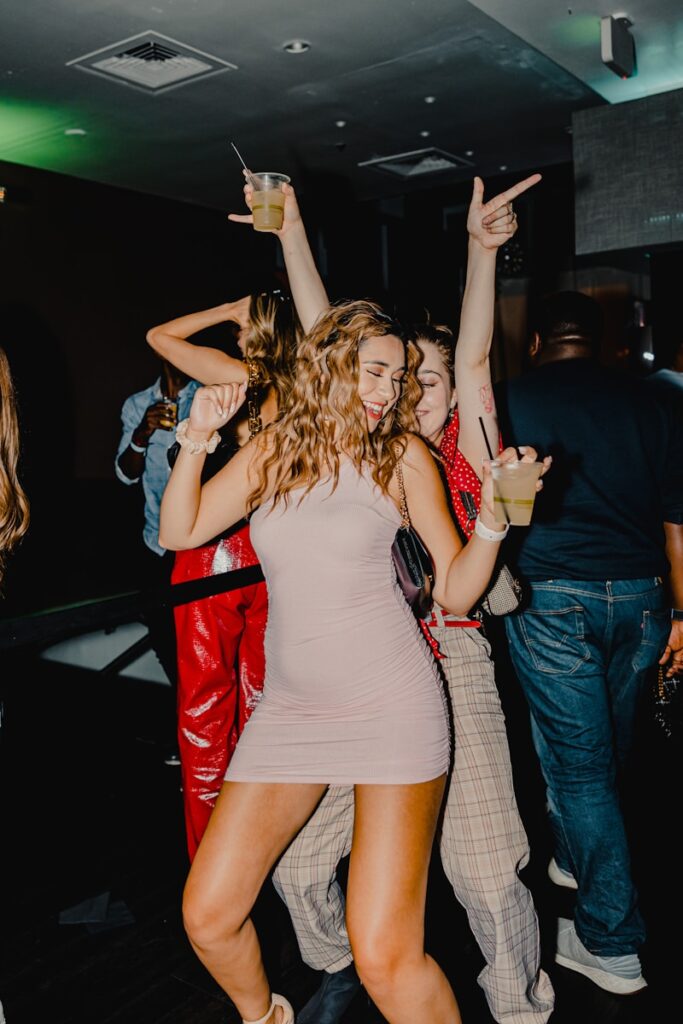
“Western beauty standards have always been biased against women of colour,” noted Mia, highlighting the nuances in the club’s requests. “It’s not just about wearing dresses and heels—it’s about conforming to a narrow definition of femininity that often erases our cultural identities and ignores our natural beauty.”
For black women, the ramifications of this strict dress code extend beyond mere fashion choices. The expectation to adhere to Eurocentric beauty standards, including straightened hair and lighter skin, can result in the erasure of their natural features and cultural heritage.
“I’ve had door staff turn me away and promoters say well my natural hair doesn’t fit the dress code,” shared Sarah, reflecting on her experiences. “It’s frustrating to feel like you have to change yourself just to be allowed into a club.”
In this way, the enforcement of dress codes in Mayfair clubs perpetuates harmful stereotypes and reinforces systems of oppression that prioritise Eurocentric ideals of beauty over diverse representations of femininity.
For young women, quote on quote, lucky enough to make it past the velvet rope, the price of admission comes with its own set of risks and consequences. On guest lists, entry fees are a mere £20, offering unlimited drinks all night. However, these drinks are often cheaply made and served in large quantities, leading to excessive alcohol consumption and potential health risks.
“The men inside these clubs are there to flaunt their wealth and status, often at the expense of young women’s respect,” explains Jack, a promoter who works for several Mayfair clubs. “They see these clubs as their playground, where they can indulge in excess and objectify women without consequence.”
“It’s like they want us to get drunk,” remarks Sarah. “But it’s all part of the fun, right?”
Sarah reflects on her experiences at Mayfair clubs with a mixture of nostalgia and disdain. “The nature of the club is definitely like a double-edged sword,” she remarks. “I’ve had great times in there, but I’ve also had stuff like drunk footballers get their penis out in the corner of the dancefloor. That was nasty.”
Jack sheds light on the drinking culture prevalent in these establishments. “The drinking culture also plays a part, of course,” they explain. “Cheap unlimited drinks mean the girls will be an easier time for our big spenders. It’s sad to say, but it’s how it works, and the girls get something out of it too.”
These insights highlight the complex dynamics at play within Mayfair clubs, where moments of excitement and enjoyment are often overshadowed by instances of objectification and exploitation. For many young women like Sarah, the allure of the high life comes with a heavy price—the constant threat of harassment and disrespect.
Meanwhile, for men and those not on guest lists, the price of admission skyrockets to £700 for a table and £800 for a bottle. Bottle service, a status symbol among the wealthy elite, can cost upwards of £25,000, further cementing the clubs’ exclusivity and reinforcing the power dynamics at play.
In recent years, the rise of social media platforms like TikTok has shone a spotlight on the discriminatory practices of Mayfair clubs, sparking widespread outrage and condemnation. Countless videos have surfaced of black girls sharing their experiences of being turned away from these establishments, prompting calls for boycotts and accountability.
“It’s like they don’t want us there,” says one TikTok user. “This is not the first time of them getting called out for racism. I think we need to stop going there altogether. Our money is not respected or needed there”
While discussions surrounding discrimination in Mayfair clubs often centre on the experiences of black women, it’s important to recognize that misogyny and prejudice extend beyond racial lines. Women of colour, larger women, and those without surgical enhancements also face barriers to entry, further highlighting the pervasive nature of discrimination within nightlife culture.
“It’s not just about race; it’s about upholding narrow standards of beauty and desirability,” explains Jack, a promoter familiar with the inner workings of Mayfair clubs. “These clubs prioritise a certain image—thin, conventionally attractive, and often surgically enhanced—and anyone who deviates from that is deemed unworthy of entry.”
As the conversation surrounding Mayfair clubs continues to gain traction, it’s clear that these establishments are emblematic of larger societal issues surrounding privilege, power, and discrimination. While they may offer fleeting moments of excitement and glamour, the price of admission comes at a steep cost—one that young women, particularly those from marginalised communities, are all too familiar with
In a city where the average night out costs £76, Mayfair clubs represent the pinnacle of excess and extravagance. Yet, behind the glittering facade lies a sobering reality—one that serves as a stark reminder of the work that still needs to be done to dismantle the systemic inequalities that pervade our society.