Declan McKenna’s career trajectory has seemingly only ever been on the up. When the North London singer-songwriter released his debut single Brazil in 2014, amid complaints of institutional corruption, fans and critics alike were surprised to hear such a ‘mature’ song penned by a 15-year-old. After a label bidding war, McKenna released his first studio album, What Do You Think About The Car?’ through Colombia. It was all hands on deck with Vampire Weekend’s Rostam Batmanlij serving as executive producer, accompanied by James Ford and Neil Comber.
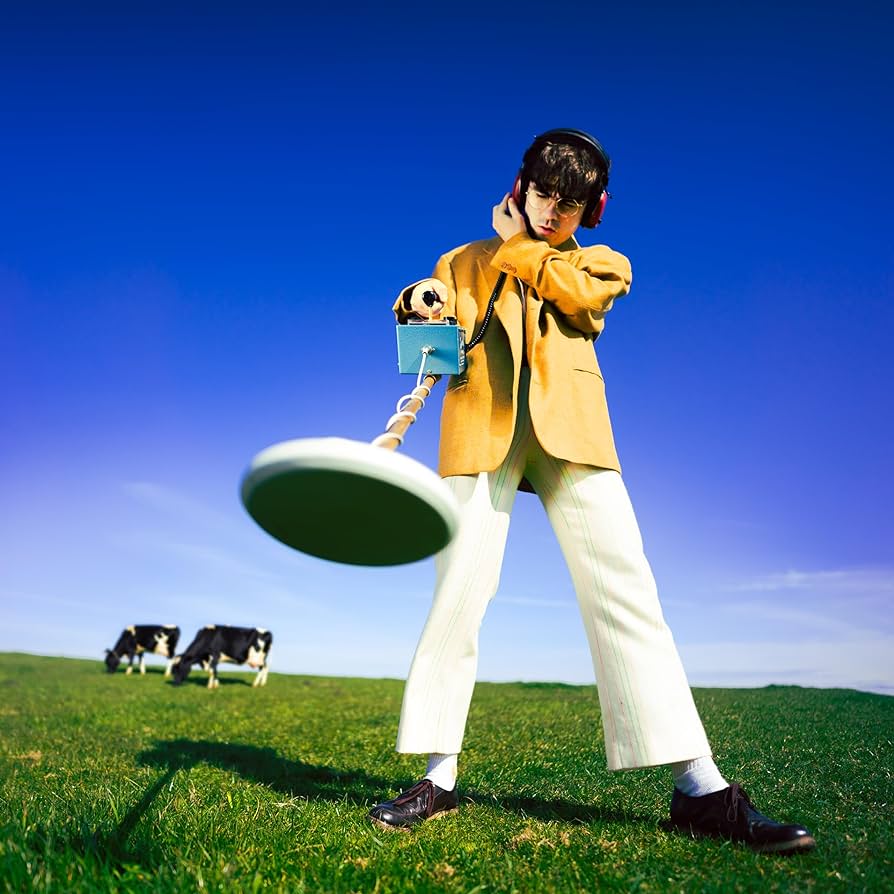
In 2020, McKenna dropped his second project, Zeros, a singularly produced glam rock rollercoaster ride. His boldest, most confident record yet, it seemed like the ‘less is more’ approach was working. In the four years since we last heard from McKenna, he’s developed his own label – Tomplicated – through which What Happened to the Beach? was released. He employs Grammy-nominated Gianluca Buccellati to handle the mechanics on this third album.
WOBBLE, the opening track, sets the tone. McKenna’s voice sounds almost tortured through a vocoder as he ponders the record’s defining question: “What happened to the beach?” The folky guitar arrangement is pleasant and whimsical but the echoey drum beat is extremely jarring. Elevator Hum, the album’s second offering, is a beautiful piece of work. Beautiful indeed, but boring. Its floral instrumentation, bird chirping ambience and bombastic chorus make the track sound bigger than it truly is. This formula makes songs like Sagittarius A* and Emily standouts on his previous works but it seems McKenna’s rinse-and-repeat method has this time around made his music shrink.
The album has its great moments. McKenna and reverb are best friends on Mulholland’s Dinner and Wine and Breath of Light, with refreshing synthy 80s breaks on the former and groovy guitars that make the album exciting again. The latter is by far the best on this new release, doing all it can to prevent the all-too-common mid-album sag. The laboured breaths driving the beat distinguishes the song from the repetitive series and strumming and chatting intros.
In a track-by-track breakdown, the North-London musician calls it the “weirdest song” he’s ever released, made backstage at Islington Academy. The low and sporadic drums give the track a haunting, ceremonial atmosphere, to which McKenna says: “The song found itself through a few attempts at turning the strange chants and noises into a song; hell called, it wants its song back.” Nevertheless, with the homegrown success of his debut, the organic out-of-studio brainstorms seem to be where McKenna works best.
The ominous vibes leak onto the album’s finale, though it’s not executed nearly as well. Thematically, 4 More Years is a far cry from the introspection that Brazil had listeners coming back for. A reference to England’s loss in the 2022 World Cup, McKenna groans “four more years” five times over a 41-second track which perhaps would have been better placed as an interlude than a closer. Ultimately, this record is McKenna’s latest but not his greatest. Maybe another four years will allow for some more fine-tuning.
3 stars out of 5.