With soaring rent prices and box-rooms the size of storage cupboards, young Londoners are finding new ways of dealing with their enforced lack of space
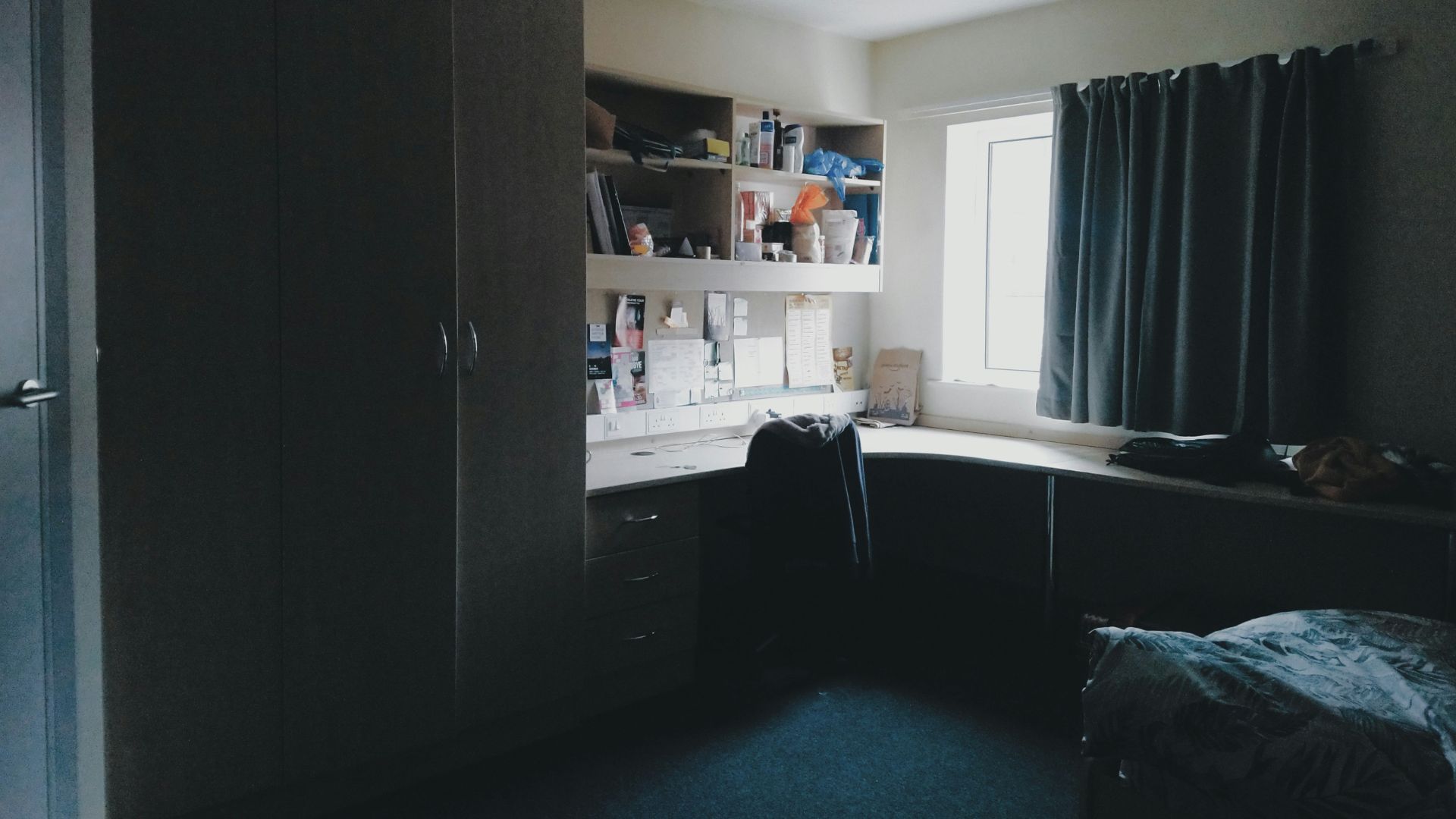
Mollie Mondino, 23, shares a small room with her boyfriend in a house share in Canada Water, South London, alongside three other housemates. Her work laptop sits open on her bedside table, framed images and illustrations lean against the wall with no wall space to take up.
“All my belongings are in storage because I don’t have enough room to put them in my house,” Mollie says. “I feel like I live on nothing, not out of choice, but out of necessity.”
With two people living in such a small space, losing possessions and finding them can become stressful. “It can get very overwhelming and chaotic when you’re looking for something,” she says, “as everything is confined into such a small space.”
The lack of things has led to a lack of personality in her space. “Although I have my main possessions, I don’t have things that make the space my own or which have a sense of identity,” Mollie says.
Although not out of choice, Mollie is living a sort of “enforced minimalist lifestyle” due to her small living space. And she is not alone. Data released by the Office of National Statistics found that London had over 100,000 households of multiple occupancy – or house shares. This means these people’s possessions are squeezed into one bedroom and a shared kitchen. If not in a house share, studio flats are also tiny, with the average size in London being around 23 square metres.
Not only this, London has the most active rental market in the UK, with tenants moving property roughly every two-and-a-half-years. This means that 404,600 rental properties changed hands in 2024 alone. The combination of moving often and living in small spaces means Londoners can’t own too much ‘stuff’.
Oliver Cudmore, 23, lives in a tiny studio in Beckton, East London. There are suitcases stored under his small desk and shoved into corners. With just enough space to walk around, it is unsurprising that he had to throw out a lot of things when moving to the UK from the US. “When I moved here, I packed everything I owned into three suitcases,” he says. “Now I could pack everything comfortably into two.”
He had to part with a large amount of clothes and decorations as he had no space to keep them. “My room has a tiny under-bed storage compartment and a couple of shelves,” he says. Despite making the space easier to clean, Oliver does desire to own more possessions. “I think naturally having less, I wish I could have more,” he says.
As a fashion student, Oliver needs space to keep fabrics, trims and threads he uses in his work. “Because I haven’t got enough space at home, I often have to throw away or donate spare fabric,” he says. “If I could save these it would save me a lot of money.”
With most renters being 25-34-years-old, young people are the main demographic feeling this burden on their possessions. With many Londoners seeing their small spaces as a curse, there is a sub-category of people who are facing the crisis head on: minimalists.
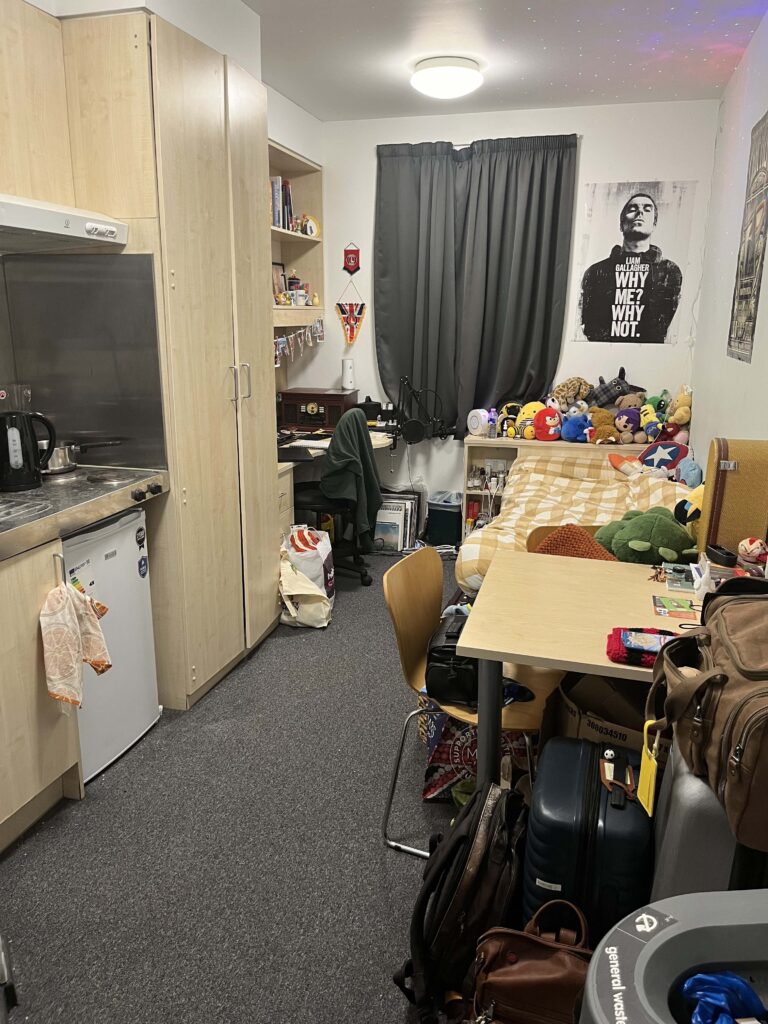
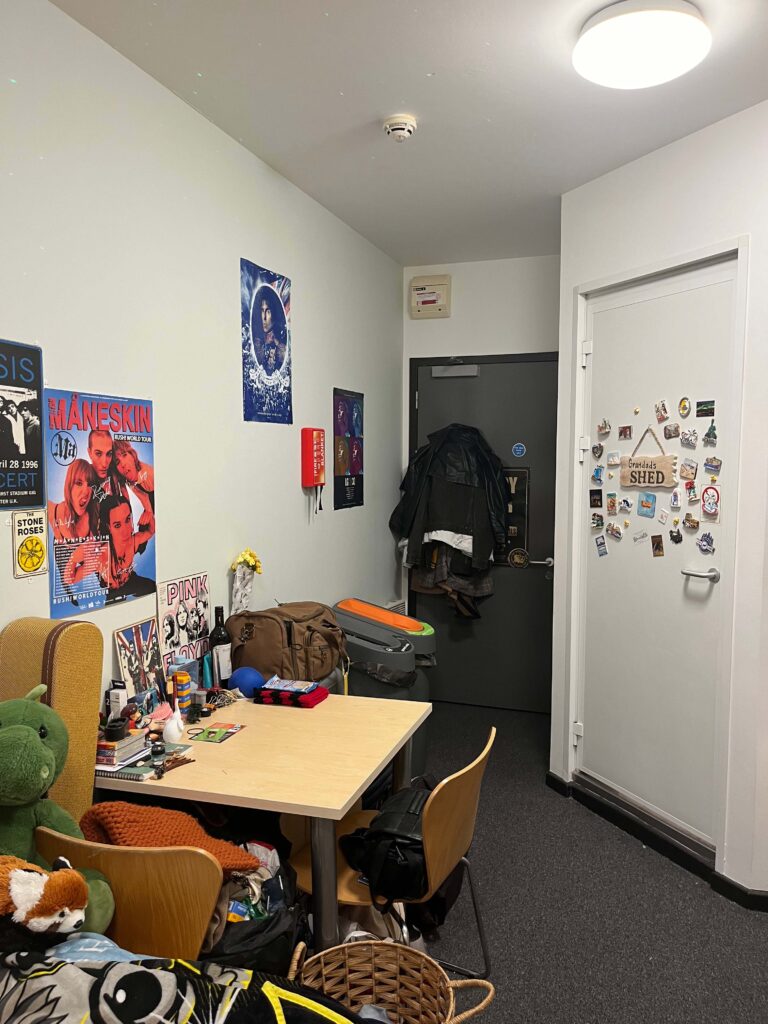
Oliver’s studio in Beckton Pics: Oliver Cudmore
With underconsumption trends gaining traction on social media, focusing on simplicity and minimal consumption seems to be trendy. For example, the No Buy 2025 challenge on TikTok encourages people to be intentional with their consumption and cut back on non-essential purchases. With thousands of posts on TikTok, it is clear that intentional de-consumption is rising in popularity.
Imran Suleiman, 28, lives in a small room in a house in East London and has been leading an intentionally minimalist lifestyle since 2020. The Covid-19 pandemic made him question his relationship to the things he owned and gave him the desire to live more simply.
“The turning point, for me, was becoming aware of the infinite distractions that I had to navigate on a daily basis,” Imran says. “I experienced fatigue from making too many decisions and became attracted to simplicity.”
“Being forced to own fewer things often comes from a necessity rather than a choice…this is very different from intentional minimalism.”
Deciding to take inventory over his life, Imran went through all his possessions: books he had never read, clothing he had outgrown, cameras and jewellery he no longer needed. In doing so, he has experienced a new level of mental clarity.
“Minimalism allows me to think clearly and removes unnecessary distractions and stress in my life,” Imran says. “It helps me to focus on the big picture rather than the fine details.”
There are numerous studies that show leading an intentionally minimalist lifestyle with less possessions links positively with one’s wellbeing. For example, a Chinese study found this to be true, with the most significant factor affecting wellbeing being clutter removal.
Sarah Rezaei, a psychologist and researcher at Monk Prayogshala, a research institute in Mumbai, explains that owning less things leads to less stress in our lives. “When you own fewer things, there’s simply less to clean, organise and maintain,” she says.

So, if owning less really does make us happier, why are those living in small spaces with fewer possessions like Mollie and Oliver still longing for more? Sarah explains that the key differentiation is likely the lack of choice. “Being forced to own fewer things often comes from a necessity rather than a choice,” Sarah says. “This is very different from intentional minimalism.”
An intentionally minimalist lifestyle focuses on low-consumption and intentionally living with fewer possessions. Practically, this could look like reducing clutter from your home, wardrobe, or being more cautious of your consumption, Sarah explains. “At its core, it’s about recognising what is ‘enough’ and removing distractions to focus on what truly matters,” she says.
However, to genuinely reap the benefits of minimalism, it must be an intentional choice. “Behind minimalism, there should be an intention – whether that be to live more sustainably, make better choices or focus on what’s important,” Sarah says.
Minimalism is not the same as being forced to own less possessions. To be a minimalist, you must actively and intentionally lead your life in a way which encompasses low consumption and a lack of ‘things’. Whilst Londoners like Oliver and Mollie can try to see positivity in their small rooms, true minimalism comes from somewhere very different than an enforced lack of space.