
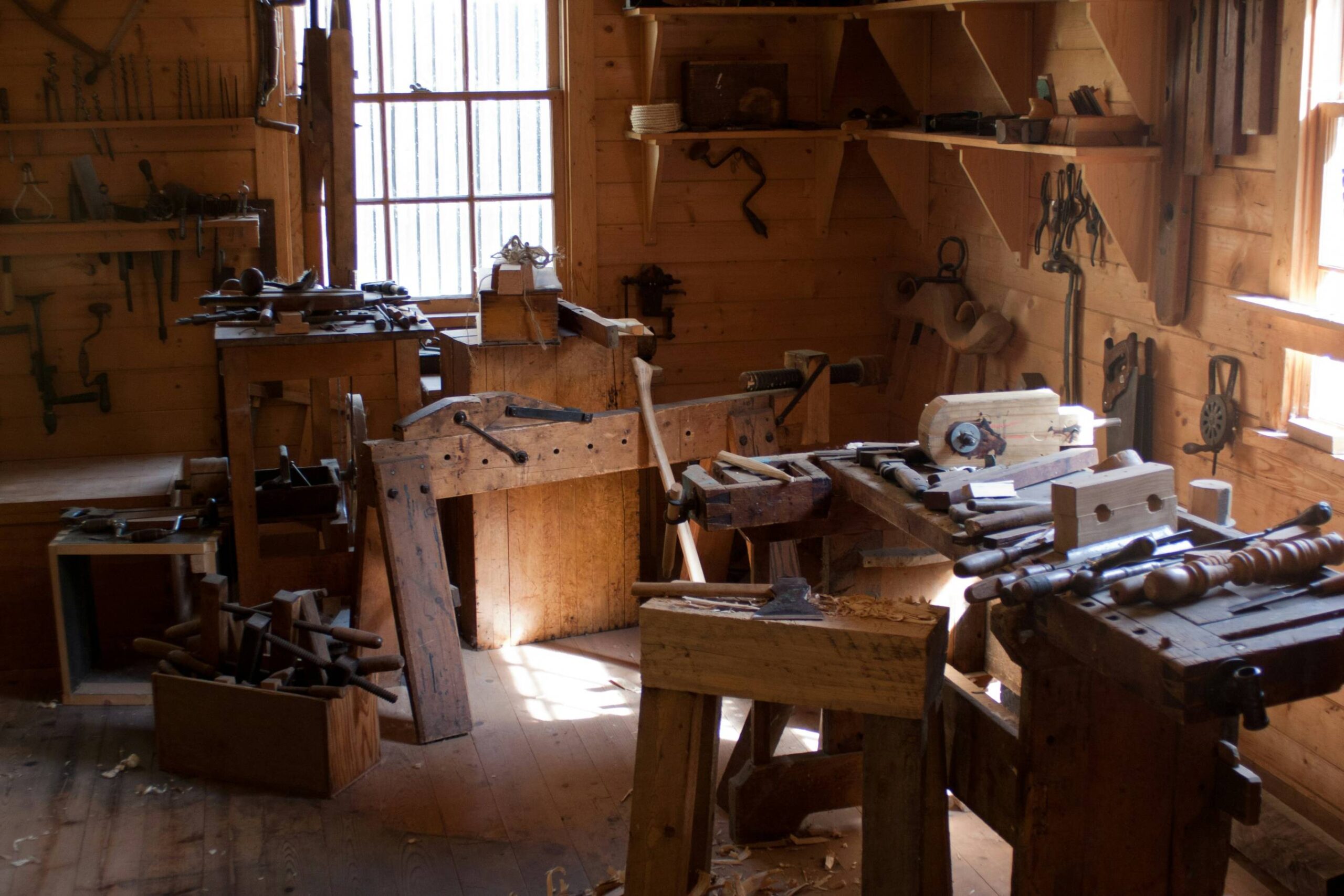
After years of startup launches and corporate success in Shanghai, Robin, 36, traded his high-rise view for sawdust and silence.
“It wasn’t until my 90-year-old grandmother offered her garage that I found the courage to pursue what I truly wanted—a life where success is measured not in promotions, but in the tangible creations of my own hands.
For years, I followed the expected path, worked hard, went to business school, and moved to China to build a career. My life was structured, things made sense, and, most importantly, the people around me were proud. That kind of validation is powerful. But beneath it all, I yearned for something more tangible, something I could create with my own hands.
Carpentry wasn’t a lifelong passion, but I knew I was searching for something different. Growing up with a painter mother, creativity had always surrounded me in one way or another. When other kids had video games, we used to have entire afternoons drawing, always having a paintbrush or clay hidden somewhere. Yet, I found myself in a high-rise office, shutting down my computer in a towering glass building, feeling like just another face in the crowd.
That sting, the awareness that I could be doing something I truly loved, never left me.
Leaving behind the security of the corporate world felt reckless, unnecessary, and, above all, like I was discarding years of effort. In 2020, during Covid, was obviously a very difficult time in China, which emphasised even more the feeling of loss and despair I felt at work. The isolation of lockdowns, the uncertainty of each day, and the stark division between what was “essential” and what wasn’t forced me to question everything. I began to see how fragile the structures I’d built my career on really were. I had the skills to build something new, what I lacked was the courage to start. And then one day, it hit me: if I didn’t take the leap now, I might never do it at all.
During those long Shanghai evenings, as skyscrapers lit up around us, my wife Suzanne and I would talk about what truly mattered. She had seen firsthand how the corporate world consumed me, the midnight calls with international clients, the weekend strategy sessions, the constant pressure to perform. When we imagined our life together, neither of us pictured it happening in conference rooms or through video calls from opposite sides of the world.
What began as hypothetical conversations gradually solidified into a vision: a workshop where I could create with my hands, a home where we could hear each other breathe, moments that weren’t scheduled between meetings. Suzanne understood my yearning before I could fully articulate it myself. She’d watch me lingering in furniture stores, running my fingers along wooden surfaces, examining joinery with curious eyes.
Her observation was the mirror I needed. Together, we started researching what a transition might look like, where we could live, how we could adapt our lifestyle, what skills I would need to develop. The dream of carpentry wasn’t just about working with wood; it was about building a life where time belonged to us again.
We married in the summer of 2022, and by the spring of 2023, we welcomed our first child, our little boy, Theau, an event that reshaped my life in ways we could never have planned. Suddenly, the relentless pursuit of career milestones and financial security felt secondary to something far greater: time. The fleeting nature of it. The way life accelerates when you least expect it. The arrival of Theau wasn’t just a joyful moment, it was a stark reminder that life doesn’t wait, and neither should we.
We needed time to settle, to breathe, to figure out what kind of life we truly wanted to build. But as we took stock of everything, almost everyone around me insisted I was making a mistake. “You’re too old to change careers.” “This is too drastic.” “You have no idea what you’re doing.” “It’s irresponsible for your family.” They spoke as if life followed a single, unbreakable path, as if I should ignore the growing feeling in my gut that I was meant to do something different.
But their fears didn’t align with mine. What scared me wasn’t starting over – it was the thought of looking back decades from now and realising I had spent my life chasing a version of success that wasn’t truly mine. Life is too short to stay trapped in a script someone else has written. And so, despite the doubts, despite the uncertainty, I chose to rewrite mine.
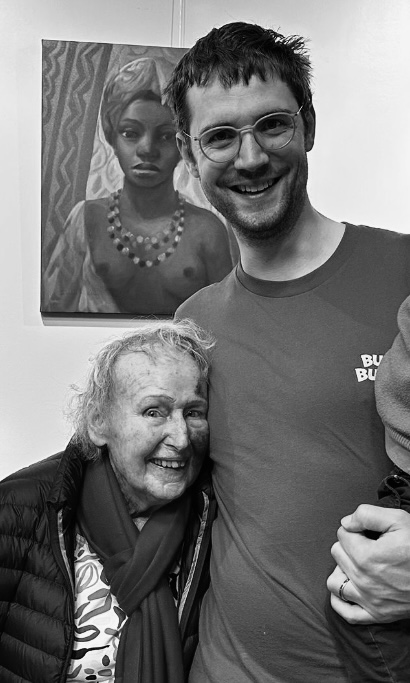
Thankfully, my grandmother Francette, saw things differently.
I remember casually mentioning to her one day, as I dropped her off at home in Paris, where she lived, that I was thinking of changing careers to pursue woodworking as I was moving back to France. I didn’t expect much of a response, just small talk. She stayed silent the entire drive. But as she stepped out of the car, she turned back with a deadly serious face and said, “My garage is free if you need space, it’s for you to start.” For a moment, I was stunned. And then, I felt the rush of knowing that someone truly believed in me.
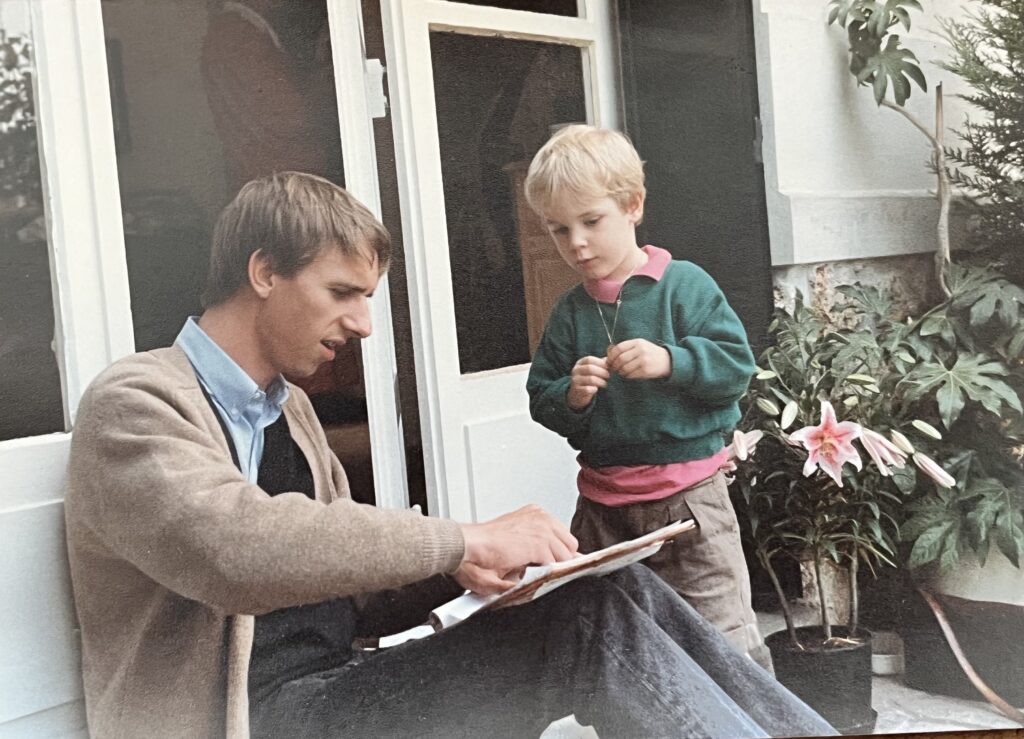
Two days later, I set up my workshop in her garage, a space once filled with memories of the past now became the foundation of my future. I cleared away old schoolbooks, deflated footballs, and looked through dusty boxes. The garage had been untouched for years—each item I moved revealed layers of my family’s history. Photos of summers long past, my father’s tools from when he dabbled in home repairs, even my own childhood drawings tucked away in folders.
I work there every afternoon. Some days are short, when I have to pick up my kids from nursery, and others stretch on as we discuss my latest creation while she makes soup. Having barely any experience with carpentry, I worked on several creations before attempting anything substantial. My first project was a simple wooden spoon – uneven and rough, but entirely mine. I gradually moved on to small boxes, then shelves, learning through countless mistakes. My grandmother would sit nearby, offering both critique and encouragement in equal measure. Despite never working with wood herself, she had an intuitive understanding of craftsmanship from watching my grandfather in that same space decades earlier. Sometimes, she’d bring out old furniture from the house, pointing out techniques I could study and replicate.
Never in a million years did I imagine ending up here – a corporate strategist turned novice carpenter, building a new life in my grandmother’s garage in France, after over a decade of fast-paced ambition in Shanghai’s gleaming business district. The contrast is sometimes jarring: my hands, once accustomed to keyboards and conference tables, now callused and occasionally splintered; my daily schedule dictated not by meetings but by the natural rhythm of creation and family needs.
There are still challenges, of course, and nothing is set in stone. Finding consistent clients who value handcrafted quality in a world of mass production remains difficult. My technical skills still have significant gaps, joinery techniques that masters execute flawlessly often take me multiple attempts.
The financial uncertainty is perhaps the most daunting; months can pass between substantial commissions, and the steady corporate pay cheque is a memory I sometimes miss when bills arrive. The business world teaches you that success is never linear, and carpentry requires patience and precision. But more than anything, this transition has allowed me to be present. Unlike my old job, where long hours and endless travel kept me away, woodworking has given me a life where my children can watch me create, see the dedication in my hands, and understand the value of building something real.
Walking away from a conventional career wasn’t about abandoning success, it was about redefining it.
Success isn’t necessarily what others see for you, or promotions or even financial growth. For me, it’s about waking up with a sense of purpose and see the results of my work in something tangible. Sometimes the most rewarding paths are the ones we never expected to take.”
Now, take a look at the Behind the Scenes of Artist’s Workshops …