
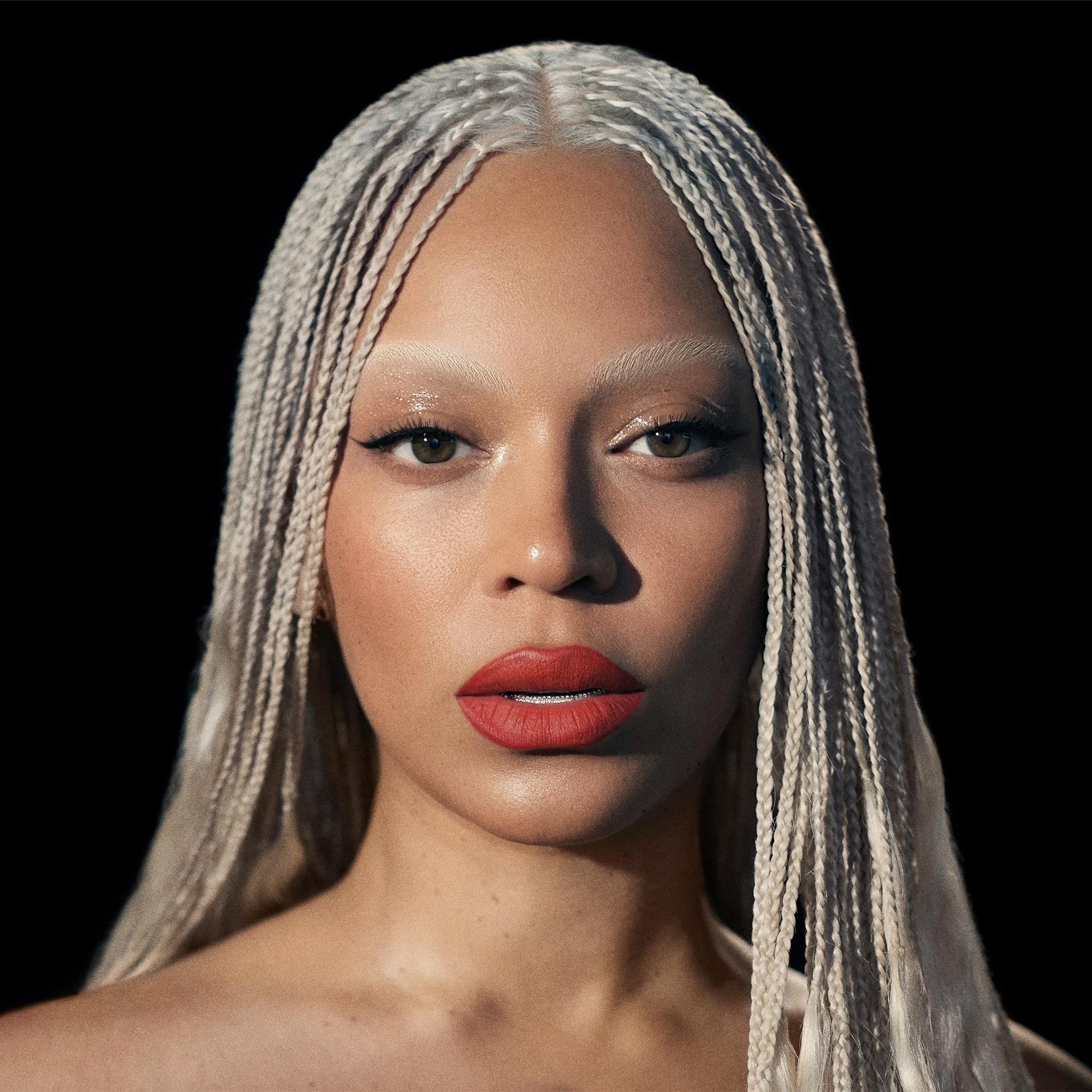
“A-O-T-Y, I ain’t win! Come back and fuck up the pen!” – If Beyoncé can do it, why can’t I? Peer investigates how the media industry is changing for black female creatives
The phrase “work twice as hard for half the appreciation” is an old but familiar fable among the black community. Whilst ‘mediocrity’ and ‘outstanding’ are subjective markers, history has had a way of repeating itself when it comes to overlooking black excellence.
Take Beyoncé for example. A heavily decorated and accomplished artist, the former Destiny’s Child hadn’t taken the GRAMMY Awards’ Album of the Year once in her 20+ year career. One could wonder then if Beyoncé has ever really deserved the award. While we can’t answer that for you, we can look back to 2013, when Beyoncé surprise dropped her self-titled record — sparking industry change for new music to be released on Fridays instead of Tuesdays. Or 2017, when Adele won the accolade and broke it in half — “I couldn’t possibly accept this. Beyoncé is the artist of my life.” Beyoncé was awarded Album of the Year in 2025 for COWBOY CARTER. A milkshake duck, her win was overwhelmingly credited to voter fraud, “wokeness” and her husband, Jay-Z’s, 2024 complaint on the snubbery. She is the first black female to win the award in 26 years.
Work twice as hard, they say.
The 2025 GRAMMY ceremony could be an omen of hope for the black creative industry. But do famous black wins translate in the wider world of media?
Adesewa Yusuff (they/them), broadcast journalist and TikTok influencer, seems to think so … to an extent. At 20, Yusuff has three million TikTok likes under their belt, Graham Norton runner experience, and a cushty gig at BBC’s Radio 2 and 6Music. For Yusuff, media work is cinematic as much as it is musical — graduating from the prestigious BRIT School with a Film and Media diploma in 2022.
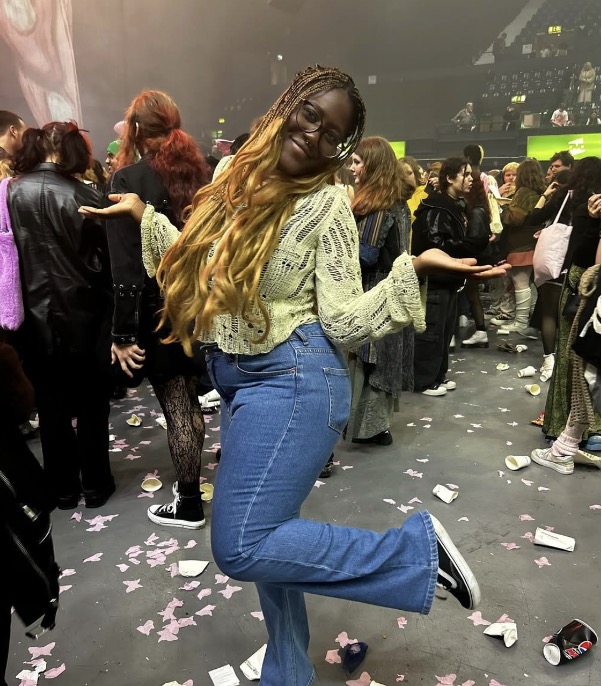
Peer: Has media always been a love of yours?
AY: I’ve always been a creative person. There was never a time as a child when I wasn’t watching TV or reading a book. At secondary school, I signed up for the school production of Hasbro Junior and as I was doing that, obviously it was really fun. I loved being in a group of people who liked doing the same thing. As I was doing that, I saw how much the dance teacher and the drama teacher enjoyed making it with us and I was like, you know what? I think I’d prefer to work behind the scenes. I knew then I wanted to be a film director.
Peer: How did you get into the creative field?
AY: I applied for a year-long internship at the BBC which introduced me to radio. I really enjoyed it and am still working there. It let me know what the industry was really like. I’d done all this stuff at school but had never been an industry professional, so it’s been interesting. It brought me out of my shell and I learned a lot about myself.
Peer: What is your day-to-day job like?
AY: I couldn’t say anything definitive as I sometimes assistant produce. Sometimes I’ll be bringing guests from the lobby or I’ll be answering the phones from people who are tuned in, taking notes from them, and bringing them to the producer to hand to the presenter. I did all that for Radio 2 and 6Music, and have gone on to work on a couple of episodes of The Graham Norton Show.
Peer: Do any artists inspire you?
AY: Shonda Rhimes. The Shonda Rhimes universe is insane. And Tim Burton.
Peer: Shonda Rhimes is known bending media narratives, like black main characters as primary and queer love interests. Does being black affect your creative output or how you look at art?
AY: Yeah. I remember being young and telling my mum that I’m going into the film industry and that’s what I want to do for the rest of my life. She was like, “Are you sure? It’s a really unstable industry. How are you going to make money?” I was 12 at the time and I’m sure my parents wanted me to go down a STEM route or something that makes lots of money. I’m not the only creative in the house. My brother is an animator, painter and writer. He was my first inspiration. We’re first-generation British-Nigerian immigrants, so it feels like we’re in this together. I’m turning 21, so there’s a big pressure to go to uni, which I strayed from at first and felt like I fell short of expectations. It’s just like that one thing of trying to make your family proud, especially as an immigrant.
Peer: Does being a black creative motivate you?
AY: I want to be the first black person to do this or that. That is something I’m striving for.
Peer: Do you think the creative industry is a safe place for black people to operate in? Or is opening up to hearing more black voices?
AY: It’s hearing more black voices little by little. When I’m walking into the BBC office, I see a lot of white people. I remember being fresh out of school and seeing one or two black people in the office and I was like “Wow.” I feel it’s most safe when black people have made specific spaces for themselves, like Radio 1 Xtra. It’s a strong sense of community you feel. There’s no feeling like working with other black people. I feel like I can properly be myself and don’t have to water myself down.
Peer: What’s your favorite thing about being creative?
AY: Getting to express myself the way I want to express myself, I wouldn’t have been able to work in any other industry.
Jess Adelaja (she/her) is a black female photographer and student based in Cambridge. Between her degree and budding photography career, Jess is assistant producing for Watersprite Film Festival, the world’s largest student film festival.
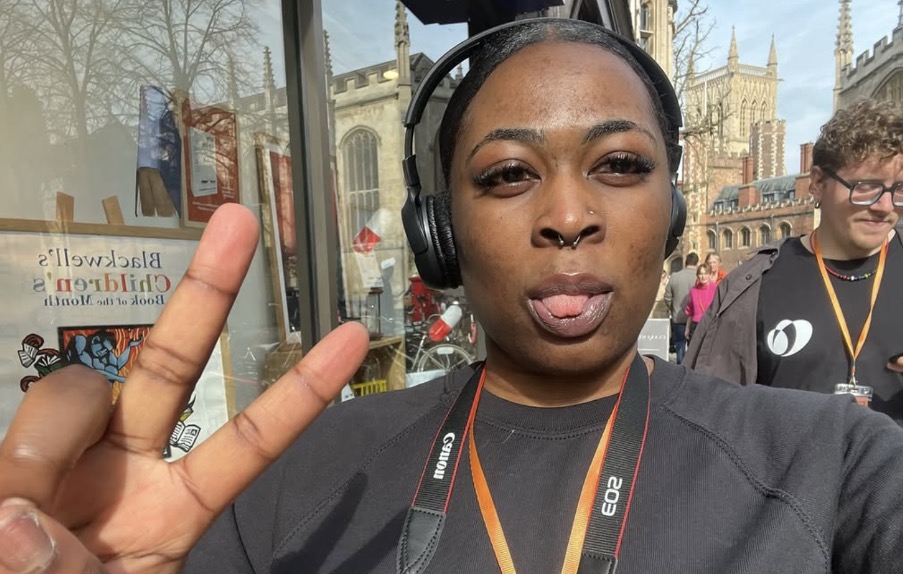
Peer: What is it like being a photographer?
JA: I’ve always been into photography. I guess when you’re a kid, you see pretty things and you wanna take a picture of it. I used to make jokes like “Oh, I could be a photographer!” But it wasn’t until last year that I took it seriously and started my page, lensofjessiica.
Peer: Are you looking for a signature style?
JA: Yeah. I’m inspired by other student work and Petra Collins! I love her work with Olivia Rodrigo and on Euphoria, it’s so colourful and vibrant.
Peer: What do you shoot on?
JA: I shoot on a Canon EOS 5D Mark IV. I’m currently shooting documentary photography, film photography. I wanna do portrait photography. Fashion photography is definitely something I wanna explore because I’m not really into fashion like that.
Peer: Does being black affect your creative output?
JA: I don’t know. I feel like subconsciously I have that thought anyway, that “Oh I’m black. I have to work harder than other people who aren’t black”. It’s upsetting because I deserve to be in this space just as much as you, regardless of my race. I’m not in the photography industry properly yet, but I feel like once I start breaking into it, I’m gonna hear that a lot more and it’s just something that has to put to the back of my mind and just keep doing what I’m doing.
Peer: What’s it like working on the Watersprite Film Festival?
JA: It’s kind of opened the doors for me a little bit because aside from photography, I also want to do content creation and social media.
Peer: How do you feel black positively affects your output in the creative industry?
JA: I’ve never thought of that. In a way, it is a blessing being black in the creative industry because we’re kind of being pushed into a corner – but – within that corner, we kind of uplift ourselves a lot within our own community, which I’m really, really grateful for. Since starting my photography page, I’ve had nothing but support. The majority of my peers are black, so I’ve had nothing but support from them.
Peer: Do you feel embraced by the media industry? Or have any advice for other upcoming black creatives?
JA: Don’t be scared or shy. Work on confidence, and personality because once you start breaking into the industry, people try to look down on you because you’re not on their level per se, but don’t be shy. I’ve wanted to be an athlete, a nurse, now look – I’m a media person. My boyfriend does fine art. I think it’s a big thing in the Afro-Carribean community to be discouraged from artistic work. Then we’re shunned from it. Just make sure you’re enjoying what you do.
Deborah Loko (she/her) is a model and actress from North London. She’s also pursuing a marketing degree, so she knows how it feels to be on both sides of a casting call. At five foot eight, Deborah walks with a stride in her step; but won’t deny the covert racism that fuels these industries behind the scenes.
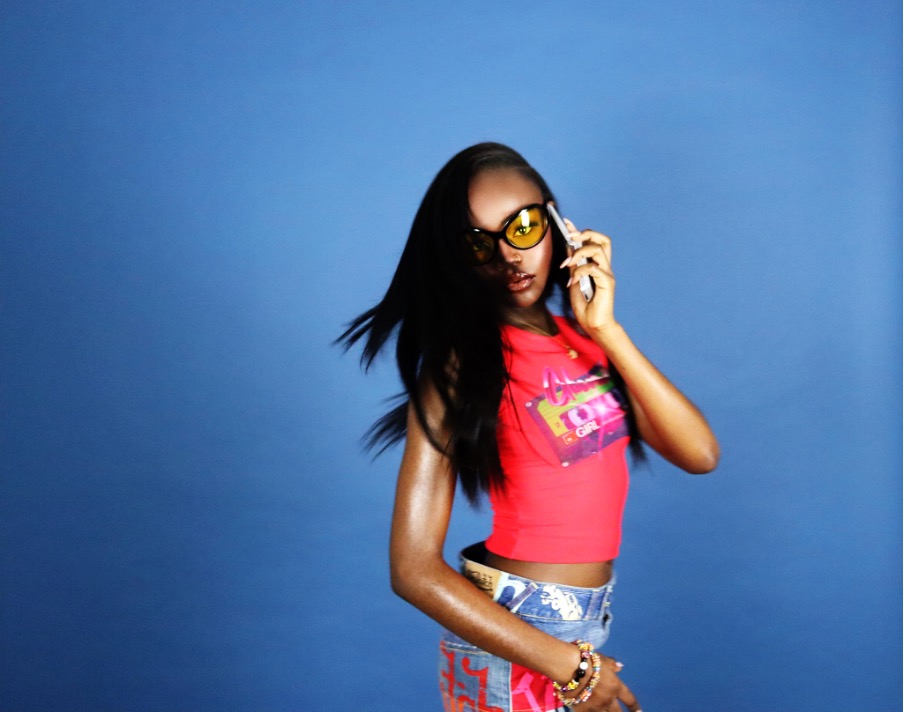
Peer: What’s it like working in front of the camera?
DL: You’re paid to have a face! So on the one hand, you can’t complain. It’s interesting. Oftentimes, as a black model, you show up to shoots and have to do your own makeup and hair. The chances of that happening are a lot slimmer if the photographer or director is black. It’s funny seeing the differences in luxuries you’re afforded. I love acting, I love modeling – don’t get me wrong – it’s my own way of expressing myself but as with every other job, you considered you’re a cog in a well-oiled machine. This one’s just hasn’t been designed to go your way.
Peer: What inspired you to get into acting, modeling, and marketing?
DL: I’ve always been into movies. Soap operas, Eastenders, the works. And I love being the centre of attention. I’m a people person. Theatre and modeling allow me to tap into different sides of myself, connect with different personalities. But I guess I didn’t really get into acting until GCSEs. GCSEs are really made to feel like this pivotal moment, the end all and be all of your future and career plans if you did or didn’t choose the right career plan. It’s funny looking back because that’s simply not true, but acting was the be all and end all for me. I realised that’s what I wanted to do. Modeling was something I was scouted for.
Peer: Does being scouted suggest the industry is changing?
DL: The industry is changing. It has to. The demand for change overpowers the urge to stay the same. The world of modeling, acting, and marketing are inherently political. Black people weren’t put on billboards historically because they were less desired. Things like TikTok and Instagram are great. Anyone can open their phone camera and people rally behind it if they agree. So the industry is adapting. More faces like mine are in ads, in bigger roles in movies and TV shows. It’s refreshing.
Peer: Does being black affect your creative output?
DL: You’ve got to show out! And not just because of the fact you need to work twice as hard or whatever, but because you wanna make your own people proud. Growing up, I use to watch Some Girls on BBC Three. Adelayo Adedayo was the star – which was a little more uncommon for black girls at the time. The show’s been over for ten years, but my friends I still talk about how great it was. I guess I want to have a performance that sticks with people like that. Especially little black girls.
Take a look at our article on Five Workspaces for Marginalised People !