By Aimee Wheeler
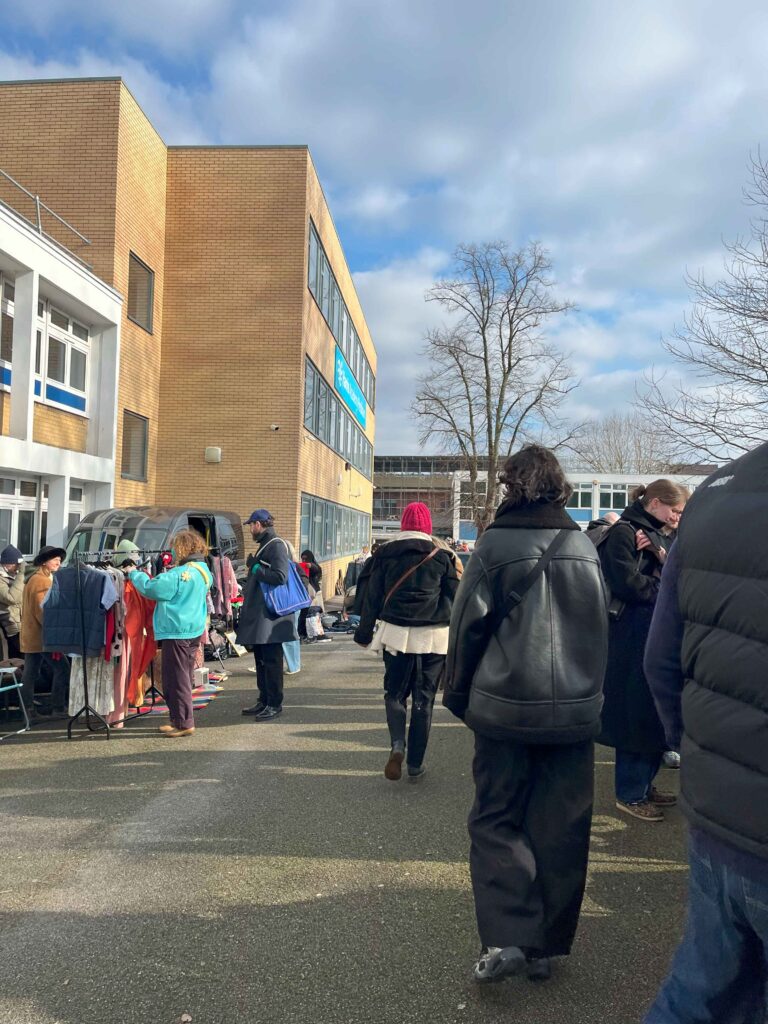
From the chatter of voices to the shuffle of feet, Peckham Car Boot buzzes with the chaotic energy you’d expect from a school playground at lunchtime, except this isn’t about kids and juice boxes. This is serious business.
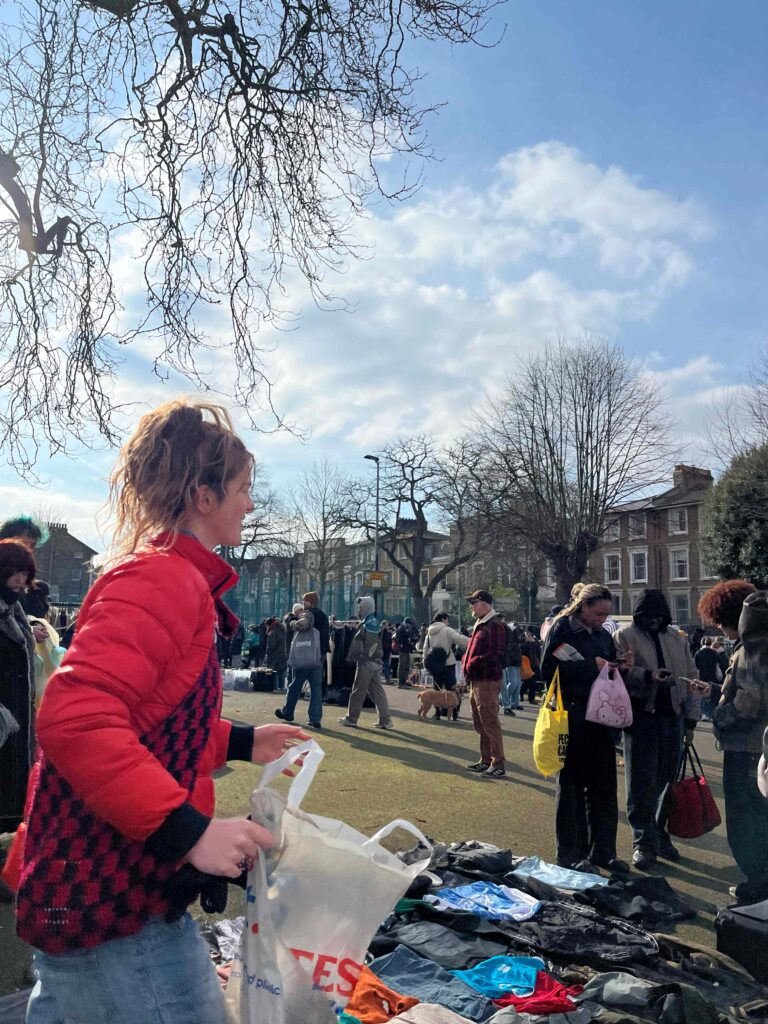
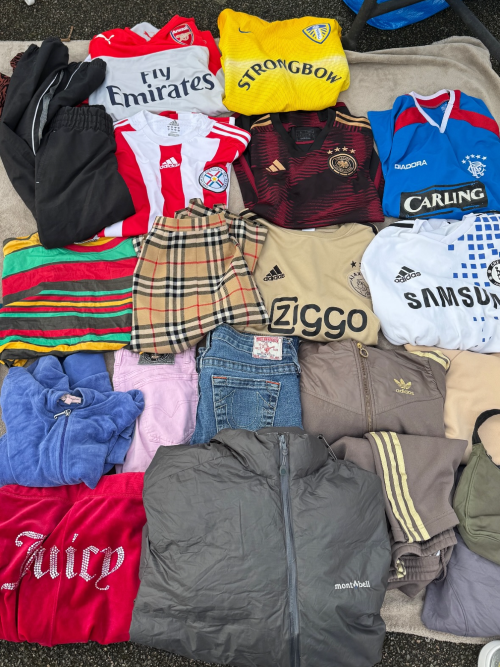
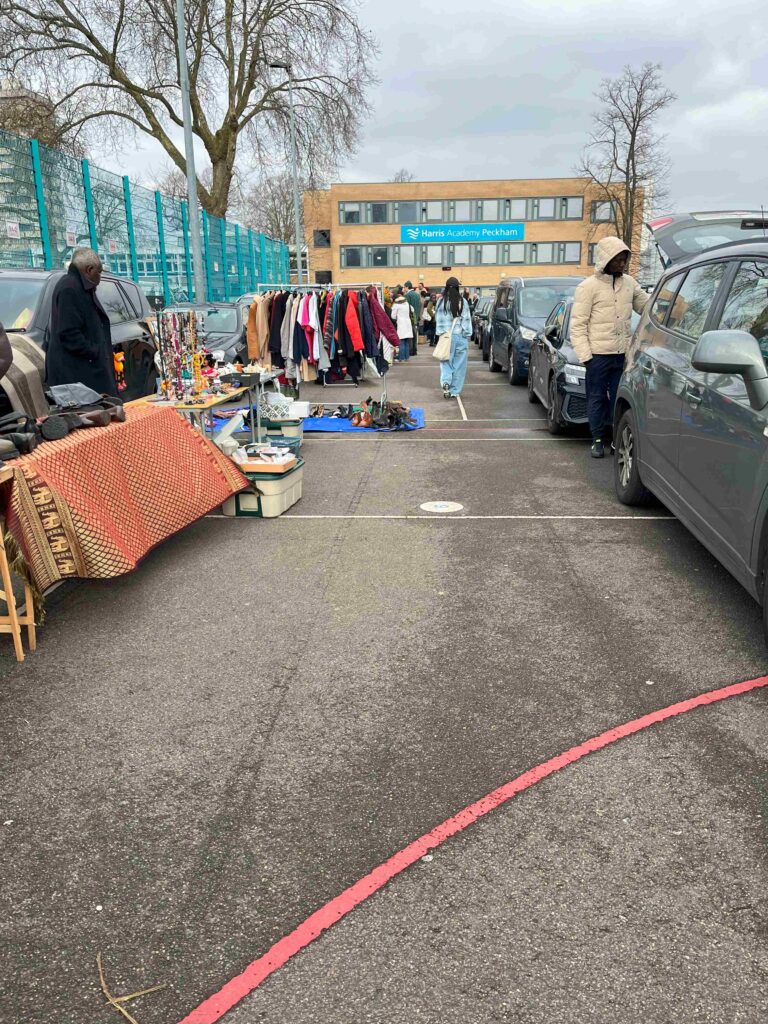
It’s a chilly Sunday morning, and I’ve fought back against the gravitational pull of my bed and the warmth of my duvet to join a zombie-like queue that snakes around Bellenden Road to the Lidl car park. This is where you will find bargain hunters and vintage fanatics who wait patiently to uncover their next big find. After ten long minutes in line, you finally get through the gates, a £1 coin lighter, and you’re met with a sea of stalls, eager sellers, and a treasure trove of vintage gems.
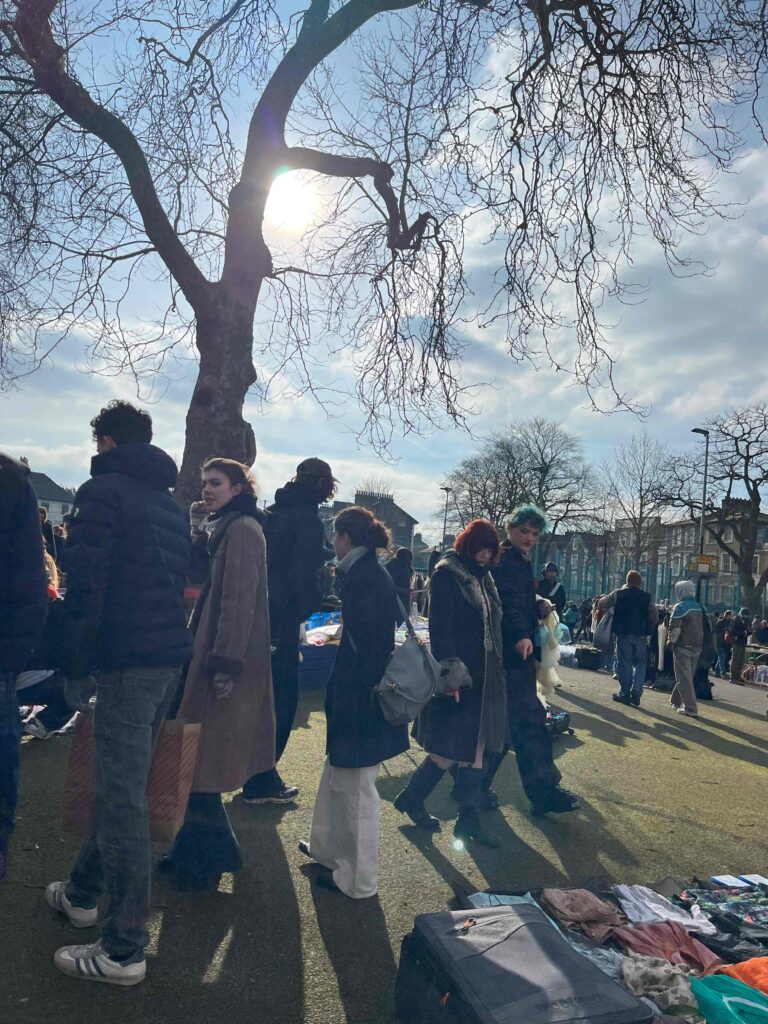
The smell of coffee and freshly baked pastries drifts through the air as you dodge elbows and weave through crowds. The setup is insane; just instinct and luck, and you might find a pot of gold. And while the thrill of the hunt is addictive, it makes you wonder: how sustainable is all this? Between the vintage dealers and independent businesses, there’s a whole ecosystem at play. I spent the day wandering through it all, uncovering stories from the heart of Peckham’s busiest Sunday tradition.
It’s not just the promise of a good deal that draws people to Peckham Car Boot, it’s the sense of purpose behind it. Sustainability isn’t just a passing trend here; it’s embedded in its soul. Nathan, who’s been coming to the preloved pop-up for years, has seen firsthand how attitudes towards second-hand shopping have shifted. “People growing up now are way more into sustainability,” he says. “When I was younger, my friends used to laugh at me for going into a charity shop. But now everyone’s doing it. Buying second-hand is popular, it’s important, and you can get some pretty good deals.” Maybe a trend is being born?
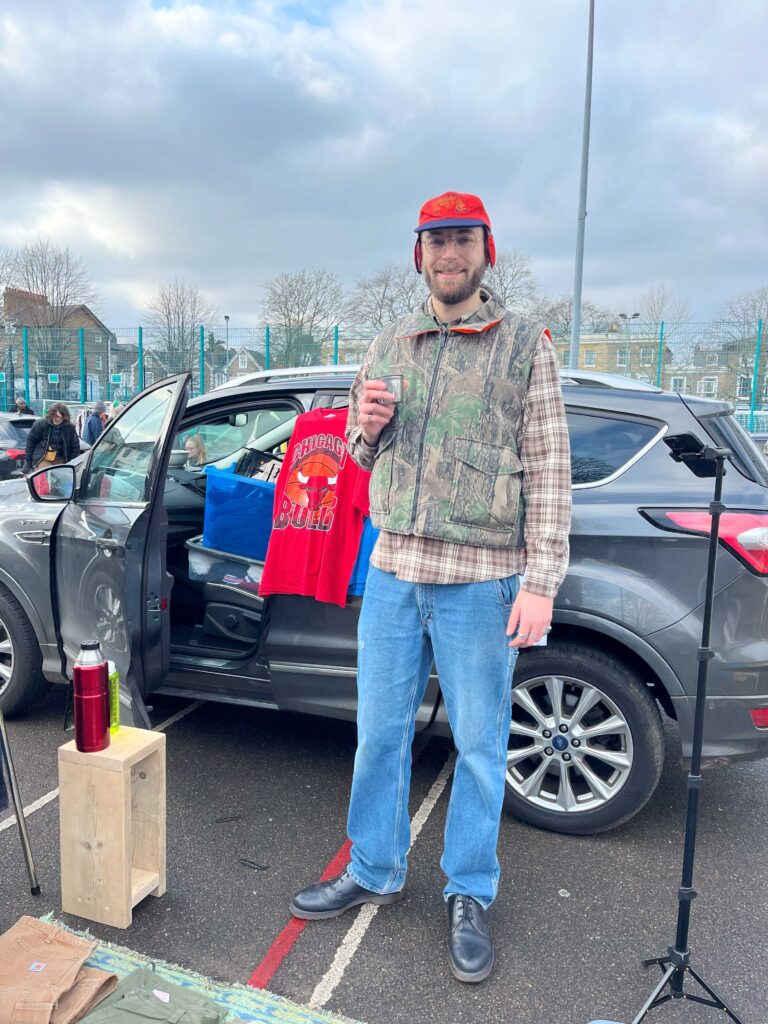
Many people find themselves rummaging through various boxes on their hands and knees in search of an elusive bargain, just as I found myself searching through one of Sella’s boxes for 50p bangles. As many a fashion student does.
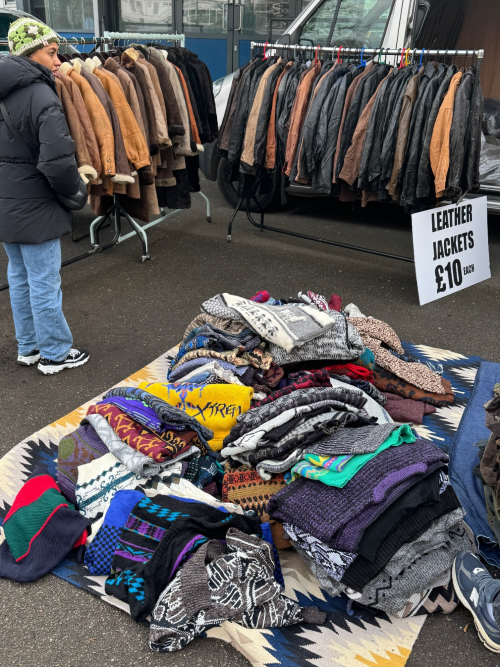
Stalls overflow with vintage clothes, furniture and knick-knacks that may have been thrown out elsewhere, but here they’re given a second lease of life. The car boot has tapped into this shift in popularity; a trend or not, it caters to a crowd that values not just style but a bargain. Nathan points out that “The sellers know their audience — they’re encouraging people to buy second-hand clothes, furniture, in fact anything that is good deal.”
This blend of commerce and sustainability through recycling and upcycling gives Peckham’s second-hand emporium its edge. It’s not always about scoring a bargain, but perhaps doing one’s bit at creating a sustainable loop where nothing goes to waste. In this city obsessed with fast fashion and disposable trends, this car boot offers a positive alternative to wasteful consumerism.
I spoke with Nina Moore, a co-seller, with her husband, Bill, who started selling because their son who’s “exactly that type of young person who would go to all the high-end stores like Supreme but soon realized ‘Why am I spending all this money on new stuff when I can actually save myself some dosh and get this a lot cheaper second-hand?’” Perhaps this is a realisation we’ve all questioned. Nina agrees: “The climate here is very much about people finding pre-loved things and giving them new life—breathing new life into them in their own homes or on their bodies. That can only be a plus for everybody on the planet.”
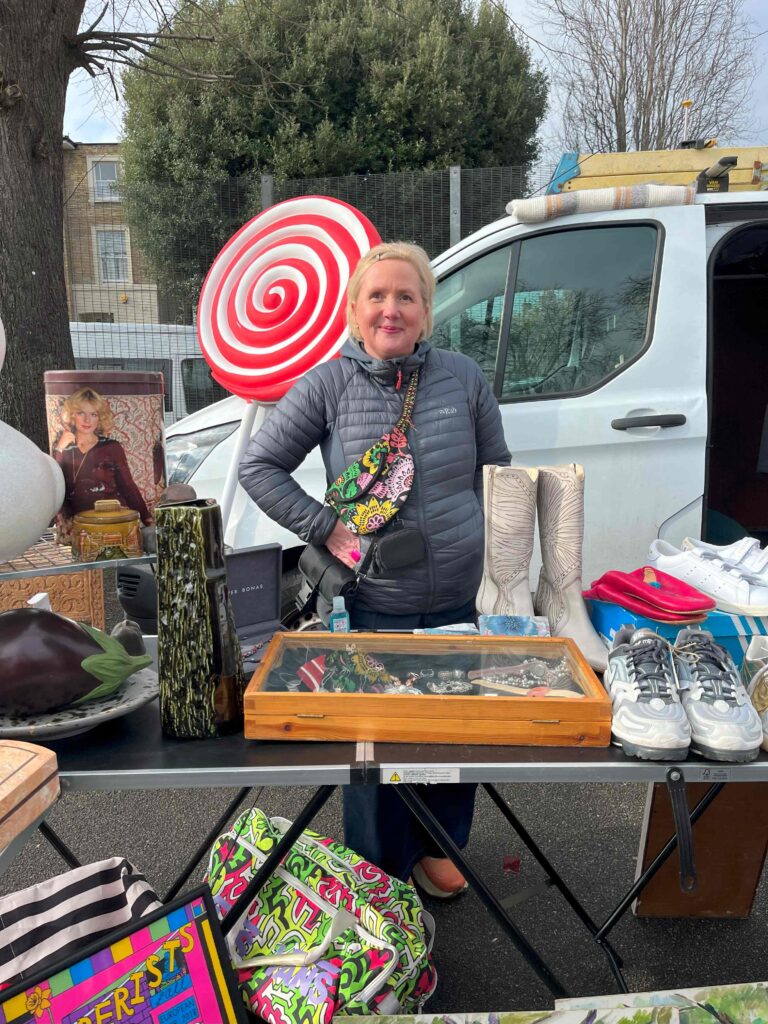
The atmosphere here is clearly different to your local home car boot sale. It certainly smells different to the car boots of bacon sarnies and dusty old Barbies with tangled hair; although it’s not in some random field in the middle of nowhere, it’s in Peckham.
Walking around, I passed lines of cars and stalls, It made me think about the history of this place and the excitement of not knowing what obscure items I might come across, from a used prosthetic limb to a pair of retro-designer jeans. I had the pleasure of speaking to Jas Ward, Supervisor at Peckham Car Boot, for the story of how it all started in 2019.
“It all started with Erin and Steven, because they were both interested in selling second-hand and vintage goods, and Erin now owns a shop on Brick Lane. Their enthusiasm stemmed from “going to car boots in Gloucester”, and from others, they saw an opportunity to start “a similar car boot in South East London”
The popularity of this car boot has grown more and more, and it’s surprising how far people are willing to travel, even from as far as the South of France. Jas added, “We were featured in a French news story recently, and suddenly we had loads of emails from people in France planning their holidays around visiting Peckham Car Boot. It’s crazy how far it’s reached.”
So, you may be wondering what all this fuss is about? “Car boots are about finding unique items—it’s the thrill of finding something one-of-a-kind. It’s more than just shopping—it’s a social hub, where teenagers hang out for just a £1 entry. It gives them somewhere to go on a Sunday morning.” Jas adds.
So what motivates people to come to this car boot? It’s not just about saving money and finding a bargain, but perhaps doing one’s bit for sustainability, recycling and upcycling. As Caoimhe Rita, owner of Rita’s vintage, says, “It’s keeping fashion circular within the community, reducing waste that would otherwise go to landfill. Rather than purchasing new and contributing to manufacturing costs and carbon emissions, individuals can grab second-hand pieces that they genuinely need.”
Aah Kid, owner of the Aahkid clothing brand of children’s reworked clothing, remarks, “The popularity of Peckham Car Boot allows people to purchase and experiment with fashion at low cost—without costing the earth,” intertwining the need for affordability and sustainability is what works for this car boot. “People are definitely searching for both [style and sustainability]—otherwise, they could just go to any high street.”
Caoimhe Rita points out how second-hand shopping addresses the broader environmental issues. “It reduces fashion waste, which harms our planet, the health of third-world countries, and the ecosystem. It also puts pressure on fast fashion companies to change the way they make their clothes.” Well, as easy as it might be to buy low-cost brands, they are a contributing factor in polluting rivers, creating textile landfill waste, and creating poor working conditions for employees. With a community that cares, this retro resale has become a social hotspot where people from all walks of life can come together over their shared passion.
So why get up out of your warm bed on a Sunday and not just click “buy” on that basket of clothes in your shopping cart? It’s easy, convenient, and somewhat affordable, right? Peckham Car Boot is more than just a car boot; it’s a place to swap fleeting trends for lasting fashion. In a playground full of Ford Focuses and crazy clutter, this is where I want to be on a Sunday, sifting through clothes, channeling my inner Del Boy, always on the lookout for a savvy score and a good laugh!