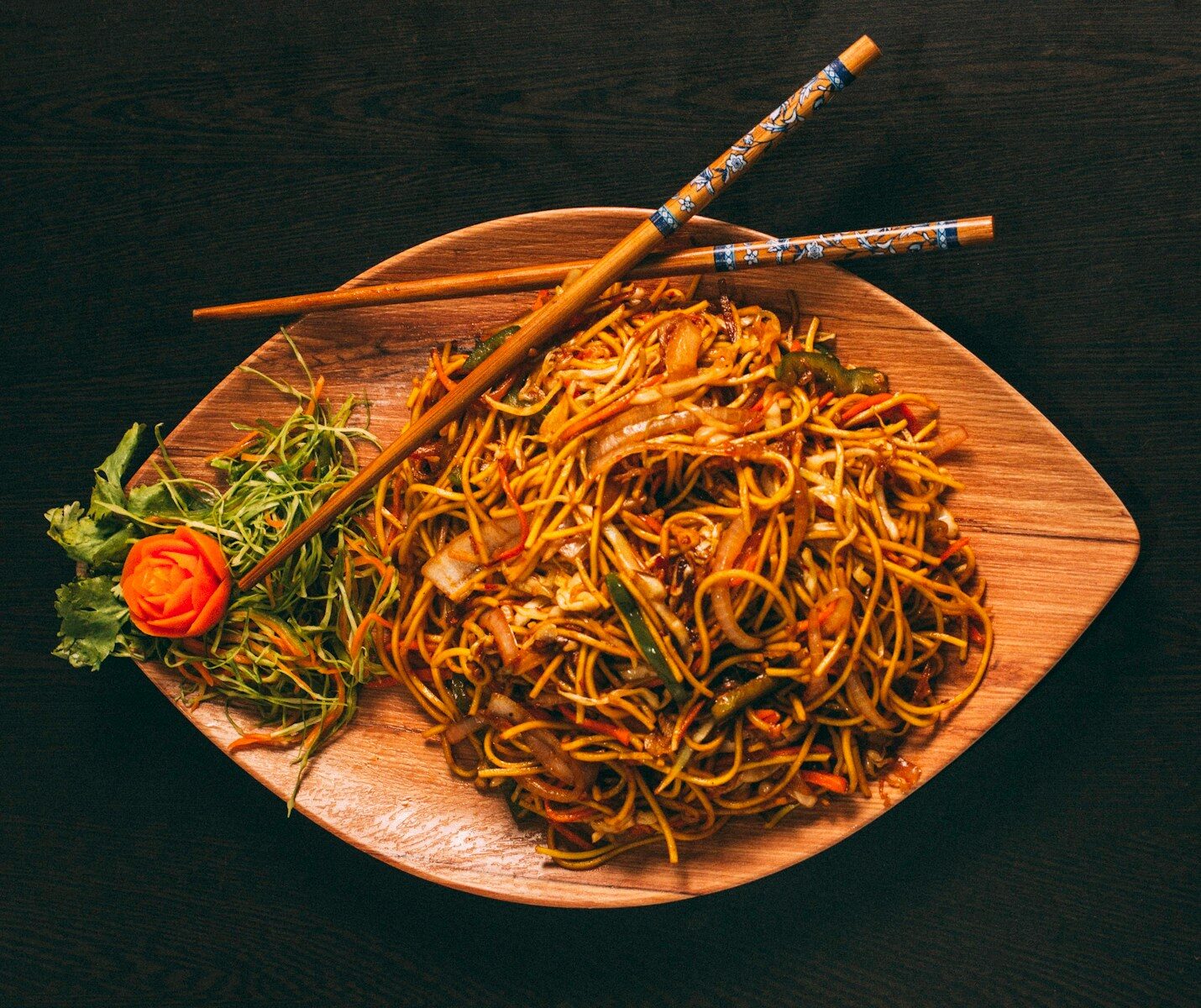
A familiar flavour can carry routines, habits, and a sense of belonging across borders
Taste is often treated as a personal preference, but it is also a form of memory. A familiar flavour can carry routines, habits, and a sense of belonging across borders. In cities shaped by migration, taste becomes a quiet way of holding on to home. At night in Canary Wharf, as the river reflects the lights of nearby office towers, taste is what draws people toward a small Chinese food stall by the water.
The financial district does not fully sleep. By the riverside, a compact Chinese food stall called Late-Night Canteen remains busy long after most nearby cafés have closed. Orders are placed at the open counter, and customers carry their food to a small wooden shelter nearby. Inside, warm yellow lights, simple decorations, and wooden walls soften the surrounding glass-and-steel landscape. Mandarin and English conversations mix in the air. Different rhythms, held together by food, share the same small space.

The stall is run by Aaron, who moved from Shanghai, China, to London and set up the business by the river. His intention was clear from the beginning.
“I wanted Chinese people living here to have a place where they could eat something truly familiar,” he explains. “When you’re far from home, food matters more than you realise.”
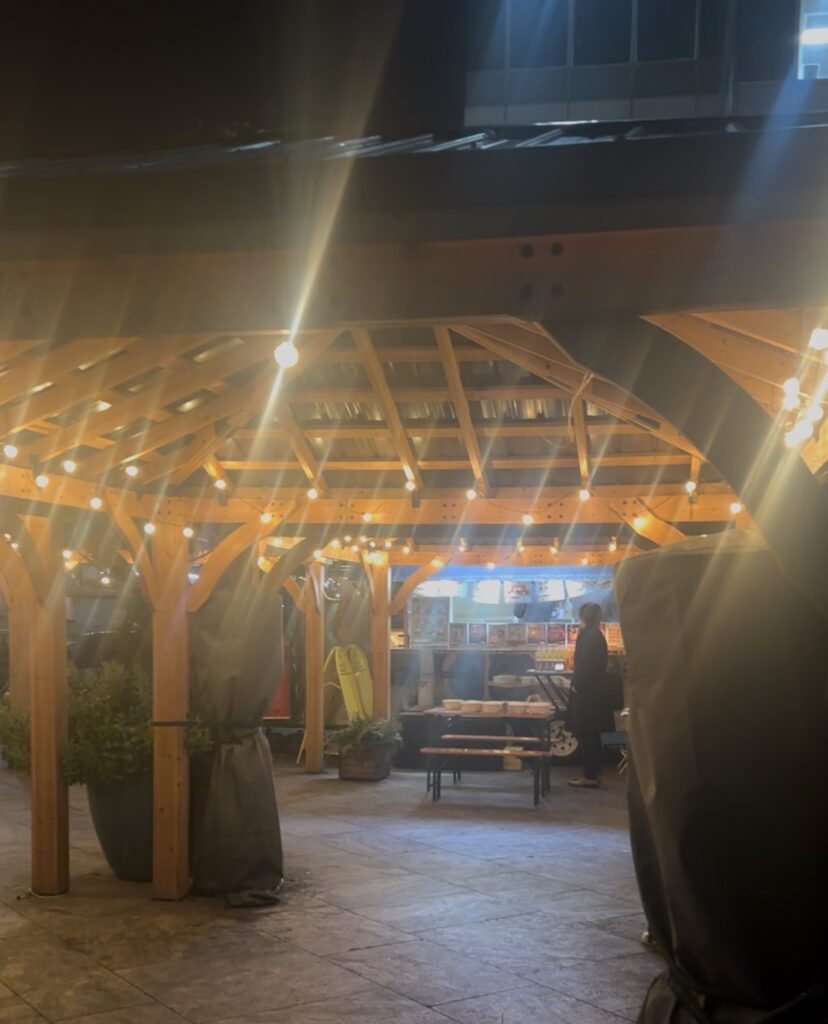
The riverside food stall and wooden hut were designed deliberately — modest, welcoming, and warm — offering a sense of comfort rather than spectacle. At the same time, Aaron hopes that non-Chinese customers can taste Chinese food as it is meant to be, not overly adjusted or simplified. “I want them to try real Chinese flavours,” he says, “not just an idea of them.”
Over time, the stall has become a regular stopping point for Chinese students and workers nearby. Scarlet, a Chinese international student studying in the UK, eats here almost every day, both lunch and dinner.
“It’s affordable, filling, and convenient,” she says. “And it tastes right.” For her, the stall is not about novelty or cultural exploration. Sitting in the wooden hut with her takeaway box, she treats the meal as part of her daily routine between classes and assignments. The taste is familiar enough to feel efficient rather than emotional. “I just need something warm and reliable,” she explains.
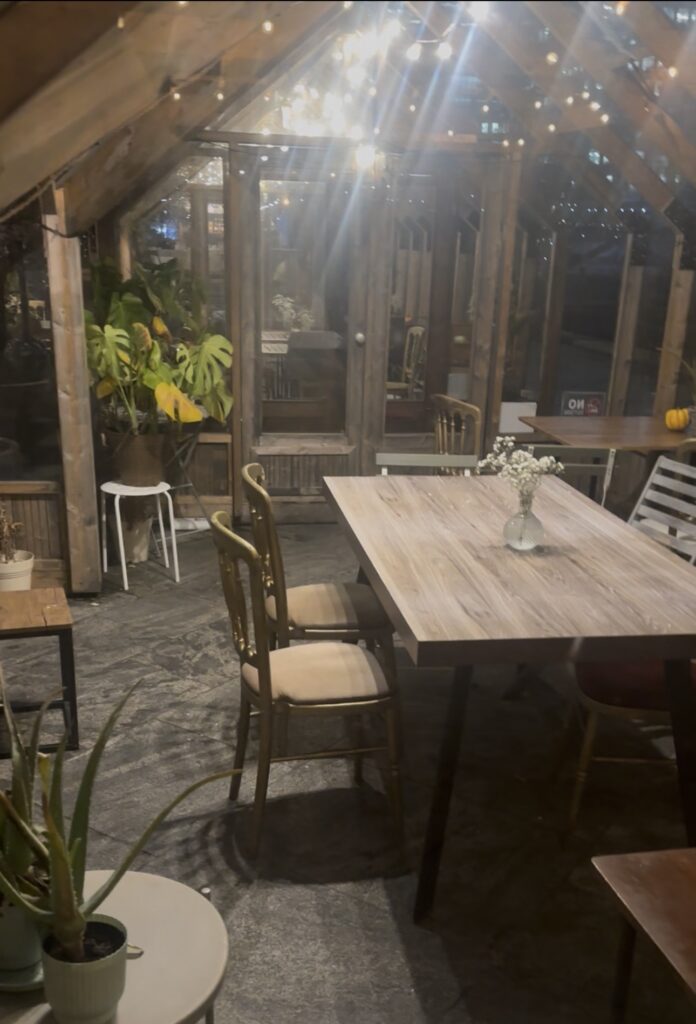
During lunchtime, the queue grows longer and more mixed. Office workers from nearby buildings join the line, many of them non-Chinese. James, who works in one of the surrounding offices, says he first noticed the stall because of the number of Chinese customers waiting by the river. “I thought if so many Chinese people come here, it must be good,” he says. Sometimes, he comes simply to escape the routine of sandwiches and salads. Sitting in the wooden hut, he describes it as “trying something different without leaving the area.” For him, the taste represents a brief cultural encounter in the middle of a highly standardised workday.
The same riverside space, however, serves very different purposes. For Chinese customers like Scarlet, the stall functions as part of everyday life: a place that supports study, work, and survival in a foreign city through familiarity of taste. For customers like James, it is an occasional choice, framed as an “authentic” or “hidden” discovery. Neither perspective is wrong, but they are not equal. One is rooted in necessity and continuity; the other in curiosity.
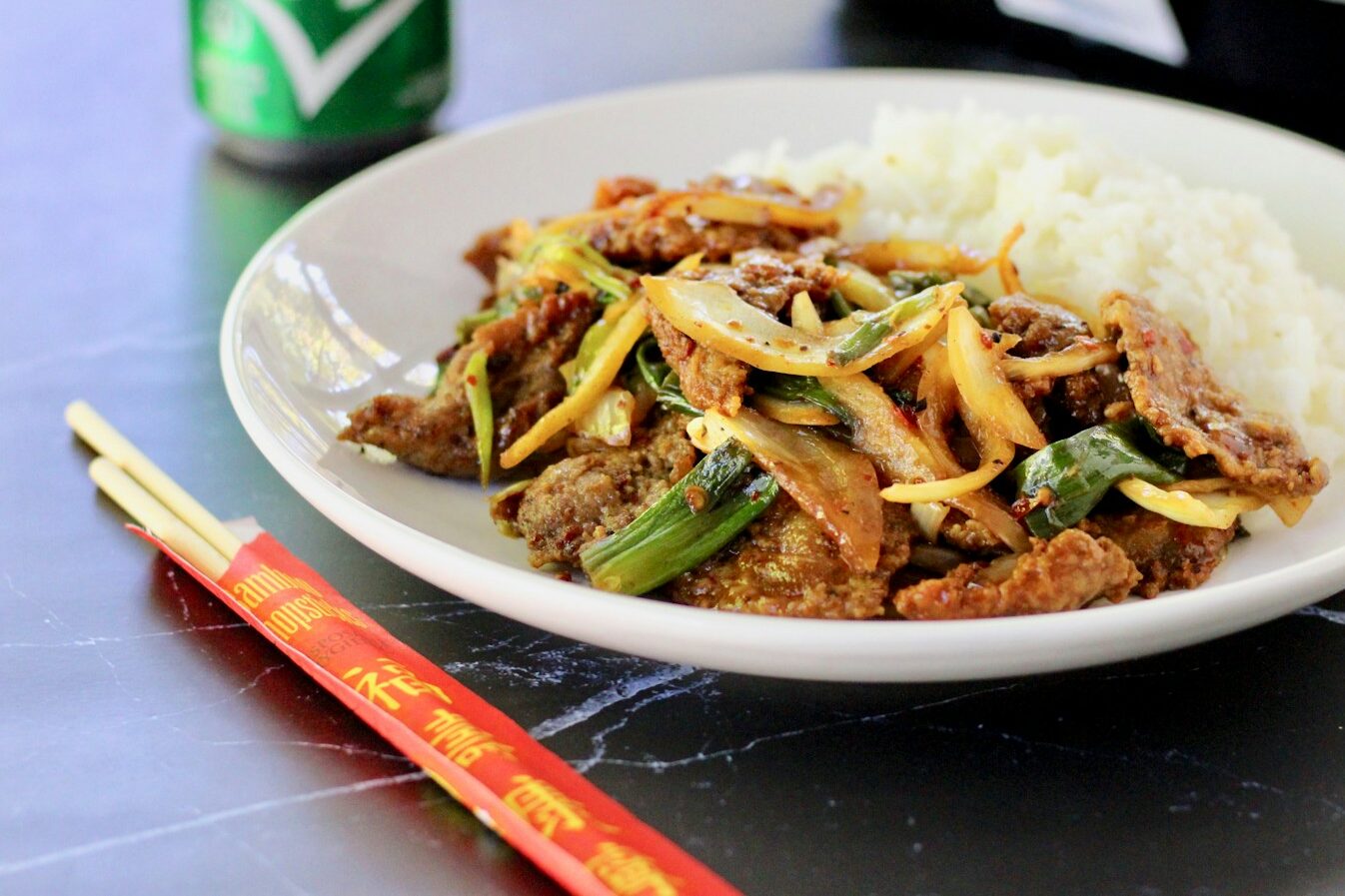
Aaron is aware of this imbalance. Online reviews still matter, even for a small food stall.
“Of course they affect us,” he says. Comments about food being “too oily” or “too strong” influence how dishes are adjusted.
What gets cooked and sold reflects not only memory and intention, but also foot traffic, weather, and review platforms. In this context, maintaining authenticity becomes a careful negotiation rather than a simple goal.
Sitting in the wooden hut, holding a warm box of food, I can hear both languages at once. I understand the pressures behind the stall and still take part as a customer. From this position in between, the difference becomes clearer. Some people come here to sustain everyday life; others come here to experience difference through taste. One group depends on this riverside stall for familiarity, while the other passes through it.
As the late night comes, the river outside grows quieter, but the lights inside the hut remain on. Steam rises into the cold air, orders continue, and familiar faces nod in recognition. In the heart of London’s financial district, this small food stall and its wooden shelter show how taste can hold two worlds at the same table — warm, temporary, and never fully the same.
Leave a Reply