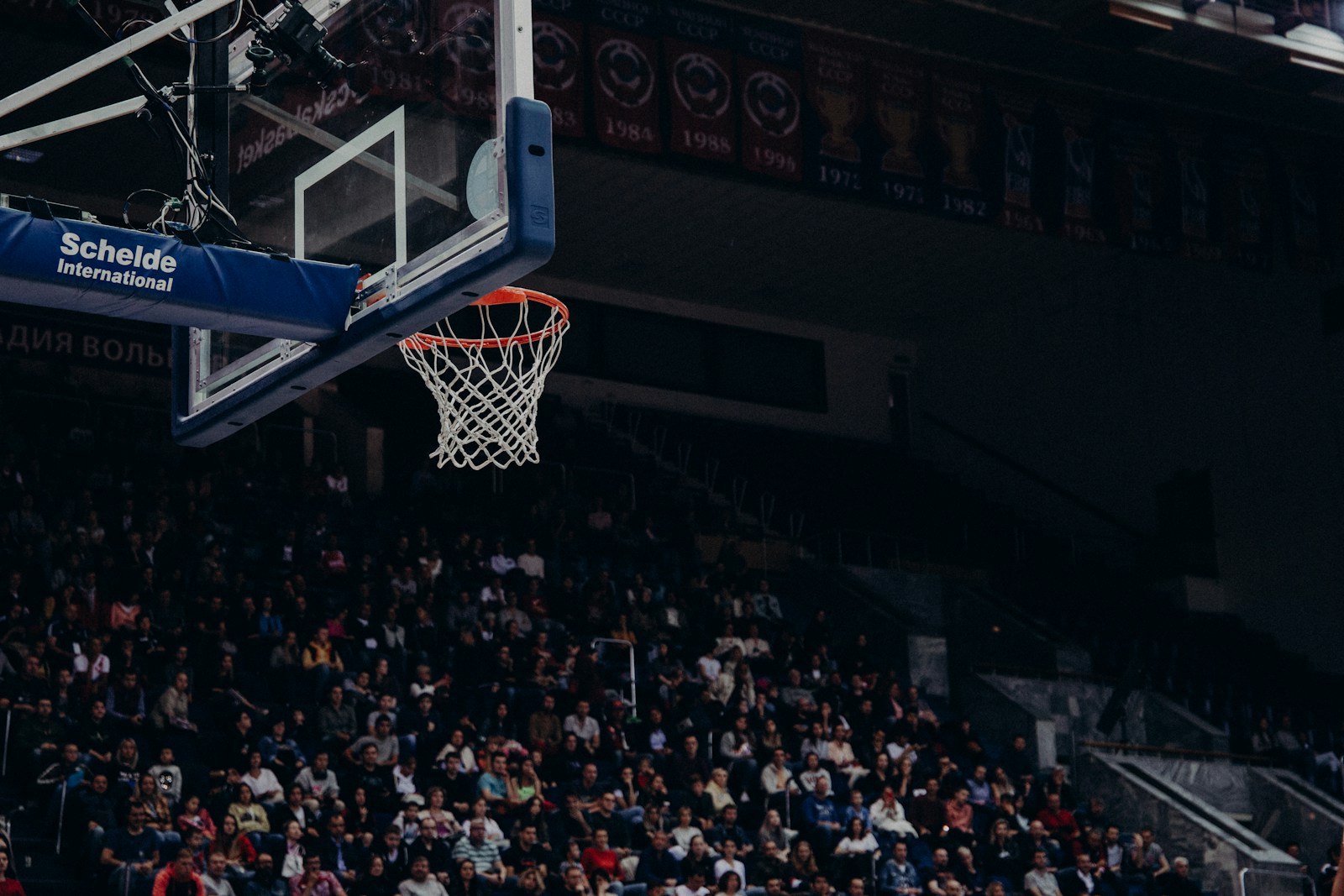
At the loudest moments of a basketball game, something unexpected often happens. The crowd is shouting, people are on their feet, voices collide from every direction – yet for the player on the court, the noise begins to fade. Attention narrows to the play. The body moves without hesitation. Many athletes describe this state simply as focus.
Focus is not silence. It’s not the absence of sound. It is the ability to stay with the task when sound becomes emotional, personal, and overwhelming. In London, where basketball is played on noisy street courts and in echoing arenas, focus isn’t learned in calm. It’s learned inside noise – sometimes supportive, sometimes hostile, and often both at the same time.
From the Street
One of London’s most challenging basketball courts is an outdoor court nicknamed the Blue Cage in Deptford. Here, there are no bleachers or barriers separating players from the people watching. Spectators stand just a few feet from the action, close enough to offer praise – or taunt.
The Blue Cage in Deptford is a legendary public basketball court in South London, known for its intimate and intense atmosphere. The court is fenced in and surrounded by city life – traffic, wind, and a crowd so near that every word they shout feels personal. One local organiser described the Blue Cage as “a perfect example of what a streetball court should be… It’s competitive. It can be intimidating, but it’s a true community”. For young players here, noise isn’t mere background; it’s a constant feedback loop that can either boost you or break you.
Jerry, a Chinese-British player who grew up playing at the Blue Cage, remembers that the noise was never neutral. When he played well, the park would erupt. “People would shout things like ‘Yao Ming!’ or ‘China boy can hoop!’ Everyone would clap and make noise,” he says. The praise was loud and immediate – and not always entirely comfortable. “You feel seen. You feel like you’re proving something,” Jerry recalls.

But the noise could turn in an instant when he played badly.
“If I missed a few shots, people would say I was soft,” he explains. “They’d tell others, ‘Pick on him. Go at him.’ Suddenly the crowd wasn’t cheering – they were testing me.”
On this street court, crowd noise carried a clear judgment. It signalled whether you were respected, doubted, or targeted. And for Jerry, often one of the only Asian players on the court, every mistake seemed to reinforce a stereotype in some onlookers’ eyes, while every success came as a surprise to them.
“At first, I heard everything – every shout, every comment. It messed with my head,” he admits. All those voices invading his thoughts made it hard to focus on the game itself. Over time, Jerry realized he had two choices: react emotionally to the crowd, or find a way to play his game in spite of it. Slowly, he learned to narrow his attention. He stopped listening to individual voices and started focusing on small, controllable details: the bounce of the ball on the concrete, the timing of his steps on a drive, the feeling of his breath before a shot. The noise never disappeared, but it gradually moved to the background.
This is how focus is forged on street courts like the Blue Cage – not by escaping distraction, but by surviving it. The court doesn’t shield players from pressure; it saturates them in it. However, that constant pressure becomes a form of training for the mind. Sports psychologists call this selective attention: learning to filter out irrelevant input and lock onto what matters. In fact, research suggests that while a steady drone of crowd noise can eventually fade into the background, sudden or variable shouts are far more likely to grab an athlete’s attention and disrupt performance. The Blue Cage provides plenty of the latter. By enduring this unpredictable auditory assault day after day, Jerry was unknowingly teaching his brain to sort through the noise and stay locked in on the game. He was building a mental resilience that would become crucial at the next level.
When the Arena Roars
If the Blue Cage is a chaotic classroom, London’s pro arenas are the exam halls. At the Copper Box Arena – home of the London Lions – noise is not an accident of the environment; it’s deliberately engineered. Music thunders during breaks, lights flash, and thousands of fans chant in unison. The sound isn’t just louder; it’s heavier and more organized, designed to rattle opponents and rally the home team. In fact, the Copper Box’s very interior was designed to amplify crowd noise, earning it the nickname “the box that rocks”.
Former basketball trainer Kami says the arena is built to test a player’s focus.
“The crowd can lift you or break you,” he explains. “When a player is hot – when his shot is falling – the noise can actually help him stay hot. The cheers reinforce confidence. You feel unstoppable.”
Kami has seen how a home crowd’s energy can lock a player into a rhythm. Each made basket brings louder applause, which boosts the player’s confidence, which leads to better decisions and more success. It becomes a feedback cycle – success produces noise, noise boosts confidence, and confidence sustains more success. Psychologists might call this a confidence loop.
But Kami has also witnessed the opposite. “In away games, especially with hostile crowds, I’ve seen very strong players miss shots they normally make, even open layups,” he says. “The boos get in their head. They rush, they hesitate. Even elite players can lose their rhythm.” According to Kami, the difference isn’t skill – it’s attention. A hostile crowd pulls a player’s focus outward. Instead of staying centered on their own body and the task at hand, the athlete starts worrying about the noise, the reaction, the pressure. This is when choking happens: not because the player suddenly loses ability, but because their attention is split in all the wrong directions.
This crowd effect has been observed even at the highest levels of the sport. During the 2020 NBA season, when games were played in an empty-arena “bubble” due to the pandemic, players actually shot and scored better without fans in the building. Without thousands of screaming spectators, overall free-throw accuracy across the league jumped from about 77% to over 80%. Many players attributed the improvement to the quieter, practice-like atmosphere – with far fewer distractions, they could concentrate more fully on their performance. It was a striking real-world example of how much crowd noise and pressure can influence outcomes.
In normal times, professional teams try to inoculate players against these effects by simulating hostile environments. Kami notes that players practice with blaring artificial crowd noise, limited communication, and high-pressure drills. But no amount of canned noise quite replicates a true arena full of opposing fans. There’s an emotional weight to a live crowd that a soundtrack can’t duplicate. That is why early experiences under fire – like those raucous street court battles – matter so much.

The Psychology of Focusing Under Noise
Steven Chu, a sports psychology major with a master’s degree graduate explains that what we call focus is essentially selective attention: the ability to process certain information while filtering out the rest. The human brain cannot process everything at once in a chaotic environment, so elite athletes train themselves to zoom in on what truly matters – their own body, the ball, the play – and let the roar of the crowd fade into a blur. According to Attentional Control Theory, loud and unpredictable noise can hijack this attentional process, making it difficult to concentrate on the task at hand. The goal for any athlete is to prevent that hijack by managing their own arousal levels.
Chu notes that noise affects performance largely by changing an athlete’s arousal – the level of physical and mental alertness in the body.
“A certain amount of arousal helps performance,” he says. “It sharpens attention and reaction speed. But when arousal gets too high, muscles tighten, timing breaks down, and decision-making suffers.”
This aligns with the classic Yerkes-Dodson principle: a moderate level of stress can elevate performance, but excessive pressure undermines it. Indeed, studies have found that even well-trained basketball players see a significant drop in shooting accuracy when subjected to loud distractions compared to quiet conditions. Noise can push arousal beyond the optimal zone.
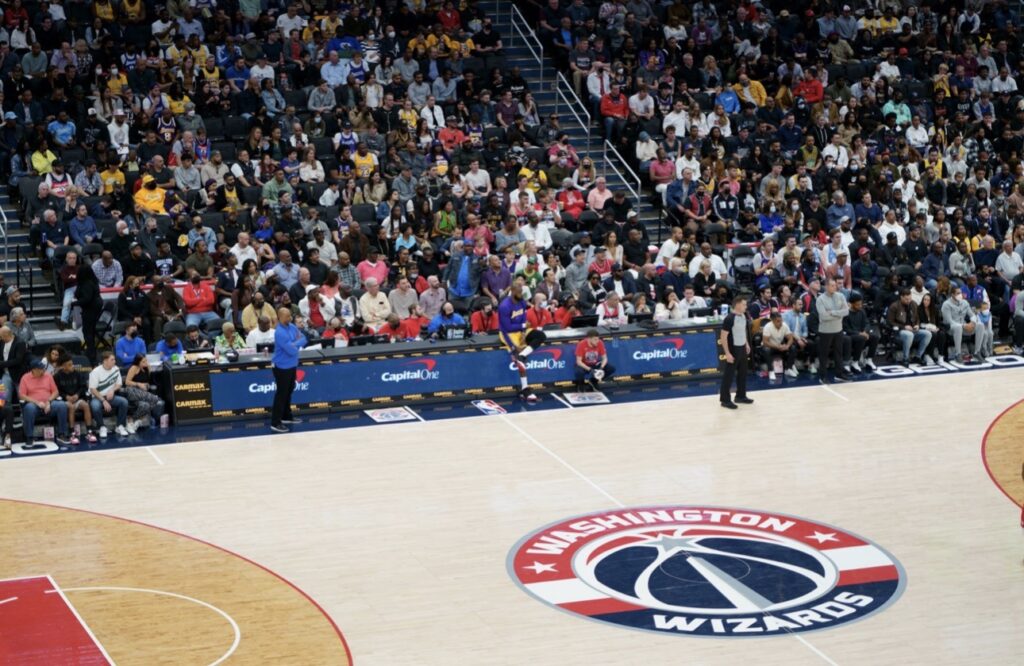
Whether noise ends up helping or hurting comes down to how well an athlete can regulate their response. “The difference between athletes who survive noise and those who don’t is regulation,” Chu says. “Can you keep arousal in the right zone?” Athletes who excel amid chaos have often built up this regulatory skill through years of exposure. Psychologists have observed that constant low-level pressure – like the din of a busy streetball court – forces players to practice emotional control and refocusing on a regular basis. Over time, those habits become fixed coping strategies.
When focus reaches its peak, it no longer feels like a conscious effort. Athletes often describe it as a kind of intuition or being “in the zone.” In these moments of deep focus, decisions feel automatic, and the game almost slows down. The conscious mind quiets while the body reacts on instinct honed by countless hours of practice. External commotion that would normally distract just melts away. In fact, during such peak experiences, athletes have reported that the roar of the crowd becomes muted and peripheral vision narrows – as if the mind filters out the noise and clutter. Focus becomes a kind of sixth sense, an internal awareness of only what matters in the moment.
In a city like London, where noise is a constant companion and silence is rare, this skill is essential. Jerry’s story shows that true focus isn’t something that suddenly appears at the high-level games – it’s built slowly, through repeated exposure to pressure, judgment, and noise. The street court taught him how to ignore the voices around him. The arena tested whether he could control his reaction to them. From the Blue Cage to the Copper Box, athletes learn the same lesson: you don’t gain focus by waiting for silence. You learn it by performing inside the noise. The players who succeed are not the ones who hear less – they’re the ones who have learned what not to hear.
Leave a Reply