Serra Umur
Graham Pullin is Professor of Design and Disability and co-founder of Studio Ordinary. His disability-focused designs were a part of the Design and Disability exhibition at V&A South Kensington
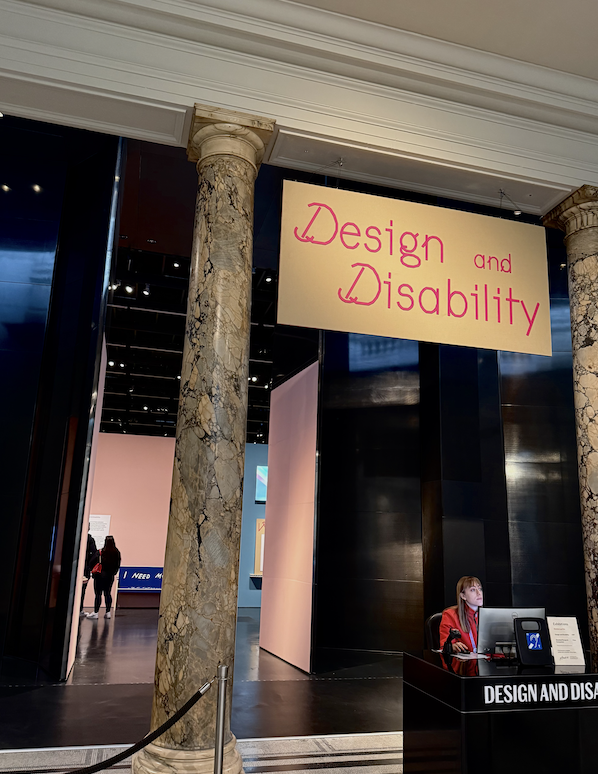
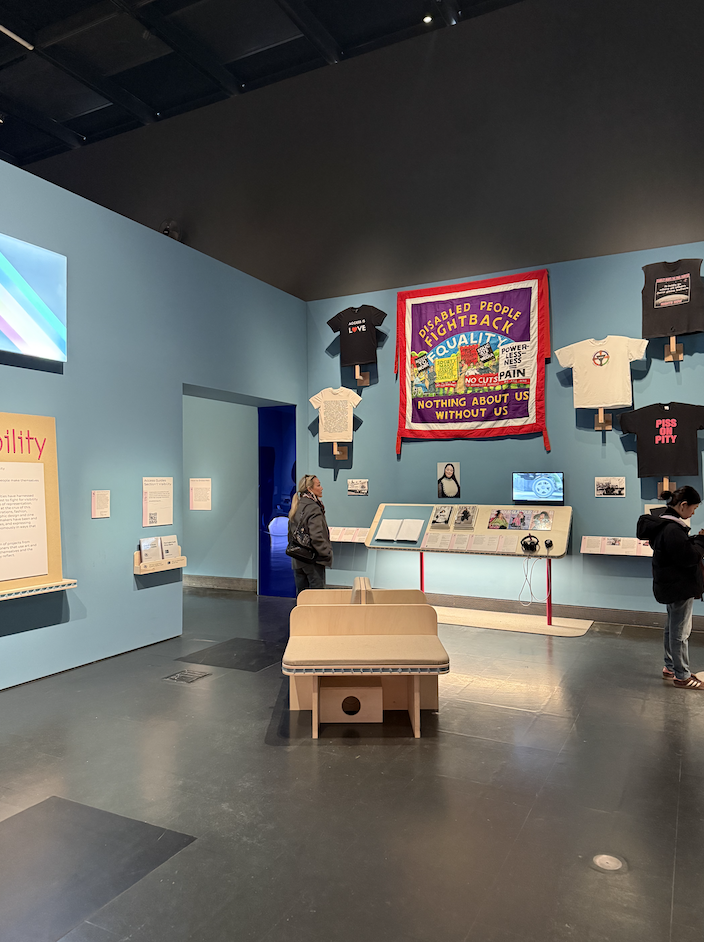
The Paralympics on our screens acts as a rare reminder, for many, that disabled people seem to only have value when they are performing at superhuman levels. This contrast between the lived experiences of disabled people and their everyday invisibility in society was recently highlighted in the V&A South Kensington’s influential Design and Disability exhibition, which ran from 7 June 2025 to 15 February 2026. It features over 100 objects created by or in collaboration with disabled, deaf, and neurodivergent people created from the 1940s to the present. Among the contributors is Graham Pullin, who showcased his collaborative project Hands of X (developed 2016–20 with Andrew Cook, Eddie Small, and Corinne Hutton). Pullin gives us some insight into designing for people with other abilities and why it’s important for all of us to challenge ableism and rethink how disability is represented in design.
Here are five key thought-provoking points from Pullin’s perspective on design and disability:
- Making disability visible and personal: “Hands of X is about making disability visible and also designing disability objects, including fashion, with their wearers’ identities in mind.” Pullin reinterprets prosthetic hands, utilising common materials (such as wood, cork, and metal) inspired by eyewear customisation. This approach enables users to express their identity through fashion or design choices. This also helps to disrupt the normative expectations associated with “medical” prosthetics and changes the user’s perspective from merely a functional tool to an element of self-expression.
- Challenging “superhumanism”: Pullin challenges the typical “superhuman” portrayal of disabled people that is often depicted in the media (for example, many Paralympic advertisements). He believes that this common media narrative (e.g., Paralympic ads) pressures disabled individuals to constantly perform as extraordinary, ignores everyday realities like pleasures, pains, and ordinary life, and focuses on individual achievements over systemic issues. To illustrate this point, Pullin references Katherine Araniello’s satirical video entitled Meet the Superhuman, which mocks this type of representation. Pullin further states that they “resist disability being framed medically and that they “recognise both the pleasures and pains of being disabled.”
3. Advocating “super normal” design for extraordinary bodies: Pullin states that his “design work has always challenged ableism, but… my involvement with… critical disability studies came post-Design Meets Disability.” Pullin’s work at Studio Ordinary, which he co-founded in 2019 at the University of Dundee, is a meeting of design and disability studies, evolving from his 2009 book Design Meets Disability. He recommended manifestos such as Super Normal Design for Extra Ordinary Bodies, drawn from designers Naoto Fukasawa and Jasper Morrison, to promote understated, unapologetic objects that resist spectacle and embrace ordinary life.
4. Questioning tech futures and emphasising interdependence: In work on augmentative and alternative communication (AAC), co-authored with AAC users, Pullin “questions the dominance of predictions that artificial intelligence (AI) and brain-computer interfaces (BCIs) will define the future of Augmentative and Alternative Communication”. He highlights the value of human interdependence and recognising that people rely on each other meaningfully rather than relying on isolated technological “solutions.”
5. Graham Pullin calls us to action with this provocative take on inclusive design: “Nothing about us without us” is Studio ordinary’s core principle guiding their cause. He believes that “nondisabled designers should not only include disabled designers (who are, of course, needed in recognising and dismantling barriers) but also nondisabled designers. He further states that “we should think about the possibilities on how we approach disability design.” He states that he controversially argues that if disability design were approached like any other form of design characterised by “irreverence, provocation, curiosity, exploration, and attracted to constraints as well as freedoms, playful-with-serious-intent… fill in the next six adjectives”