
TikTok is a social media platform that has gained popularity for its ability to make videos go viral quickly and reach a large audience. There are several types of videos that tend to perform well, including dance and choreography, lip-syncing and acting skits, food and recipes, DIY/life hacks, and comedy/humour videos. These often feature catchy music, creative editing, and visually appealing content. As a result, they can gain popularity quickly and reach a large audience on TikTok. There is no doubt that TikTok is growing at a rapid rate, but is the growth progressive for young minds? Or have young generations such as Gen Z been born into a technologically advanced world that is detrimental to the growth of vulnerable and impressionable minds? Some trends that are particularly harmful encourage users to participate in challenges that have resulted in serious injuries and even hospitalisations. Similarly, TikTok trends that focus on appearance, body image, and unrealistic beauty standards may affect mental health, particularly in young people. These trends may encourage unhealthy behaviours or promote a distorted self-image.
- “The skull breaker challenge“: This dangerous trend involves three people jumping at the same time, with the middle person’s legs being swept out from under them, causing them to fall backwards. The trend has resulted in serious injuries and hospitalisations ultimately encouraging people to injure themselves and put themselves in danger for views and likes. TikTok recognises how harmful these challenges are by censoring this trend and removing all videos to stop the trend circulating.
- “The milk crate challenge“: This trend involves building a tower of milk crates and attempting to walk up and down the tower without falling. The trend has resulted in serious injuries and hospitalisations leading to the challenge being censored by TikTok due to the amount of injuries caused. There were reports on Twitter that suggested a woman had passed away after getting hurt while trying out the milk crate challenge in Dallas. The woman reportedly fell onto the hard concrete outside a petrol station after trying to climb on stacked milk crates. Fortunately, the woman survived.
- “Silhouette challenge“: This trend involves users dancing in front of a red filter while wearing a sheer garment, creating a silhouette effect. However, some users have used editing techniques to remove the red filter and reveal the users’ identities and bodies without their consent.
- One harmful TikTok trend that gained attention in 2021 was the “Devious Licks” challenge. This challenge involved stealing or vandalising items from school bathrooms, such as soap dispensers, toilet paper holders, and even toilets themselves, and then sharing videos of the thefts on TikTok. The trend led to widespread damage and theft in schools across the United States, and prompted schools and law enforcement agencies to issue warnings and take action to prevent further incidents. TikTok also took steps to remove content related to the trend and ban users who participated in it.
- The “blackout challenge“. This challenge involves intentionally cutting off the oxygen supply to the brain by choking oneself or holding one’s breath until they pass out. This can lead to brain damage, seizures, and even death. There have been reports of teenagers experiencing serious injuries and fatalities as a result of attempting the blackout challenge. Medical professionals and authorities have issued warnings about the dangers of this trend, and TikTok has taken action to remove videos that promote or showcase it. It is important for young people to understand the potential risks and consequences of participating in these kinds of challenges and to avoid attempting them. Parents and guardians can also help by monitoring their children’s online activity and discussing the importance of safety with them.
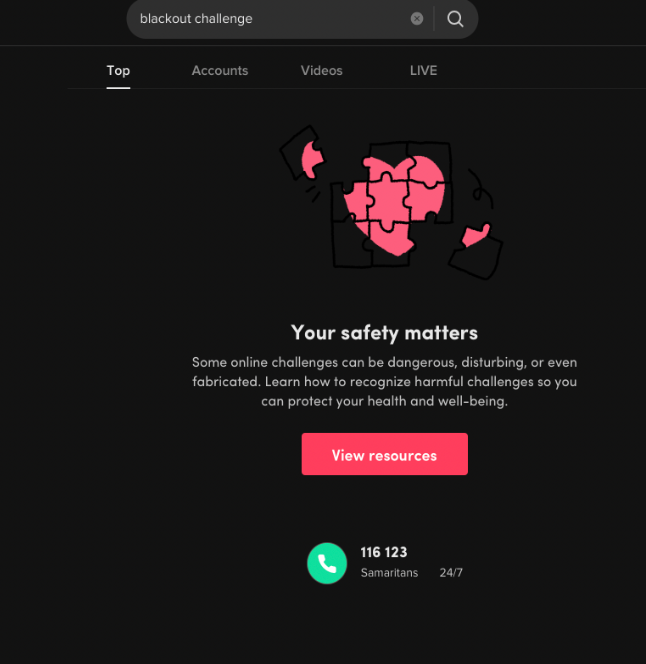
TikTok is an app that should be approached with caution and used in moderation. Experts have outlined the potential dangers of the app; “TikTok is potentially dangerous for kids under 16 because it can expose them to inappropriate content, predators, and cyberbullying. Younger kids might not have the skills or experience to navigate the platform safely or know how to report inappropriate behaviour.” – Dr. Jenny Radesky, Assistant Professor of Pediatrics at the University of Michigan and member of the American Academy of Pediatrics Council on Communications and Media, in an interview with NBC News in 2022. While these trends may be entertaining, it’s important to remember to prioritise safety and respect for others when participating in TikTok challenges.