ID Guide: Elderflower
Common names: Elderflower, boortree, boontree, borewood
Latin: Sambucus nigra
Foraging for elderflower requires a little extra care due to a toxic lookalike.
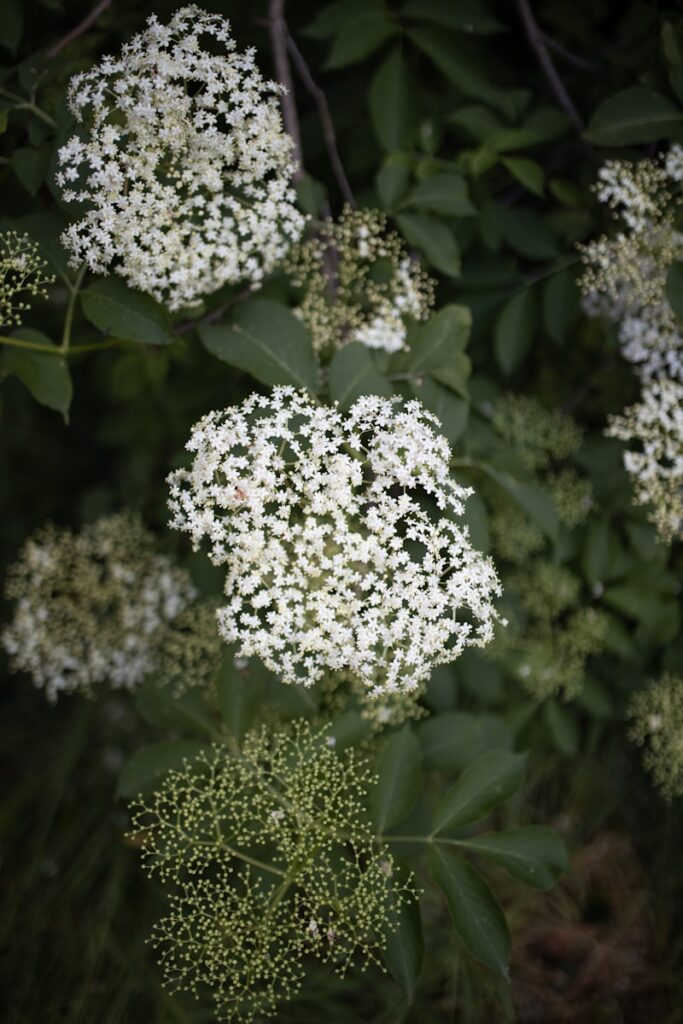
You may need to start by looking up. The plant can grow as a hedge, bush or a tree (most common). When in bloom, it can be identified by a distinctively sweet scent and the little creamy white clumps of flower buds – elderflowers.
The elder tree will bloom in late spring/early summer, usually beginning in late May, and the flowers will give way to elderberries in late summer. These are also edible, but should only be consumed if you are confident in your berry foraging. When foraging for elderflower, the clumps of tiny white and cream flowers are the only part that need to be picked. You can cut them off the tree with a pair of scissors or secateurs.
Once you’ve found what you think is an elder tree, take a look at the buds. If the tiny flowers have five petals and a fragrant scent, you are in luck!
The flowers can be infused to make syrups and jams, and are a great addition to salads. They have a sweet taste so are often used for baking. The flowers could also be used for a garnish.
There are a few things that could be mistaken for elderflowers. Follow the advice below carefully to avoid picking the wrong plant.
Commonly mistaken with…
Common: Giant hogweed
Latin: Heracleum mantegazzianum
Giant hogweed is toxic to humans and should not be ingested. It produces a sap that irritates and burns the skin, so must not be touched either.
The small white flower clumps are similar to elderflower, but giant hogweed is exactly what its name suggests – a weed. This weed can grow five metres tall on a stem, whereas elderflower will be on a bush or tree before flowering.
Common hogweed is a non-toxic smaller plant that has similarities to giant hogweed. Both should be avoided.
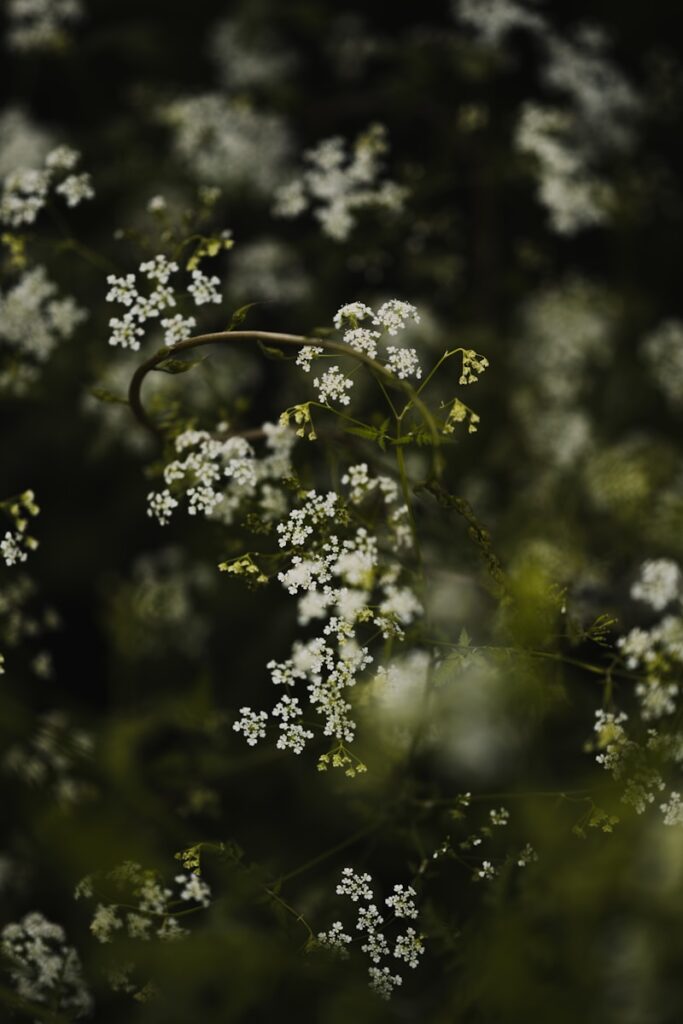
Common: Cow parsley
Latin: Anthriscus sylvestris
This commonly mistaken plant is actually edible but is more savoury so wouldn’t give you the sweet elderflower sap. No harm done if you have picked it though.
Again it grows in the ground on a large stalk similar to giant hogweed. The only similarities to elderflower would be the tiny white flowers but elderflower grows on a branchy tree or bush so can be identified that way.