

For London’s young ravers, the dancefloor is more than a night out, offering a space to connect and step outside the pressures of everyday life.
The bass arrives before the music fully takes shape, travelling through the concrete floor of an underground warehouse, rising through the soles of your shoes before the melody properly lands. For a few hours, the outside world begins to fade, and the urgency of deadlines and responsibilities slips away.
Sothea Spooner, who goes by Tia, is a 21-year-old design student who first discovered the scene through friends two years ago. What stayed with her was not the music but the people. “I’ve always felt a sense of community at raves,” she says. “There’s no judgment; people can dress up and be whoever they want.”
That openness is most visible in underground and queer rave spaces, many of which are organised by independent collectives that prioritise raw expression over image. These are not polished club nights with a dress code at the door; they take place in warehouses, squats, and occasionally even forests. These spaces are deliberately hard to find, often spread only by word of mouth or through private social media channels. “Knights, fantasy outfits, costumes,” Tia says. “People really commit.”

For Megan Tan, a 20-year-old fine art student from Singapore, the scene offered something she had struggled to find back home. In London, she found her way into raving through Tia, and what struck her most was the contrast with what she had known before. Not just from mainstream clubs, but from the city she grew up in.
“There aren’t really places like this where I’m from,” she says. “Here, people with similar interests can just come together and lose themselves in the music.”
Back home, she watched alternative and queer spaces disappear: lesbian and gay bars closing under regulatory pressure, and underground scenes kept deliberately hidden because visibility carried risk. Tia, who grew up in Cambodia before moving to London, recognises the same pattern. In parts of Asia, she explains, going to a rave isn’t just a night out. It carries a stigma that does not exist here in the same way.
“Here, it’s political,” she says. “It’s a political statement. To be free, to be queer, to be anything you want.”

That distinction matters, because mainstream clubs can feel transactional, built around a certain look and a certain crowd. Both women describe rave spaces as something looser and more sincere. On the dance floor, the unspoken expectation is individuality, not image.
That sense of safety is part of what makes these spaces valuable. “I think the stereotype is that it’s unsafe,” Tia says. “But honestly, it’s one of the safest spaces there is.” The irony, she notes, is that the spaces most people would consider risky – the warehouses, the squats, the forest parties – are often where people look out for each other most instinctively.
But even these spaces are not immune to change. As certain nights gain visibility and attract larger crowds, Tia has noticed a gradual dilution of what made them feel distinct in the first place. The underground, almost by definition, cannot survive being above ground for too long.
Behind the scenes, the person most responsible for shaping that feeling is rarely the one anyone talks about the next morning. The DJ sets the pace and reads the room, making hundreds of small decisions across the course of a night that most people on the dancefloor will never consciously register. Getting it right requires something that, according to Cory, cannot really be taught.
CoryVerses, known simply as Cory, has been DJing in London for 16 years. He started at 14, sneaking into clubs on a fake ID to network with other DJs, and has since played everywhere from small, intimate bars to Indigo at the O2. He describes the craft not as a technical skill but as something closer to instinct.
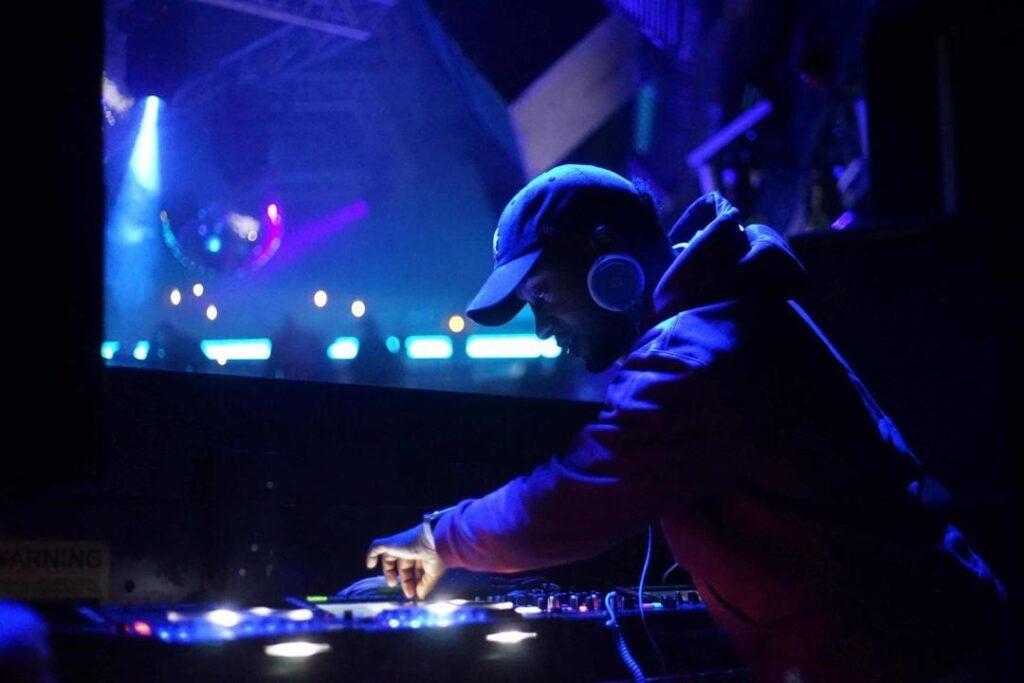
“I can walk into a room with no music playing and just know exactly what would work,” he says. “They say, don’t judge a book by its cover; I say, unless you’re a DJ.”
That instinct has been tested by a scene that looks very different now from the one he entered almost two decades ago. For Cory, the shift began with streaming. “When streaming became a thing, that’s when we lost real connection in music,” he says. “Now everybody’s taste is so fragmented.”
“You have to be an open format DJ these days,” Cory says. “If you’re not catching everybody at the same time, you’re going to fail.” After COVID, a wave of new DJs entered the scene, attracted by increasingly accessible equipment and software. Some brought genuine passion. Others did not. “That kind of poisoned the field a little bit,” he says. Both shifts point in the same direction.
Yet what keeps him going has nothing to do with any of that. “Every time I feel like I might be falling out of love with it, I return to smaller, more intimate venues, and it reminds me why I love it so much.” The goal remains the same every time.
“I’m just trying to spread love wherever I go. I want to create that loving atmosphere and bring it back to how it was.”
Recently, a woman stopped him outside a club and told him that her sister had been talking about him since she was 12 years old. Now she was finally old enough to come out herself. For Cory, that moment captured something about what this culture, at its best, is actually for.
“It’s getting passed down, generation to generation,” he says. “And I’m just so grateful to be a part of it.”
The feeling that Tia, Megan, and Cory describe, of spaces that exist outside the ordinary, where different rules seem to apply, is not accidental. It is the product of a culture that has spent decades fighting to survive, and in many cases losing that fight.
Jim Ottewill has spent years documenting that struggle. A music journalist and author of Out of Space, a book tracing how UK cities have shaped rave culture, he has watched London’s nightlife transform from the inside. What he sees now is a city under pressure from forces that have very little to do with music.
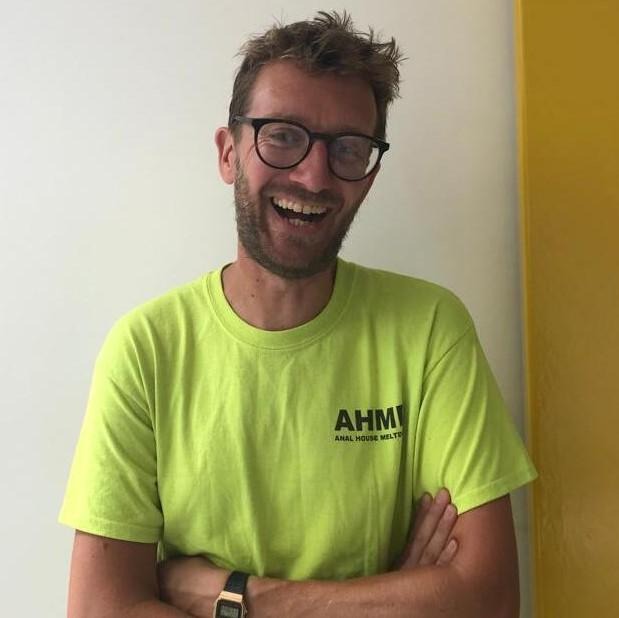
“Our cities are evolving all the time,” he says. “London’s landscape is moving more rapidly than anywhere. It’s gentrification on steroids.”
That pressure has a particular cruelty, he explains. The same culture that makes an area feel alive and attractive, the clubs, the noise, the sense that something is happening, draws in new residents, whose complaints then threaten the venues that created that atmosphere in the first place. “Clubs represent something exciting, a loud, vibrant, intoxicating part of UK culture,” Ottewill says. “And this culture is what makes an area attractive to people, which is why they move there. Then they complain about the noise of the area they’ve moved into.”
The consequences are visible across the city. Corsica Studios, one of London’s most beloved independent venues, is currently in its final days in its current form. The area around it in Elephant and Castle, Ottewill notes, is already unrecognisable from what it was only a few years ago. It is one closure among many, but it carries a particular weight for those who have been going long enough to remember what was there before.
The scale of what is being lost extends beyond sentiment. In 2023, the night-time economy contributed £93.7bn to the UK economy and supported nearly three million jobs, yet venues like Corsica Studios are still closing. For clubs to survive now, Ottewill says, they have to operate with ruthless precision. “These are businesses. There’s an incredible amount of work that goes into keeping the doors open.”
Yet the standard narrative around rave culture rarely reflects any of this complexity. The headlines, he says, have barely changed since the scene first emerged. “Electronic music and club culture have historically been perceived as a nuisance, a problem for local authorities to manage. Those narratives still persist.”
What makes this particularly frustrating is how much the culture actually offers, especially now. “There is a collective power and energy in people congregating together to dance,” Ottewill says. “There’s something healthy and good for us about moving to music.”
But he is careful to acknowledge how easily the word “community” gets hollowed out. It has become one of the most overused terms in the marketing language of clubs and brands alike. “You can see it in the terminology of big brands, even some big clubs.”
But underneath the cliché, he argues, something real persists, and it matters more, not less, given the current moment. “This is an even more necessary, if not utopian, ideal in an age of war and endless doom scrolling.”
Whether the spaces that hold that experience will continue to exist is a harder question. Ottewill is neither despairing nor falsely optimistic. Closures, he says, have historically forced innovation, with venues and promoters adapting to find new models, pushing into cheaper parts of the city. The scene is already changing shape: daytime parties, sober raves, events crossing into classical venues, all signs of a culture diversifying under pressure rather than simply retreating. “There has always been an ebb and flow,” he says. “Hopefully, there will be more openings than closures. Though that could depend on what kind of government we’re dealing with at the next general election.”
Ultimately, he returns to something simpler. “People want to go out and dance to loud music,” he says. “That impulse is still there, whether it’s beating louder or quieter than before is up for debate.”
For now, at least, it is still beating.
Leave a Reply