The rise of social media has created a new way for music to be marketed. As long as a song has a short catchy snippet, it has the ability to form an unshakable ear worm that you can’t get rid of if you tried. You may have never listened to the song in its entirety yet somehow you are able to sing along to all the lyrics.
The use of algorithms on streaming platforms and on social media has flipped the previous model of the music industry upside down, giving social media immense amounts of power in music marketing. Music professor and researcher Dr Karlyn King states that algorithms have “completely reshaped how the industry is built, how it operates, how it functions, how careers are built, how we measure success and how we engage as audiences.”
As a result of this an echo chamber of sorts is created, whereby users are discovering less of a variety of music based on their pre-existing preferences.
In his book, Filterworld: How Algorithms Flattened Culture, Kyle Chayka claims: “The feed has replaced the critic.” Previous influencers of culture and trends like critics, curators and DJs have been overridden by algorithms. He suggests: “Taste is no longer calculated; it is cultivated.” This means artists have a pressure to conform to the standards of the platform creating content to attract the most attention.
Speaking to The Daily Show, Chayka explains: “Humans have bad habits – we want to be passive; we want to be lazy; we don’t want to get too far out of our comfort zones.
“And these algorithmic platforms make it so easy to not do that, we don’t have to see things we don’t like, and we don’t have to listen to music that’s unusual for us. It enables these innate tendencies which make us boring consumers.”
King agrees, claiming: “In the past it would’ve been record labels, music journalists who were the gatekeepers for how artists reach their audience. Whatever was available in the record store would’ve been what’s popular. Along came Napster and then streaming services like Apple Music and Spotify which determine what we hear now. If you get playlisted on discover weekly, it can launch an artist to millions of people overnight.
“Visibility is no longer shaped by these traditional gatekeepers. It’s data. Playlists and getting on that algorithm then you’ll be pushed. The kind of data that gets analysed is data that didn’t exist 15 years ago, and artists and labels are using this data to make decisions around where to tour, which songs to focus on, which styles to promote, who is your audience, where they are and also when to release music. So, it’s way more data driven than in the past.”
This has subsequently led to music becoming shaped by the incentives of streaming platforms rather than creativity.
Speaking on The Chasing Leviathan podcast, Glenn McDonald, former data engineer for Spotify and author of You Have Not Yet Heard Your Favourite Song: How Streaming Changes Music states: “The biggest change is in discovery. Finding new music when I was a kid was like a shopping experience… Streaming changed that… suddenly all the music in the world is there and you can explore it by listening and not by wondering.”
King adds, “in this streaming, social media, TikTok economy, breaking through used to be the decisions of other tastemakers like managers or producers but now it depends on consistent engagement and interaction with these platforms. If you’re on there consistently, actually getting a viral breakthrough hit is completely random; it’s very much right day, right time. If they manage this, they’ll get playlisted and then they’ll get amplified by the algorithm.”
Streaming services like Spotify and Apple Music give us an unfathomable number of options that we end up listening to the same select number of songs which could be a contributing factor in the appeal of physical media which has gained popularity in recent years. Listeners want to take a step back and slow down.
King comments, “we don’t own the music on a streaming platform, we pay a subscription to rent it. We have an unlimited catalogue instantly but we’re only renting access. So, you don’t own the music, and the algorithm is definitely in charge of that.”
According to Music Week, in 2024, 6.7 million vinyl albums were sold, almost a five-fold increase from 1994, returning the total UK physical music market to growth for the first time in three decades, as reported by the BPI. Additionally, they report that according to UK indie record shops, vinyl shoppers are getting noticeably younger.
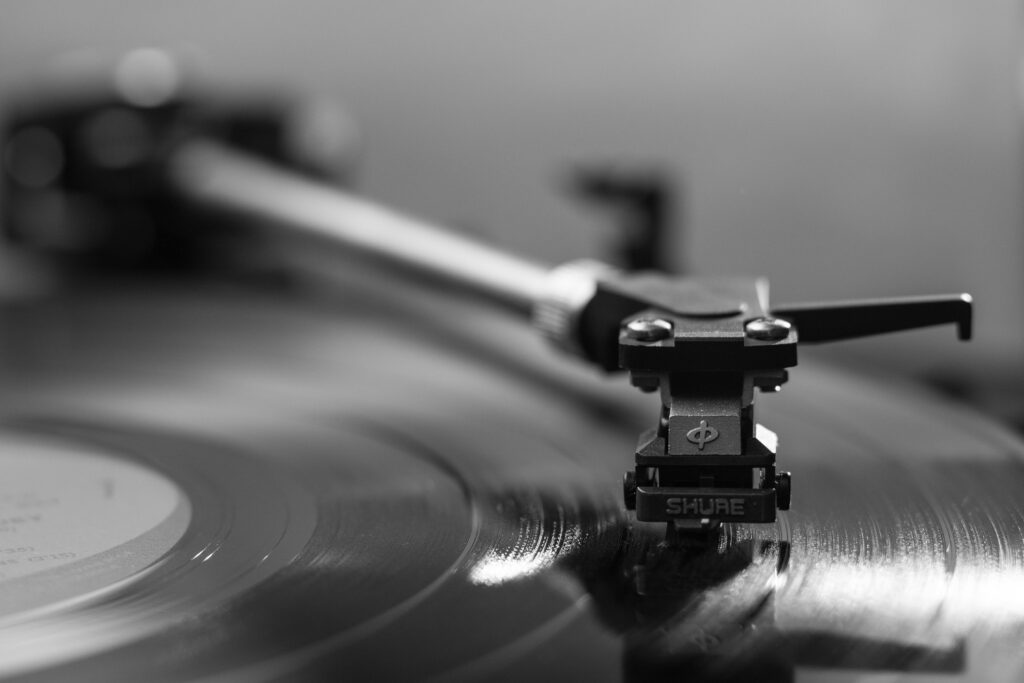
Part of the appeal of vinyl is that it creates a slower pace of listening to music, and fans have something to show for their interests and passion.
King adds, “there’s a whole movement around slow listening, active listening, which is completely different to sticking a playlist on in the background. It’s the act of actually sitting and being mindfully attentive to something that is so rare. It’s certainly not what we are being steered to with all the algorithmic stuff.”
But what do young music fans think?
Sophie Story, 20, says that for her the appeal of physical media is that “its collectible and feels authentic.” Luke Homans, 22, also likes the “more authentic feel,” and claims, “they are cool to collect and own.” And Jess Evans, 21, who says “it feels more personal”.
Lola Jameson, 20, passionately states, “I love my records. There’s something about setting up my record player and listening to music that way that feels really special to me. I also love that they’re mine, that I own them. If something happens and I suddenly can’t stream music anymore I’ll still have my favourite albums and singles to play on my record player”.
King suggests the popularity of vinyl and physical media in Gen Z is due to, “a sort of nostalgia for a time they weren’t alive when music was only released on vinyl. There is this kind of romanticisation that if you had something on vinyl you had to be really good, so promotes this added legitimacy for artists. And for a lot of fans, it’s about feeling connected to the artist.”
The popularity of short form content on social media – particularly TikTok – has contributed to the shorter attention spans of users, which could be a factor the changing landscape of music consumption.
Abi Nutman, 21, states, “i’m more likely to listen to playlists (than albums) because they have the songs I’m interested in listening to right now, and there’s significantly more variety, so it stops me from getting bored.”
Evans, 21, adds that she is, “more likely to listen to playlists as I can make my own personal ones with a bit of everything.” Faye Boyle, 19, comments that she “enjoys the diversity of playlists as they can be tailored to match the vibe, but if I’m in a particular mood, listening to a singular album is more satisfying.”
According to a study by Deezer, 50% of people listen to less albums than they did five to 10 years ago and almost 40% of the respondents said they prefer to listen to playlists.
King explains that playlists have become more popular than albums because, “that’s what we’re fed; It’s what the algorithm feeds us, and artists are constantly engaging. Rather than releasing albums every few years artists are now releasing frequent singles, an EP, lots of collaborations.”
This preference of playlist over album can be disappointing for artists who create albums to tell a story. Artists put thought and intention into creating the album as a cohesive piece of art, yet the playlist and the shuffle button disrupts this.
Following the release of Adele’s album 30, Spotify removed the feature which puts the album on shuffle by default. Adele addressed this on Twitter saying, “this was the only request I had in our ever-changing industry! We don’t create albums with so much care and thought into our track listing for no reason. Our art tells a story, and our stories should be listened to as we intended. Thank you, Spotify, for listening”
Despite the era of streaming discouraging the listening of albums start to finish, the concept album has not been put to death yet. Rolling Stone defines a concept album as, “thematic albums tied together by specific moods or interconnected songs,” rather than being a collection of unrelated tracks. For example, Tallahassee by The Mountain Goats, Electra Heart by MIRINA and To Pimp a Butterfly by Kendrick Lamar.
King concludes, “I don’t think the album will ever die. There’s enough value around it but it’s not economically viable for artists to only do albums every few years anymore.”
Ultimately, algorithms, streaming platforms and social media have changed and are continuing to change the landscape of the music industry. Yet the rapid pace and dominance of algorithms has been met with a resurgence of traditional physical media in young music fans. Perhaps pausing, pressing play without shuffling will help revive the heart of music in this data driven music economy.
Leave a Reply