
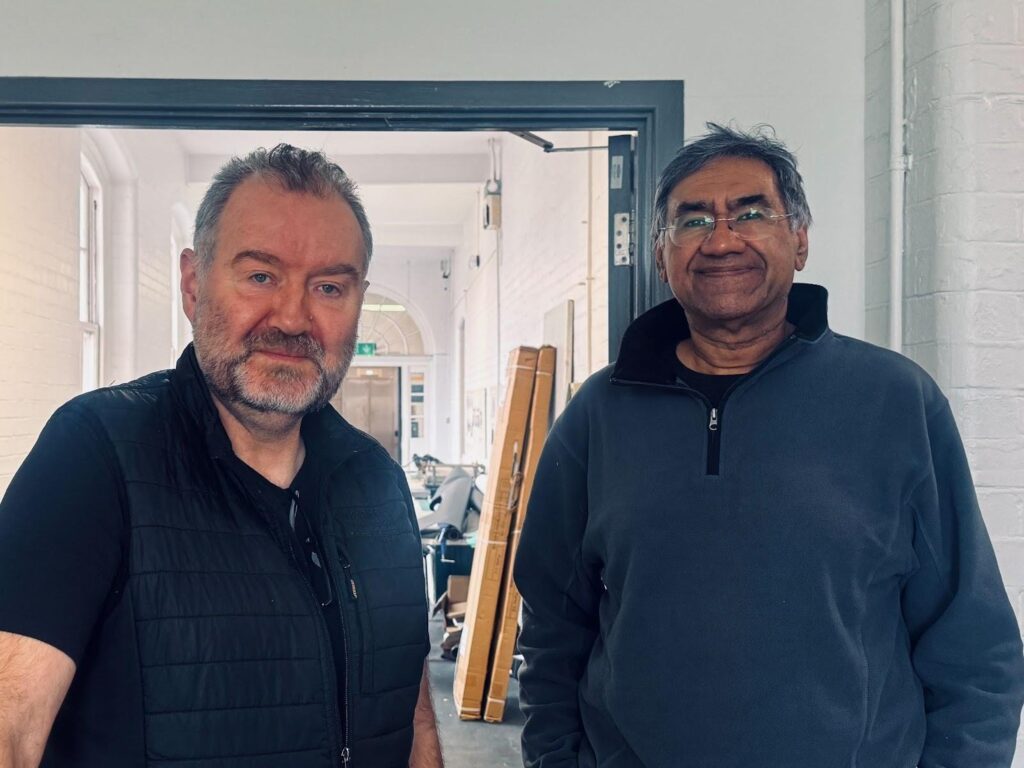
Once a relic of the early 2000s, the compact digital camera has become a defining accessory for Gen Z, shaping how the next generation documents its life. At Goldsmiths, University of London, photography lecturers Ivan Coleman and David Ramkalawon, both practising documentary photographers with over 30 years of experience, have seen this shift up close. In this interview, they reflect on the return of the digicam, the appeal of imperfection, and the undeniable pull of the past. “Nostalgia is cyclical,” Coleman says. “You live long enough, you see it all come back.”
When digital cameras first appeared in the early 2000s, how were they viewed within the photography world?
Coleman: Before digital really broke through, the cameras were extremely expensive. You remember the old Kodak and Nikon ones. They were considered out of reach for most people. It was only when the Canon D30 came in that we thought, “This is a camera we can actually use”. Suddenly, you started reconsidering film because it was just easier to use. It saved money on processing, and you could deliver images to clients almost instantaneously. It was a revelation.
Ramkalawon: Digital cameras changed that completely. In news gathering, you’re not looking for the best. You’re looking for the fastest. Good enough is good enough, as long as it’s fast.
Why are digicams making a comeback among young photographers?
Coleman: A lot of it is nostalgia. Our generation grew up with Super 8 and VHS, so that’s how we remember childhood. The people we teach now grew up with early digital cameras. Our understanding of the past is always tied to a particular technology, whether that’s cassette, vinyl or now early digital.
Ramkalawon: Students also like the imperfections. They want to use the darkroom because it isn’t perfect. They want black and white prints that feel physical. It’s taken us a while to get our heads around that because when we were learning, the goal was always to make the best possible image. They want the “roll-off”, where the brightest parts of the image bloom instead of just turning into empty white pixels. It mimics how our eyes actually see. They verbalise it as a reaction against AI. They want something physical, something hand-processed.

Do you think the digicam revival is connected to the broader return of Y2K culture in fashion and music?
Coleman: Nostalgia is cyclical. Once you get past 40, you start seeing fashions come back. I’ve already seen the 1980s return twice. People reach their twenties and start thinking everything from the past was cooler, especially if they didn’t experience it the first time.
Ramkalawon: Part of it now is that the future feels pretty uncertain for a lot of people. The 1990s especially felt like a moment when everything seemed okay. Maybe it’s just easier, or even safer, to look back.
What is the difference between taking pictures on a digital camera vs on a smartphone?
Ramkalawon: One difference is simply holding a camera up to your face. That changes how people react. When someone raises a phone, everyone immediately knows they’re filming. A camera feels different.
Coleman: Smartphones have actually made physical cameras less threatening. Now people are more suspicious of phones because they assume the image might end up online. A lot of that is about how attached smartphones are to social media. Both take pictures, but they don’t feel the same. And the irony is, smartphones have never been better. You’ve got 4K, 24, and 48 megapixel cameras. You could do everything on your phone. But it’s almost that ubiquity that makes people want something different.
Is the digicam comeback here to stay or is it a passing trend?
Ramkalawon: It’s a trend. Before this, compact film cameras were fashionable. Influencers posted photos with them, and suddenly the prices shot up. A lot of it comes from social media, and it becomes another kind of flavour, almost like choosing a filter. People get to a point where they think everyone’s using the same thing, so they start looking for something cooler.
Coleman: I can already predict what’s next. The Canon 5D and panorama cameras will probably come back around.
What advice would you give young photographers experimenting with older cameras today?
Ramkalawon: Cameras are just tools. The idea that a certain device will suddenly make your photographs better is a myth. The only real secret is practice. Take more pictures. But also look at photographs. There’s nearly 200 years of history in this medium.
He points to the words of the American street photographer Garry Winogrand: “It’s exciting to see what the world looks like in a picture.”
Coleman: Look at real prints on gallery walls. Put your phone down. Photographs on a wall are completely different from images on a screen. Everything on a phone is transmitted light; a print is reflected light, like a painting. If anything should become fashionable again, it’s making prints.
Leave a Reply