
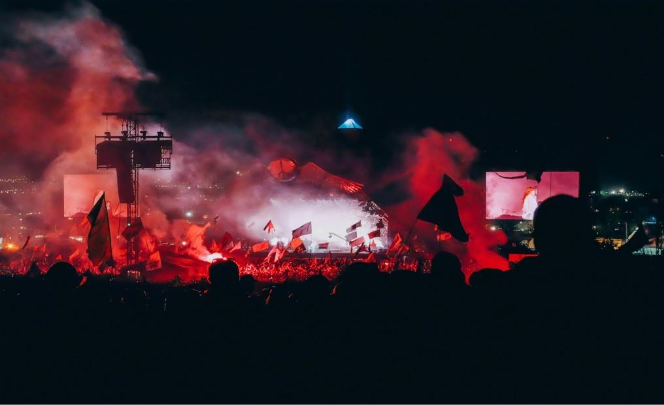
For over five decades, Glastonbury festival has stood the test of time as a defining pillar of British music culture. Described as an annual pilgrimage where music, culture, politics and art converge in the fields of Somerset, its cancellation leaves a huge void in this year’s festival line up, so, what’s taking its place this summer while Worthy Farm takes its well-earned rest.
To understand what might replace Glastonbury this year it’s important to understand its cultural weight. Founded in 1970 by Micheal Eavis, the festival has evolved from a small gathering to a globally recognised event. Its stages have hosted everyone from David Bowie to Beyonce, cementing its reputation as a place where music history is made. Glastonbury’s significance extends far beyond its headliners, it embodies a particular vision of British identity. Namely its politically engaged, progressive and eclectic fans.
I spoke to emerging music journalist Peter Martin, writer at SoYoung Magazine and member of Casual Smart, a Welsh indie band making waves in Cardiff. According to Martin, the key change this year will not involve replacement, but instead a redistribution of Glastonbury’s many facets.
“It’s massive, not just culturally but economically.” Martin explains, “Glastonbury isn’t just a festival, it’s a landmark of British summertime. When it takes its fallow year, it leaves a gap that smaller festivals and alternative events will rush to fill. But nothing quite replicates its scale.”
Martin’s point highlights a crucial idea. Glastonbury’s absence will result in a shift of attention. Audiences, artists and media coverage will disperse across a wider range of events, altering the balance of power within the industry this year, making space for the smaller, developing events that deserve to take up more space. Festivals of the likes of Green Man and End of the Road will no doubt take centre stage this year, and without Glastonbury dominating headlines, these festivals will have the opportunity to shine.
“You can’t ‘replace’ Glastonbury in the traditional sense. What you’ll see instead is more localised and niche festivals, more genre specific lineups and localised events. In a way it’ll be far healthier for emerging artists.”
This fragmentation reflects a broader shift in music consumption. In the age of streaming, audiences are increasingly drawn to personalised experiences. Rather than attending a single, all-encompassing event. Festival goers are beginning to seek out smaller gatherings that align more closely with their tastes and music identities.
Another more likely development is the rise of urban festivals. Unlike traditional rural events, these festivals take place within cities, utilising existing venues and parks. A great example of this is Brockwell live, an event that takes place every year in Brockwell Park, an area that you wouldn’t expect to see such a spectacle. This model offers both financial and logistical advantages, particularly in a climate where large scale events face growing challenges.
Cities such as London, Manchester, and Bristol are already home to vibrant music scenes, making them ideal locations for multi-venue festivals. Events like All Points East demonstrate how urban festivals can successfully combine major headliners with a diverse supporting line up. Martin adds, “I think we’ll see a rise in hybrid events, part festival, part digital experience. Also, independent festivals might gain more attention, but there’s always the possibility of pop-up, city festivals taking over urban spaces.”
This hybrid model reflects a changing relationship between audiences and live music. The COVID-19 pandemic, for example, normalised digital performances, demonstrating that festivals are no longer confined to physical spaces. As a result, the future of festivals may lie in their ability to combine physical and virtual experiences.
While the loss of Glastonbury this year is significant, it creates opportunities, as mentioned prior, emerging artists have the opportunity to take the stage this year. Major festivals like Glastonbury usually rely on established headliners, which is what makes the festival so beloved. While festivals like Green Man combine larger and more underground acts for a more considered and eclectic event.
Martin adds, “I think we’re moving toward a more diverse ecosystem. Big festivals will always exist, but audiences are changing- they want something more personal, more curated. This could accelerate that shift.”
Despite the potential benefits of Glastonbury’s cancellation this year for emerging acts and new names, it’s important not to overlook the economic impact of its absence. The festival generates millions of pounds for the local economy, supporting businesses, workers, and infrastructure. We should therefore expect significant financial consequences for those in and around the Somerset area, particularly for those who rely on the festival for income.
Additionally, Glastonbury plays a crucial role in shaping industry trends. Its line-up often influences touring schedules and chart performance. Without it, the industry will lose a key point of reference for trends, forcing us to find a new inspiration point.
Rather than attempting to replace Glastonbury, the industry will adapt through the rise of independent festivals, filling in the gaps with the expansion of urban events, and the integration of digital experiences. In doing so, it might become more inclusive, more innovative, and more reflective of contemporary music culture. In this instance, the question is not simply what will replace Glastonbury, but what its absence tells us. If anything, it shows that festival culture is far more resilient than any single event. Even without its most iconic institution, the music will continue just in new and creative ways.