
Image: Manoj Kumar Kasirajan, Unsplash
In Indian homes, belief rarely announces itself loudly. Instead, it lingers on small instructions passed down through generations. I have grown up being told not to cut my nails after sunset, not to leave shoes upside down, and not to light a lamp in the evening. These house-related superstitions continue to quietly shape domestic life, even as modern living transforms the physical structure of homes.
For many families, the relationship between a house and its inhabitants is deeply emotional. “A house is not just bricks and furniture, it carries the energy of the people living inside it,” says Madhavi Navale, 73, from Pune, India. Growing up, she recalls how elders would prioritise vastu (an ancient Hindu tradition that arranges buildings and rooms, to harmonise with natural forces) before buying or building a home. East-facing and north-west facing houses were believed to be particularly auspicious, allowing sunlight and fresh air to enter freely. “Good light and air bring good health, peace, and prosperity,” she explains, a belief that continues to influence housing preferences even today.
Protecting this domestic energy is equally important. One of the most common beliefs across Indian households is that of nazar, or the evil eye. According to Madhavi, negativity does not always come from jealousy alone. “Sometimes even too much praise can disturb the balance,” she says. To guard against this, lemon-and-chilli (also called Nimbu-mirchi) charms are often hung at the entrance. While many may question their literal power, these objects remain fixtures in homes as they offer reassurance and a sense of control over unseen forces.
Several household superstitions also have practical origins that have been disguised as belief over time. The long-standing warning against cutting nails after sunset is one such example. “Earlier, there was no electricity, and after sunset it was dark,” Madhavi explains. “Cutting nails with sharp tools could easily cause injuries, and there were no hospitals nearby.” Turning safety advice into superstition ensured it would be followed without argument, especially by children.
Order and harmony within the home are recurring themes in many such beliefs. Leaving shoes upside down, for instance, is believed to cause fights within the household. “Shoes represent dirt and the outside world,” Madhavi says. “Leaving them upside down was believed to bring negativity into the house.” Similarly, sitting on the doorstep was discouraged. “The doorstep is the boundary between inside and outside,” she explains. “Blocking it was believed to stop good energy from entering the house.” Furthermore, entering the house with one’s right foot is thought to bring good fortune and prosperity.
Cleaning rituals also carry symbolic weight. Sweeping the house after sunset was traditionally avoided, as it was believed to sweep away Lakshmi, the goddess of wealth. Yet Madhavi points to the practical logic behind the belief: “In dim light, small valuables like coins or jewellery could easily be lost.” Broken mirrors or cracked objects were also removed, as they were thought to disturb the energy of the home and symbolise stagnation.
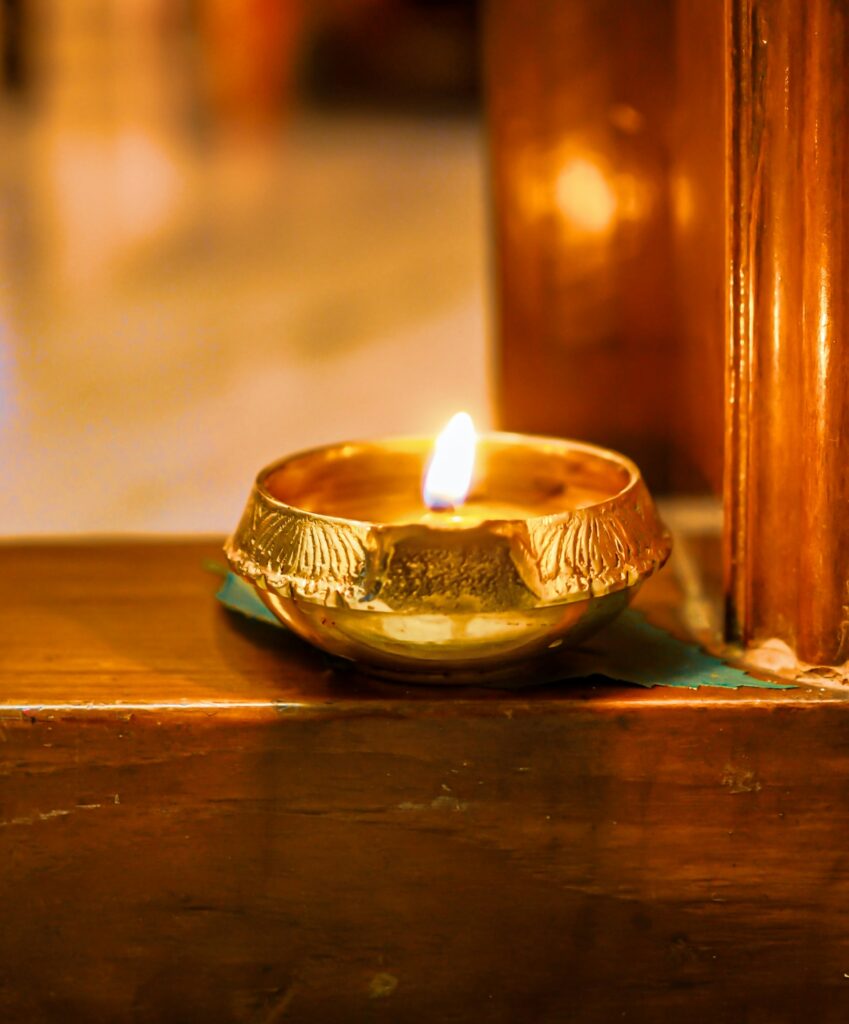
Daily rituals further shape the emotional rhythm of domestic life. Lighting a diya in the evening, Madhavi notes, was both spiritual and functional. “Before electricity, lamps were essential,” she says. “Even today, lighting a lamp brings calm and marks the transition from day to night.” Rules around sleeping directions, too, reflected an inherited concern for health and rest.
What allows these superstitions to survive is not blind faith, but transmission. They are absorbed through observation, repetition, and gentle reminders rather than formal instruction. “You don’t have to blindly follow everything,” Madhavi reflects. “But understanding the reason behind them is important.”
In a rapidly modernising India, these beliefs continue to coexist with contemporary lifestyles. Even when questioned, they persist as habits tied to memory, care, and continuity. As Madhavi puts it simply, “Respect your home. Keep it clean, calm, and full of good thoughts. A peaceful house creates peaceful people.”
Leave a Reply