
The clinking sound of the knives and forks, the smell of the food, the plates clattering, an evening meal always brings us joy, it makes us want to remove ourselves from our video games or pause the gossip in the group chat just for an hour to spend time with those around us. Let’s not forget about the table; a piece of furniture which bonds us together when it comes to meals, celebrations, dinners, conversations and more. When households sit together, it builds the opportunity to interact and increase the connections between each member.
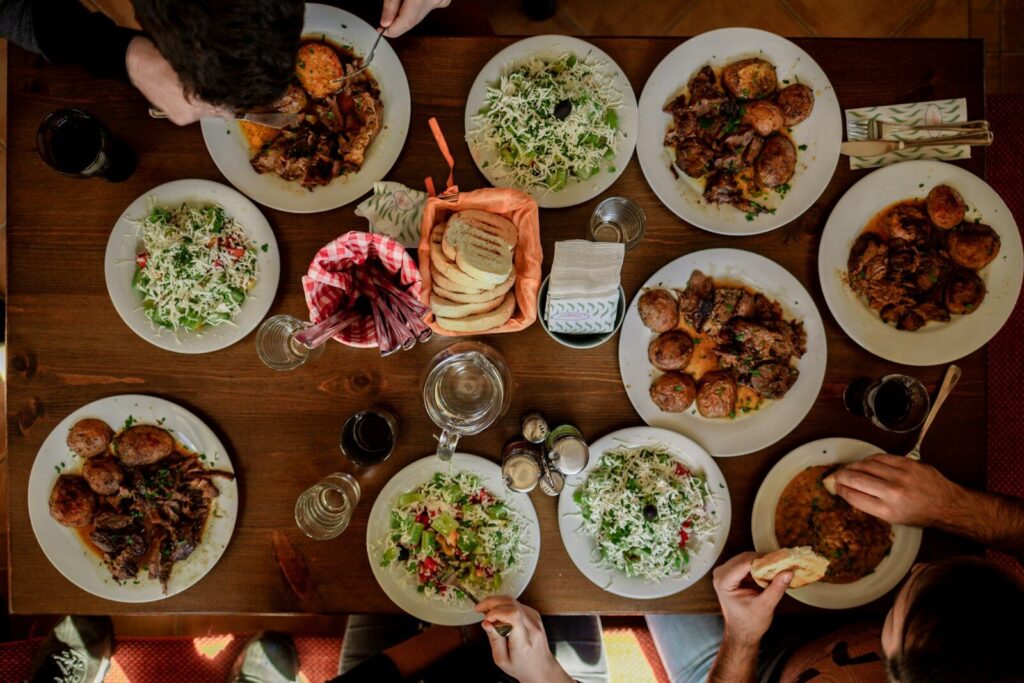
Image: Stefan Vladimirov, Unsplash
It starts in childhood. “Family dinners provide an opportunity for children to connect with their parents and caregivers”, says Dr J. Mitchell Vaterlaus, “during meals, parents can also communicate important family values and check in with their children about their emotional, social and academic experiences”. For some, you may be an immigrant or have immigrant parents. It is where two worlds meet: the old generation and the new. Children see their parents cook recipes from back home, using ingredients and recipes that may not be easy to find in the new land. Native languages are spoken and stories that have never been revealed appear. The table holds memories. It does not force a choice between cultures. In most cases, the dinner table, in these homes, is not just where family happens. It is where heritage survives. Where language continues.
As we get older, we can forget this beautiful tradition, but it is always worth getting together to eat. “I think it is very important to have family dinners because it builds a nice connection with the family and bonding time which is good for communication,” says Jason Yaboah, 19, who I met as he collects his little sister from nursery school.’ In their house, Jason says, the quality time doesn’t end when the plates are put away, and his family plays a game called “UNO” which brings that excitement on the table.
Every household is different, some are huge, others are small, some are loud and others are calm and for some, they share their dinner table with friends and roommates. The connection is still there, a sense of belonging and the warm atmosphere.
Keysi Estiwen, 25, lives with his family in Spain. To Keysi, home is not about decoration and the lights, it is about the moments and the family surrounding him. During the week, keysi leaves early to go to university and arrives home pretty late around 9pm. For Spanish people and his culture, 10pm is not late at all, in fact, there is no specific time on when you can eat breakfast, lunch, snack or dinner, you just eat it when you want to. After all the busy things Keysi and his family go through the day, it is the warm food which allows them to pause during the end of the day to reconnect and share what they did throughout the day. They like to eat on the couch with the television off which allows them to connect more.
The weekends are the 2 days where other relatives and extended families come over to their home or they go to theirs to spend that family time all together because family is very important in his culture. For Keysi, his family are his favourite people to chill with, life gets busy and they do whatever they can to make the time for each other. Keysis’s story is a perfect reminder that you can always make time for your loved ones, it’s built with love and effort.
Emma Mwangi is a 20 years old university student who lives in a shared accommodation. She stated, “we do not talk much, we all live together but at the same time we do not”. When Emma wants to eat, she goes to the kitchen and makes her own food. She loves her space and is not much of a chatter box but when times are important such as Christmas and New Years, Emma and her flatmates make sure to put the effort to at least spend time together so no one is alone. This is where the stories and the laughter appear because no one should spend the holiday alone. It is the same intentional moments that turn a shared house into a home. Emma balances her work and her studies, so she is usually busy. At times, she does not eat, “not because I forgot but because I get so busy that I no longer feel hungry”, said Emma. On the weekends when she has time, she goes over to London to visit her amazing aunt with her 2 cousins and stay there for a day or two just to be surrounded by a family member that she loves. This is her ultimate reset button where she is surrounded by someone familiar. For Emma, home is the respect she shares with her flatmates and the balance between their relationship.
Afoma Ofor, 21, lives in a shared accommodation with 2 people who are a super sweet couple. “We do not eat together all the time but when we do, I like the conversations, oftentimes, we watch TV while eating”, she stated, “we will make ourselves comfortable on the couch, dig into our food and allow the conversation to flow”. When it comes to food, she is less likely to prepare them because she has a particular taste. However, she is the queen of turning a shared space into a place where it feels alive and comfortable when it comes to events such as decorating the home for Christmas, New Years, Easter, birthdays and more. She likes their home to feel like a celebration and making things feel special. The funniest moment that has happened to them when they eat whilst watching TV, is roasting each other till they run out of laughter. However, nothing got to the same level as when they were watching The Walking Dead and a jump scare hit and Afoma flung her food everywhere. “Like, the floor and my flatmates were covered in food because of me,” she giggles. “Every time we watch something scary whilst eating, they make sure to add that social distance”. To Afoma, home is about quality time, the laughter and the playful roasts, the people who make you feel like you belong.
Leave a Reply