In the age of social media scrolling and AI manipulation, it’s easy to forget the origins of artistic inspiration. Here two artists explain why they’re so keen to hold onto old techniques.
Nowadays, the pace of life is getting faster and faster, people prefer convenient and fashionable things and think that traditional culture may be too complicated or have nothing to do with daily life. Young people have been exposed to modern technology and popular culture since childhood and have little understanding and interest in traditional things. In addition, many traditional processes are time-consuming and costly, and cannot be compared with modern industrial products, and gradually no one is willing to spend time to learn and do. Another problem is that traditional culture sometimes cannot keep up with modern people’s aesthetics and needs, and the lack of innovation makes it even less attractive. The most important thing is that the propaganda and protection efforts are not enough, many cultures only spread in a small range, can not let more people know, and gradually forgotten.
The Printmaker
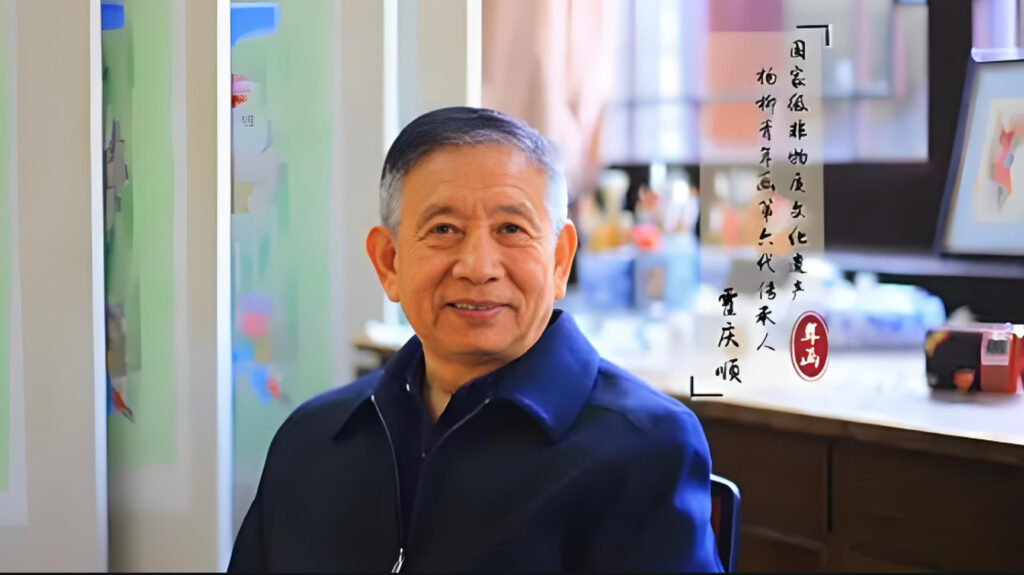
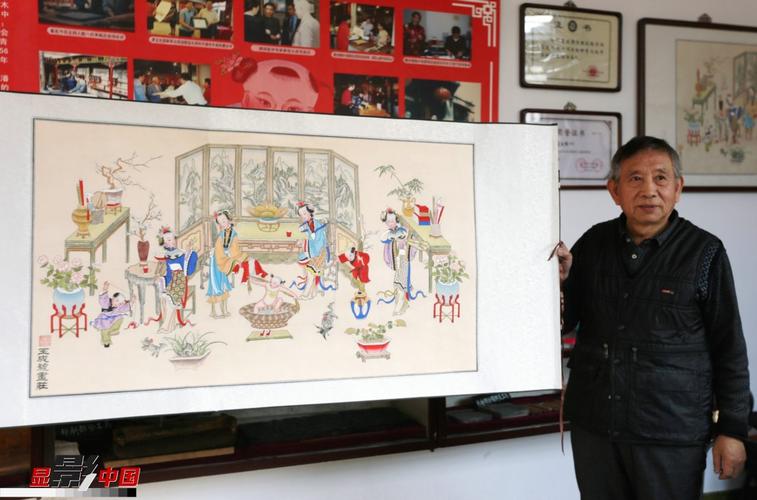
Printmaker HuoQingshun is one of six generations of inheritor who lives in Tianjin. From the age of 12, he started to learned the method of printing woodblock pictures from his father and gradually mastered the techniques of various New Year pictures.
“That’s what my family did,” he says. “My dad did, my grandpa did. I’ve been learning around them since I was a kid. Inheritance comes naturally to me. It’s like a family business, a legacy.”
For decades, he has been constantly researching New Year pictures and has inherited and developed the traditional techniques, including outlining, engraving, printing, painting and mounting.
The Yangliuqing New Year woodblock prints originated in the 16th century in Yangliuqing Town, Tianjin. As an important part of the Spring Festival folk customs, the birthplace, located along the Grand Canal, enjoyed convenient transportation (the main long-distance transportation tool at that time was the boat). Based on this, the Yangliuqing New Year woodblock prints were able to spread throughout China.
“An interesting aspect behind Yangliuqing New Year paintings is that the production of woodblock prints involves five steps, each of which is completed by a dedicated professional,” he explains. “First, the painter creates a draft, designing the overall composition of the painting. Then, the engraver carves the draft onto a wooden block, which is an extremely meticulous task. Next, the color printer uses the engraved wooden block to print the basic outline of the painting. After that, the colorist fills in the colors bit by bit with vivid pigments. Finally, the painter makes detailed refinements to give the whole painting more charm and verve. Each person is responsible for a part, with the steps closely linked, so as to produce exquisite New Year paintings.”
The production of Yangliuqing New Year paintings is the result of a collaboration. Each link is completed by different craftsmen, so there is no individual signature on the New Year paintings. If someone signs their own name, it would be a big mistake, as this goes against the traditional spirit of Yangliuqing New Year paintings. What is usually signed at the end is the name of the workshop or painting studio to reflect the strength of the team and the inherited craftsmanship.
The Artist
April Xing is bucking the trend. As an antidote to fast moving social media and technology, it is the memories of April’s childhood and of previous traditional artists that drive her to go back to basics in her work.
“I was born in Tianjin, one of the hometowns of printmaking art, and this cultural background inspired my passion for traditional culture and art,” says April. “Yangliuqing woodblock prints, as one of the national intangible cultural heritages, has a long history of more than 400 years and is a typical representative of this field. When I was a child, every family would hang the Chinese New Year paintings for blessings during the Spring Festival, which became my earliest artistic memory. I was deeply attracted by the bright colours and rich folklore symbolism of New Year paintings, which also left an extremely deep impression on me.”
Her earliest artistic memories date back to childhood. As the figures in the prints symbolise the coming year, the family would buy posters of the prints and display them in the house during the New Year to pray for children and keep them safe. Her early move to York broadened her exposure to global art and culture, but she remains to committed to preserving and revitalising a declining folk form. As Tianjin is her hometown, Yangliuqing New Year paintings are a representative folk art form. She hopes to help both foreigners and Chinese people interested in traditional culture understand its deeper meaning and ensure its substainabilty to develop a global perspective on this art.
“When I came to the UK, my biggest challenge was the language,” she says. “For me, letters are a new form of language and also a bridge to communicate with western culture. I chose to use letters as a carrier to incorporate the traditional elements of Yang Liu Qing New Year paintings, redefining them with the most representative doll symbols.” This is, she explains, not only a tribute to the culture of New Year’s Paintings, but also a re-examination and expression of her own cultural roots.
The set of 26 letters in the Chinese alphabet with the characteristics of Yangliuqing’s New Year paintings is the first work of practical significance on April’s creative path. As someone born in Tianjin, Yangliuqing New Year paintings are an important cultural memory of April’s upbringing, as well as her family memory. This art has accompanied her from a young age and has subtly influenced her creative aesthetic and cultural identity.
“By incorporating elements of Yang Liu Qing New Year’s Paintings into the lettering design, I hope to arouse people’s interest and curiosity in non-heritage, and make them rethink the possibilities of traditional art in a modern context,” she says. “More importantly, through these works, I want to convey the idea that cultural heritage does not mean stubbornness, but rather the need to create a dialogue with modern life and find a way to resonate with the contemporary mind. My works also remind the public not to ignore those cultural memories that are closely related to our lives but are gradually disappearing.”
April hopes that her work will stimulate the public to reflect on the relationship between traditional culture and modern life. In an era of rapid development, many people think of intangible cultural heritage as distant and static, or even as belonging only to the past. Through her creation, April tries to make the audience realise that traditional culture is not an outdated symbol, but a living culture that can find new forms and values in contemporary society.