Preserving the Past, One Click at a Time: How the Internet is becoming the Ultimate Archive
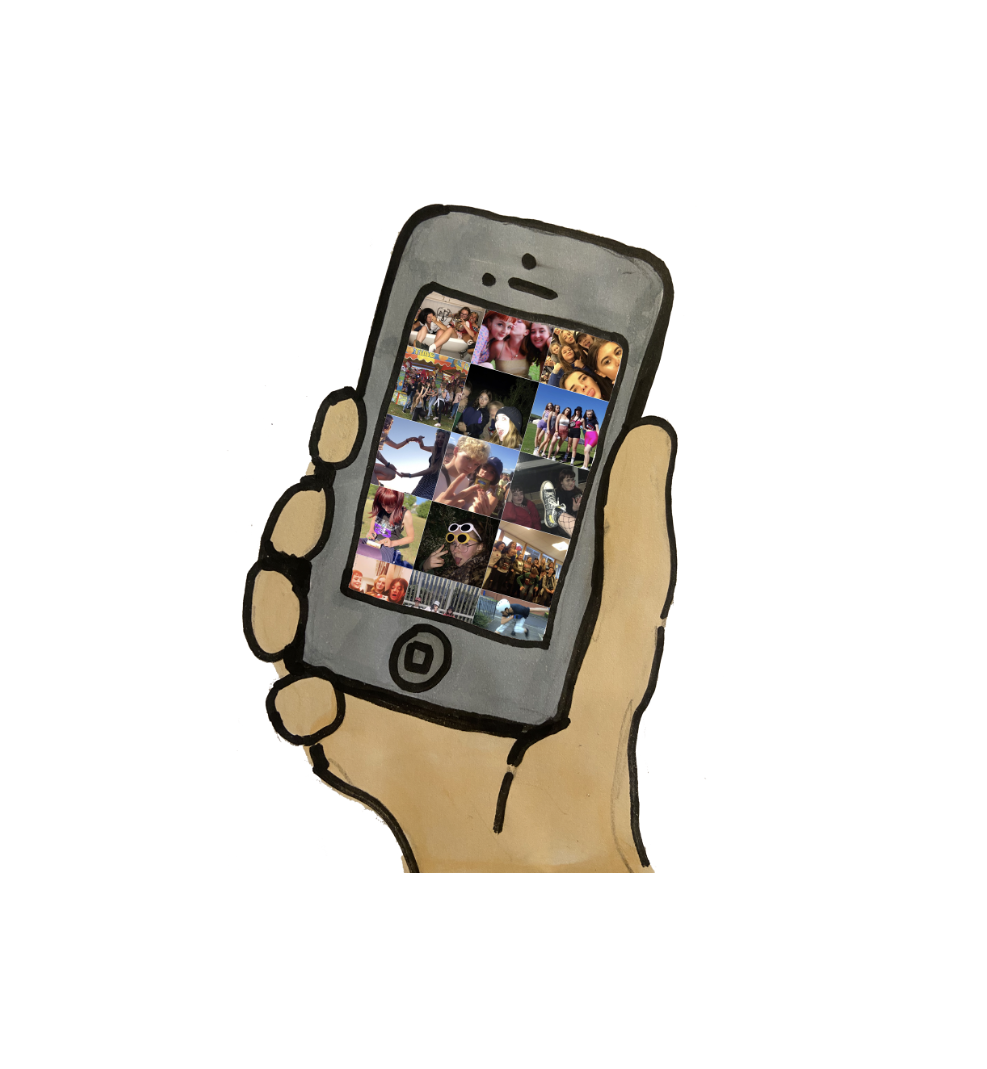
When was the last time you went down a rabbit hole on your own Instagram? Scrolling back to that painfully over-filtered Retrica selfie where you chopped your own fringe and thought it looked great (it didn’t). Or maybe you found a Facebook memory which left you cringing at that chaotic status when being ‘random’ was the height of comedy. As we grow older, the internet ages with us. Both comforting and slightly terrifying, Gen-Z is the first generation to experience feelings of nostalgia for things that happened online.
The Museum of Youth Culture was amongst the first to shed light on this phenomena, through the project I’m Not Okay: An Emo Retrospective – an exhibition at the Barbican collecting personal photos snapped through the first generation of emo culture, the first subculture that truly thrived in cyberspace. Its moments were captured on digital cameras and early 2000s phones, destined for MySpace, LiveJournal, and Bebo. Now, long-buried on old hard drives and Photobucket accounts, these snapshots have been digitally unearthed. The curators aimed to “preserve a lost subculture of wiped servers, deleted profiles, and discarded mobiles” and that’s exactly what it does. Stepping into the exhibition, you’re met with a wall of grainy selfies; glass cases of broken BlackBerrys, flip phones covered in band stickers, scrawled notebook lyrics, and a television looping home footage-bedrooms plastered with Kerrang! posters, and shaky clips from sweat-drenched My Chemical Romance shows.
Jamie Brett, curator of Emo Retrospective, had been thinking about the project for five years, driven by his personal connection to the emo subculture. It all began with just 30 photos – snapshots Jamie and his friends had saved on old hard drives and SD cards from their phones. But they found there was nothing that represented emo properly, or felt quite right. “I’ve been pretty diligent about backing things up. I’ve got files dating back to 2003, a real labyrinth of folders – but even then, we didn’t have anything that truly captured emo in the right way,” he explains.
To fill in the gaps, Jamie turned to the community. Using a Myspace style template, he put out a call for emo photo submissions on the Museum of Youth Culture’s Instagram. The response was overwhelming: “Within two weeks, 2,500 people had submitted their photos,” Jamie says.
While the original emo generation was the first subculture to centre on the internet, many have evolved since – sadboys and tumblr girls, indie sleaze, twee, weeaboos. Nostalgia seems to be accelerating at an unprecedented pace. There’s discourse on tiktok about a “2014 revival” as if it wasn’t just 10 years ago. In fact, people on TikTok are already reminiscing about early 2020 lockdown trends, remembering when we painted our walls with cow print patterns and piled on excessive blush. Now, users react to old videos recreating their questionable makeup looks as if they were from decades ago. Commenters on these TikToks jokingly cringe, saying “the history books will skip us,” yet the reality is quite the opposite. Having instant access to past versions of ourselves is a powerful reality.
And the internet isn’t just a space to laugh at old photos – it is the most powerful tool for making silenced voices heard and amplifying stories that otherwise may fade away into obscurity. Sonny Ashby, a researcher in queer archives, explains that self-archiving is an important form of collecting history that wouldn’t otherwise exist if it wasn’t being self-recorded.
“When it comes to queer archives and similar, archiving is done by marginalised people through necessity, as a form of remembering their histories and forwarding legacy on to people that otherwise wouldn’t be able to remember it,” Sonny explains. “I always think about Instagram and how that is a huge archive all in one place despite it not being intentional.
“The internet is a way of immortalising people and stories – a form of collecting things.”
However, concerns arise with the reliability and longevity of using the internet as archival practice – the systems we rely on are relatively new, and keeping web pages working and content in the same place over years has proven more difficult than anticipated. Many readers may mourn to remember the 2019 MySpace wipe, where millions of user-generated content was permanently lost due to a faulty server migration.
Hannah Stageman, the special collections and archives manager at Goldsmiths University, London, says this is an issue many archives and digital museums face. Since digital archives and the technology and methods to run them are so new, many organisations are still adjusting to the way they work. “One of the biggest issues right now is what files are going to last the longest,” says Hannah. “Right now JPEG image files seem to be our best option, but who knows, in the future there may be something completely different and JPEGs may not even run anymore.” The fragility of files and servers is an ongoing issue, one that is yet to be figured out.
Even in the present day, this threat feels more urgent than ever. With the recent TikTok ban in the US – albeit for a day – it’s evident how easily entire platforms can be erased, taking countless pieces of content with them. It’s a reminder that our digital memories and communities are never truly secure. These platforms can disappear in an instant, and with them, a large part of our collective history could vanish without warning.
The potential for digital erasure is growing more pressing, especially as corporations like Meta continue to dominate social media spaces, and as political powers, such as the Trump administration, have shown a willingness to censor content. On the day of Trump’s inauguration, for example, the hashtag #democrat was mysteriously censored on Instagram, reflecting how far-right agendas are increasingly extending their efforts to silence opposition online.
This growing trend of censorship and the control over what can and can’t be shared online signals a disturbing shift. What was once a relatively safe space for marginalised communities to gather and express themselves is now vulnerable to the same types of repression that exist in the physical world. As digital platforms become more central to our lives, the question of how we preserve and protect our collective histories becomes more urgent – and with it, the question of how we maintain the integrity of our digital archives in the face of growing threats to both the platforms themselves and the content within them.
Hannah Stageman advises the most important thing you can do to keep your memories safe online is to save multiple backups. She suggests having one cloud based version of the thing you want to save, one on your actual computer or phone, and one saved to an external device – like a USB or a hard drive. This way, you are protecting your stories the way they would be in a real archive.
As the internet continues to evolve, so does our ability to preserve the moments, movements, and memories that shape us. Whether it’s an old MySpace photo, a viral TikTok, or a marginalized voice fighting to be heard; by saving, sharing, and celebrating our digital histories, we ensure that no story or media is ever truly lost – only waiting to be rediscovered.