
You may think of older people as being the main group affected by loneliness, but recent studies show that generation Z is struggling with social isolation more than other generations. With the disconnect from the real world due to digital technologies, mental health issues among gen Z are increasing. Social media has given us an opportunity to connect with people online, however they lack face-to-face human interaction.
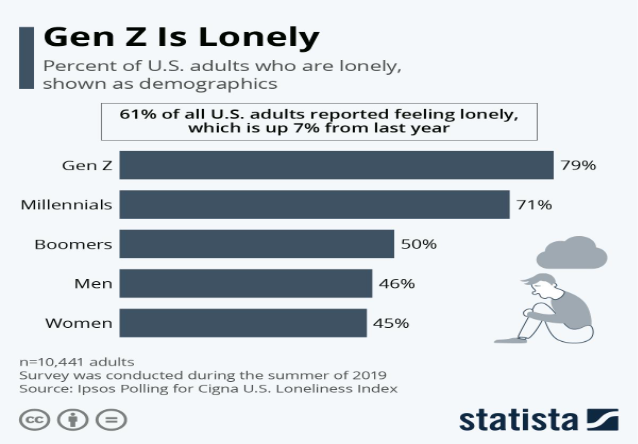
Gen Z already experiences the highest rate in both anxiety and depression compared to previous generations, according to Ipsos polling of US adults, which is the factor why they struggle with social interactions and end up lonely. An article on the UC Davis blog, Cultivating Health, said social media use may increase feelings of anxiety and depression, specifically in teens and young adults. This can make them feel a sense of low self-esteem and the social anxiety which affects their own self-perception and makes it difficult to build relationships and maintaining them.
For many people in gen Z, social media is their escapism, whether it is Instagram or Netflix but, research has shown that constantly being online is not healthy and can increase the feelings of isolation and how it is sabotaging your mental health. Other than the sense of isolation, gen Z find it challenging to determine meaningful connections in the future which can create a high risk of self-harm and suicidal thinking. From the graph, we can see a 1% difference between men and women when it comes to loneliness. According to The Health Policy Partnership, men who may require support are less likely to talk about mental health than women. Women tend to have more networks around them and build strong connections and friendships when they need the support whereas men have fewer social connections to rely on.

People who grew up with smartphones and technologies at such a young age have less skills to develop strong social skills and emotional intimacy which makes them lack face-to-face interactions. Constant exposure to others’ lives on social media can make the individuals viewing possess Fear of Missing Out (FOMO) which according to the NCBI, during the Covid-19 pandemic elevated immediately.

We all know that loneliness is part of mental health which can:
- Increase social withdrawal, depression and anxiety
- Increase of isolation
- Reduce in motivation
- Reduce in confidence
No matter the age or your environment, there should be places individuals can receive support, someone to talk to in schools, workplace, community organisations and more. In schools, children should be taught about mental health and how to get the support so when or if they experience the signs and symptoms, they will know how to approach it. Gen Z can tackle loneliness by attending social events for prioritising face-to-face interactions, normalising mental health support, going to physical activities and more.
Social media and stress are all contributors to the anxiety, depression and emotional distress that gen Z faces. By prioritising mental well-being and face-to-face connection, gen Z are able to break the loneliness cycle.