
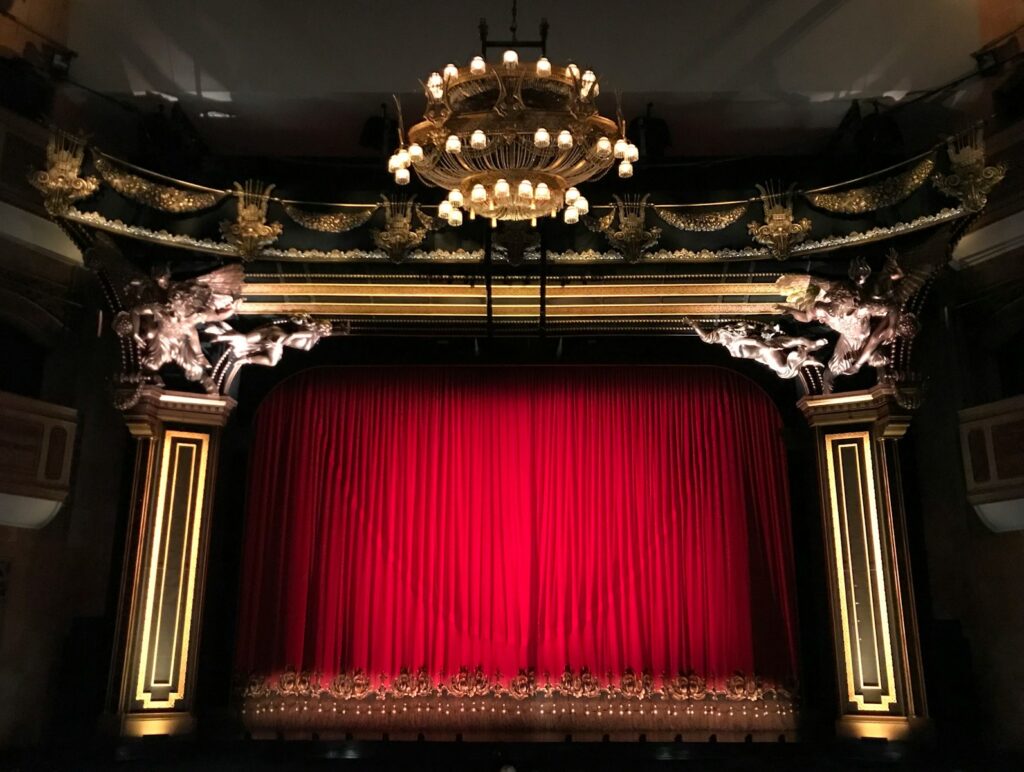
London has a history of more than 2,000 years, integrating politics, economy, culture, and art. The contribution of British theatre to the world is self-evident, and the West End’s role in the development of British theatre is beyond doubt. More importantly, the West End has become an increasingly visible force in the British economy, both as a theatre centre and as a centre of entertainment.
London’s West End is one of the world’s two major theatre centres alongside New York’s Broadway, an international stage for the performing arts and synonymous with the British theatre scene. When travelling to London, you can enjoy a musical at a West End theatre. Even if you’ve never been to a musical before, you’ll be captivated by them. There are around 100 theatres in London and the West End has over 40 of them.
1) Theatre Royal Drury Lane
Located in Covent Garden, the Theatre Royal Drury Lane, which opened in May 1663, being the world’s oldest theatre site in continuous use. Throughout its long and illustrious history, the theatre has undergone several renovations and rebuilds, with the current building dating back to 1812, when architect Benjamin Dean Wyatt rebuilt it after the previous theatre was destroyed by fire. Drury Lane has hosted many iconic performances, including William Shakespeare’s plays, musicals, operas, ballets, and pantomime. It has always been a preferred venue for classical and contemporary works.
2) Theatre Royal Haymarket
The Theatre Royal Haymarket holds a prestigious place in London’s theatrical history, renowned for its rich heritage and ongoing contribution to the arts. Situated in the heart of London’s West End, it has been a focal point of cultural and entertainment excellence for centuries. The history of the Theatre Royal Haymarket dates to 1720, and in 1766 it was granted a royal licence to stage plays. The theatre has a capacity of 888 and in 1873 it pioneered the ‘matinee’ arrangement, which has since been copied by theatres around the world.
3) Adelphi Theatre
Since its opening in 1806, the Adelphi theatre has been a cherished landmark of the city’s theatrical landscape. Originally designed by architect Ernest Schaufelberg, the Adelphi Theatre has undergone several renovations and reconstructions over the years, each time emerging with renewed splendour while preserving its distinctive charm. Its elegant facade and ornate interior evoke a sense of grandeur and sophistication, captivating audiences to step into a world of theatrical enchantment.
4) Royal Opera House
The Royal Opera House, situated in the vibrant Covent Garden district of London, stands as a symbol of artistic brilliance and cultural heritage. With a history spanning more than 250 years, it is internationally renowned as one of the four major opera houses in the world for opera, ballet, and classical music. Originally established in 1732, the current building of the Opera House is in its third generation, and this neo-classical style Opera House still retains the remaining parts of the 1858 building. During World War II, the Opera House was used as a ballroom, and after the war it became home to the Royal Opera Company and the Royal Ballet.
5) Vaudeville Theatre
The Vaudeville Theatre is one of London’s renowned West End theatres. Located on the Strand, it has been entertaining audiences since its opening in 1870. Its intimate atmosphere and prime location in London’s theatre district make it a favourite among both locals and visitors. Whether you’re seeking timeless drama, side-splitting comedy, or captivating musical performances, the Vaudeville Theatre can provide an unforgettable theatrical experience.