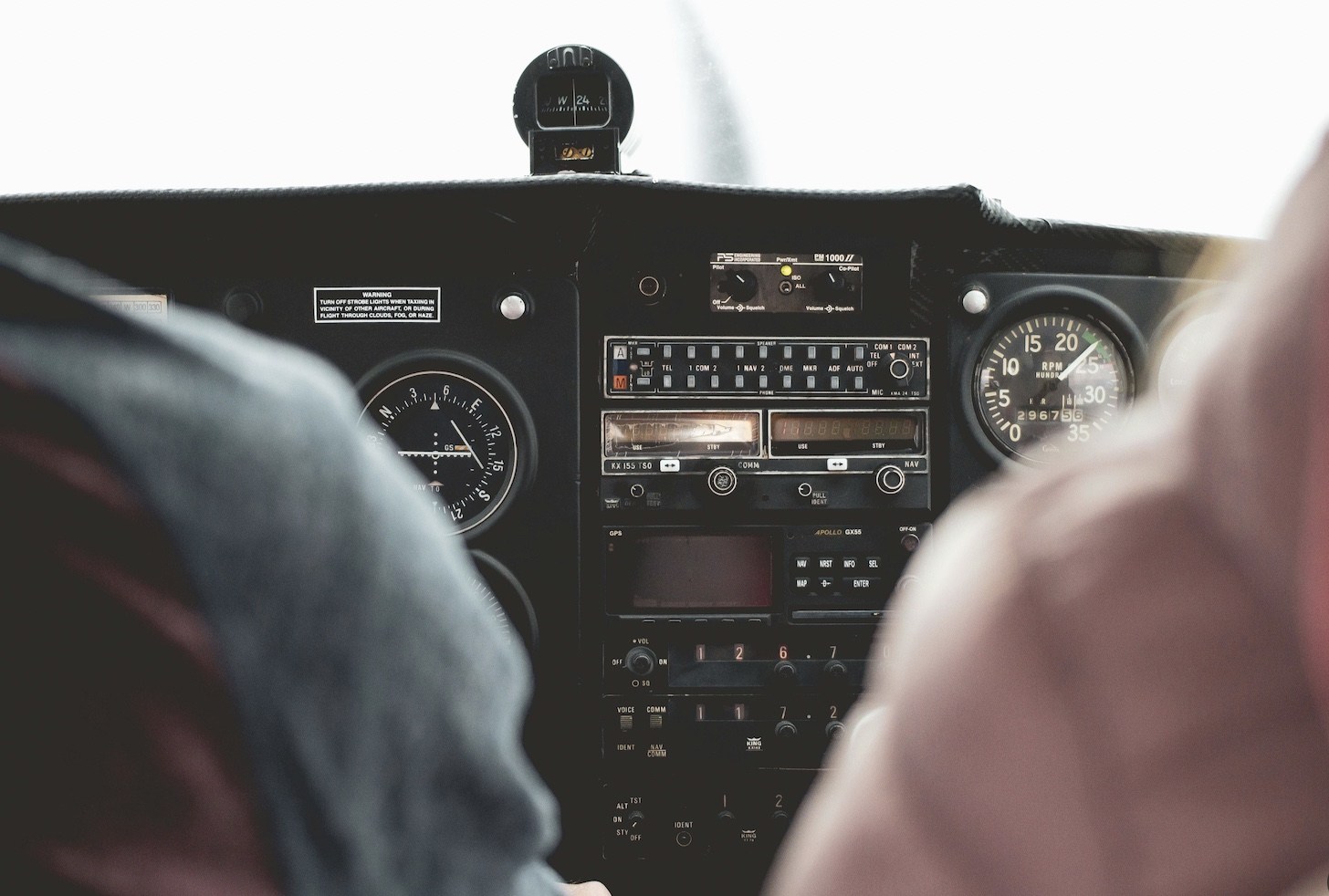
In the cockpit, Nicolás Pescador is learning that intuition can be as vital as training.
Every time a plane takes off, more is at play than instruments and checklists. Beyond weather reports, procedures, and technology, pilots rely on something less visible but equally vital: intuition. When conditions shift, and decisions must be made in seconds, it is often this internal compass that guides their actions, operating quietly alongside the measured logic of aviation systems. A study in Human Factors found that experienced pilots made faster, more accurate decisions than novices by noticing subtle cues that signalled problems, showing that cockpit “intuition” is built on trained perception, not guesswork.
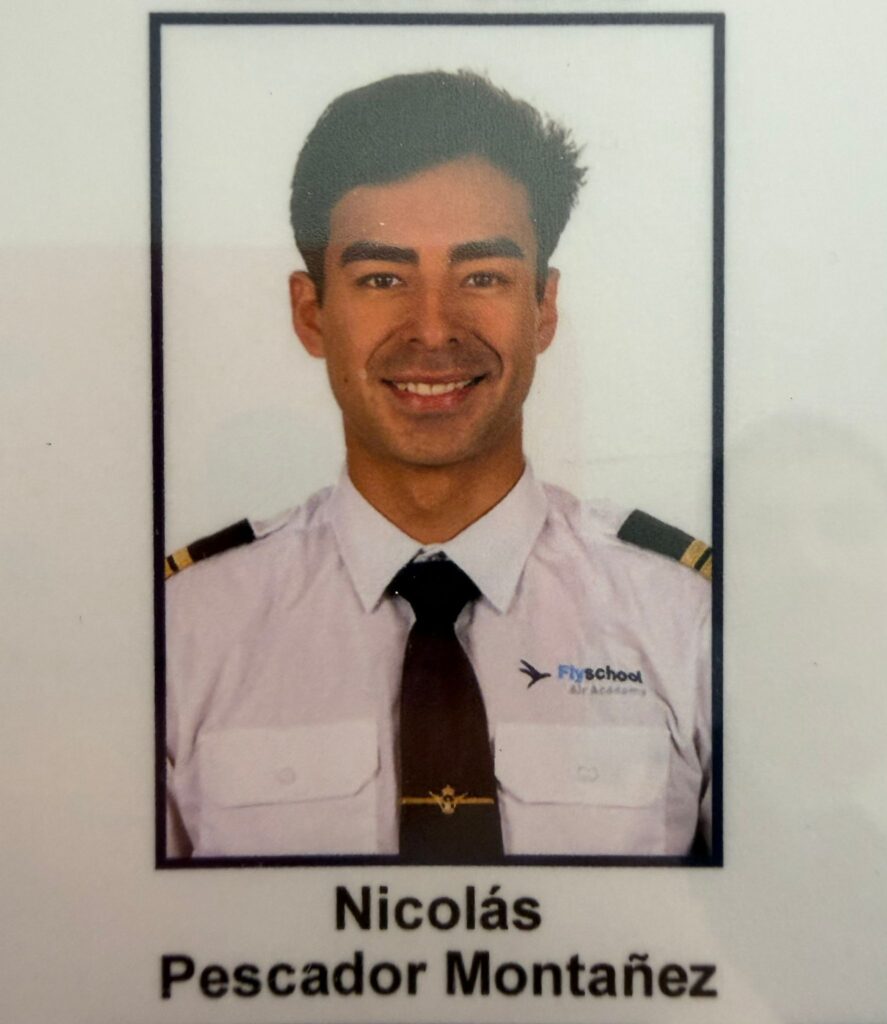
For Nicolás Pescador, 23, a trainee commercial pilot taking his second year at Fly School Air Academy in Madrid, intuition has already proven indispensable. He does not speak of heroics or near misses, nor does he frame his experiences as exceptional. Instead, he chooses his words carefully, almost as if naming the experience too loudly might diminish its meaning.
“It was during a routine simulator session,” he recalls. “The aircraft was stable, autopilot engaged. Everything was reading green. But as we descended through a thick layer of cloud, a sense of unease crept in.”
He pauses, searching for precision rather than drama. “Nothing was technically wrong,” he says. “But something didn’t feel right.”
Trusting that feeling, he disengaged the autopilot and adjusted the flight path manually. Moments later, a wind shear warning triggered a sudden, dangerous shift in wind speed or direction that can make landing unsafe if not addressed immediately. Had he hesitated, the landing could have become hazardous.
The story has the shape of a cinematic moment, but Pescador treats it as something quieter and instructive. For him, it is evidence that flying is not purely mechanical. “We are trained for every scenario,” he says. “But sometimes instinct leads before calculation has time to catch up. It’s subtle. Almost invisible if you don’t know what to look for.”
He reflects further on that sensation: “It was like a tightening in my chest, a micro‑alert that something in the environment wasn’t matching the data. In the simulator, I had no real danger, but the feeling is exactly what would guide me in the air. It’s a warning before the instruments can show it.”
Commercial pilot certification typically requires a minimum of 1,500 flight hours, much of it in simulators designed to replicate high-stress and emergency conditions. For trainees, these hours are not simply a regulatory threshold. They are a process of immersion and repetition, through which the aircraft becomes familiar not just as a machine but as a responsive system.
Those hours cultivate an almost subconscious understanding of flight: the vibrations transmitted through the controls, the way the aircraft responds to different air masses, and the small changes that signal larger shifts ahead. Over time, reaction becomes anticipation.
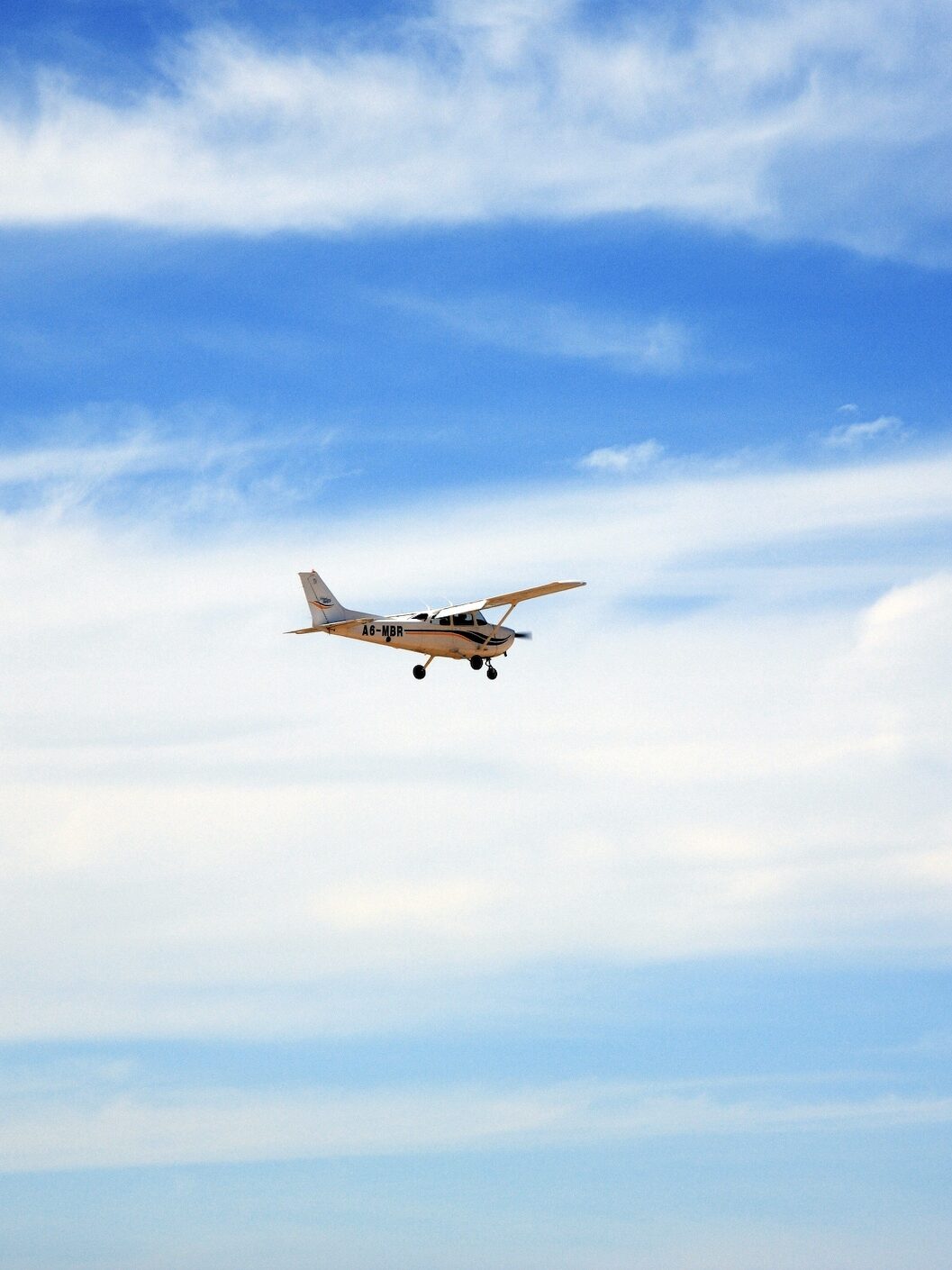
Early training, Pescador explains, is as much about avoidance as reaction. In summer, student pilots are taught to steer clear of areas with strong thermal activity, rising columns of warm air that can destabilise flight. “In hot weather, there are many thermals and birds,” he notes. “They create instability, so we try to avoid those zones.”
Timing is another variable drilled into students from the outset. Training flights are often scheduled for early morning, when the air is calmer and winds are lighter. “By midday, in both winter and summer, turbulence increases,” he says. “The atmosphere becomes much more unstable.”
Certain conditions demand strict discipline rather than instinct. “When there is fog, you fly purely by instruments,” he explains. “You cannot trust your senses.” That principle, known as instrument flight discipline, is rehearsed repeatedly until it becomes automatic, a safeguard against disorientation caused by visual illusions.
Other environments demand heightened physical awareness. Flying over mountainous terrain introduces a particular risk. “You get mountain waves,” he says, describing the way wind is forced up and down by the landscape, creating strong vertical air movement. “You can feel the aircraft rise and fall sharply. It’s something you must anticipate rather than react to.”
Psychologists describe what pilots call intuition as rapid cognition developed through repetition and experience. Ana Jiménez, who has studied decision-making under pressure, says the phenomenon is often misunderstood. “What feels like instinct is actually the brain processing hundreds of small cues almost instantly,” she explains. “Pilots are reading the aircraft and the environment on a level most people never experience.”
Jiménez stresses that intuition does not replace procedure. “It complements it,” she says. “It allows a pilot to act when there isn’t time to consciously gather and analyse every piece of information.”
“In high-speed environments, delayed decision-making can be as dangerous as incorrect judgement,” Jiménez explains.
As experience grows, the boundary between training and instinct begins to blur. Pescador describes moments when he has sensed subtle changes in wind pressure or vibration through the controls, cues too delicate to appear on any display. “You learn to trust that feeling,” he says. “Ignoring it can be costly.”
Modern pilots operate under significant pressure. Airlines demand efficiency, precision, and constant readiness. Long-haul pilots may spend much of their lives away from home, while trainee pilots often face financial strain even before securing stable employment. Fatigue, stress, and cognitive overload are part of the profession. Yet despite increasing automation, the human mind remains central to safe flight.
Autopilot systems and artificial intelligence now handle much of what was once done manually, Jiménez notes, but they do not replace judgment. “Machines follow algorithms,” she says. “They don’t feel the aircraft or sense subtle environmental changes. When seconds matter, it is often experience, what we label intuition, that makes the difference.”
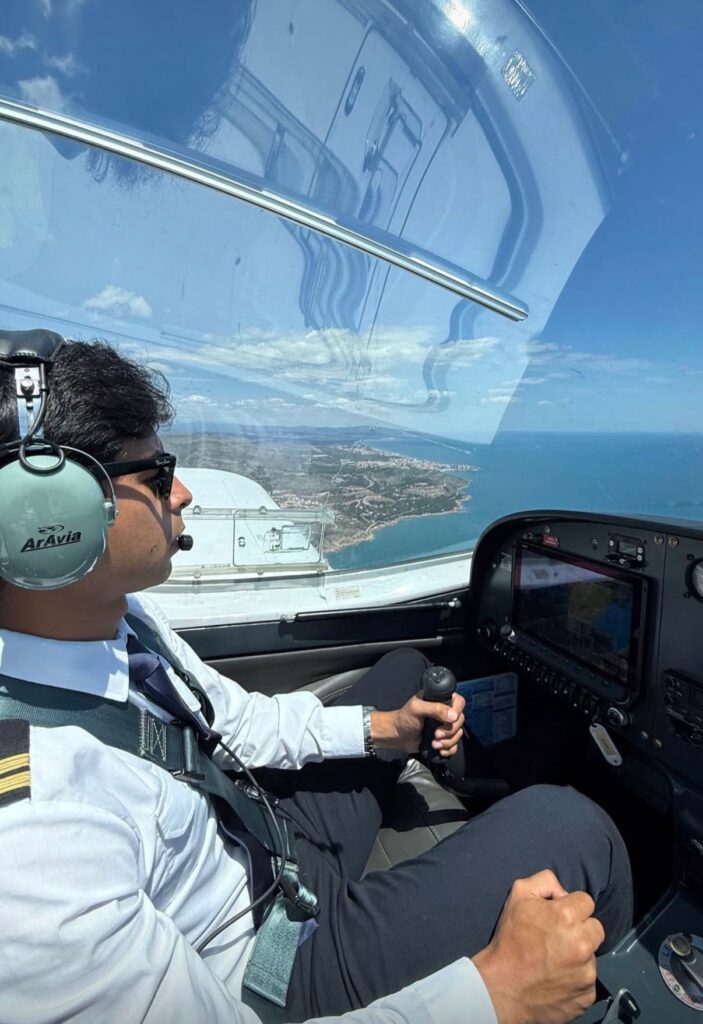
Pescador is uninterested in dramatising these moments. He speaks of vigilance, observation, and patience. Mastery, for him, is not measured solely in logged hours or technical knowledge, but in presence: the ability to remain attuned to what the aircraft is doing and what it might do next.
“The instruments tell you what is happening. Intuition tells you what could happen,” Pescador says.
For passengers, a flight may feel serene, even effortless. Behind the cockpit door, however, there is a constant negotiation between procedure and perception, technology and human awareness. For pilots like Pescador, intuition is not an optional extra. It is an essential skill, quietly woven into every adjustment that keeps an aircraft and everyone on board safely aloft.
Leave a Reply