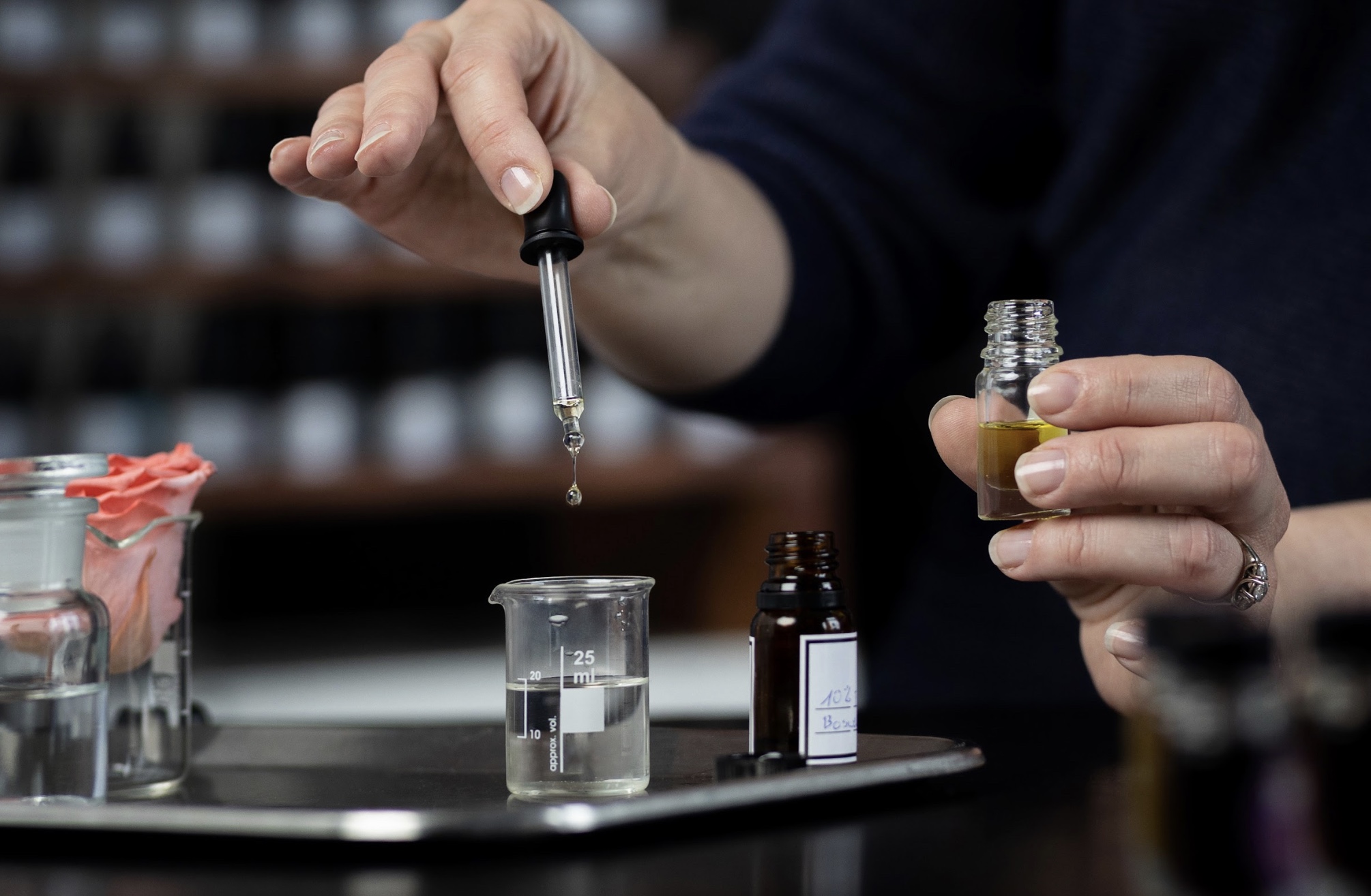
In a studio tucked away in the streets of Notting Hill, Lucy Heale is doing something quietly radical. She is teaching people that the most powerful fragrance they will ever wear is the one they make themselves.
There is a moment that happens in every workshop at The London Refinery. It is the moment when someone lifts a strip of testing paper to their nose, closes their eyes, and goes somewhere else entirely. Maybe it is a childhood garden, a lover’s bedroom, or a grandmother’s kitchen. In that instant, fragrance stops being a product and becomes something far more intimate: a portal.
Lucy Heale, the founder of The London Refinery, has built her entire business around that moment. Since launching in 2019, after winning a university competition at Central Saint Martins and turning down a perfectly good job at a digital marketing agency to do so, she has been quietly redefining what it means to wear a scent.
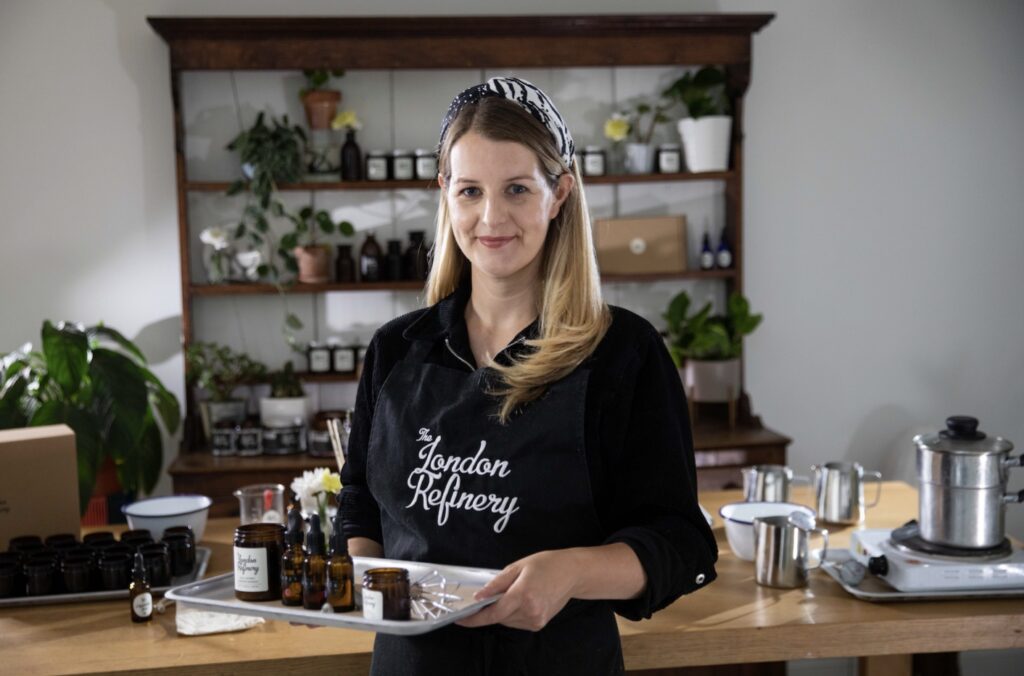
“Fragrance is not just about smelling good,” she says. “It is about understanding where it comes from and how it is made.”
Of all the ways we construct identity, scent may be the most underestimated. It does not hang on a wall or sit in a wardrobe. It moves with you, invisible, intimate, and neurologically speaking, more deeply wired into who you are than almost anything else you wear.
We have always known this, in some sense. Perfume has been traded, gifted, inherited, and mourned for thousands of years. People keep empty bottles long after the scent is gone. They describe the smell of a lost person the way they might describe a face. They recognise themselves, sometimes startlingly, in the scent of a room they have not entered since childhood.
What is newer is the growing desire to reverse the transaction. Not to choose a scent off a shelf, but to make one. To sit with raw materials and arrive, through something between instinct and memory and experimentation, at something that feels genuinely, specifically yours.
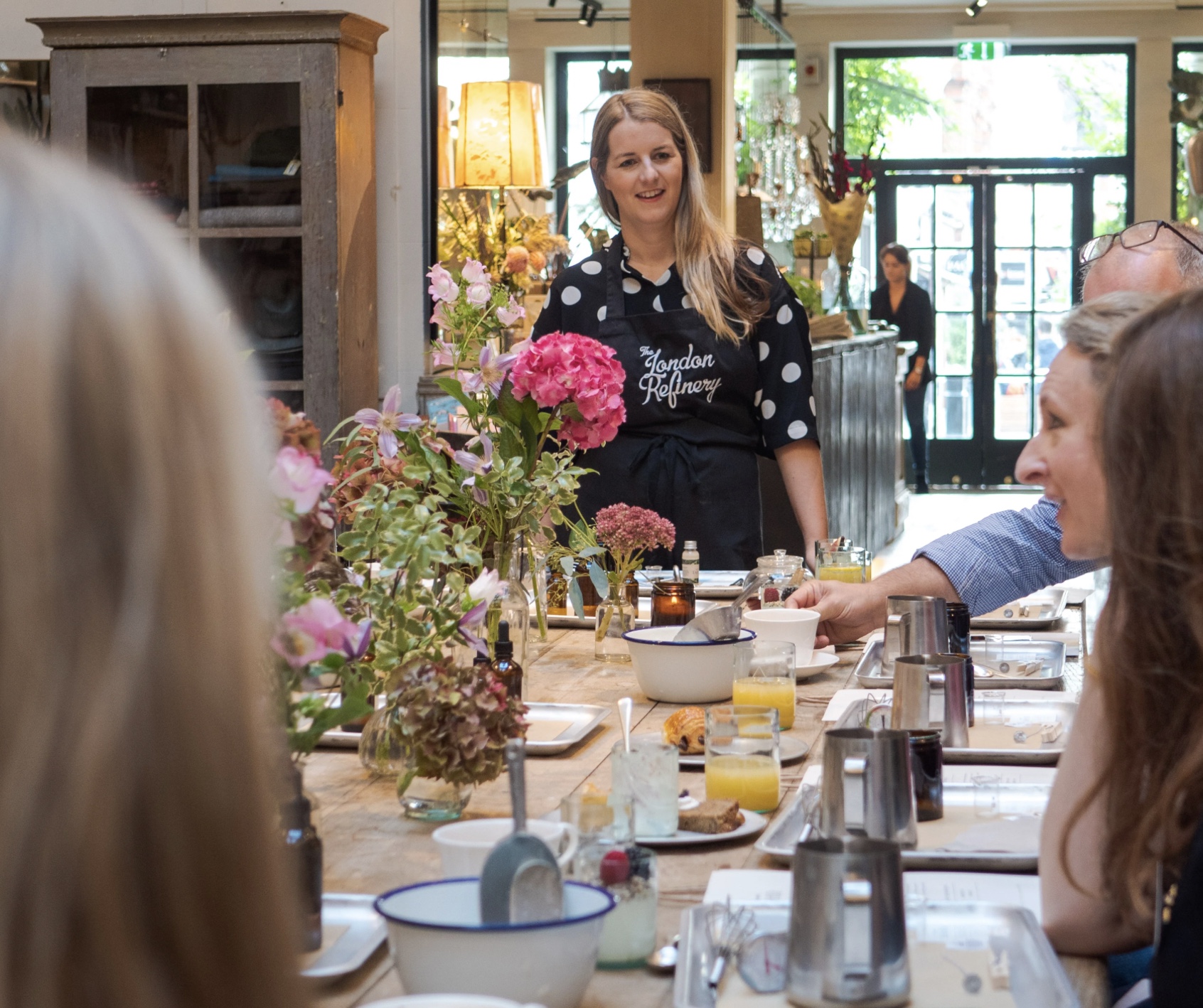
The London Refinery’s workshops last two hours. There are no formulas to follow, no prescriptions. Instead, participants work through a palette of natural essential oils, most sourced from small producers in the south of France, following what they are drawn to rather than what they think they should want.
What emerges is rarely what people expect. Someone who arrives certain they want something floral often finds themselves reaching for something greener, earthier, more austere. Someone who thinks they want warmth discovers they actually want stillness. The process has a way of surfacing preferences people did not know they had, and preferences, it turns out, are a kind of self-knowledge.
“Your scent becomes an extension of your identity,” Heale says. “It is not something imposed on you. It is something you have shaped with intention.”
That distinction matters more than it might seem. Most of us wear scents chosen for us by market research, celebrity association, or the ambient pressure of a department store counter. The fragrance we end up with is rarely a reflection of who we actually are. It is a reflection of what we were presented with on the day we needed to buy something.
The act of making, by contrast, requires a different kind of attention. It slows you down. It asks you to be specific about what you actually respond to, and why. In this sense, the workshop format sits at the intersection of craft and self-inquiry, and the two hours people spend at a blending table often function as something closer to reflection than shopping.
That insistence on knowing what you are working with extends to the materials themselves. The fragrance industry has long operated behind a veil of deliberate opacity: ingredient lists that tell you almost nothing, supply chains that stretch across continents without scrutiny, synthetic compounds that approximate nature without coming from it. Heale works against this. The oils used in her studio are natural, largely European in origin, and free from petrochemicals, parabens, and pesticide-treated botanicals. Every ingredient is tested for skin safety, because natural, it turns out, does not automatically mean gentle.
She is candid about the limitations this creates. Natural scents can be softer, less immediately arresting than their synthetic counterparts, built as those often are for projection and longevity over subtlety. Some workshop materials, certain metals, and crystals used in the process, resist fully sustainable solutions. Heale makes the most responsible choices available and does not pretend otherwise when the ideal is out of reach. Something is clarifying about that honesty. It treats sustainability not as a marketing position but as an ongoing negotiation with the actual conditions of making things.
Knowing where your materials come from also, it turns out, changes the experience of working with them. When you understand that the lavender in your blend grew in a specific region, harvested in a particular season, the act of choosing it becomes something more than aesthetic preference. It becomes a small act of connection to a place and a process. The finished scent carries that with it.
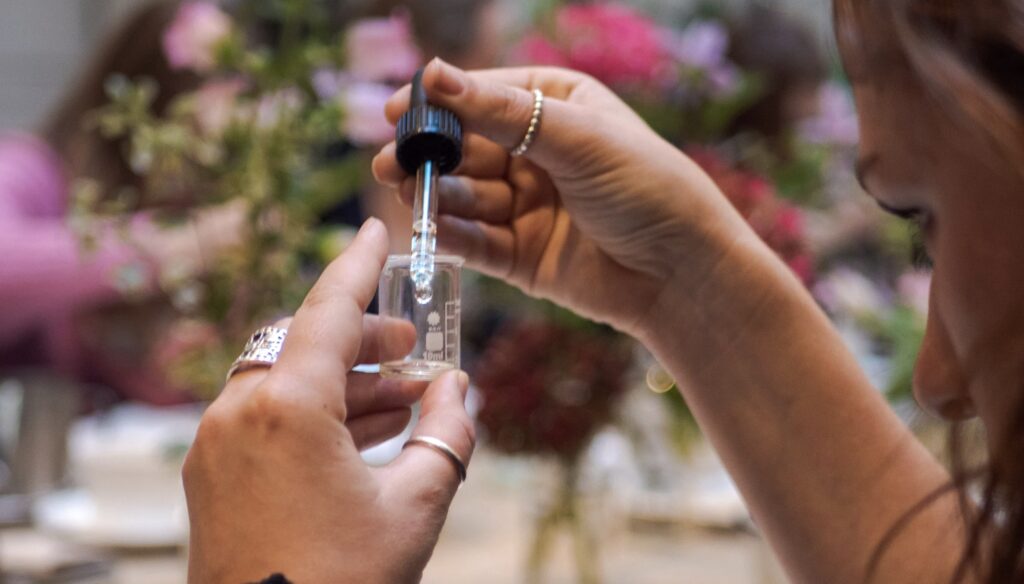
Scent is also uniquely a memory technology. Of all the senses, smell has the most direct neurological connection to the limbic system, the part of the brain that processes emotion and memory. This is why a particular combination of notes can drop you into a specific afternoon twenty years ago with a precision that neither sound nor image can match. It is also why the fragrances people create in workshops so often have a retrospective quality: they are reaching, frequently without realising it, for something they already know.
One of the most striking examples of this at The London Refinery involved a woman who came in not to create something new but to recover something lost. She brought her late dog’s lead, his blankets, his coats, and anything that still held traces of his scent. She wanted something that could carry the memory of their walks together through the Cotswolds: cold and strong, she said, but also wintery, even though the walks had been in summer. The finished blend used woody, earthy notes for that familiar solidity; cool green herbs for the open air; soft musky undertones for the feeling of closeness. It was, in a very precise sense, a portrait. Not of a place, but of a relationship.
There is something in that story that speaks to a broader shift in how people relate to objects and experiences. The appetite for the meaningful over the merely good, for the traceable over the generic, has quietly reorganised how a generation consumes. In fragrance, as elsewhere, it has produced a growing scepticism toward the mass-produced and a corresponding interest in the natural, the artisanal, and the personal.
The workshops also do something harder to account for in any framework of individual identity: they create community. Strangers who come in separately often find themselves bonding over the shared vulnerability of the process, of not knowing what they are doing and trying anyway. Friendships form during sessions. People return together. There is something about the shared intimacy of working with materials that are, literally, about how you want to be sensed by others, that seems to lower the usual defences.
In this way, the making of a personal scent becomes a social act as much as a private one. You are deciding, in a room with other people, who you want to be. The answer you arrive at is yours alone, and yet the process of arriving at it is collective.
What you leave with is a small bottle of something that smells, if the session has gone well, unmistakably like you. Not a version of you that a brand has decided to offer. Not a compromise with what was available. Something that started as an intuition and ended as an object. An identity, briefly and precisely bottled.
Leave a Reply