
How Listening with the Body Helps a City Slow Down
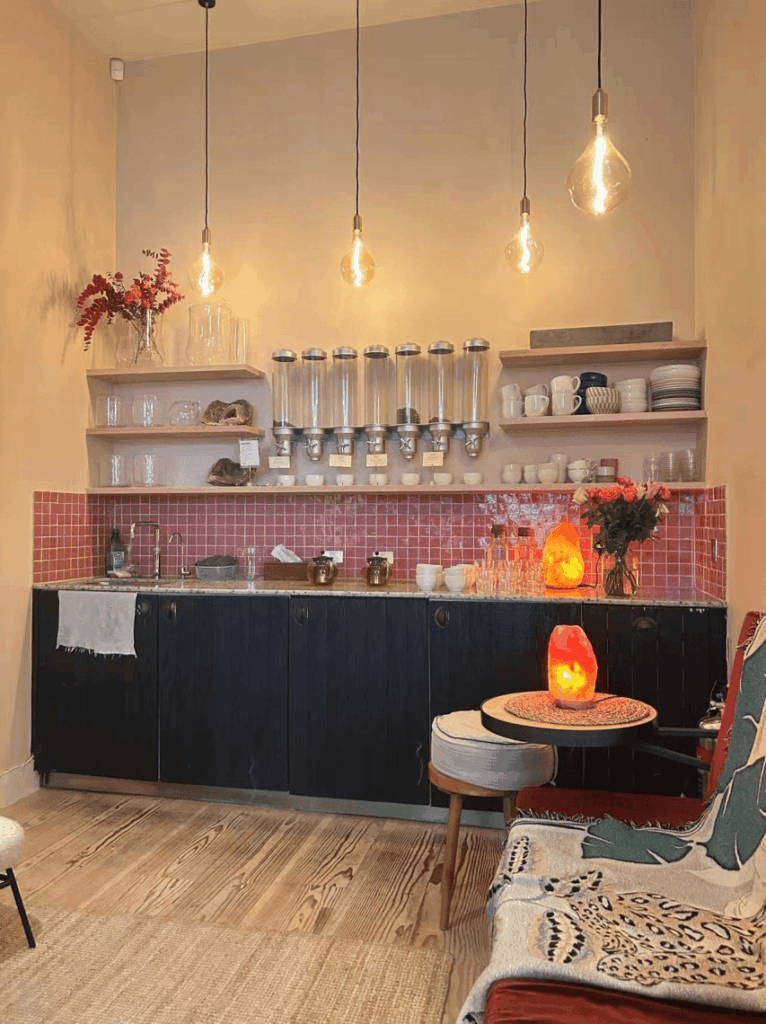
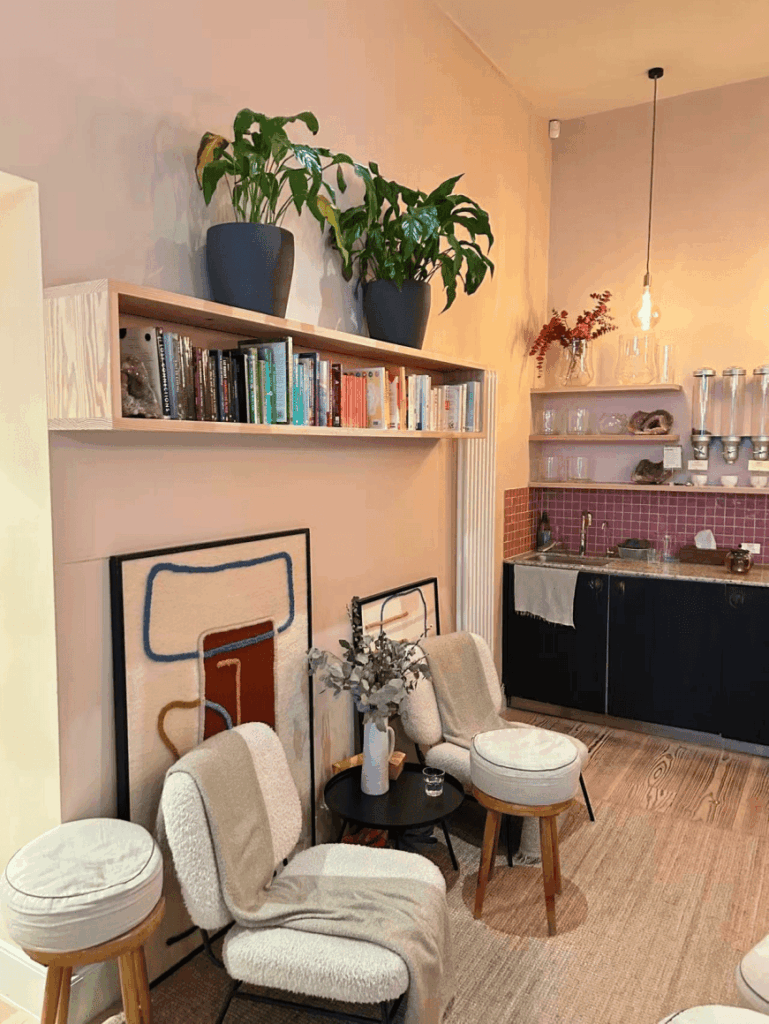
When I step into the Re:Mind Sound Bath Studio near Victoria Station, the street outside is still roaring with traffic and overlapping voices. But the moment the door closes behind me, the noise dissolves. The interior features a rustic, wooden aesthetic, with a cosy yet compact waiting area adorned with rugs. Entering the sound bath room, several crystal bowls in pale blue, milky white, and amber tones are arranged in a quiet semicircle beneath the lamplight, their smooth glass surfaces catching the light, while a large bronze gong leans silently against the wall. A faint woody scent hung in the air, and the warm glow softened everyone’s features.
Sound healer Christine Vogler sat quietly at the front of the room. We get talking, and she explains how she once lives by metrics and targets.
“For a long time, I was still working in traditional, high-paying corporate roles,” she says.
Years of high-pressure work took their toll, and in order to escape, she starts to spend her evenings in yoga studios and sound healing workshops. At first, these practices are simply a way to restore balance between meetings and emails. “The more I learn, the more my worldview shifts,” says Christine, and it began as a refuge that slowly became direction. Three and a half years ago, Christine left the corporate world and committed herself fully to the healing work she had once pursued only on the margins of her life.
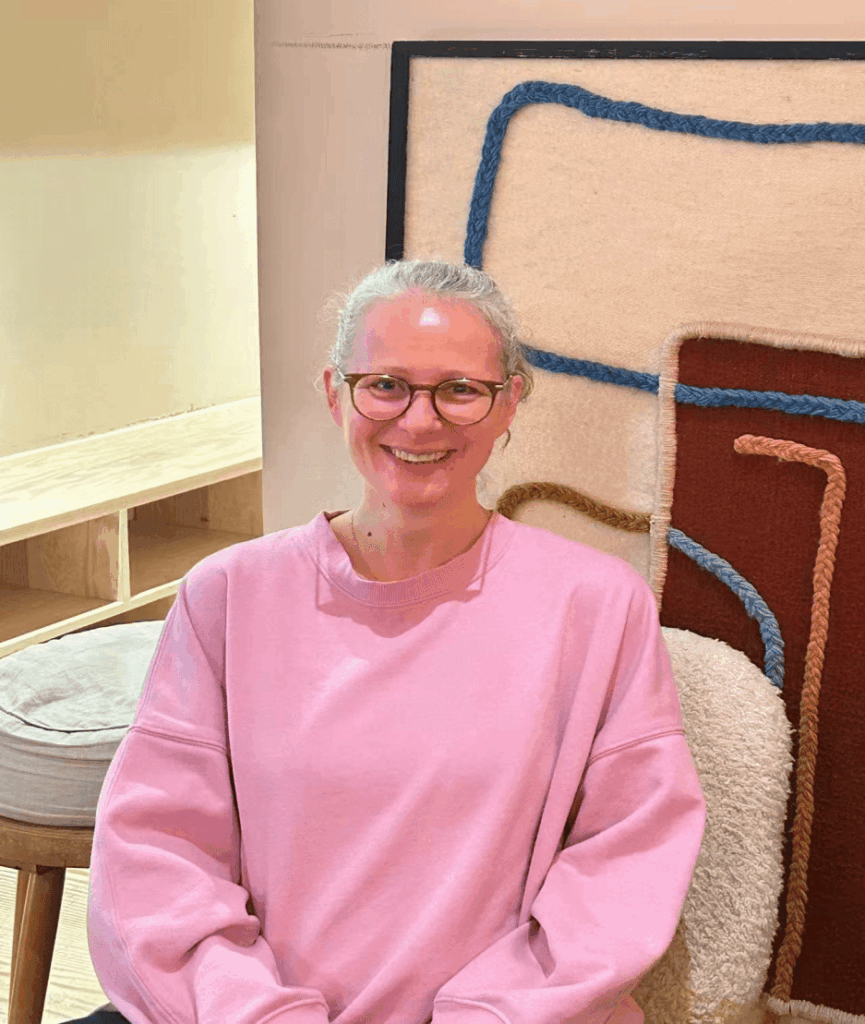
For Christine, sound is far more than something the ears receive. ‘‘In a sound bath, you experience sound through the body,’’ she explains. ‘‘Unlike recordings trapped inside headphones, live sound moves freely. It fills the room, brushes against skin, and settles into breath and muscle.’’ She describes this process as a resonance. ‘‘There’s an entrainment occurring between the frequencies of the instruments and the frequencies within your body,’’ she says. ‘‘When singing bowls are played, their vibrations interact with the body’s own rhythms, gently guiding it into a slower, calmer state.’’ This communication extends to the cellular level. ‘‘Every cell begins to communicate with the sound,’’ Christine explains, ‘‘In that moment, the body stops listening and starts responding, long before the mind has time to catch up.’’
Christine exercises particular caution with what she calls “sensory labels”, words like “relaxing,” “heavy,” “floating,” or “healing” that people often use to categorise sound. “We always want to classify things,” she says. But sound resists neat categories. Even for experienced practitioners, it remains deeply personal. “For me, the gong feels heavier and more spacey,’’ she explains. “The gong’s vibrations seem to expand outward, filling the room, while crystal bowls feel lighter and more fluid to me.” Still, she is quick to qualify her descriptions. “Someone else might experience it completely differently,” she says.
“What feels soothing to one person may feel overwhelming to another. The same sound settles into each body in its own way,” she says.
During a sound bath, a wide range of reactions unfold, none of them needing correction. For Christine, especially in a city like London, the goal is surprisingly simple. “Relaxation is the key objective, especially in a city like London,” she says. “In a place driven by deadlines and constant movement, slowing down the nervous system is already a small act of resistance.”
When tension loosens, she notices shifts in the room. “Some people see colours or memories,” she adds. “It can bring up things they are not consciously thinking about.” Not everyone relaxes easily.
“For those new to this, the mind can be overpowering,” Christine adds. “People start analysing, wondering if they’re doing it right.” But she doesn’t see that as failure. “Distraction and doubt are part of the process. ” That’s just how we learn to listen.
When I lie on the mat, I drift into the space between wakefulness and sleep. My eyelids grow heavy, my breath stretches out, and my body finally releases its weight. Christine isn’t surprised. “Falling asleep is very common,” she says, especially in a city where exhaustion is often ignore. Crucially, sleep does not mean disengagement. You’re still receiving the benefits, she explains, as sound gradually lowers brainwaves into a meditative state. “The mind may fade for a moment, but the body continues to listen,” Christine says. “Even in unconsciousness, it remains in quiet conversation with vibration.”
Christine sees sound baths as a form of meditation. For first-time participants, the experience often stays on the surface, marks by novelty, drowsiness, or distraction. With repetition, something shifts.
“The more you do it, the deeper you can go,” she says. As your body becomes familiar with vibration, resistance fades. “Your system knows what’s happening,” she explains. “Over time, sound is no longer something that comes from outside,” Christine says.
“It becomes something you feel from within.” However, for Christine, no sound bath is ever “one-size-fits-all,” and when I lie on the mat, I drift into the space between wakefulness and sleep. My eyelids grow heavy, my breath stretches out, and my body finally releases its weight. While instruments may look similar, she explains, each facilitator’s training and philosophy shapes the experience. She prefers restraint over excess. “Too many instruments can feel disruptive,” she says. For Christine, healing lies not in constant stimulation, but in continuity, allowing sound to settle, and people to meet themselves in stillness.
As the final note on the gong fades, a stillness settles over the room. No one in the class rushes to speak, as if words might disturb the softness that has been slowly settling over the room. Outside, London is still roaring: buses surge past, phones vibrate, voices overlap. Nothing has change. Except me. Commuters hurry past, phones in hand. I slow my pace, take deeper breaths, and resist the familiar urge to rush onward. Perhaps this is the quiet power of sound bathing in modern life: not a promise of improvement, productivity, or self-optimisation, but permission to pause, to feel, to exist without performing. In a city that never truly rests, listening becomes an act of care. And, slowly, the body remembers how.
Leave a Reply