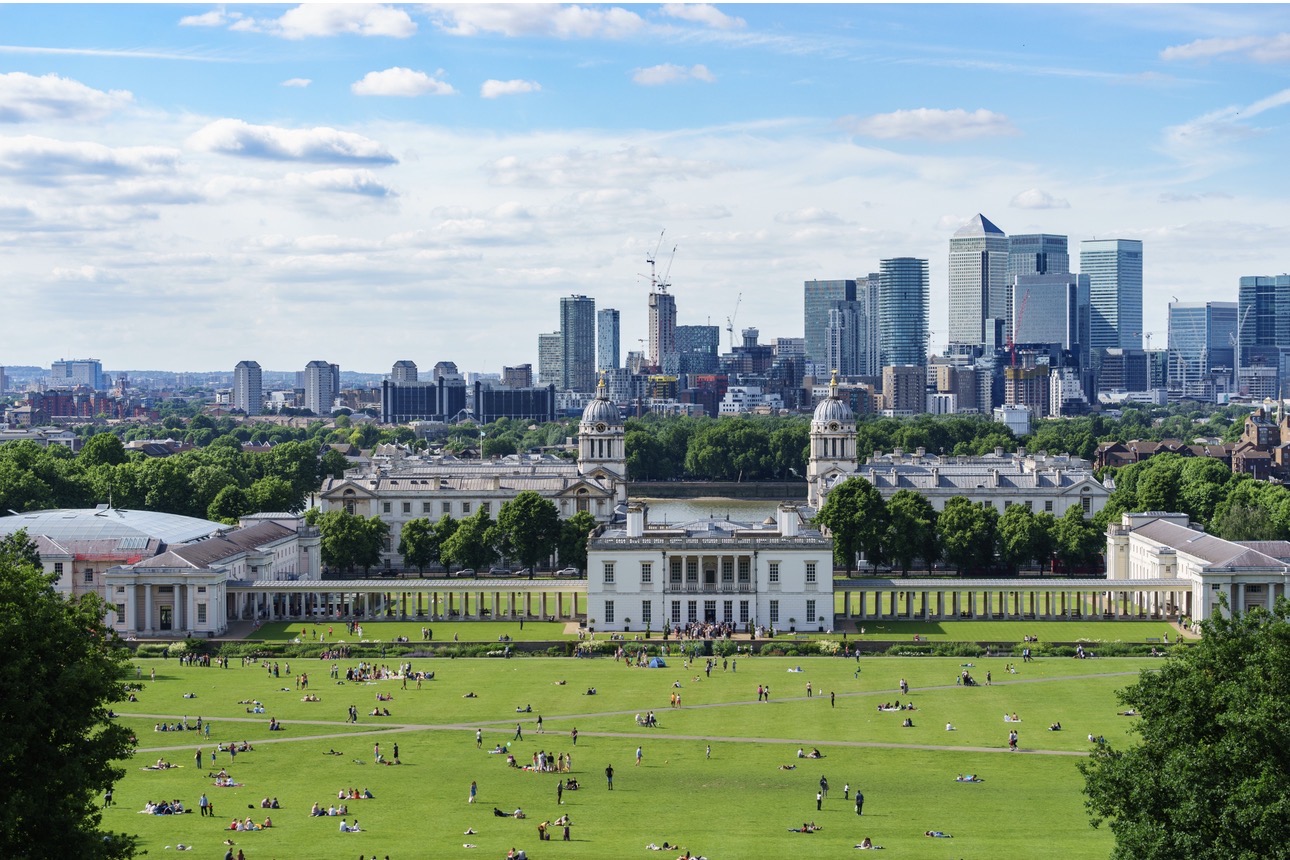
On a hill in Greenwich Park, a thin metal line runs across the ground, marking zero degrees longitude, the point where east meets west, and the world’s time begins. Beneath your feet runs the Prime Meridian, the invisible line that divides east from west and anchors global time. Each day, visitors queue outside the Royal Observatory to stand astride the line, one foot in each hemisphere, smiling for photographs as if they have briefly stepped outside the ordinary rules of geography. Yet many visitors describe something else when they arrive on the hill: a subtle feeling that the place carries a particular presence. Not necessarily mystical, but intuitive. A sense that certain landscapes seem meaningful before we fully understand why.
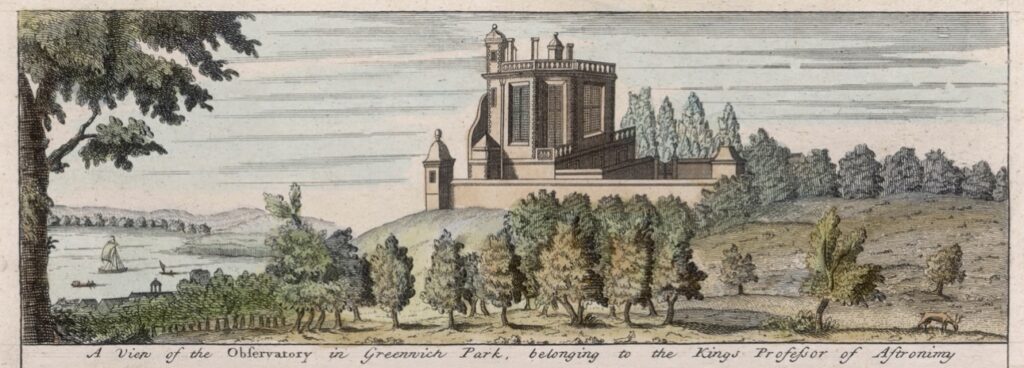
It is a playful moment, but the setting lends it unexpected weight. The hill rises above the Thames, open to the sky, with sweeping views across London. For many visitors, the experience feels strangely grounding, as though the landscape itself carries a quiet significance. Some might find themselves wondering, “Why here?”
It is the kind of question that sits somewhere between science and human intuition. Maps and measurements explain part of the answer, but human beings have long relied on intuition when choosing where to build, gather, and observe the sky. The true answer, historically speaking, is surprisingly practical. When the Royal Observatory was founded in the seventeenth century, its purpose was to solve one of the most pressing problems of the age: determining longitude at sea.
Accurate navigation depended on understanding the relationship between time and position, and astronomers needed a location where the stars could be observed clearly. Practical reasons may have determined the final decision, but the qualities that made Greenwich useful for astronomy, elevation, open horizons, and distance from the noise of the city are the same qualities that people instinctively respond to today. Intuition often begins with the body: a quiet sense of stillness, perspective, or clarity in a particular place.
According to Louise Devoy of the Royal Observatory Greenwich, the site was chosen largely for logistical reasons.
“When the Royal Observatory was established in the seventeenth century, Christopher Wren [the architect of the Observatory] was actually looking at a couple of different places,” she explains. “There was an option near Chelsea to be closer to the royal court, and another in Hyde Park. But Greenwich was ideal mainly because it was free.”
The land sat within a royal park and was readily available to the Crown. Geography also played an important role. “That hilltop location gives you good visibility,” Devoy says. “You can see the stars rising and setting across the horizon.”
Distance from London’s smoky centre also mattered. In the seventeenth century, the city’s fires, chimneys, and growing population produced a haze that interfered with astronomical observations. “It was about five or six miles away from the main city,” Devoy explains, “so away from smoke or interference. But you still had the river, which enabled the Astronomer Royal to get the ferry back into town to meet with other scholars. So it seemed like a good option all around.”
On the surface, Greenwich’s story is one of pragmatism. Yet the qualities that made the site scientifically useful, elevation, open sky, and distance from urban noise, are the same qualities that shape how it feels today.
Long before telescopes were installed, the hill already held historical significance. The site once hosted Duke Humphrey’s Tower, a medieval structure associated with an early royal library. The surrounding park contains traces of Roman activity and centuries of layered history.
As Chris Hawkins, a volunteer with Friends of Greenwich Park, explains, “Greenwich is a place that has been chosen again and again across history. Its beauty, elevation, and wide views over the Thames have consistently drawn different groups to it, from royalty to scientists.”
That sense of continuity is reflected in its royal past. “Before it became a scientific landmark, Greenwich was closely tied to the life of Elizabeth I, who was born at the Palace of Placentia, which was demolished in the 17th century to make way for the Royal Navy hospital that stands there now,” Hawkins says, describing a time when the area was a centre of royal power and court life.
The landscape itself may help explain this enduring appeal. “The hill in Greenwich Park would have stood out in any period; it’s a natural vantage point over the Thames, and that alone would have made it significant,” he notes.
Devoy is also careful not to suggest that ancient symbolism influenced the Observatory’s location. “As far as I know, the choice was much more pragmatic,” she says. And yet visitors often experience the place in ways that go beyond practicality. For many people, the Meridian line itself triggers a subtle shift in perspective.
“When you look at the line and see place names like New York, Sydney, or Beijing, it’s a reminder that we’re on a planet,” Devoy says. “Our time and location here is completely different from what it is somewhere else. I think it just reminds us how small we are.”
The Meridian, after all, is not a natural feature but a human decision. “A meridian is just an imaginary line that goes from the North Pole to the South Pole,” Devoy explains. “There’s no natural start or finish point. Any meridian could be significant.”
For centuries, different nations used different prime meridians. Lines passed through locations such as the Canary Islands, the Azores, Baghdad, and Paris. By the nineteenth century, more than ten competing systems existed. “If you bought a map in Brazil, zero degrees would go through Rio de Janeiro,” Devoy says. “In Russia, it would go through St Petersburg.” As global trade expanded, this confusion became impractical. In 1884 representatives from around the world gathered in Washington DC to agree on a single international standard.
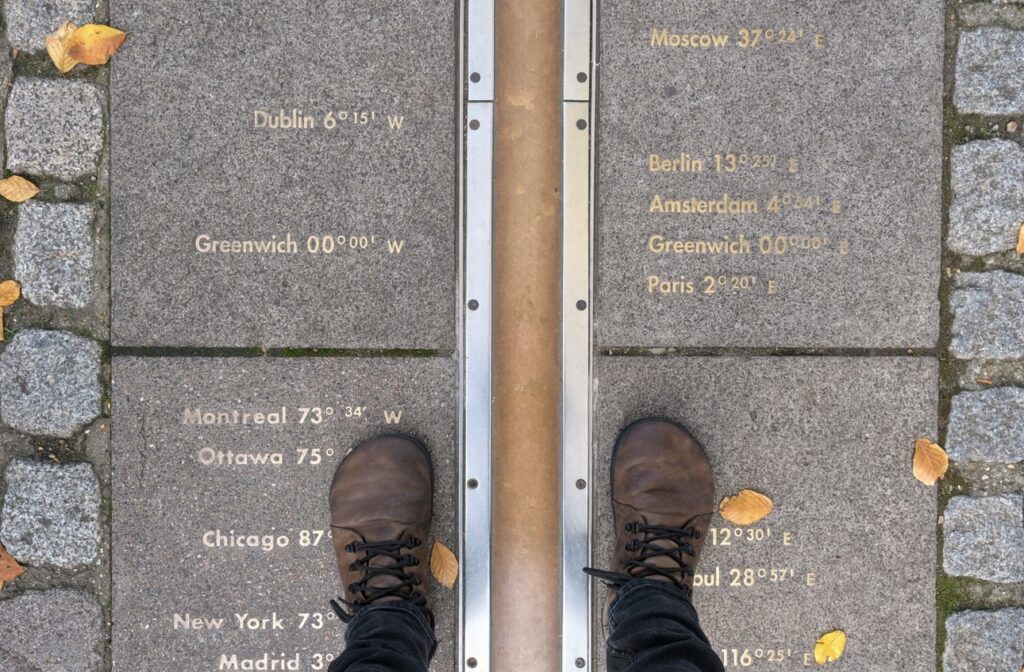
Four observatories were considered: Greenwich, Paris, Berlin, and the US Naval Observatory. Greenwich ultimately won. “Greenwich was chosen because the majority of shipping companies were already using British charts,” Devoy explains. “Seventy-two percent by tonnage. It was a very pragmatic decision.”
Even the systems that organise our world, it seems, begin with collective agreement. Today, Greenwich continues to draw visitors from across the globe.
From the hilltop, London spreads out in two directions at once. Below lie the historic buildings of the Old Royal Naval College and the National Maritime Museum. In the distance rise the glass towers of Canary Wharf, glowing at night with financial power.
“The contrast is incredible,” Devoy says. Yet the pull of the park is not purely visual.
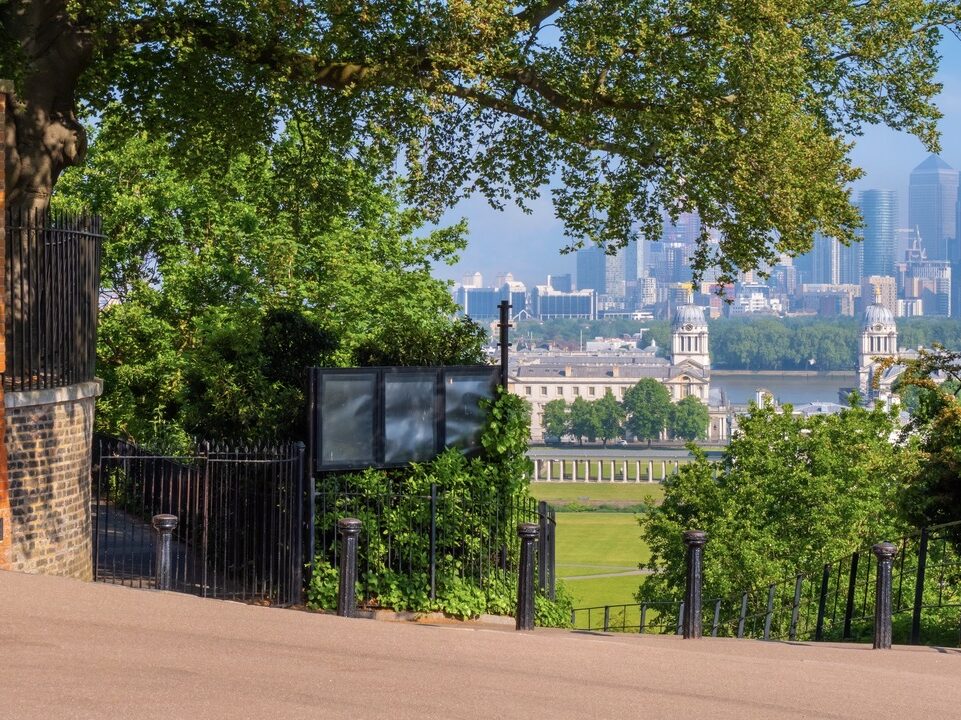
Paul, a 52-year-old London resident visiting the park on a quiet afternoon, struggles to explain why he returns regularly. “I don’t believe in all that energy stuff,” he says with a laugh. “But every time I’m here, I feel oddly grounded. Like this is where things line up. I can’t explain it.”
Others describe a similar sensation in more deliberate terms.
Jemima, 37, says she has been visiting Greenwich to meditate for several years.
“I moved to South London about a decade ago,” she says, “and I always come back here when I want to feel grounded.”
Experiences like these may not be measurable, but they are increasingly common in contemporary city life. Practices such as meditation, mindfulness, and embodied awareness have become part of everyday urban culture.
In this context, Greenwich occupies an unusual position. It is simultaneously one of the most scientifically defined places on Earth and a location where many people report an intuitive response.
Perhaps the two are not as different as they appear. Long before modern science, ancient communities observed celestial movements, tracked seasonal cycles, and chose locations that seemed significant in relation to land and sky. What we now describe as intuition once functioned as a shared method of understanding the world.
Greenwich, in its own way, still reflects that intersection. Here, a line that exists only by agreement organises global time. Ships once navigated oceans using measurements taken from this hill. Satellites now orbit the planet guided by even more precise systems.
And yet visitors continue to stand quietly beside the Meridian, looking out across the river, sensing something difficult to name. Measurement and meaning coexist here. The place where time begins is also, perhaps, a place where people pause.
Leave a Reply