Before social media seeped into every aspect of modern life, people were only educated the basics of sexuality. You were straight, gay, or bisexual. The newly circulating term ‘LGBTQIAA+’, has attracted mass attention, predominantly on TikTok. I say ‘newly’ lightly, as this term has existed for over five years, but is flourishing now within a society who live on the internet. But what is the true impact of countless terms for something as simple as sexuality? By creating a group for every describable sexuality aside from heterosexual, are we empowering people’s feelings and making a community, or is this more heteronormative than ever? On top of this, is this even empowering or are we confusing young people, and giving them more labels to try and align with?
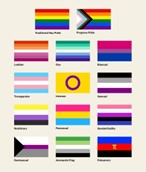
Sexuality labels have never been as mainstream as now, the term LGBTQIAA+ is circulating in nearly every aspect of everyday life, whether it’s through symbols, flags or conversation. If you simply evaluate terms changing from ‘LGBT’ to “LGBTQIAA+’, you’d presume it’s progress in society, against a world of heteronormativity, but is this emotional progression? In a time with never-ending definitions of sexualities, everyone should feel heard, understood, and defined. But this in itself poses many questions. Should something as natural as emotions be categorised? Do these terms really promote inclusivity or is it making people question themselves even more?
Chaya Kennedy, a young person who does not identify with the LGBT community, believes that “it comes across like having so many labels united is bringing like-minded people into a place where they can share experiences. I’ve never had to feel misunderstood for my sexuality, and even if it’s a community with anyone queer, anyone who just knows what it’s like to question themselves, it’s a positive”. Perhaps since it is a community in which the majority would have faced many moments of uncertainty, it creates a space of what you’d assume to be a more judgement free zone, than with the rest of society.
“It helps people voice their identity and be able to help others understand it too when others define it. Sexuality can be so difficult for some people; I think especially young people who are going to see the debates more because they are the people who use social media the most. So as someone who can’t relate but has still seen it, maybe definitions online can help people actually discover themselves,”- explains Chaya. The internet has made it possible for people to read detailed explanations of the spectrum of sexuality.
“I knew someone that’s been conflicted with labels, as they didn’t understand which label fit them. She felt ‘wrong’ because there are so many labels and they’re as easy to find as a google search now, so still not knowing how she really felt led to internal isolation”. This is more regressive because although it may be a small fraction of people who search and still cannot define themselves, this minority feels more alienating than ever. Social media has ‘replaced’ news outlets for young people. What they read tends to be what they believe. Is having so many options truly better? If there’s countless options and people still can’t find one, what would this make them think? Would this happen in a world without labels?
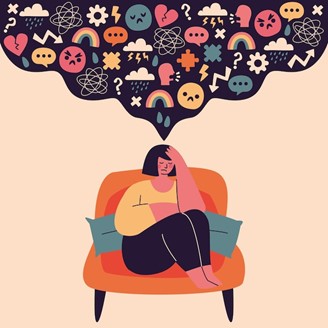
This questions seeps into other emotional turmoil, specifically mental health labels. Feeling excessive emotion turmoil is already consuming. Does diagnosing everybody and every emotion push a self-fulfilling prophecy? From different types of depression to personality disorders, there are even more terms to define all the emotions each person holds. Aside from professional diagnosis’, many young people fall into the trap of self-diagnosing, often rooting from outsiders labelling traits they have with serious illnesses. Although there’s a chance of these self-diagnosis’ holding truth, the real issue at hand is people are accepting labels and living up to them, making emotions spiral.
Who knows mental health better than a therapist? When interviewing Rachel Abedi, therapist for young people, it’s clear that the question of whether labels are pushing progression, creates great debate. “Young people trying to fathom their mental health tend to be the most impressionable group, this is because it’s often their first time experiencing particular feelings and they just want them to go away. Non-professional diagnoses are creating the risk of phantom emotions,” she says. “Phantom emotions” are feelings which are evaluated unprofessionally, especially within social media, in which then get stuck in a loop of forming into ‘deeper’ emptions.
“Labels comfort young people but they can act as provocation to ‘symptoms’ becoming intense, internal struggles. Initially, I notice they will provide comfort as any explanation would. It’s also nice for young people who are struggling to be validated with a label, as it means that other people must have shared these feelings. But the dangerous side of labels is that as much as it is comforting, that is only temporary. The part which is hard to shift is people being too complacent with their diagnosis’”.
From a professional standpoint, it seems that young people misdiagnosing themselves only provides them with a rough idea of what their issue is, but without seeking real help and advice, they don’t know how to even handle the label they’ve given themselves. It may solve the issue of the unknown, but it does not solve the deeper damage it causes. That becomes extremely real once people have labels with intense symptoms, means that in many cases, they mentally give up.
“I have spoken to many young people who have entirely stopped trying to heal but try to remain in the label, so they don’t have to face the unknown again. I think that in itself is another indication that all they have ever searched for is comfort. Whether that comfort comes from trying to find a label or adapting to living within their label,” comments Rachel. Healing can act as further lack of self-identity, feeling less ‘wrong’ but still not feeling ‘right’. Choosing to stick by a label which you once related to, but potentially grew out of. The only comfort better than a label, is true advice and guidance out of how they feel, because living without mental health labels is the sign of progression.
Labels surrounding anything that describes and regulates your emotions can be confusing, isolating, or freeing. But without ‘labelling culture’, would there simply be less confusion? If everyone stopped searching for answers, and instead accepted the things they felt momentarily, would there more be freedom to healthily explore each feeling? By accepting, people are often also more open to accepting advice, as when they give themselves a negative label many convince themselves they do not even deserve the help. The strain labels create of forcing temporary feelings into a box where they cannot evolve, is what could be the biggest strain, even bigger than the emotions themselves. The restriction is not as free as accepting that everything is constantly moving, whether that be your mental health position, your desires, or your understanding of your identity. Sexuality changes. Preferences change. Your mental health changes. It all changes with you and learning about yourself. So why trap yourself when humans are meant to change, and evolve into their best possible form?